Showing posts with label spring flowers. Show all posts

April 06, 2026

A Dancing Easter Vase on Monday

arrangement

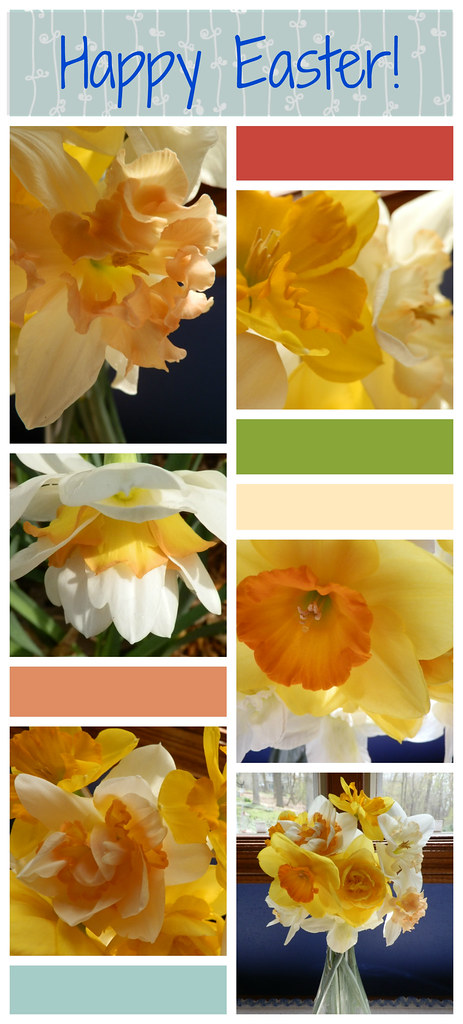
Happy Easter!

I pulled together a few odds and ends over the weekend for Easter vases. Some fillers came from the garden; others from the sunroom. This first vase appears to be dancing and celebrating spring.

hellebores

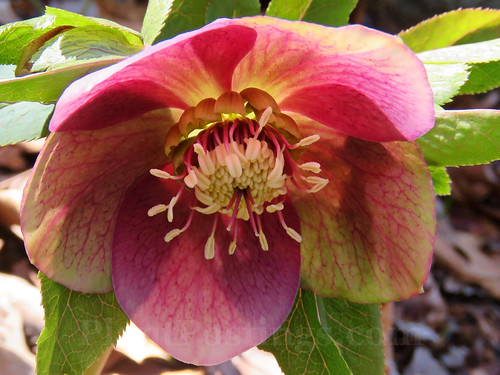
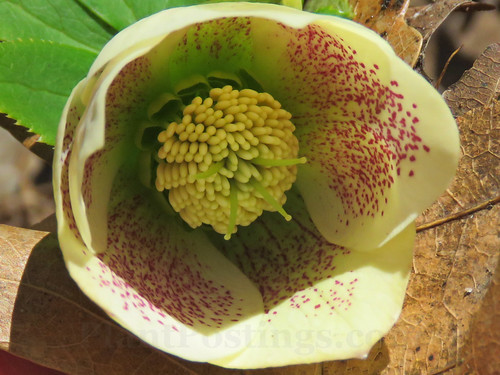
The stars of this grouping are Hellebores (Helleborus × hybridus)—currently blooming with abandon in the garden. I have about six varieties, and I always find it hard to clip them for some reason—I don't want to disturb their natural beauty. But they're lovely in vases and face up in bowls.

daffodil

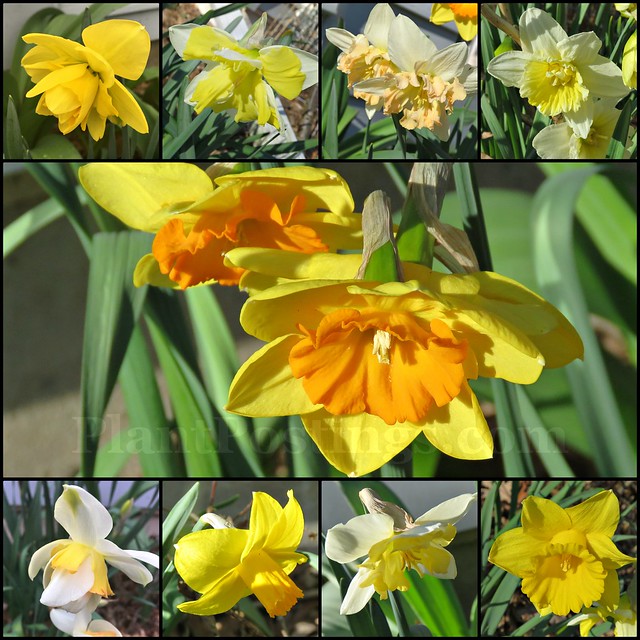
Daffodils (Narcissus hybrids) are abundant, too, These white ones with yellow centers seem to be the first tall Daffodils to bloom in spring.

fiddlehead fern frond

I included this dried Fiddlehead Fern frond (Matteuccia struthiopteris) for structure and a nod to the end of winter.

hydrangea ivincible lace

Also saying "bye" to winter: dried seedheads of 'Invincibelle Lace' Hydrangea (H. radiata). Because this shrub's seedheads persist through winter, it has four-season appeal.

kalanchoe

I also grabbed two items from the sunroom, including yellow Kalanchoe (K. blossfeldiana), with its bright, cheery blooms.

ivy

And vines of English Ivy (Hedera helix), which give the arrangement its "dance."

daffodils

Another vase was a quick combination of more Daffodils and a few clippings of evergreen Yew (Taxus canadensis).

daffodils 2

So...spring is happening, and the garden is waking! What's blooming and growing in your garden and in your vases? Head on over to Cathy's blog Rambling in the Garden for the wonderful meme, "In a Vase on Monday."

April 22, 2022

Blooms, Buds, and Beginnings

cover

Spring is really happening now. I was starting to wonder...

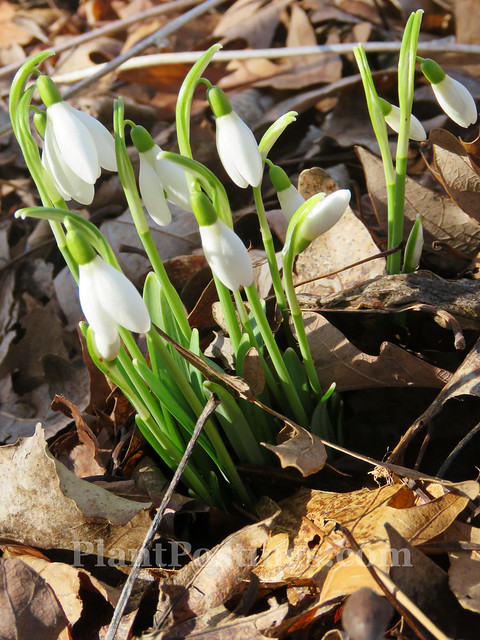
snowdrops 1

Because of the cool/cold weather we've had in April, some plants that were starting to bloom a month ago are still blooming. I think this is the longest the Snowdrops (Galanthus nivalis) have lasted. I believe this is 'Flore Pleno.'

snowdrops 2

The plant label for these Snowdrops is long gone, so I don't know their cultivar, but they are cuties.

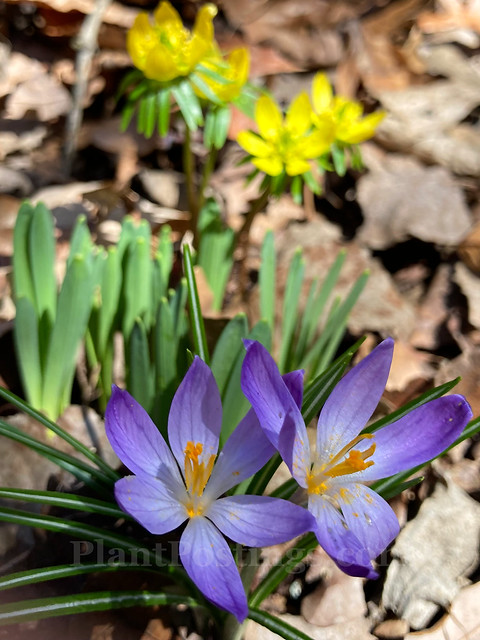
tommies & aconites

The Tommies (Crocus Tommasinianus) and the Winter Aconites (Eranthis hyemalis) are still blooming, too.

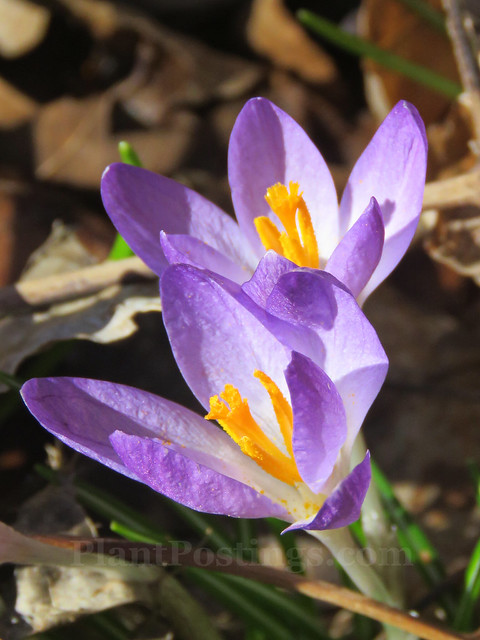
tommies

They're so hopeful and hardy.

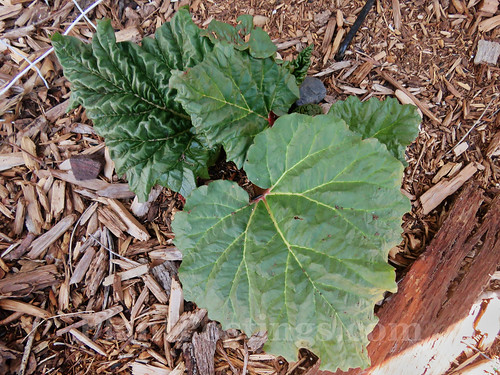
rhubarb

The Rhubarb (Rheum × hybridum) is making more progress.

And now it's time to celebrate many new garden happenings.

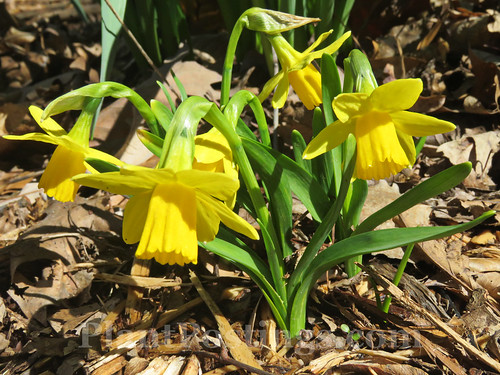
tete-a-tete

daffodil 1

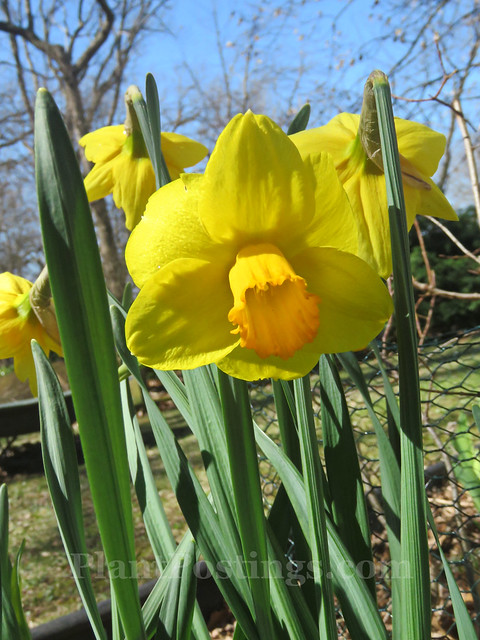
daffodil 2

Daffodils (Narcissus spp.)!

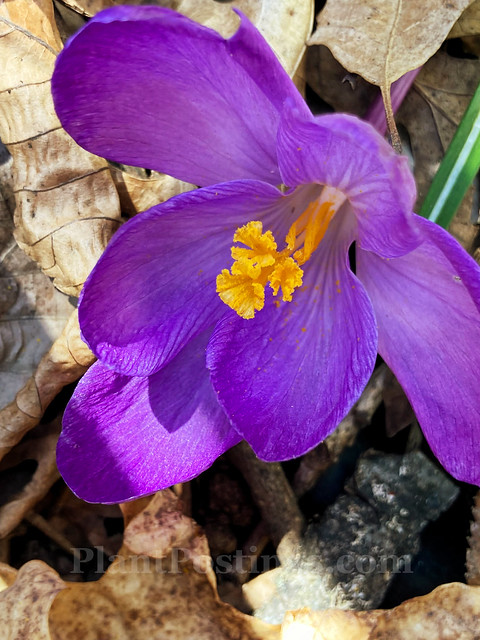
crocus 2

crocus 1

Crocuses (Crocus vernus)!

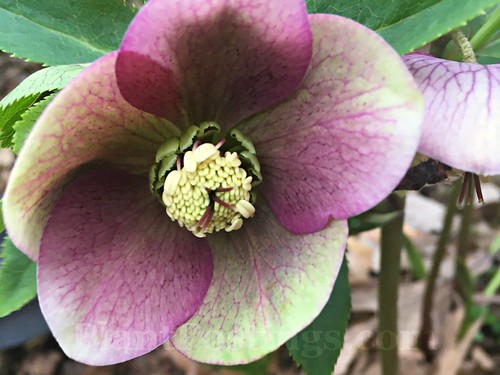
hellebore 1

hellebore 2

hellebore 3

Hellebores (Helleborus orientalis)!

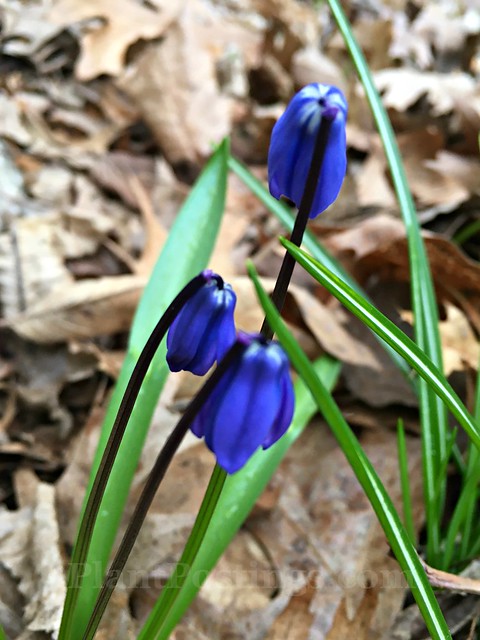
blue squill

Siberian Squill (Scilla Siberica)!

bleeding heart

Other plants will be filling in and blooming very soon, including Blooming Heart (Dicentra spectabilis).

hyacinth

Hyacinth (Hyacinthus orientalis). (It's a tiny one.)

mayapples

The Mayapples (Podophyllum peltatum) have emerged.

allium

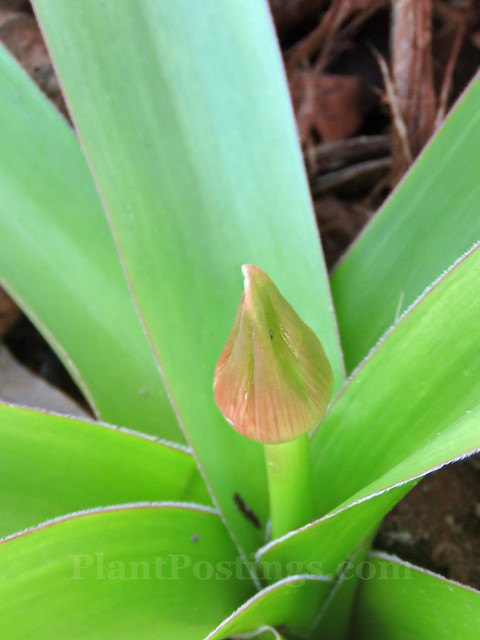
The Alliums (A. giganteum) are budding. (This is either 'Globemaster' or 'Ambassador'; they're interplanted in this spot and I'll know when it blooms.) 

forsythia

The Forsythias (unknown dwarf hybrid) will be blooming this weekend.

bluebells

Along with the Virginia Bluebells (Mertensia virginica), which seem to have appeared out of nowhere. I've expanded the caging after this photo was taken; rabbits like to eat them.

Yay! Spring has sprung!

April 15, 2020

A Bit of a Nip on This Garden Bloggers Bloom Day

Daffodils

My USDA zone 5a garden is in a strange state of flux. We had a rather mild winter and March, so many plants were taking off. Now it's bitter cold for several days, with nighttime lows around 24F/-4C.

These photos were taken before the winds, pounding rains, and bitter cold hit. The Daffodils (Narcissus spp.) are doing OK--they've been blooming for a couple of weeks now. In fact, the cold weather is holding their blooms longer.

Glory of the Snow

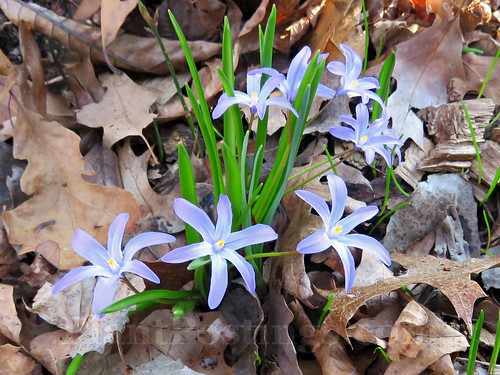
Little patches of Glory of the Snow (Scilla forbesii) here and there have been so cheery and affirming.

Blue Squill

The Blue Squill (Scilla siberica), barely had a chance to break bud. But that blue color!

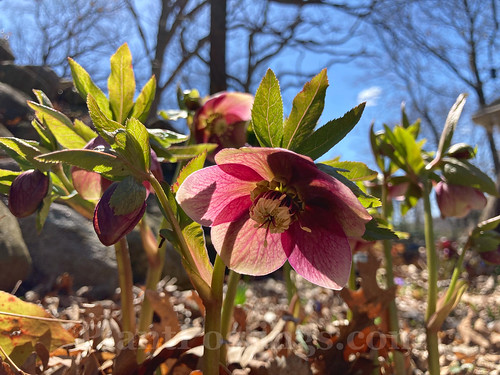
Helleborus 1

Hellebores, including this unknown Helleborus orientalis hybrid can take the tough weather conditions. They're a bit battered around, but they'll be OK.

Helleborus 2

Another Hellebore hybrid.

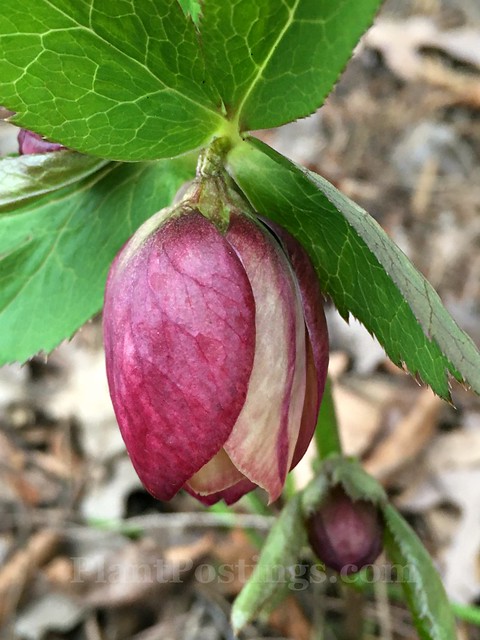
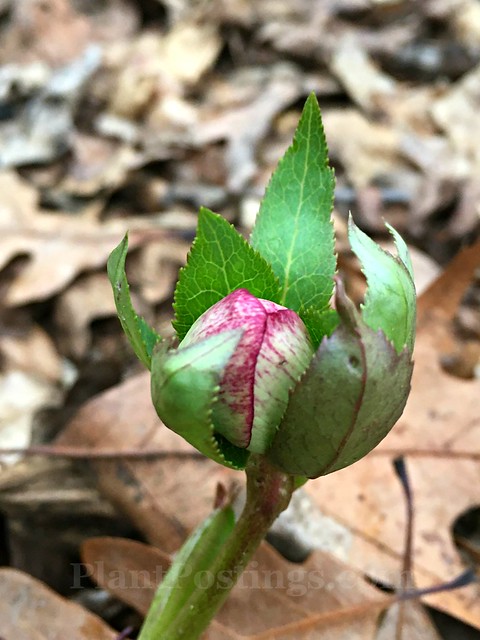
Sandy Shores Bud

This Hellebore 'Sandy Shores' is a new one for me, and the buds are almost as pretty as the blooming flowers.

Sandy Shores

Here's 'Sandy Shores' just about to bloom. The flower has a slightly warmer color tone than some of my other Hellebores.

Blushing Bridesmaid

Yet another Hellebore, 'Blushing Bridesmaid', seems to be appropriately taking her time to bloom. I'm really looking forward to seeing this one, too, because it's a double-petaled bloomer.

bloodroot

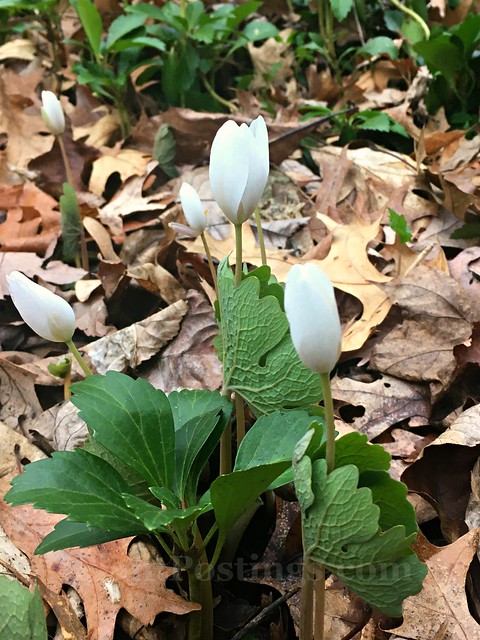
I was shocked to see that the Bloodroot (Sanguinaria canadensis) was blooming in the woods. Poor little buddies--I'm sure they're pummeled and depetaled by now.  The Wild Ginger (Asarum canadense) is up, too, but I didn't get photos of the flowers yet.

I'm sure my May Bloom Day will be much more optimistic and floriferous. Until then, make sure to check out other posts for Garden Bloggers Bloom Day, hosted by Carol at May Dreams Gardens.

January 12, 2017

Plant of the Month: Florist's Cyclamen

flower 1

I write this post not with any pretense about success in growing indoor potted plants. On the contrary, my record with them, in general, is not good.

I can remember my dear grandmother's home filled with African violets that spanned the color range, and she was able to keep them growing for years on end, with repeat full and lush blooms. She may have had a Cyclamen or a few other blooming plants among her collection--I don't recall.

My experience is not as impressive. Historically, I've killed more indoor potted plants than I'd care to share here. But that doesn't stop me from trying. And in recent years, I've had more success (or perhaps luck). One of the plants that has surprised me with its longevity and lush growth is a Cyclamen plant I picked up four years ago.
flower 2

Most potted Cyclamens are florist cultivars of C. persicum, a species native to the Middle East, Northern Africa, and Eastern Europe. The species has a limited range of allowable conditions in the wild, which probably accounts for its persnickety temperament.

Now, mind you, I don't necessarily follow the rules when it comes to dealing with potted plants--particularly those that go dormant. (Visit this link to learn more about conditions preferred by potted Cyclamen plants.)  I don't have the patience to put them away in a dark room, water them at a specific time, hang them upside down, and do the hokey-pokey. But for the purposes of documentation, here are the conditions and steps I've followed that have kept this little Cyclamen plant going and flourishing since 2013:
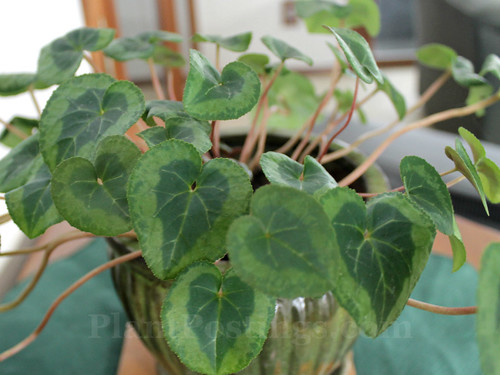
foliage 2

• I first transplanted my Cyclamen from its plastic retail container to the ceramic pot it inhabits to this day. I've never transplanted it again, though many recommend that practice annually after summer dormancy. This particular container has good drainage, but I used only regular potting soil with small pebbles on top for mulch/decoration.
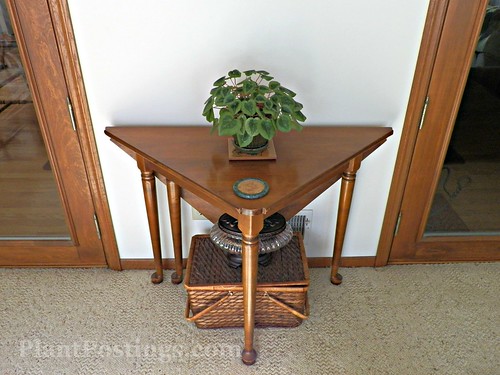
winter

• During the winter, the plant lives on a small table on the north side of the sunroom, which faces south. Here, it receives indirect light from dawn until dusk. The room is partially heated, but is closed off from the rest of the house. Daytime temperatures range from about 50F to 70F, depending on the sunlight, the day length, and the outdoor air temperatures/wind conditions. Nighttime temps range from about 38F to 50F. The room is more humid than the rest of the house, but on dry, cold days I do mist the plants to maintain slightly higher humidity.
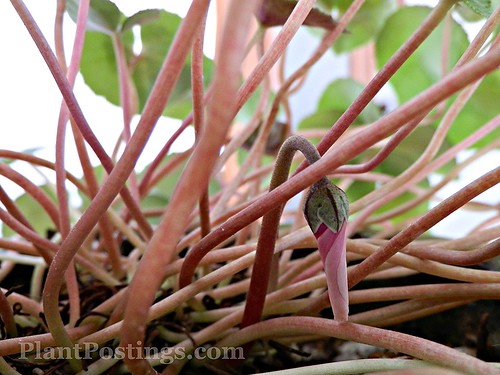
bud

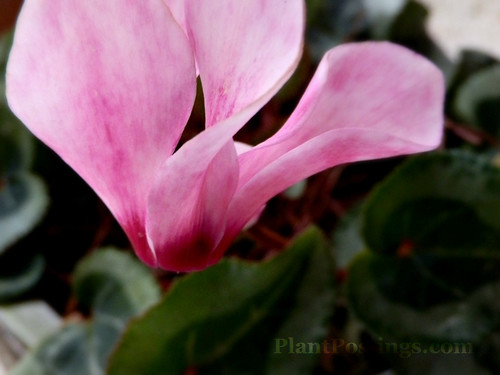
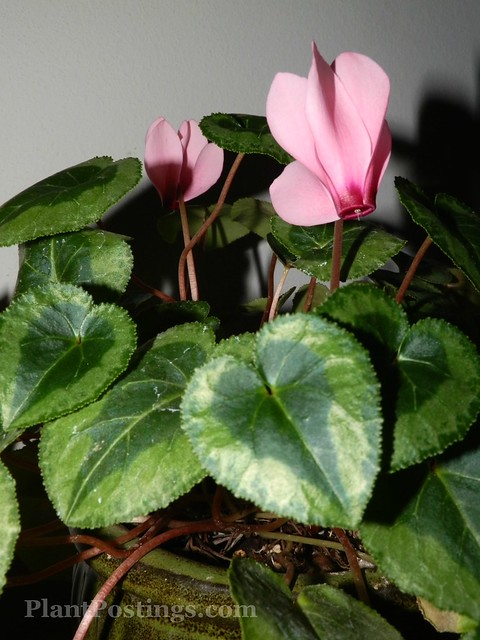
Bloom time for my little Cyclamen plant begins anywhere from early January to mid-February. I don't know why it varies--probably because I don't follow the rules. It's always exciting to see the first budding stems pop out of the soil. At first, they look very much like the foliage stems, until you begin to see the twirled pink shape of the buds.

The plant blooms, generally, through the early spring. The foliage continues to flourish until early summer.
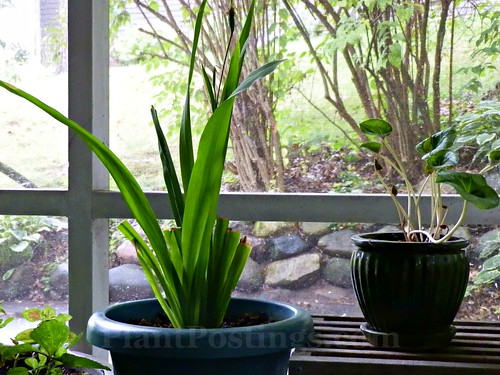
screen porch

• I place the plant outside (in a shady spot protected from heavy rainfall) with most of my other potted plants as soon as nighttime temperatures consistently remain above about 40F--generally sometime in early May. If we have a very cold night with a frost predicted, I move the plants to a warm porch and cover them. Usually, by mid-May, we're beyond the threat of nighttime frost, and I do a jig.

• When the foliage begins to wither and fall off, I slowly reduce watering. It is at this point, I believe, that many people give up on potted Cyclamens and throw them out (because I almost did, myself, more than once). But I encourage you to simply ignore the plant for a few months. A little water is OK, but the plant is now dormant and is better off neglected for a bit so it can rest during the heat of the summer.

In some years, the Cyclamen retains a few leaves even through the summer. In other years, it entirely loses its leaves and I can't believe there's a chance it will come back. But then it does! Tiny new shoots emerge from the soil and begin to fill in.
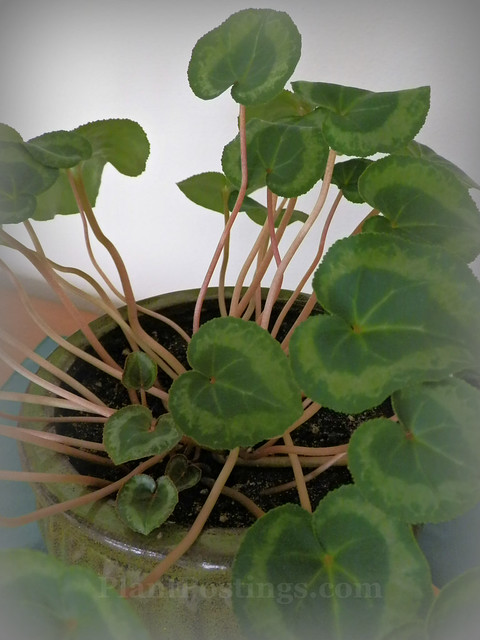
foliage 1

• Before the first frost, I bring my plants indoors for the winter. For me, this happens sometime between early and mid-October. By this point, the Cyclamen is starting to look like a lovely potted foliage plant, perfect as a holiday accent piece.
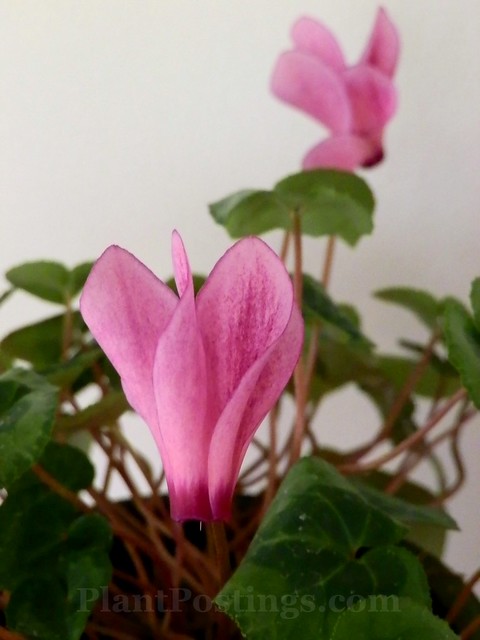
flower 3

And so the cycle continues. If you've ever tried to grow florist's Cyclamen and have given up, I encourage you to try again. It's easier than you might think, and the hardest part is having faith it will resurrect from its summer dormancy. When it does, it's hard to describe the thrill of seeing new life at a time when most other plants are going dormant.
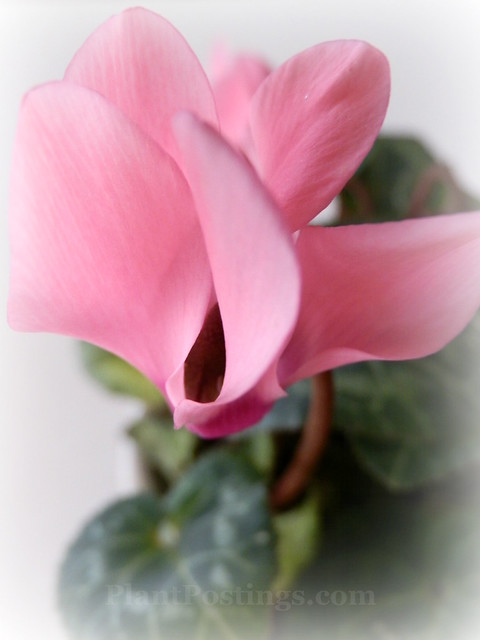
flower 4