April 29, 2026

An Ode to the Trilliums

Trillium recurvatum
Trillium recurvatum

Trillium grandiflorum

Trillium erectum
Trillium erectum

April 25, 2026

And Now It's 'Real' Spring

Woodland mix

Many of us who live in climates featuring extreme seasonal swings often joke about the many "seasons" of spring--from fake spring, to "spring of deception," to real spring. I think we've made it to the last stage. We'll still be cold a few times in the next few weeks, but I'm officially packing away the parka and the snow boots.

And the garden is signaling it's time to move on and grow!

Malus

The stars of area gardens right now are the Crabapples (Malus spp.). They seem to suddenly explode with lush flowers and intoxicating scents.

Hellebores

A few blooms of various Hellebores still hang on--especially those in colder, shadier areas.

Podophyllum peltatum

The Mayapples (Podophyllum peltatum) in the woodland resemble a convention of umbrellas. As they flatten out in the next few days, apparently that's a sign it's time to hunt for Morel mushrooms.

Mertensia virginica

Virginia Bluebells (Mertensia virginica)...sigh...I wish they could bloom all summer. Their time is too fleeting.

Lamprocapnos spectabilis

Same with the Bleeding Hearts (Lamprocapnos spectabilis). They're great companions for the Virginia Bluebells, as shown in the top photo.

Epimedium x warleyense

Finally, for this "Six on Saturday," I'm including a nod to the Barrenworts, in this case, Epimedium x warleyense. I have several Barrenwort varieties, but this one seems particularly happy with the garden's conditions.

That's it for this week for my "Six on Saturday," a meme hosted by Jim at Garden Ruminations. Head on over to his wonderful blog to visit gardens around the world.
___________________

cover for promo
Our book, "A Journey of Seasonal Wisdom," 
is now available in ebook format, internationally, on Amazon!

Fellow blogger, Donna Donabella, and I co-wrote the book, and its readers are truly part of the story. The paperback will be out next week! We're both so thrilled: Our collaborative effort of several years is now a finished product. Visit Golden Dragonfly Press or my previous post to learn more!

April 22, 2026

A Special Announcement on This Earth Day!

cover for promo

Happy Earth Day!

As spring unfolds, nature and gardens awaken, and change happens fast! Earth Day celebrates our place in nature. Its mission is to broaden, educate, and activate the environmental movement, worldwide. On this date, 56 years ago, the first official Earth Day was celebrated.

And on this Earth Day, we have a special personal announcement to share. My friend and talented poet, Donna Donabella at Gardens Eye View, and I are celebrating the launch of our book: "A Journey of Seasonal Wisdom." The book includes Donna's amazing poetry, a unique book format we co-created and co-wrote (encouraging readers to contemplate the seasons, week by week), and prose I added to round out the prompts.

This little book is for its readers--gardeners, bloggers, family, friends, neighbors, fellow humans. The book encourages simple joy and reflection. And it's a labor of love.

Visit this link to learn more: Golden Dragonfly Press. The book will be available on Amazon in e-book format first; then in paperback format in late April. I think you'll want a copy, because you're part of the story!

(Here's information about Earth Day and its beginnings, including the original vision and efforts of Senator Gaylord Nelson, from Wisconsin.)

April 18, 2026

Six Woodland Wonders

Viola pubescens

For this Six on Saturday, I'm including five native plants waking up in our woodland, and one plant that behaves and raves and steals my heart. The first is a Yellow Violet, and I believe this is Viola pubescens, which is very common in my local area. It's a cute little buddy.

Asarum canadense

Next, we have Wild Ginger (Asarum canadense)--a wonderful groundcover that persists through the growing season. Here you can see its heart-shaped foliage and unique, tiny bloom that pokes out under the cover.

Trillium recurvatum

This plant seems to be increasing in number on our property: Prairie Trillium (T. recurvatum). This view shows the bud at its center, soon to bloom. Several other Trillium species grace our woodland, and I'll share as the season progresses.

Podophyllum peltatum

The Mayapples (Podophyllum peltatum) always poke their umbrellas up through the rich earth in dramatic fashion. Dear old friends.

Hydrophyllum virginianum

Virginia Waterleaf (Hydrophyllum virginianum) is an amazing groundcover that competes well with invasive species, helping to protect the woodland ecosystem.

Helleborus orientalis

Finally, nearer the house are my dear Hellebores (H. orientalis). I know most gardeners love them, and what can I say? They're not native here, but they behave so well, and they're just so lusciously lovely. I can't imagine gardening without them.

OK, that's my "Six" for this week! Head on over to Jim's Garden Ruminations blog to see more amazing plants from around the world.

Also, join me on Instagram for a special #Ephemeral a Day Through May meme. I'm focusing on ephemeral plants native to my area of the U.S.--plants that I'm seeing on my own land, and out and about during hikes.

April 10, 2026

Almost Time for Garden Planting!

crocus

The main color in this post is green, so I'm starting with a photo of colorful Crocuses from last week. The little beauties are just about done now, so it's on to the next phase—celebrating the plants that need warmth.

In the meantime, I thought it would be fun to include an update on the seedlings I started in the sunroom in March. Our last frost date is in early May: Soon, I'll need to harden these babies off before planting.

dahlias

First we have the mixed Dahlias. They're doing well; I'm so thrilled!

california poppies

The California Poppies (Eschscholzia californica) are happy and dancing.

milkweeds

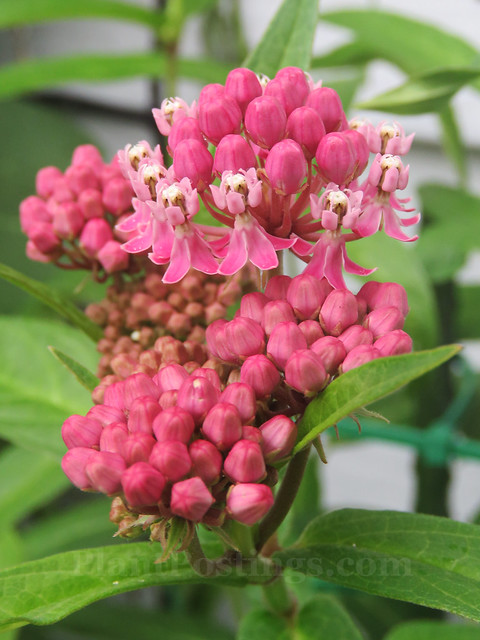
The three Milkweed species (Asclepias spp.) took a bit longer to emerge, but they're making progress now.

hollyhocks

Oh, and 'The Watchman' Hollyhocks (Alcea rosea) look healthy, too.

zinnias

'Zowie' and 'State Fair Mix' Zinnias (Z. elegans) are always reliable.

callas

Finally, I'm celebrating the Calla Lilies (Zantedeschia spp.) poking through the soil! Now the race is on to fast, colorful blooms.

That's my "Six" for this week, with extra flowers at the start. Thanks to Jim at Garden Ruminations for hosting "Six on Saturday"!

April 06, 2026

A Dancing Easter Vase on Monday

arrangement

Happy Easter!

I pulled together a few odds and ends over the weekend for Easter vases. Some fillers came from the garden; others from the sunroom. This first vase appears to be dancing and celebrating spring.

hellebores

The stars of this grouping are Hellebores (Helleborus × hybridus)—currently blooming with abandon in the garden. I have about six varieties, and I always find it hard to clip them for some reason—I don't want to disturb their natural beauty. But they're lovely in vases and face up in bowls.

daffodil

Daffodils (Narcissus hybrids) are abundant, too, These white ones with yellow centers seem to be the first tall Daffodils to bloom in spring.

fiddlehead fern frond

I included this dried Fiddlehead Fern frond (Matteuccia struthiopteris) for structure and a nod to the end of winter.

hydrangea ivincible lace

Also saying "bye" to winter: dried seedheads of 'Invincibelle Lace' Hydrangea (H. radiata). Because this shrub's seedheads persist through winter, it has four-season appeal.

kalanchoe

I also grabbed two items from the sunroom, including yellow Kalanchoe (K. blossfeldiana), with its bright, cheery blooms.

ivy

And vines of English Ivy (Hedera helix), which give the arrangement its "dance."

daffodils

Another vase was a quick combination of more Daffodils and a few clippings of evergreen Yew (Taxus canadensis).

daffodils 2

So...spring is happening, and the garden is waking! What's blooming and growing in your garden and in your vases? Head on over to Cathy's blog Rambling in the Garden for the wonderful meme, "In a Vase on Monday."

April 02, 2026

On Breaking the Rules (Occasionally)

asclepias incarnata
My Friend Swamp Milkweed
(Asclepias incarnata)
I believe it’s important to follow rules—whether they be laws, regulations, procedures, shared guidelines, or really…whatever.

But, sometimes, it’s OK to stretch them or break them. Sometimes it’s OK to set your own rules, when you own the property, the idea, and the consequences. There are many acceptable reasons, but some include greater clarity, no harm to others, innovation, spirit of the rule, individualism. Although, I believe it's always important to be consistent.

I’m not talking about anything terribly earth-shattering here. So please pardon the drama of my opening words. I merely want to share that I try to carefully follow the rules of botanical nomenclature and the horticultural norms of describing gardens and plants.

But sometimes I break the rules—both unintentionally and on purpose.

Regarding the former: My aim is to correctly report the scientific names of plants, using the standardized binomial system. This is something I want to do and need to do I consider it a very important practice. We need to ensure we’re all talking about the same plants! Common names vary by region and tradition.

Zizia aurea
My Friend Golden Alexander
(Zizia aurea)
I also try to follow Associated Press (AP) style. But I make mistakes, and plant categories change and shift. Please forgive me, as I adjust and correct errors along the way.

Here’s where I break the rules, intentionally, although it’s a struggle: I use initial capital letters for common names of plants. There are several reasons for this: 

● This is my blog. I created it. I set the style, and I try to be consistent.

● I think of plants as characters. No, they’re not people, but they are unique old and new “friends.”

● It’s easier for me to read and understand information about plants when I picture them as proper names, i.e., St. John’s Wort, Highbush Cranberry, Rattlesnake Master, and so on. There are challenges to using this rule-breaking method, and one of them is figuring out what to do with simple categories of plants, like “Maples,” “Coneflowers,” or “ Ferns."

rosa setigera
My Friend Prairie Rose
(Rosa setigera)
Again, I include the Latin names, but I tend to capitalize even categories of plants. I waffle a little on this one: I apologize for that.

All this to say that I think it’s OK to break the rules sometimes, and I own the consequences of my actions. Thanks for your patience, humor, and acceptance of my human foibles!

Do you ever break the rules?