Over the years, I've been slowly adding more native plants to the garden, and encouraging volunteers. In fact, going forward I'm avoiding planting non-native perennials--with a few exceptions. (Annuals that die in our cold winters are another story.) At this point in the season, most of my native plants have finished blooming, and the ones that still bloom have seen much better days. (Perfectly normal, of course: It's part of the natural seasonal progression, and soon most will go dormant after the first frost.)
With that said, many native plants here are still attractive garden highlights--with colorful foliage, berries, and garden structure. They're holding their shape and adding beauty and seasonal wildlife value to the garden. In one way or another, all native plants benefit the local ecosystem, and some remain attractive, active highlights right through autumn and into the winter. While books could be written (and have been) about the ecosystem benefits of each native plant, I'm focusing here mainly on the garden aesthetics. Here are a few examples:

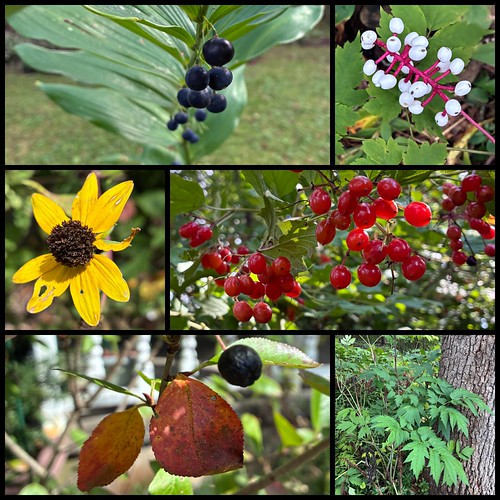
Solomon's Seal (Polygonatum biflorum): These attractive blue berries persist for months, and the arching stems resemble feathers in the wind.

White Baneberry (Actaea pachypoda): Bold, Maple-shaped leaves frame "doll's eyes" berries that branch out from bright red stalks.

Highbush Cranberry (Viburnum trilobum): This shrub holds its beauty through four seasons. The foliage shifts to multicolored shades of bronze to bright red in autumn, and the berries often persist into the winter.
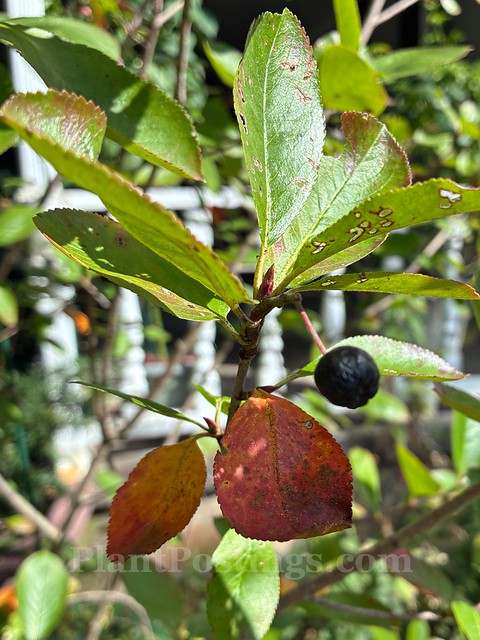
Chokeberry (Aronia melanocarpa): An excellent substitute for invasive Barberries (Berberis spp.), this shrub is still settling in here in my garden. It had a tough year with strange weather, but the edible, dark berries and the colorful foliage are worth the patience and effort. I will cut it way back in the spring to encourage more growth.

Black Cohosh (Actaea racemosa): This plant is the star of the garden in midsummer, with its tall, spiky, fluffy white flowers that tower over the understory plants. I've clipped the seeds in this particular grouping and placed them in the woods to encourage new plants. Even when clipped, they provide an attractive, shrub-like form next to the Oak trees.

False Sunflower (Heliopsis helianthoides): These plants bloom from mid-June through early October. What can I say? The pollinators enjoy the nectar, the birds eat the seeds, and the blooms offer garden beauty until the first frost.
These native plants and so many more make autumn a special time in our little corner of the world.

No comments:
Post a Comment
DEAR ANONYMOUS VISITORS: Please include your FIRST NAME. We need to know you're a real person. Security updates mean your comments likely will NOT be published unless you include your name. Sorry. Also, comments with hyperlinks might not make it through the heightened security system.
Other options: Click on the arrow next to "Anonymous" and choose either "Google Account" or "Name/URL"...
Your comment might not appear right away (even though we love you). PlantPostings uses comment moderation, and we read every comment before we publish.
Thanks for stopping by! Have a great gardening day!