Showing posts with label growing conditions. Show all posts

June 08, 2024

Nifty Garden Views and Vignettes

potted oxalis

Do you ever notice appealing (and sometimes surprising) vignettes, plant combinations, and pleasing views? It's been happening to me a lot lately.

By the time I've gotten around to photographing them, however, several examples have passed...I tried to capture a few others. With some, I stepped back to get a broader view, and then photographed single blooms or smaller groupings.

The play of the light on the Alliums and Fiddlehead Ferns (Matteuccia struthiopteris) was fun the other day:

ambassador 1

With morning indirect light, they were warm and glowing.

ambassador 2

Same plants and roughly the same angle--but with more cloud cover and more overhead light, the colors are totally different. And the shadows and variations in exposure are lessened.

ambassador

The Alliums currently blooming in this particular bed are 'Ambassador' and...

globemaster

'Globemaster,' which starts blooming earlier and is a bit shorter. I love them both, and the rabbits don't eat them. Yay.

mixed pots

We've had plenty of warm weather and plenty of rain, so most of the plants seem happy. The potted arrangements are coming into their own. Soon they'll be lush and full and spilling over the edges for the rest of the growing season.

calla lily

The Calla Lilies (Zantedeschia spp.) are full and bright. They're from a mixed grouping, so I'm not sure which species/varieties they are. They overwintered in the sunroom, so they had a head start when I started watering them in March.

impatiens and coleus

Many of the pots have various Impatiens and Coleus combinations.

mock orange and sumac

The Mock Orange (Philadelphus coronarius) is full of bright blooms and framed by the Staghorn Sumacs (Rhus typhina).

mock orange

The blooms are so graceful and gentle.

hydrangea

In addition to the potted Oxalis (O. vulcanicola 'Zinfandel') in the first photo of this post, I noticed several more "happy" plants. This Bigleaf Hydrangea (H. macrophylla) is full of blooms--more than I can remember from the past. Perhaps it's not surprising with all the rain and mild weather we've had this spring.

red admiral on allium unifolium

Another quick vignette--a graceful red admiral butterfly on American Garlic (Allium unifolium).

 It's a beautiful season! What scenes are catching your eyes these days?

Because I've included six basic "areas" of the garden, I'm linking in with "Six on Saturday" at Garden Ruminations. Head on over to view scenes and amazing plants from around the world.


July 20, 2017

Mesmerizing Views:
The Tallgrass Prairie National Preserve

welcome sign

For those who've taken road trips across the U.S., do you take a northern or a southern route? Over the years, we've tended to drive through Iowa and Nebraska on our way to family reunions and gatherings in Colorado and New Mexico. A few times, we've taken the southern route through Illinois, Missouri, Oklahoma, and the panhandle of Texas.

But for some reason, I'd always wanted to drive through Kansas. I'm fascinated by it. It's the middle of the country, in so many ways. I don't know...maybe it stems from watching "The Wizard of Oz" as a kid and wondering what the vast, open prairies of Kansas actually look like (in reality, it was filmed at MGM Studios in California).

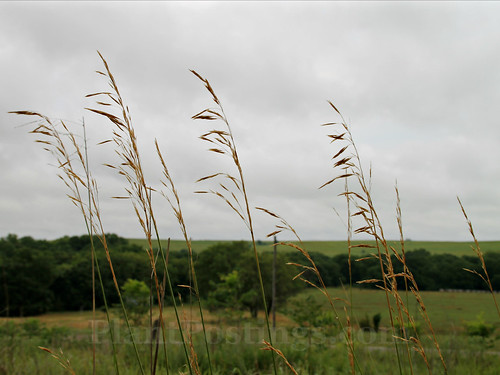
tallgrass prairie

So, I talked the fishman into driving through Kansas on the way to and from our family reunion last summer. After seeing dramatic views at the Grand Canyon, Sedona, Ariz., Monument ValleyDurango, Colo., and the Four Corners area, one might think Kansas would seem ho-hum.

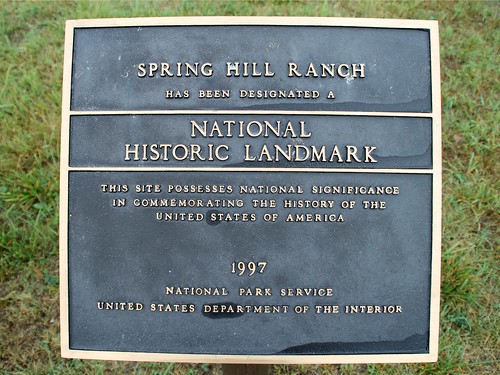
historic landmark

Au contraire--at least for me. While all those destinations were awesome, Kansas was nifty, too. We took a side trip on the way home to stop at the Tallgrass Prairie National Preserve, which protects a nationally significant 11,000-acre remnant of the once vast tallgrass prairie that covered 170 million acres of North America. Today, less than 4% remains, mostly in the Kansas Flint Hills.

Depending on the source, and the specificity of the data, the North American tallgrass prairie stretched from Manitoba south through Eastern Oklahoma and parts of Texas, and from Nebraska east through Indiana and parts of Ohio, Kentucky, and Tennesee. This was prime bison country, and to see a map of where the bison once roamed is mind-boggling. (Sadly, the bison area of the preserve was closed off the day we were there, although I've seen bison in other locations.)

Of course, my first priority was to study the prairie plants at the preserve. Since Southern Wisconsin includes Oak Savanna and Prairie plant communities, most of the plants at the preserve also are native and commonly found here. What I didn't expect was the smaller size of these plants in Kansas--likely due to somewhat lower precipitation levels, difficult soil conditions (rock and clay), and a harsher, more windy habitat than in my area.

It's a testament to their toughness, though, that these plants survive and thrive in the severe, open prairie habitat.

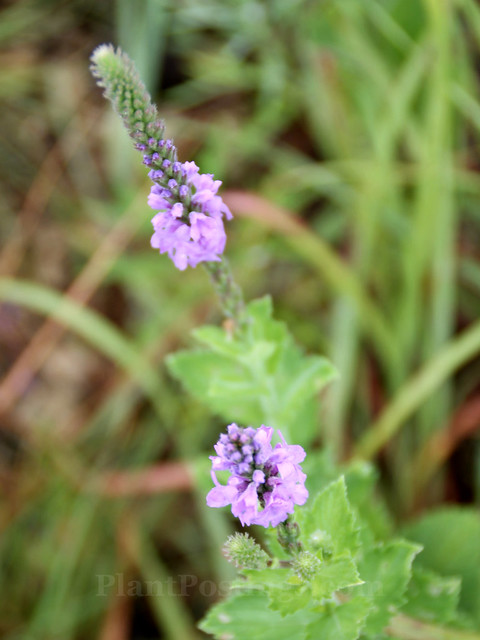
hoary vervain
Hoary Vervain (Verbena stricta)

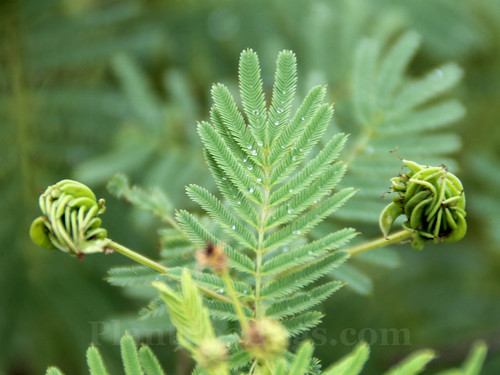
illinois bundleflower
Illinois Bundleflower (Desmanthus illinoensis)

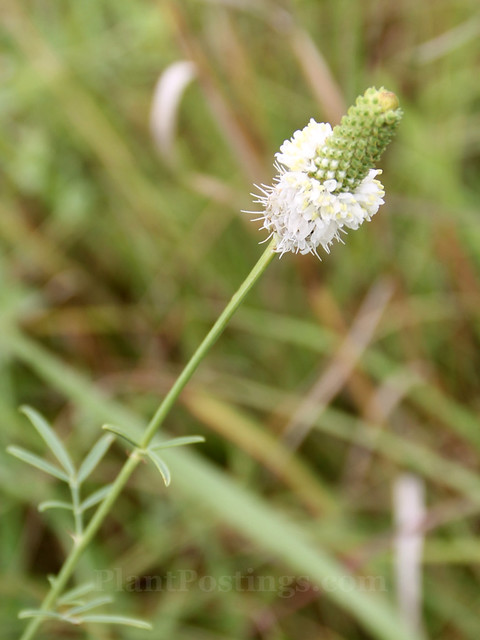
white prairie clover
White Prairie Clover (Dalea candida)

wavyleaf thistle
Wavyleaf Thistle (Cirsium undulatum)

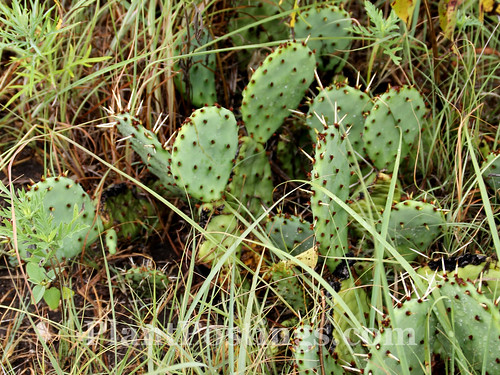
prickly pear
Common Prickly Pear Cactus (Opuntia humifusa)

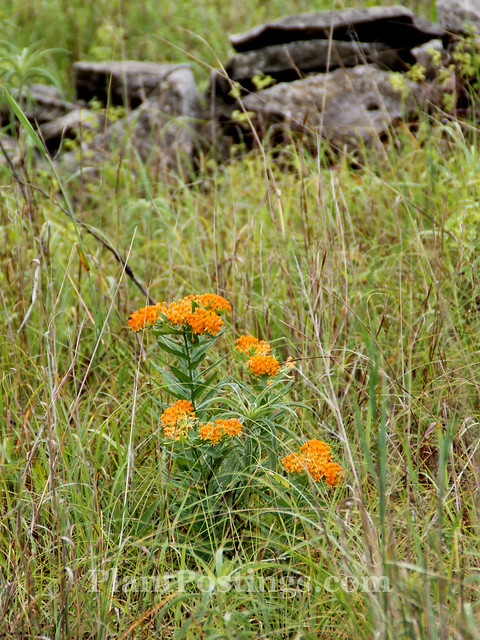
butterfly weed
Butterfly Weed (Asclepias tuberosa)

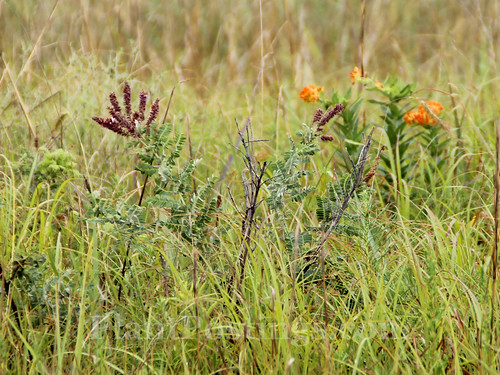
leadplant and butterfly weed
Leadplant (Amorpha canescens) and Butterfly Weed

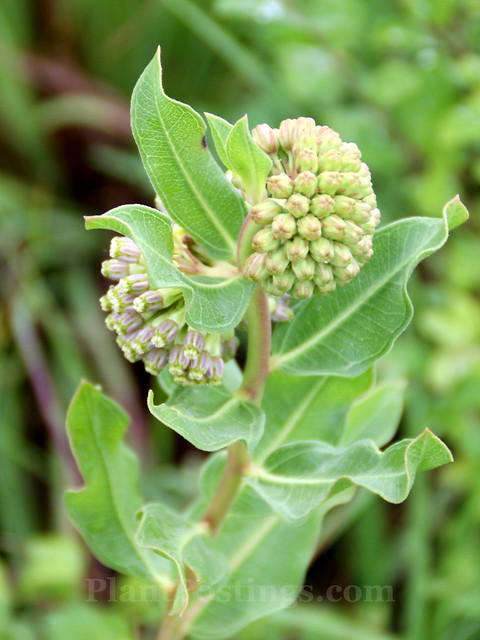
green milkweed
Green Milkweed (Asclepias viridis)

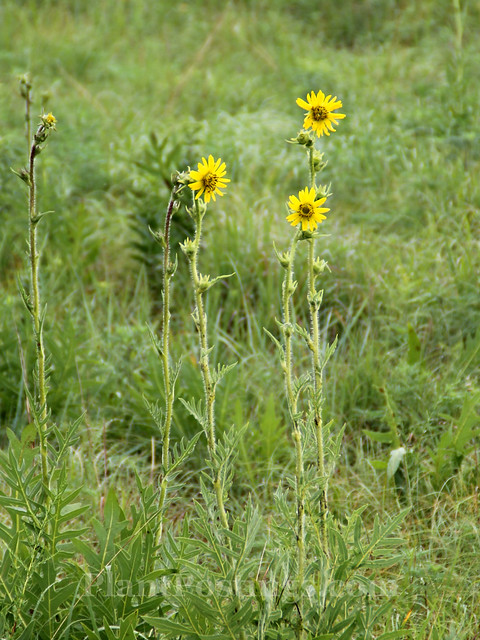
compass plant
Compass Plant (Silphium laciniatum)

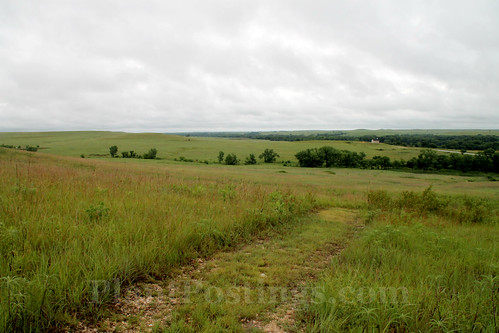
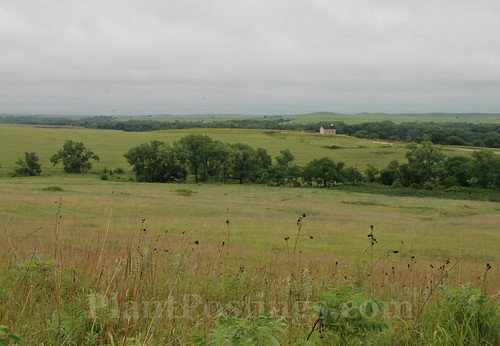
The plants were awesome, but the views were mesmerizing--prairie as far as the eye could see. The day was misty, which created an air of mystery to the landscape. If you click on the next photos, you'll get a better idea of the expansive landscape at the Tallgrass Prairie National Preserve--definitely worth a side trip next time you're traveling through Kansas.

prairie scene 1

prairie scene 2

January 12, 2017

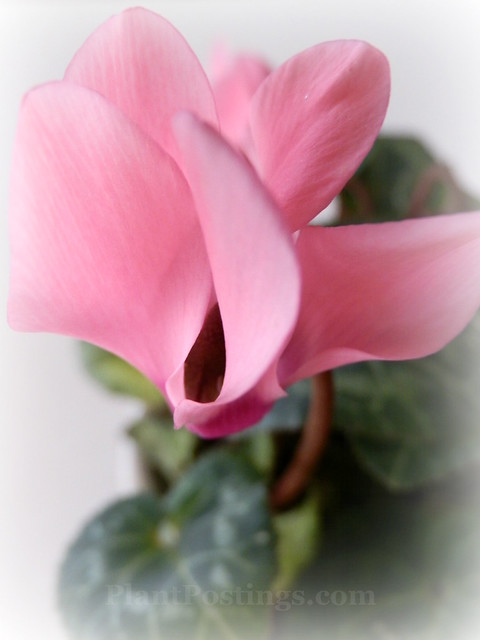
Plant of the Month: Florist's Cyclamen

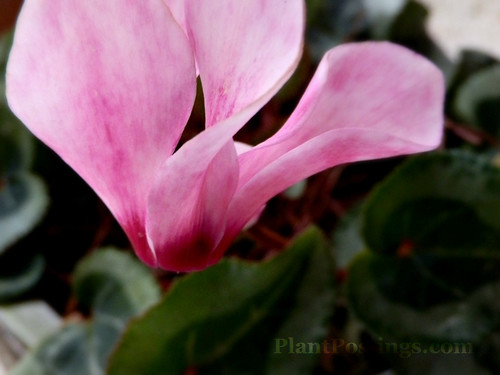
flower 1

I write this post not with any pretense about success in growing indoor potted plants. On the contrary, my record with them, in general, is not good.

I can remember my dear grandmother's home filled with African violets that spanned the color range, and she was able to keep them growing for years on end, with repeat full and lush blooms. She may have had a Cyclamen or a few other blooming plants among her collection--I don't recall.

My experience is not as impressive. Historically, I've killed more indoor potted plants than I'd care to share here. But that doesn't stop me from trying. And in recent years, I've had more success (or perhaps luck). One of the plants that has surprised me with its longevity and lush growth is a Cyclamen plant I picked up four years ago.

flower 2

Most potted Cyclamens are florist cultivars of C. persicum, a species native to the Middle East, Northern Africa, and Eastern Europe. The species has a limited range of allowable conditions in the wild, which probably accounts for its persnickety temperament.

Now, mind you, I don't necessarily follow the rules when it comes to dealing with potted plants--particularly those that go dormant. (Visit this link to learn more about conditions preferred by potted Cyclamen plants.)  I don't have the patience to put them away in a dark room, water them at a specific time, hang them upside down, and do the hokey-pokey. But for the purposes of documentation, here are the conditions and steps I've followed that have kept this little Cyclamen plant going and flourishing since 2013:

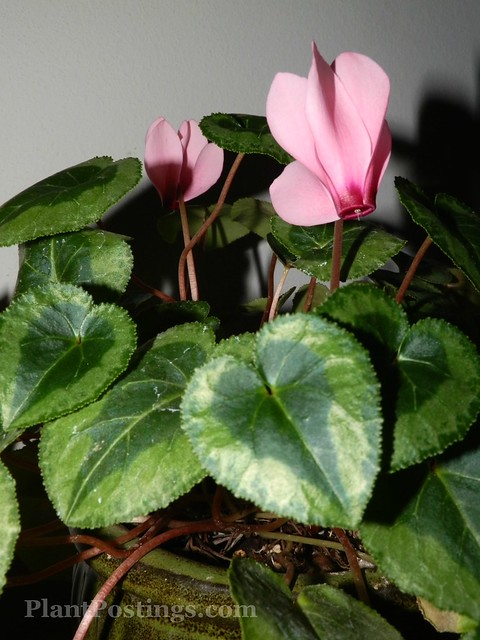
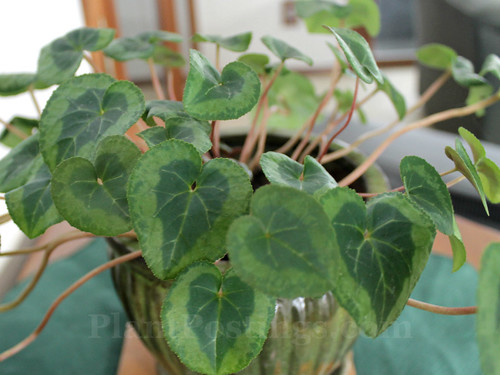
foliage 2

• I first transplanted my Cyclamen from its plastic retail container to the ceramic pot it inhabits to this day. I've never transplanted it again, though many recommend that practice annually after summer dormancy. This particular container has good drainage, but I used only regular potting soil with small pebbles on top for mulch/decoration.

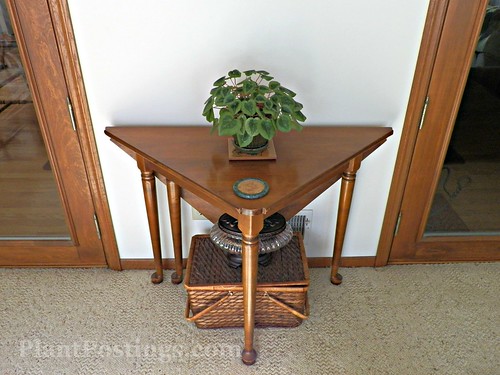
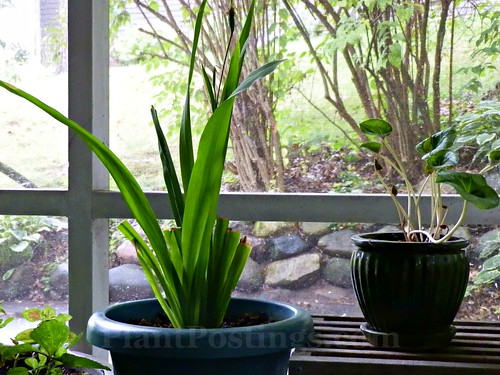
winter

• During the winter, the plant lives on a small table on the north side of the sunroom, which faces south. Here, it receives indirect light from dawn until dusk. The room is partially heated, but is closed off from the rest of the house. Daytime temperatures range from about 50F to 70F, depending on the sunlight, the day length, and the outdoor air temperatures/wind conditions. Nighttime temps range from about 38F to 50F. The room is more humid than the rest of the house, but on dry, cold days I do mist the plants to maintain slightly higher humidity.

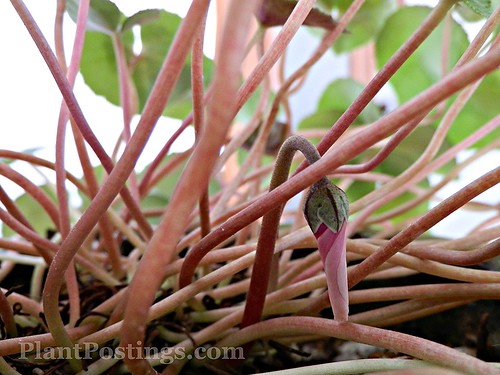
bud

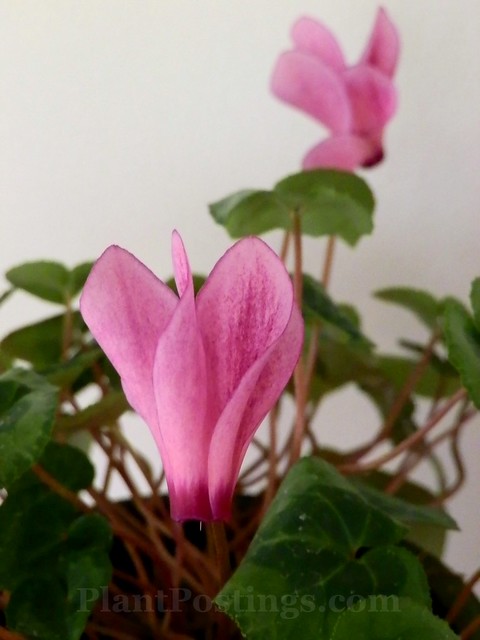
Bloom time for my little Cyclamen plant begins anywhere from early January to mid-February. I don't know why it varies--probably because I don't follow the rules. It's always exciting to see the first budding stems pop out of the soil. At first, they look very much like the foliage stems, until you begin to see the twirled pink shape of the buds.

The plant blooms, generally, through the early spring. The foliage continues to flourish until early summer.

screen porch

• I place the plant outside (in a shady spot protected from heavy rainfall) with most of my other potted plants as soon as nighttime temperatures consistently remain above about 40F--generally sometime in early May. If we have a very cold night with a frost predicted, I move the plants to a warm porch and cover them. Usually, by mid-May, we're beyond the threat of nighttime frost, and I do a jig.

• When the foliage begins to wither and fall off, I slowly reduce watering. It is at this point, I believe, that many people give up on potted Cyclamens and throw them out (because I almost did, myself, more than once). But I encourage you to simply ignore the plant for a few months. A little water is OK, but the plant is now dormant and is better off neglected for a bit so it can rest during the heat of the summer.

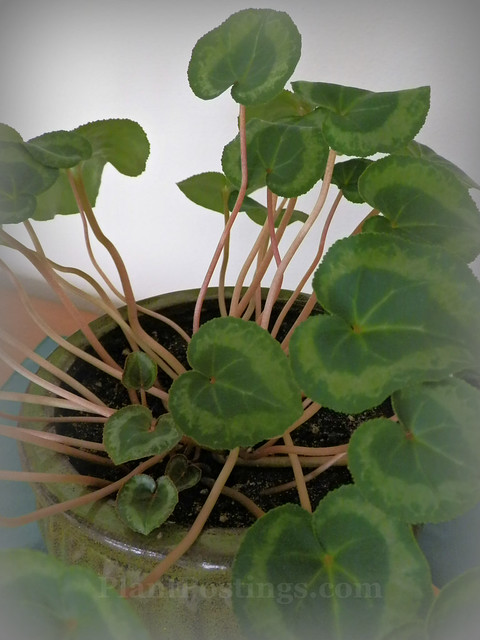
In some years, the Cyclamen retains a few leaves even through the summer. In other years, it entirely loses its leaves and I can't believe there's a chance it will come back. But then it does! Tiny new shoots emerge from the soil and begin to fill in.

foliage 1

• Before the first frost, I bring my plants indoors for the winter. For me, this happens sometime between early and mid-October. By this point, the Cyclamen is starting to look like a lovely potted foliage plant, perfect as a holiday accent piece.

flower 3

And so the cycle continues. If you've ever tried to grow florist's Cyclamen and have given up, I encourage you to try again. It's easier than you might think, and the hardest part is having faith it will resurrect from its summer dormancy. When it does, it's hard to describe the thrill of seeing new life at a time when most other plants are going dormant.

flower 4