I'm just returning from an extended road trip to the Four Corners region of the Southwest U.S.--where New Mexico, Arizona, Utah, and Colorado meet. Of course, this "plant nerd" had to photograph a few growing things along the way.
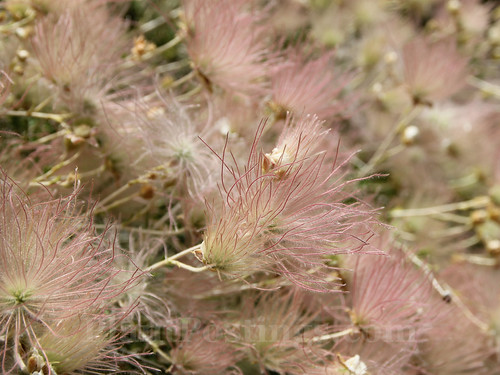
One, in particular, that caught my eye was a unique shrub with fluffy seedheads: Apache Plume (Fallugia paradoxa). It's the only species in its genus.
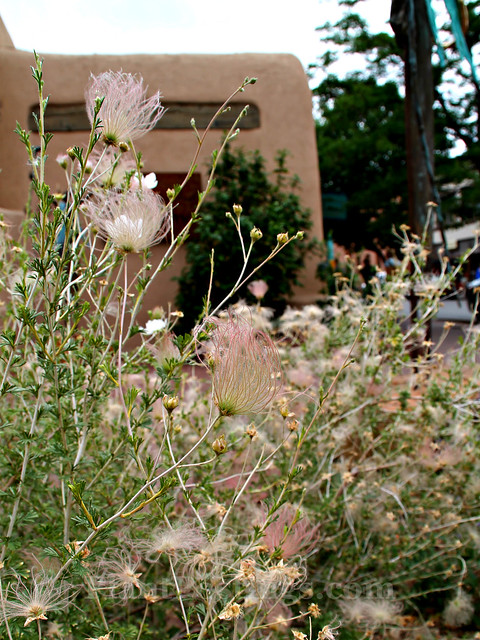
We saw it in Santa Fe, New Mexico, where its rosy glow nicely framed the local pueblo-style architecture.
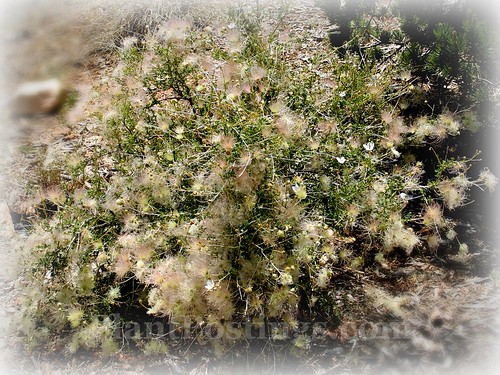
And at Grand Canyon National Park in Arizona, where the shrubs were plentiful along the paths, blending naturally with their surroundings.
Apache Plume is native to only eight U.S. states--California, Nevada, Utah, Colorado, Oklahoma, Texas, New Mexico, and Arizona, as well as Northern Mexico. If I lived in one of those locations, I would plant one or more. Thing is, it has a very specific preference for dry, rocky locations. In good garden soil with organic matter, it can look rangy and produces fewer flowers, according to Texas A&M University.
I'm thinking this is not a plant for most temperate gardens, but best enjoyed in its native setting.
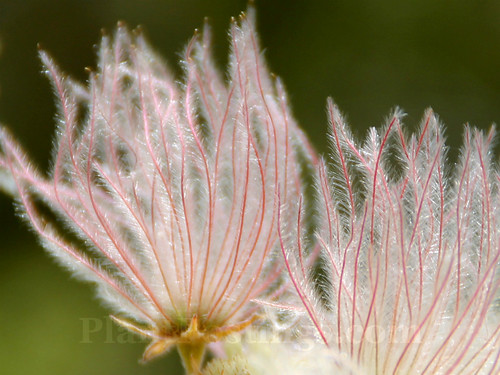
From a distance, Apache Plume resembles a Smokebush (Cotinus) cultivar, but its seedheads/fruits are very similar to those of its cousin in the Rose family, Prairie Smoke (Geum triflorum).
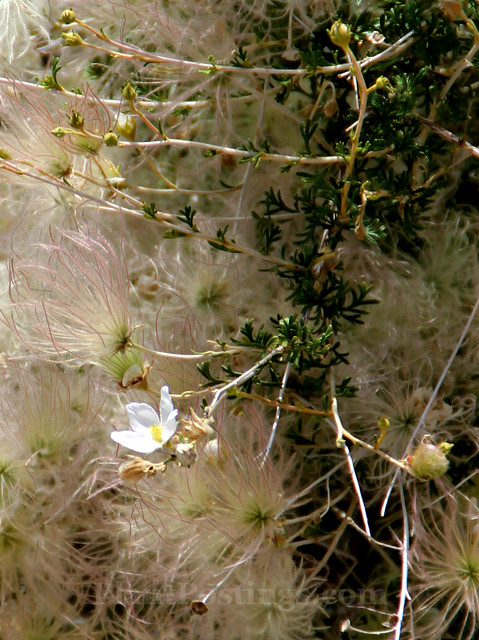
The small white flowers resemble related blooms in the Rose family. When the petals drop, the feathery achene fruits/seeds puff out, giving it a soft, fluffy appearance. It's the kind of seedhead you want to touch, and it's very soft.
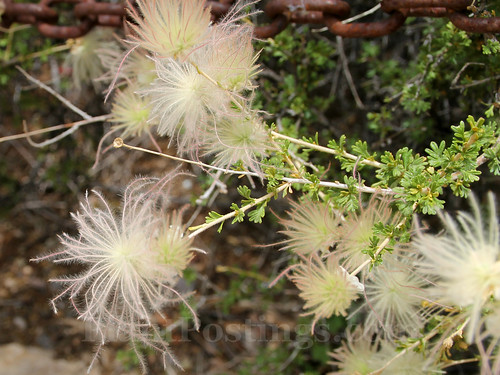
The foliage is semi-evergreen; small, deeply lobed leaves along slender, twiggy branches. Among the many Apache Plume shrubs we saw during the trip, the seedhead colors ranged from a creamy white to a lovely rose-pink.
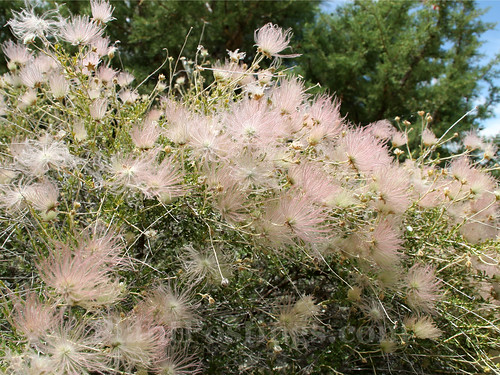
The plumes are very attractive with bright light shining through their filaments.
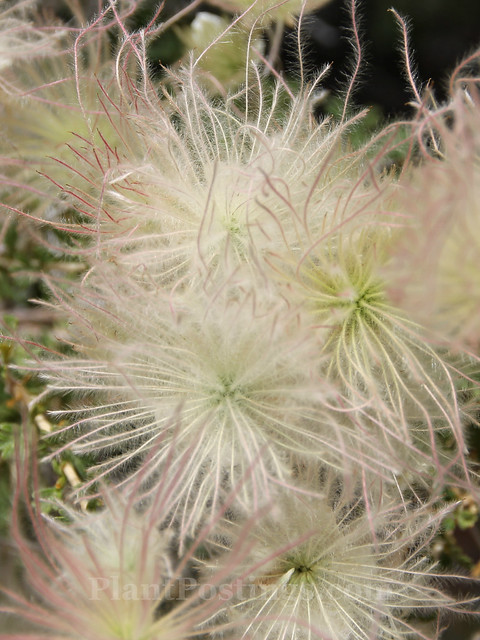
Go ahead: Try to resist touching those soft, powder-puff plumes!
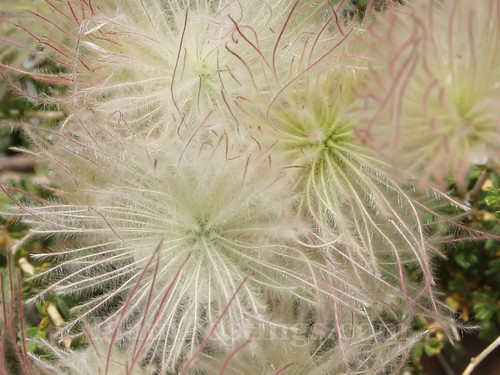
Apache Plume is hardy to zone 5, but, again, best-suited to its native habitat in the Southwest U.S. It grows to 6 ft. tall and wide, according to the Lady Bird Johnson Wildflower Center. It grows in part shade to full sun, and is a good choice for a xeriscape garden.
Historically, its branches were used for sweeping and its steeped leaves for tea and hair-washing. In its dry, rocky native habitat, it's an important forage and cover plant for wild animals and a nectar source for pollinators.
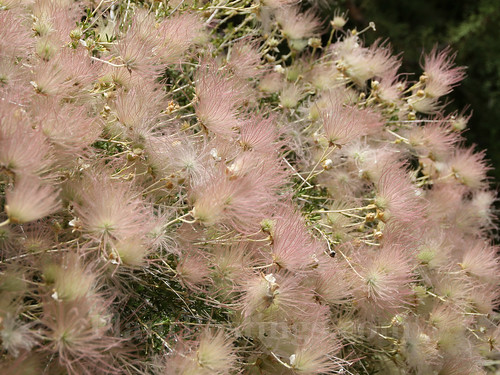
At its peak display, it looks soft enough for a pillow ...
(Linking this post to Dozens for Diana.)