Showing posts with label deadheading. Show all posts

July 30, 2018

Simple Summertime Vases

lilies 2

I'm tardy in joining in the "Vase on Monday" meme. July has been crazy, but I've managed to snap a few photos of simple combinations, from the beginning of the month to the end.

I often plop deadheaded snips, and bits and pieces in vases during the growing season, and this month is no different.
bucket

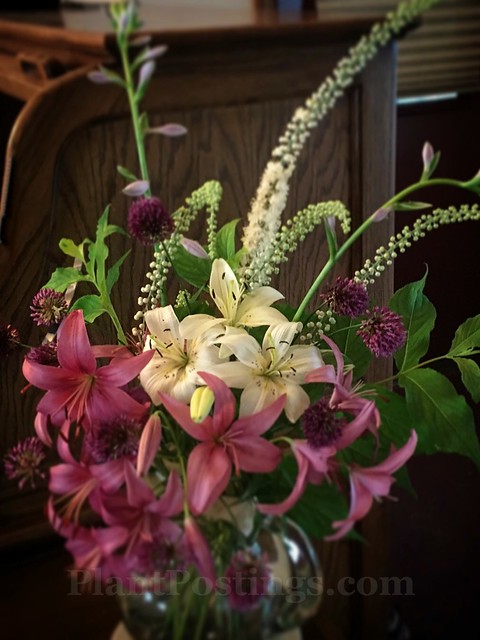
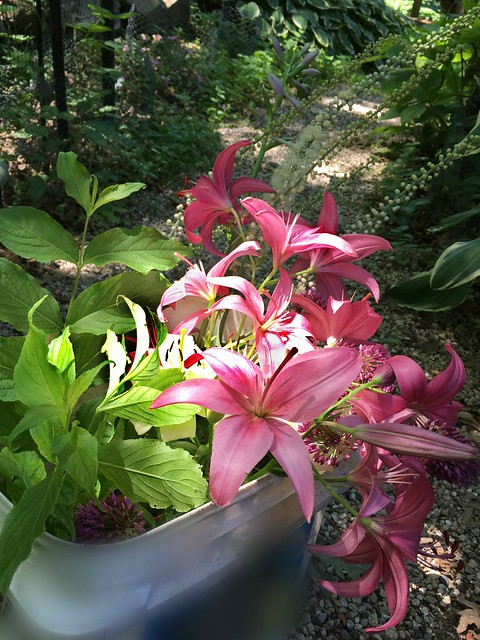
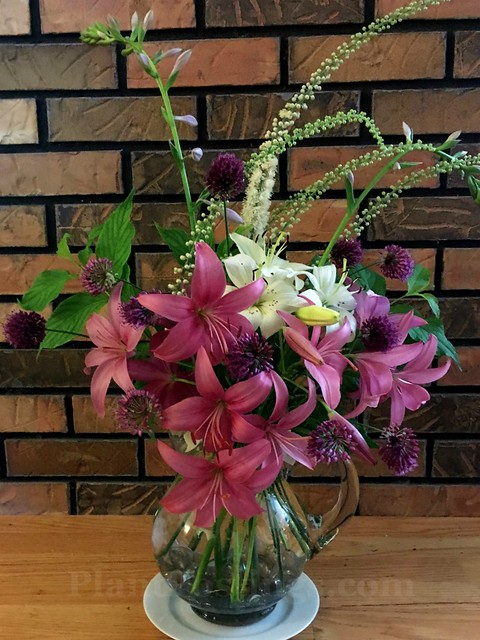
My handy kitty litter bucket filled with a couple inches of water in the bottom is a great, cheap tool for gathering the remains of the day. This first group was from the beginning of July. It included unnamed Asiatic lilies (Lilium spp.), Hosta stems, Bugbane (Actea racemosa), Drumstick Alliums (A. sphaerocephalon), and Weigela (W. florida) foliage.
glass gems

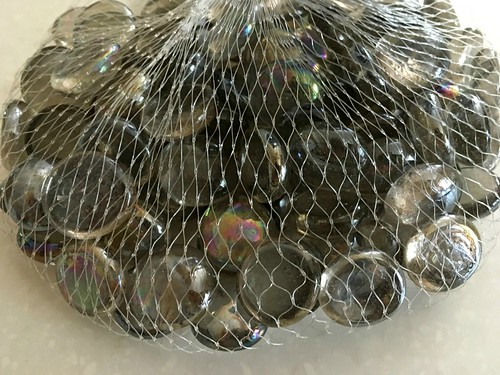
I had a bag of glass gems, so I added them to the bottom of a glass pitcher--for a little visual interest and to help hold the stems in place.
staging

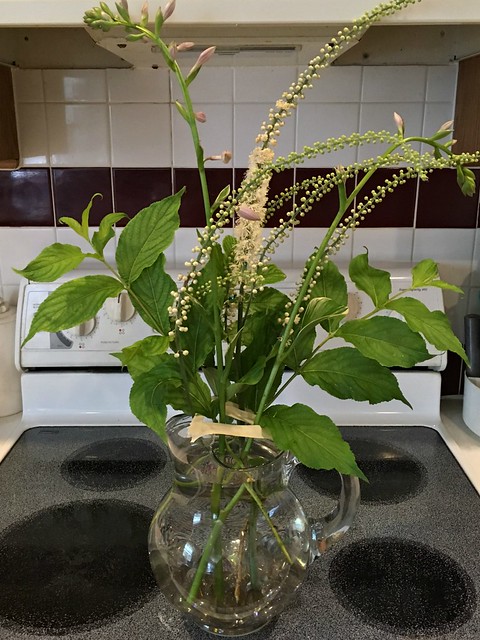
I also added criss-crossed tape at the top of the pitcher for support.
lilies 1

I knew the foliage and flowers would cover the tape.
zinnias 2

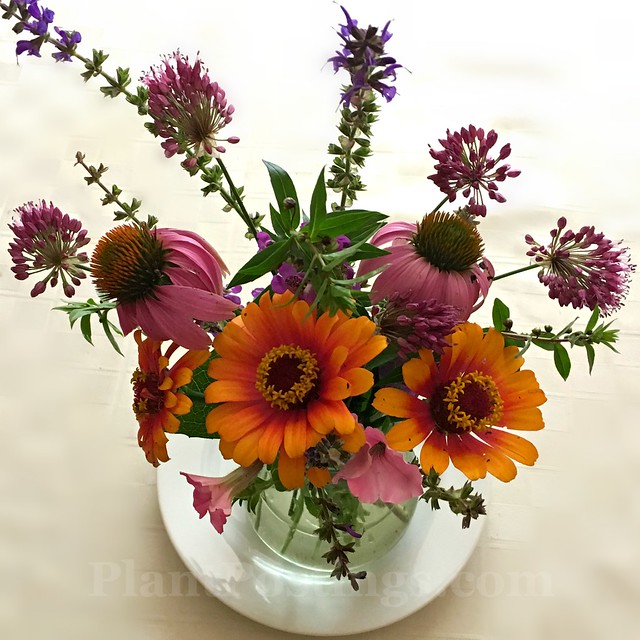
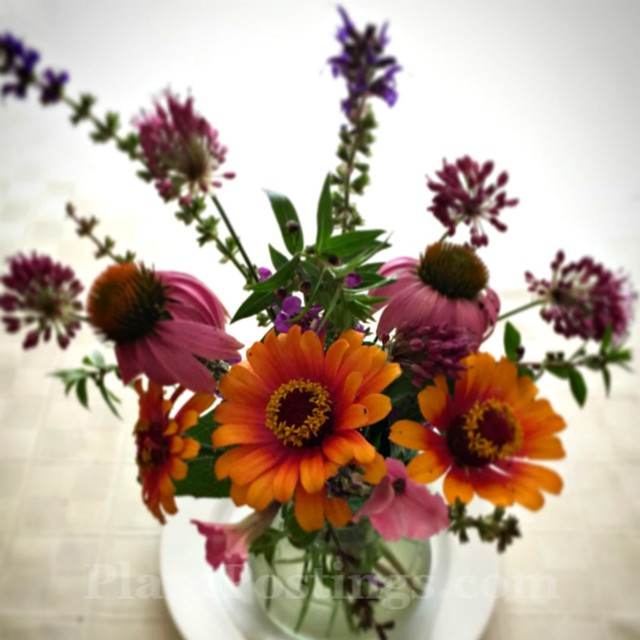
Next, I plopped deadheaded 'Zowie! Yellow Flame' Zinnias (Zinnia elegans) in a very simple vase with deadheaded Coneflowers (Echinacea purpurea), 'May Night' Salvias (S. sylvestris), a small stem of 'Supertunia Vista Bubblegum'
Petunias (P. hybrid), a little sprig of purple Angelonia (A. hybrid), and more Drumstick Alliums. Some of these flowers had flopped over due to gardener mishaps and the effects of the elements.
stargazer 3

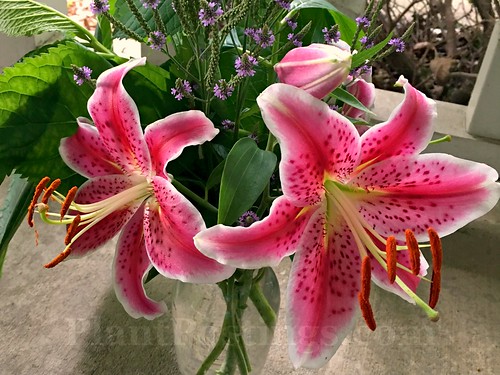
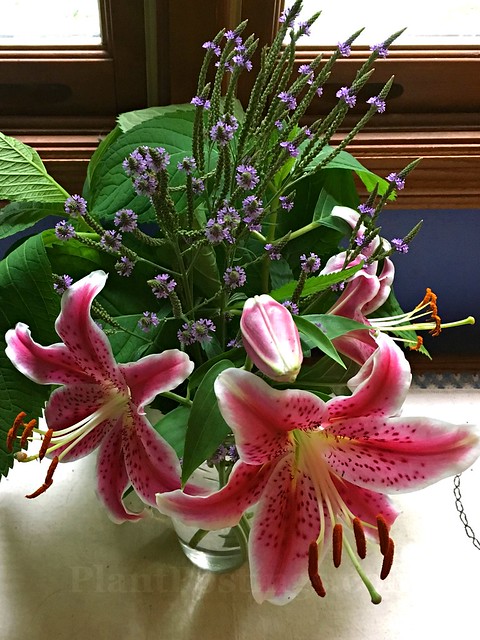
Finally, I recently rescued the 'Stargazer' Lilies (Lilium orientalis) before the rabbits could eat them. I clipped off the tops of two very tall stems of Blue Vervain (Verbena hastata) and added Hydrangea foliage for more green. The Hydrangeas were a little droopy, but later recovered.
stargazer 2

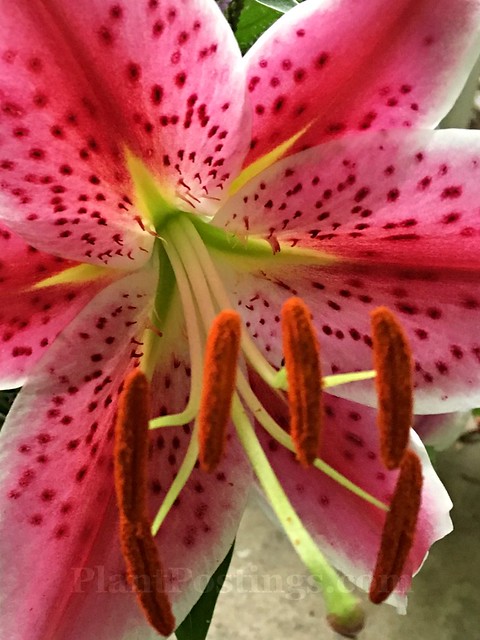
'Stargazer' is so dreamy and has a very long vase life. Plus, the scent is incredible!
stargazer 1

Summertime is a great opportunity to use deadheaded blooms and dribs and drabs of plant material in floral arrangements. Even if you're pressed for time, if you keep it simple, it won't be overwhelming, and it's better than throwing all the lovelies in the compost pile--that can wait until they're spent.
zinnias 1

Check out the "In a Vase on Monday" meme over at Rambling in the Garden for smiles and floral arranging inspiration. Thanks to Cathy for hosting!

January 27, 2014

Plant of the Month: Ornamental Sage

salvia2

Is there a plant in your garden that you're worried won't survive this brutal winter? For gardeners outside the U.S. and Canada, are you concerned about specific plants in your garden for other reasons?

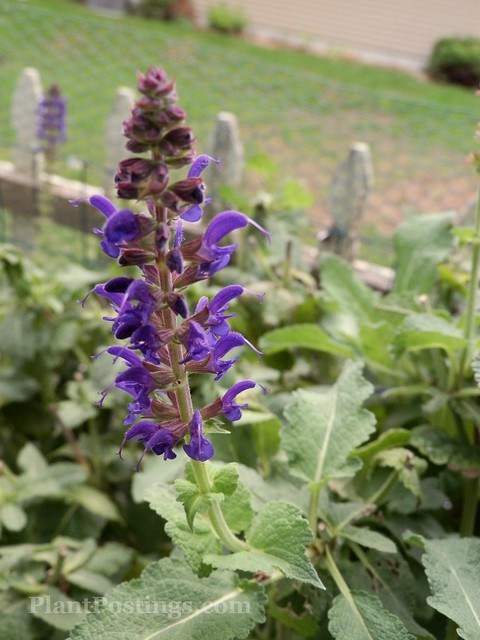
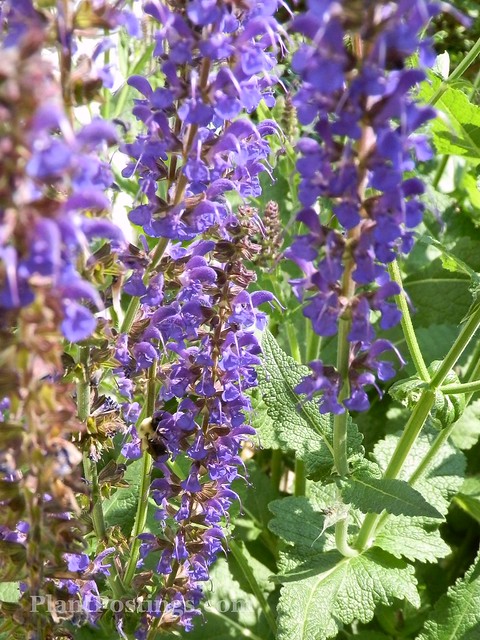
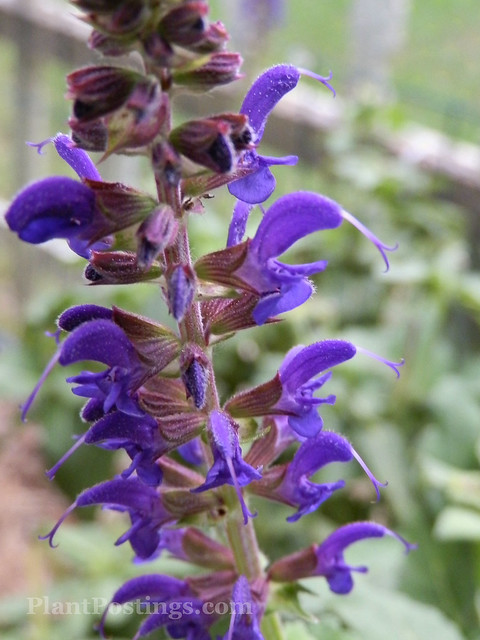
Lately, my Ornamental Sage plants have been on my mind. I'm not sure why, because they're tough perennials! I don't have the original tags, but I believe mine are either Salvia nemorosa or the hybrid Salvia x superba. They've graced the outer corners of my potager garden for about a decade now, and they've always bounced back every spring like clockwork.

salviajune
Ornamental Sage in June 2013.

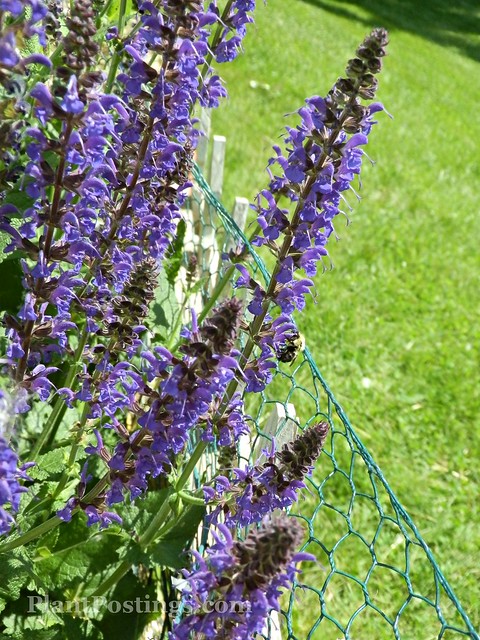
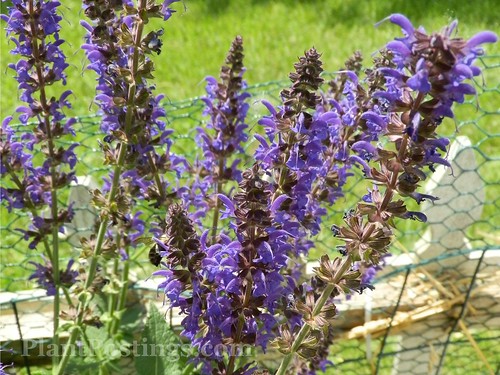
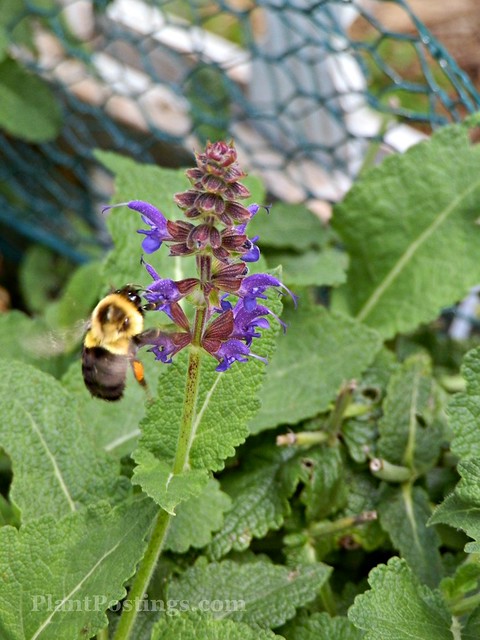
As soon as they start blooming, the pollinators cover them! I didn't realize until I started cropping the photos for this post that all but two show bumblebees diving in for the Salvias' plentiful nectar! (Can you see them? You can click on the photos to enlarge them.) In fact, it's hard to get a shot of these spikey lavendar/blue beauties without bumbles--not that I've really tried either way.
Ornamental Sages prefer sun, and rich but well-drained soil. They grow to about two feet tall, and form a shrub-like shape. They have a unique scent, similar to other plants in the Mint family, Lamiaceae. And rabbits and deer tend to avoid them.

salviajuly
Ornamental Sage in July 2012, at the height of that year's drought. Note the brown, dried lawn in the background. Granted, the plants were watered regularly, but they showed very little sign of stress.

Why am I worried about these plants? I guess I shouldn't worry because they've survived extreme temperatures and droughts for years. S. nemorosa and its hybrid superba are hardy to zone 5, and some sources say to zone 4. My two clumps are tucked in for the winter with a warm layer of Marsh Hay mulch and soft snow, and they're planted near the house foundation--on the sunny west side of the house.

Still I worry...

salviaaugust
Ornamental Sage in August 2013. After several rounds of deadheading, still plenty of nectar and pollen to go around.

I can't imagine my garden without them. They've become fixtures--reliable stallwarts that I count on every year.

This "Dummy's Guide" to planting flowers for bees notes that when in bloom, Salvias are "covered with bees all day long." I concur.

In my garden, that means continuous blooms and continuous pollinators from May through August.

salvia3

But you're more likely to have repeat blooms if you deadhead them. Several times during the season, I spend a little time every few weeks pinching off the spent blooms. I'm not picky, I just grab the garden pruners and start cutting back--usually to the base of each individual stem. Within days, I have blooms again.

I've heard other gardeners say the Ornamental Sages can be floppy. That might be true, but mine are planted with fencing as supports on two sides, and other potager plants on the other sides. And with the regular deadheading, they really don't get floppy at all.

I sure hope they'll be back this spring and summer!

salvia1