Showing posts with label Wildflower Wednesday. Show all posts

May 10, 2025

Woodland Wildflowers for Six on Saturday

Trillium grandiflorum 3

Our woodland is alive with wildflowers. Once again, I'm including only native plants for this Six on Saturday post, because this is the most active time for wildflowers—before the trees fully leaf out. Trilliums are the stars of the show, including Great White Trillium (T. grandiflorum), in the photo above.

Trillium erectum

Red Trillium (T. erectum) is another thriller, and its naturally occurring patch (planted by nature) appears to be spreading.

Podophyllum peltatum patch

It's said that when Mayapples' (Podophyllum peltatum) umbrella foliage flattens out, Morel mushrooms are nearby. I've never found the mushrooms in our woodland, though the Mayapples certainly form a colony on the hill.

Podophyllum peltatum

The Mayapples aren't blooming yet, but the buds are about to break.

Viola spp.

Next, I'm cheating and including a mix of Violets (Viola spp.) as one of my "six," since there are so many colors and several species on the property. I believe the purple and white ones shown here are V. sororia and the yellow is V. eriocarpa.

Arisaema triphyllum

Jack-in-the-Pulpit (Arisaema triphyllum) is another reliable return visitor every year. Its unique form always fascinates me.

Mertensia virginica

Most Virginia Bluebells (Mertensia virginica) range from pink to lavender to bright blue. But there's a patch of the less-common white ones in our woods, which I think are as beautiful as the others.

Trillium grandiflorum 2

How about you? What's blooming in your garden and on your property? For more examples from around the world, visit Garden Ruminations.

April 19, 2025

Six Favorite Native Plants

Dicentra cucullaria blooming

We've had a bit of warmth, and the garden is popping. I'm cheating a little: I decided to include only native plants for this Six on Saturday post, and I'll also join in with Wildflower Wednesday.

Claytonia virginica

Not many native plants are blooming on our property, but a few are starting, including Spring Beauties (Claytonia virginica). They're tiny flowers, about the size of my thumbnail, and they grow in clumps. The pink pollen and hardiness make this plant a unique and graceful, but tough, little bloomer. Another bonus: Rabbits don't eat it.

Hydrophyllum virginianum

Virginia Waterleaf (Hydrophyllum virginianum) isn't blooming yet, but its foliage is as interesting as its flowers. It's a great, naturally occurring woodland rambler that dots the forest floor.

Dicentra cucullaria

I don't recall seeing Dutchman's Breeches (Dicentra cucullaria) in our little woodland before, although I've seen it many times during hikes in the area. (See the photo at the beginning of this post.) I hope this little clump will continue to thrive.

Rosa setigera

Though Climbing Prairie Rose (Rosa setigera), technically, isn't native in my exact location, it's native two counties to my south. And with the warming climate, it's commonly found in my area now. I planted this vine a few years ago--it's now growing up and over the arbor. Yay. I'll share more photos when it's blooming later in the summer.

Asarum canadense

I was surprised to see that Wild Ginger (Asarum canadense)--a long-time, naturally occurring plant on my property--is blooming. I'd seen the foliage previously this spring, but now most of the plants have flowers, too. They're unique in many ways, including their shape, appearance, and downward-facing blooms.

Mertensia virginica

For number six, let's celebrate Virginia Bluebells (Mertensia virginica). I planted seeds for several patches of these a few years ago, and promptly discovered that rabbits eat them. Ugh. The next year, I placed caging around them, and the rabbits haven't caused much damage since. Last spring, I happily discovered they're now abundant throughout the woodland; uncaged! Are there too many for the rabbits to destroy? I don't know, but I think the buds are even prettier than the flowers.

For more examples of gardening fun around the world, visit Garden Ruminations for Six on Saturday. On Wednesday, head on over to Clay and Limestone for Wildflower Wednesday.

Happy Easter!

April 26, 2023

Celebrating Wood Betony
On This Wildflower Wednesday

lake kegonsa sp bud

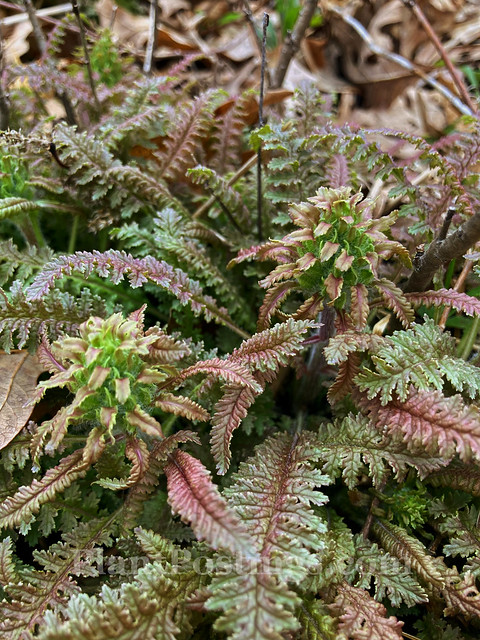
Hiking this time of year is exciting in this part of the world. After the long, cold winter, wildflowers are emerging and the landscape is changing rapidly. On a recent hike, one of the new season plants we noticed was Wood Betony (Pedicularis canadensis). The foliage with its fern-like pattern has a reddish tint in the spring, which changes to green as the plant matures.

kettle moraine sp

I've seen this plant in several parts of Wisconsin, including Door County, Kettle Moraine State Forest, and Lake Kegonsa State Park, not far from my home. It seems to prefer woodland edges and prairies near woodlands. The plant and its yellow flowers are arranged in a spiral rosette with white hairs, making the flower stalk look fuzzy. It's a favorite of bumblebees in the early part of the growing season.

door county

Sometimes the blooms have a reddish brown tint, similar to the color of the spring foliage.

Other common names are Canadian Lousewort and Forest Lousewort, apparently because early colonizers believed that when cattle grazed on the plants they became infested with lice. This plant's native range covers most of the Eastern half of the United States.

If planning to incorporate it in a garden, it prefers full sun to part shade, mesic to dry conditions, and sandy to loamy soil that's somewhat acidic. It grows to 12 inches in height and tends to grow in colonies. It's partially parasitic, so it grows well with other native plants and grasses. Here in my area, it tends to bloom in April-May, but I've seen it still blooming in June further north.

lake kegonsa sp bloom

Soon the Wood Betony will be blooming prolifically in one of my favorite wildflower settings. The bees will be very happy, and so will I. Thanks to Gail at Clay and Limestone for hosting Wildflower Wednesday. Head on over to participate!

February 22, 2023

Name That Plant (and That Pollinator)

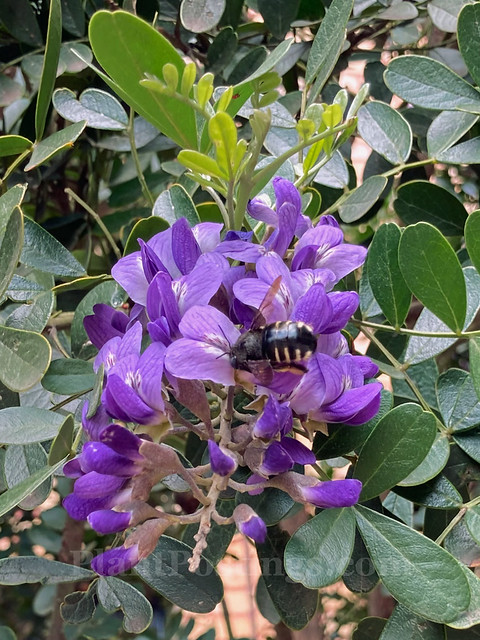
Plant and Pollinator


Texas Mountain Laurel (Dermatophyllum secundiflorum)
Horsefly-Like Carpenter Bee (Xylocopa tabaniformis)

January 25, 2023

Looking Back and Planning Ahead

march 1

I'm dreaming about the growing season ahead; are you? Some garden friends in warmer climates are beginning to see new growth, while others in even milder locations have year-round active gardens. Here in the Upper Midwest U.S., our growing season doesn't really get going until March. While, yes of course, changes are happening under the soil and under the snow and ice all winter, the growing party doesn't really start until spring.

So...I'm reflecting on some of the highlights of last year's garden as I plan ahead. In March, it started with the budding and blooming of Snowdrops (Galanthus spp.), shown above.

march 2

Other fabulous and reliable garden friends that made their appearances in March included the ornamental Alliums. (Though most actually bloom in late spring and early summer, it's fun to see the new growth poking above the soil and preparing for the season ahead.)
april 2

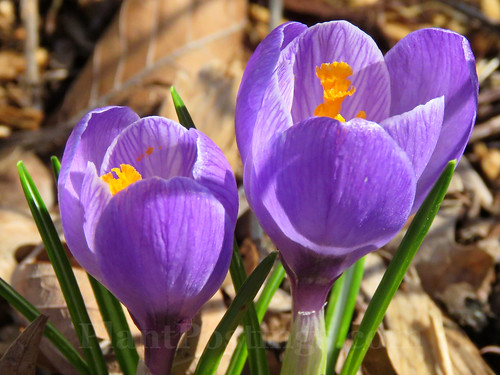
Crocuses (C. vernus) greeted late March and early April with bright color and tenacity, even as winter and spring duked it out with fluctuating temperatures and variable precipitation.
april 3

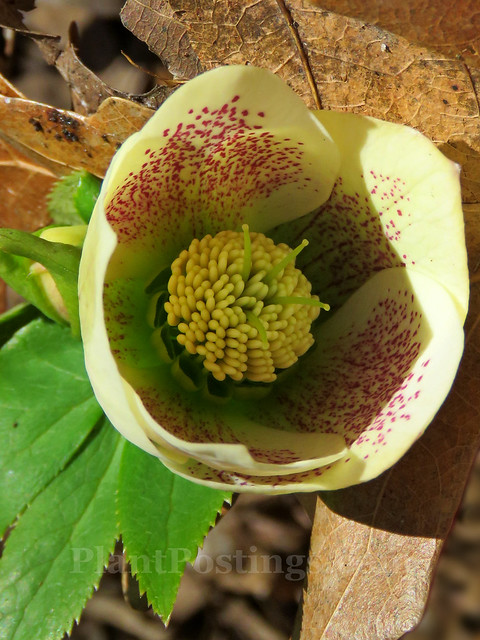
Some of the Hellebores (H. orientalis) began blooming in March, but their performance really got going in April.

april 1

The rabbits didn't eat/destroy the Virginia Bluebells (Mertensia virginica) last year because I provided adequate caging.
may 1

may 2

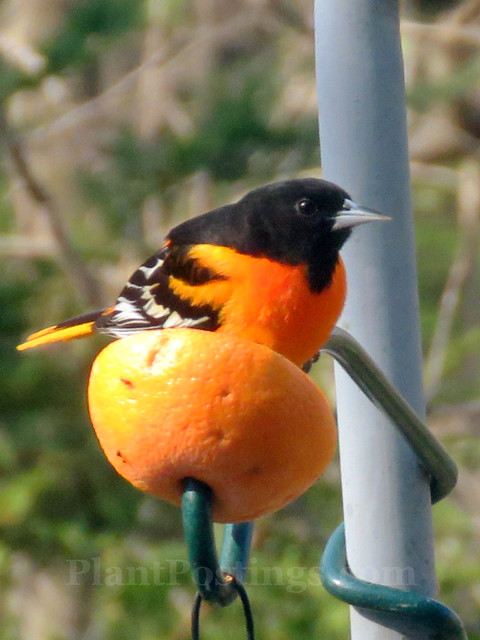
The Baltimore orioles and ruby-throated hummingbirds were right on schedule in early May. 

june 1

june 2

june 3

Alliums (A. giganteum), Salvias (S. nemerosa), and Dwarf Korean Lilacs (Syringa meyeri) took the stage in June, their cool pink and purple blooms great for floral arrangements.

july 2

Viceroy butterflies (shown here) seemed more plentiful last summer, while their look-alikes, monarchs, were lower in numbers in my part of the country than they have been in the past.
july 1

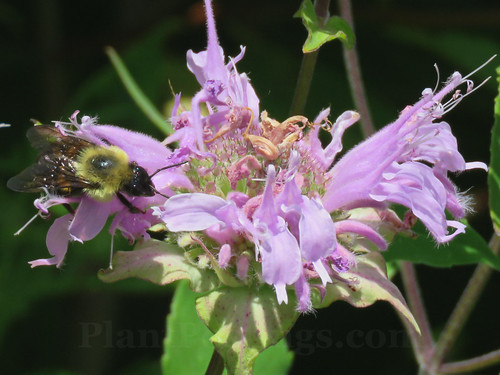
Wild Bergamot (Monarda fistulosa) offered cheery July blooms to pollinators and humans, alike.

august 3

In August, the garden flowers I'd planted from seeds, bulbs, and corms earlier in the growing season offered vases full of color.

august 2

A family of red-tailed hawks visited our backyard. That was a thrill!
august 1

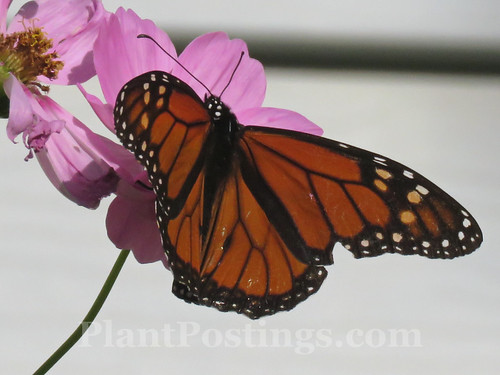
Also a thrill: every monarch I saw, because there were so few.
september 1

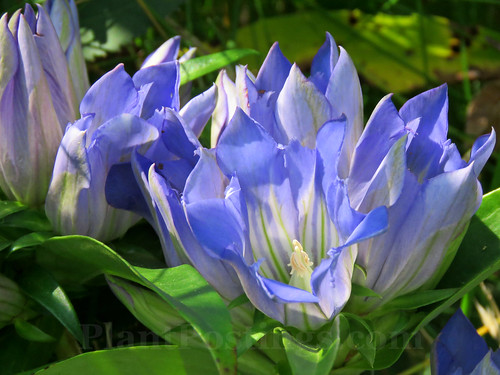
In September, I found a patch of Downy Gentians (Gentiana puberulenta) during a hike, definitely a beautiful discovery.

september 2

The juvenile hummingbirds, as always in late summer/early fall, kept me entertained.

october 1

The Maples (Acer spp.) colored the front yard view in October.
october 2

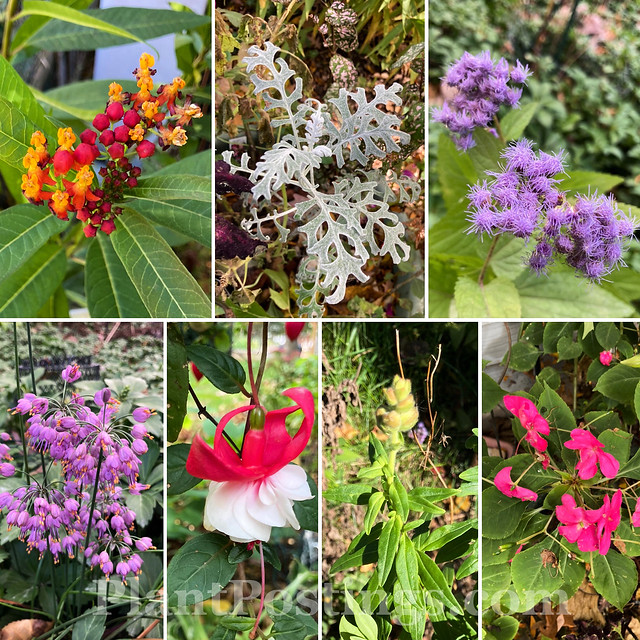
At the same time, the garden was still full of plentiful blooms, since we didn't have a heavy frost until late in the month.

october 3

We had plenty of Tomatoes for BLTs late into the season.
november 1

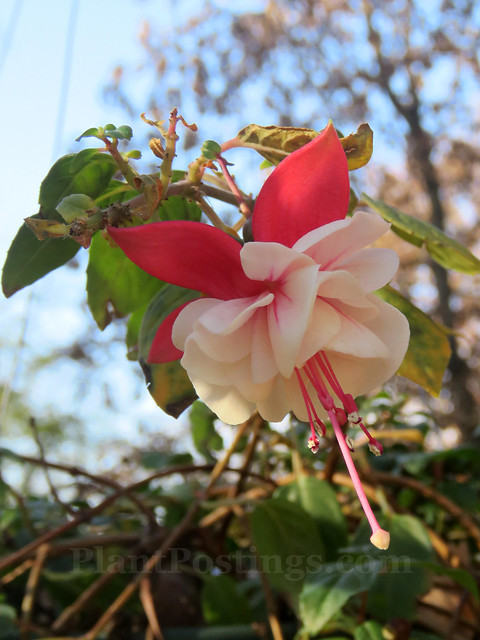
The hanging Fuchsias even bloomed into early November.

november 2

And I saw monarch butterflies later in the season than I've ever seen them before, though I'd seen very few earlier in the year.

It was a beautiful growing season, and I'm looking forward to the one ahead in the coming months. Though these are all blooms and thrills from last year, I'm linking into Gail's Wildflower Wednesday over at Clay and Limestone. Happy memories and best wishes for the growing season ahead!

August 24, 2022

Wild Senna for Wildflower Wednesday

companions

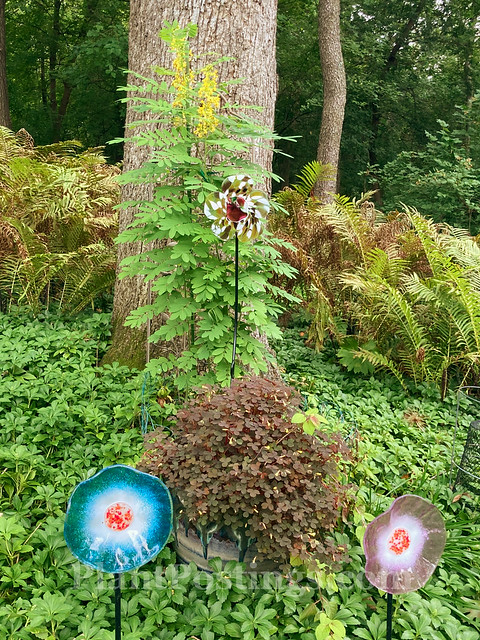
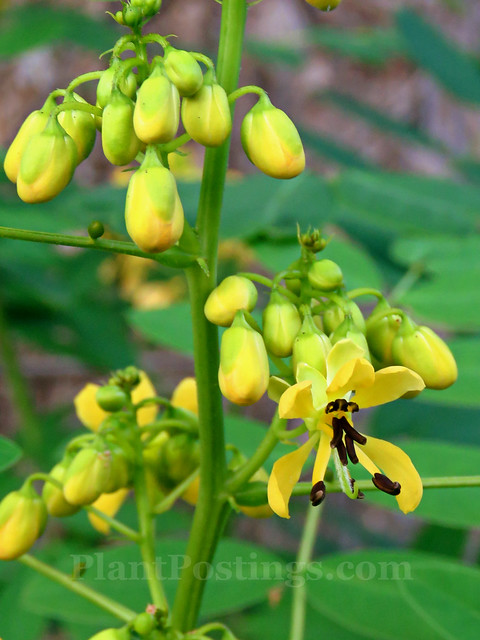
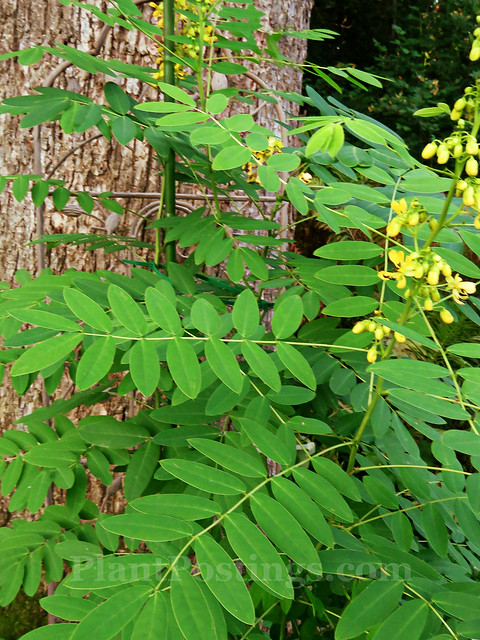
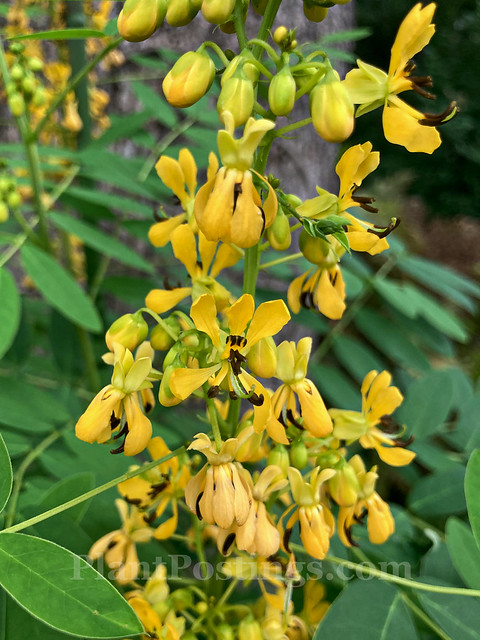
It's Wildflower Wednesday--the fourth Wednesday of the month--when gardeners around the world share information about some of their favorite wildflowers. This month, my pick is Wild Senna (S. hebecarpa).

As the ferns begin to senesce, and the brown and mustard shades of foliage begin to settle into the back garden, the Wild Senna brightens the landscape. This plant is definitely the focal point this time of year, under the central Oak and framed by the ferns, the Pachysandra, and the potted Oxalis 'Zinfandel' (O. vulcanicola), and Fuchsia 'Autumnale.'

flowers and buds

The buds are bright (this photo was taken about a week ago), and the flowers of Wild Senna are buttery yellow, open, and inviting to pollinators. Later in the season, the seedpods form, which I'll try to remember to highlight in a future post.

bumble

Some of the benefits of this plant, in addition to its beauty:
  • I almost always find bumblebees enjoying its pollen and nectar;
  • It seems to be rabbit-resistant, unlike so many native plants I've tried to establish in this shady garden;
  • It's hardy in USDA garden zones 4 to 8.
  • Some sources say it needs full sun, but it's thriving here in dappled shade, with late afternoon sun;
  • It stands tall, providing an anchor to the plants around it;
  • A horizontal root system protects it from heavy wind damage;
  • It's a host plant for various sulphur butterflies and other species; and
  • It attracts hummingbirds.

I could go on; I really enjoy and appreciate this plant, especially this time of year.

foliage

Actually, I enjoy it for most of the mid to late growing season, as the foliage of Wild Senna is nearly as fun as the flowers.

flowers

It's a great native plant to add to just about any Eastern North American garden. Its range extends from Ontario east to Maine, and south from Alabama through Georgia and the Carolinas. It's a bright spot, even in partial shade, in the late-summer landscape.

Thanks to Gail at Clay and Limestone for hosting Wildflower Wednesday. Head on over to her blog to learn about wildflowers from around the world.

April 22, 2020

White Trout Lilies for Wildflower Wednesday

trout lily 1

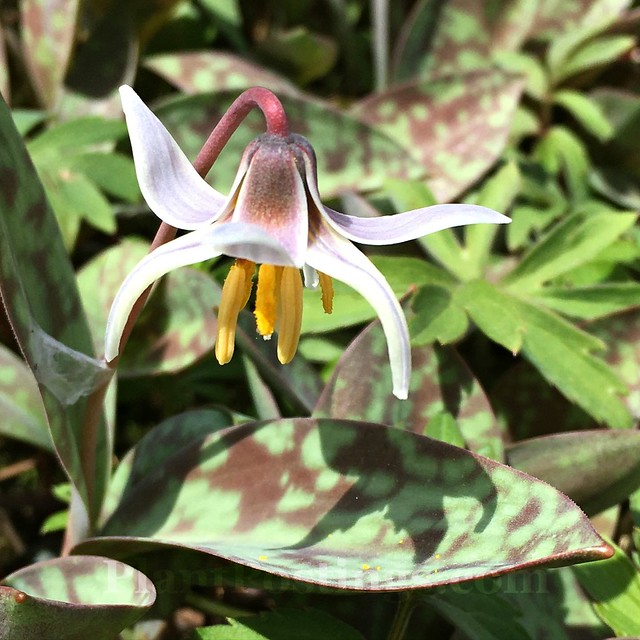
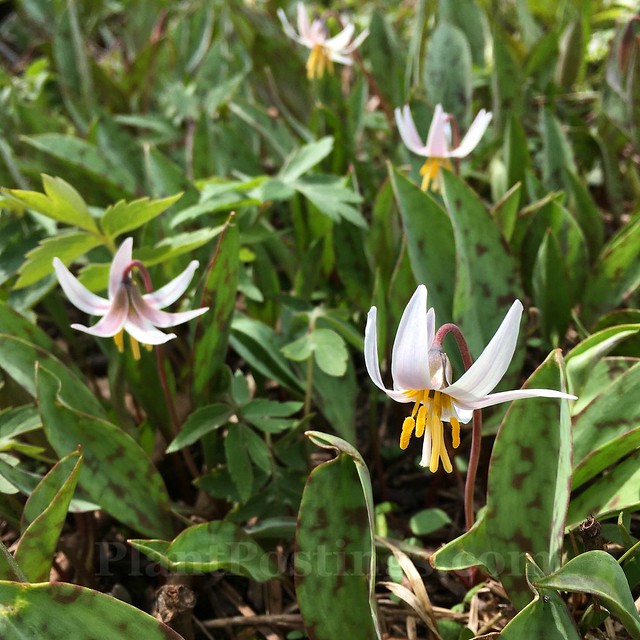
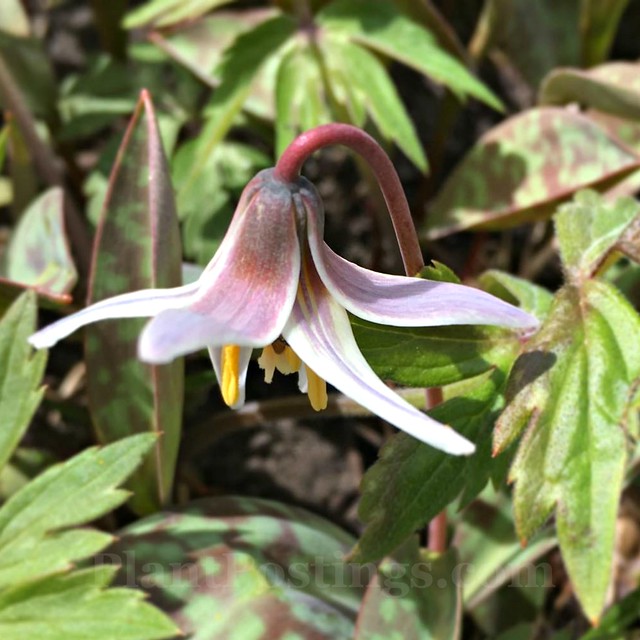
Last spring, while hiking in a favorite county park, I happened upon a colony of White Trout Lilies (Erythronium albidum). I'd been to that park dozens (100s?) of times over the years, but I hadn't visited that sweet little section during the early spring, until last year. What a beautiful sight to see--the forest floor was literally carpeted with the dainty white blooms.

trout lily 2

That section of the park has become a favorite destination, and I was thrilled to see the speckled foliage of these exquisite ephemerals emerging a couple of weeks ago; then flowering this week. This species of Erythronium is commonly found in low, deciduous woods; thickets; floodplains; and prairies in the early spring. Native to many areas of Eastern North America, it prefers part shade or shade, but in deciduous forests with plenty of spring sunshine.

I've noticed this plant is plentiful in the wooded section of the park very near a low spot next to the lake, while absent in the wooded hilly sections further from the shore, so it appears to need plentiful moisture.

trout lily 3

The one-inch, nodding flowers remind me of little caps, with curled petals and shy yellow stamens that extend down from the center. The blooms hang low off short, slender stalks. One of the first native ephemerals to bloom in the spring, the flowers close up at night and open in the morning.

trout lily 4

One thing I did notice, comparing last year's photos to this year's, is that the flowers seem to have more color when they first bloom, and fade to a stunning translucent, linen-like white with time. I don't really have favorite flowers, but...what can I say...this one is exquisite.

I'm joining in Gail's Wildflower Wednesday. Head on over to her blog, Clay and Limestone to read about other amazing wildflowers. And Happy Earth Day!