Showing posts with label Salvia. Show all posts

July 22, 2024

July 'Vases' of Plenty

mixed arrangement

At this time of year, the options seem endless for floral arrangements. It's such a dramatic contrast to midwinter; although the slim pickings of midwinter help me appreciate the plenty of July. The flowering annuals I started from seed are great companions to perennial offerings.

hosta flower 2

In the arrangement at the start of this post, I used Hosta flowers at the top and back to help frame the collection. I don't know the variety; all Hostas in the garden were here when we moved in more than two decades ago, and they weren't marked.

gladiolus

Also framing the arrangement are Glads (Gladiolus grandiflora hybrids). I planted the corms in the garden after the last frost in early May.

hosta and hydrangea foliage

Foliage from Hosta and Hydrangea (H. macrophylla) anchor the background of the arrangement.

coneflower

Purple Coneflowers (Echinacea purpurea) add beautiful structure. 

salvia

A couple of 'May Night' Sage sprouts (Salvia x sylvestris) dot the sides.

zinnias 1

Perhaps the stars of the grouping are the various Zinnias (Z. elegans) from the cutting garden, which I grew from seeds started in the sunroom in March.

zinnias 2

The Zinnias shown here are 'State Fair Mix,' although I also have 'Zowie Yellow Flame' and 'Giant Purple' in the garden.

cosmos

The Cosmos (C. bipinnatus 'Sensation Mix') flowers are so very plentiful and delightful. Their seeds were planted directly in the garden in early May.

hosta flower 1

I also added some Hosta flowers and Cosmos foliage to this second vase.

tall glad

Finally, I've continuously placed single, tall Glads in this slender vase, which seems perfect for their regal stature.

I'm linking in with Cathy's In a Vase on Monday meme over at Rambling in the Garden. Head on over to see some amazing arrangements.

January 27, 2014

Plant of the Month: Ornamental Sage

salvia2

Is there a plant in your garden that you're worried won't survive this brutal winter? For gardeners outside the U.S. and Canada, are you concerned about specific plants in your garden for other reasons?

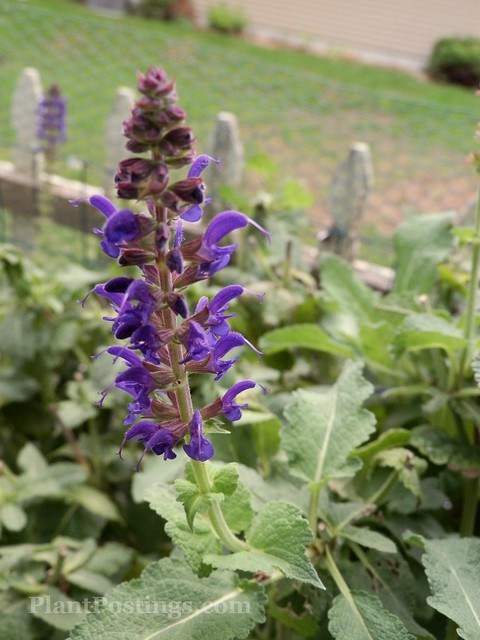
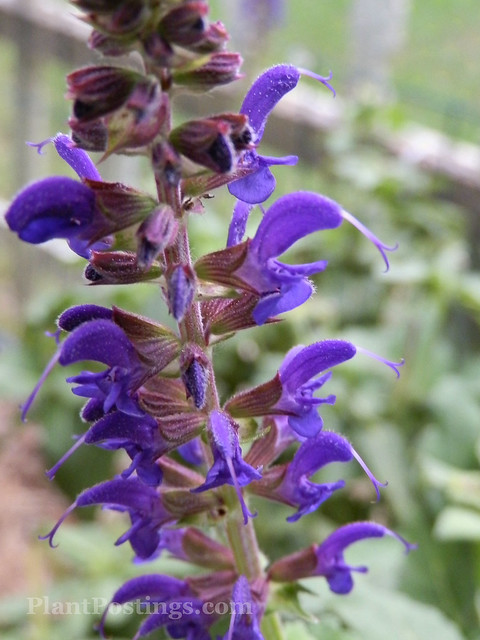
Lately, my Ornamental Sage plants have been on my mind. I'm not sure why, because they're tough perennials! I don't have the original tags, but I believe mine are either Salvia nemorosa or the hybrid Salvia x superba. They've graced the outer corners of my potager garden for about a decade now, and they've always bounced back every spring like clockwork.

salviajune
Ornamental Sage in June 2013.

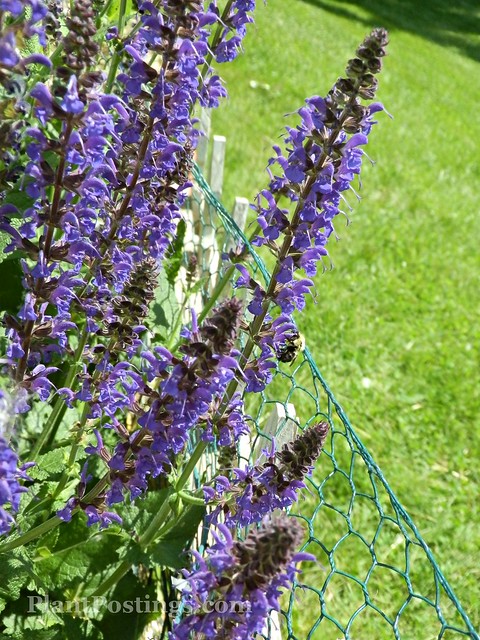
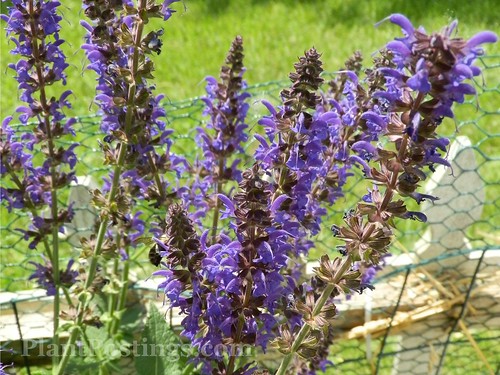
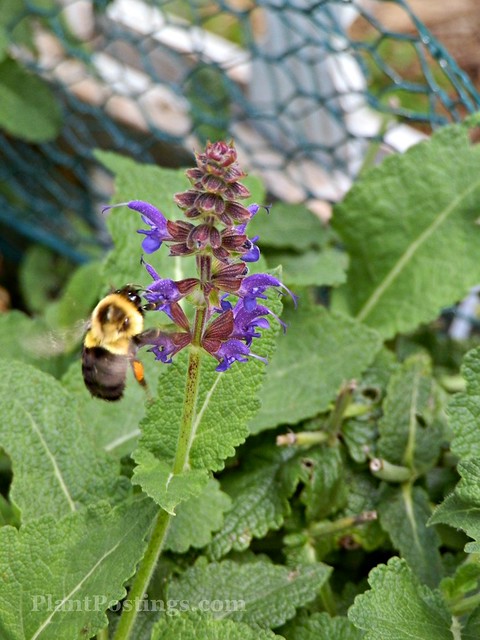
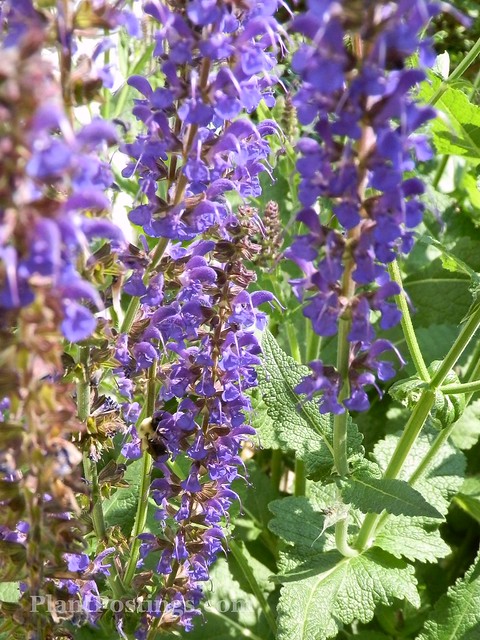
As soon as they start blooming, the pollinators cover them! I didn't realize until I started cropping the photos for this post that all but two show bumblebees diving in for the Salvias' plentiful nectar! (Can you see them? You can click on the photos to enlarge them.) In fact, it's hard to get a shot of these spikey lavendar/blue beauties without bumbles--not that I've really tried either way.
Ornamental Sages prefer sun, and rich but well-drained soil. They grow to about two feet tall, and form a shrub-like shape. They have a unique scent, similar to other plants in the Mint family, Lamiaceae. And rabbits and deer tend to avoid them.

salviajuly
Ornamental Sage in July 2012, at the height of that year's drought. Note the brown, dried lawn in the background. Granted, the plants were watered regularly, but they showed very little sign of stress.

Why am I worried about these plants? I guess I shouldn't worry because they've survived extreme temperatures and droughts for years. S. nemorosa and its hybrid superba are hardy to zone 5, and some sources say to zone 4. My two clumps are tucked in for the winter with a warm layer of Marsh Hay mulch and soft snow, and they're planted near the house foundation--on the sunny west side of the house.

Still I worry...

salviaaugust
Ornamental Sage in August 2013. After several rounds of deadheading, still plenty of nectar and pollen to go around.

I can't imagine my garden without them. They've become fixtures--reliable stallwarts that I count on every year.

This "Dummy's Guide" to planting flowers for bees notes that when in bloom, Salvias are "covered with bees all day long." I concur.

In my garden, that means continuous blooms and continuous pollinators from May through August.

salvia3

But you're more likely to have repeat blooms if you deadhead them. Several times during the season, I spend a little time every few weeks pinching off the spent blooms. I'm not picky, I just grab the garden pruners and start cutting back--usually to the base of each individual stem. Within days, I have blooms again.

I've heard other gardeners say the Ornamental Sages can be floppy. That might be true, but mine are planted with fencing as supports on two sides, and other potager plants on the other sides. And with the regular deadheading, they really don't get floppy at all.

I sure hope they'll be back this spring and summer!

salvia1