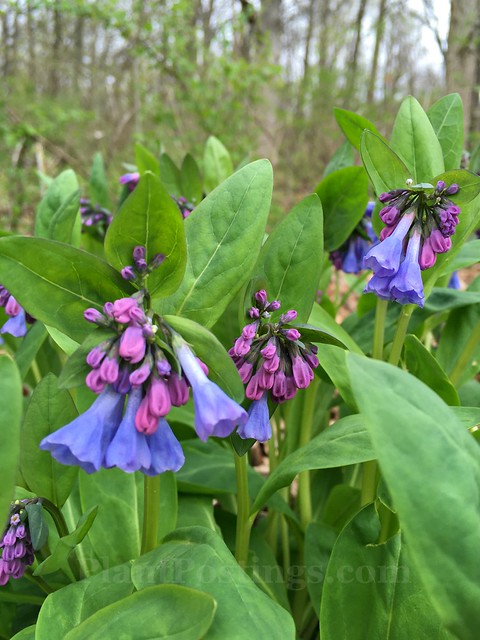
Last week, during a hike at a favorite local state park, I noticed a beautiful patch of Virginia Bluebells (
Mertensia virginica). This plant is native to most of Eastern North America and is beloved by many ... gardeners and nature-lovers, alike. This little patch I discovered was noteworthy, both because of its beauty and because it was the only patch I saw that day after hiking in a large area.
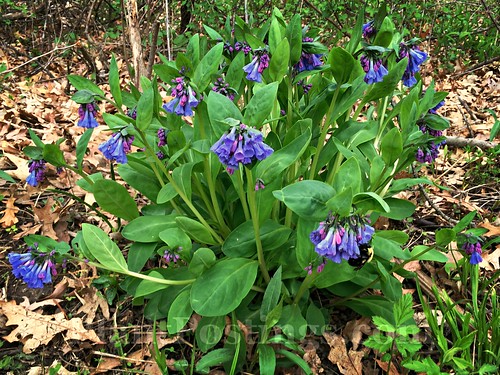
Based on my own experience with Virginia Bluebells, I immediately formed a hypothesis. This patch was near the parking lot. Could it be that
Mertensia has trouble establishing elsewhere in the park because of rabbits? Perhaps the rabbits tend to shy away from the busy parking lot area.

My theory was based on many years of trying to get Virginia Bluebells established in my own garden. I do have several patches still growing at home--plants I started from seed several years ago. But the one year they did bloom, the rabbits chewed them to bits just as they were blooming. This year, I don't see any buds, for some reason, although I've caged the plants from the bunnies.
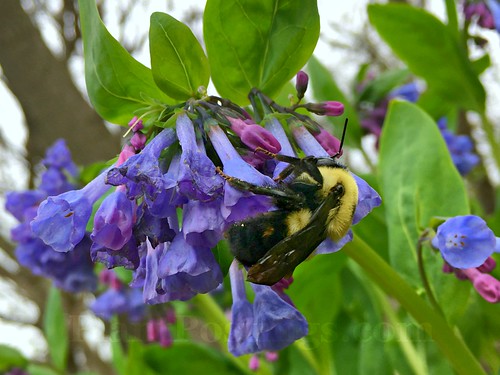
In any case, if you DON'T have a rabbit problem or you have a protected area in your garden,
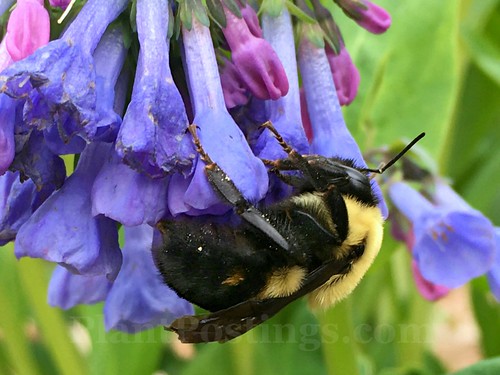
Mertensia virginica is an excellent plant to support native bumble bees. The plant blooms just as the queens are getting active in the spring and looking for early pollen and nectar sources. On this beautiful patch at the state park, I observed a resting queen.
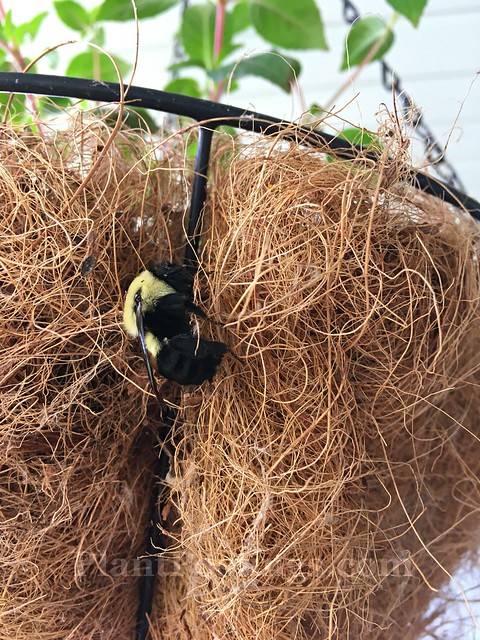
I've noticed many lethargic queens lately, during walks around the block and resting in unusual locations.

Like this one in a dangerous spot on the front porch. I don't usually interfere with nature, but I very carefully lifted her with a piece of light cardboard and placed her near some blooming flowers. I'm a little worried about the bumble bee queens this spring, because of how cool our weather has been lately, with at least one frost/freeze in the forecast this week. Blooming plants are still rather scarce.
The Xerces Society for Invertebrate Conservation recently published this excellent article on
Five Ways to Support Queen Bumble Bees. Native plants like Virginia Bluebells definitely play an important role--one of many reasons these beautiful blooms are worth protecting from hungry bunnies.