Showing posts with label rabbits. Show all posts

August 07, 2021

'Likes' and 'Dislikes' in the 2021 Garden

alliums
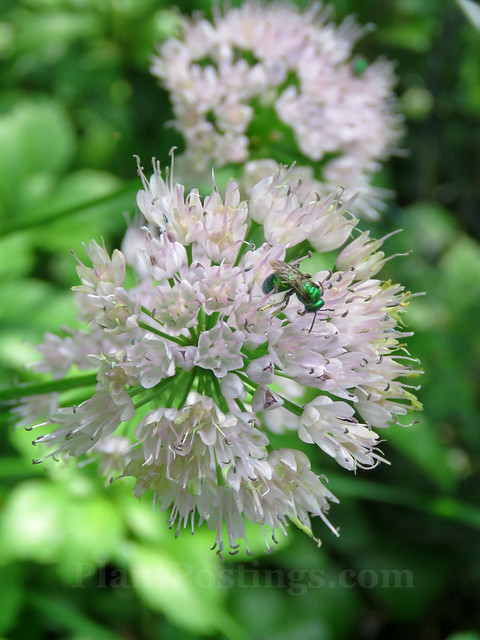
'Summer Beauty' Alliums (A. lusitanicum) bring magic and pollinators to the garden.

One of the best things about a dry, hot summer is the lack of mosquitoes. I can count on two hands the number of mosquito bites I've had during the past two months. Also, the watered parts of the garden are doing well, and the pollinators are still plentiful.

In just about every other area, including the garden, the combination of drought and heat is challenging. I've been thinking lately about the things I "like" and "dislike" about the garden this summer, and many of the dislikes are related to the early onset of high heat in June and being about 10 inches behind average in rainfall for the year. The combination has been rough on the garden in some areas.
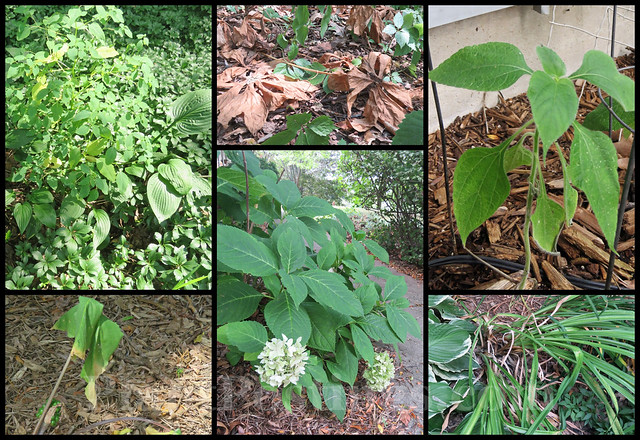
problem areas
From top left, clockwise: What's usually a very large Hosta has been fragmented (probably rabbit lunches) and taken over by Jewelweed (Impatiens capensis); Mayapples (Podophyllum peltatum) are dry and dormant while Virginia Creeper (Parthenocissus quinquefolia) takes over; Goldfinger Tithonia (T. rotundifolia) is barely hanging on, while it's thrived in this spot many other years; these Daylilies never bloomed and look stressed; I've been watering the Hydrangeas nearly every day, and they're still saggy; Jack-in-the-Pulpit (Arisaema triphyllum) is sad, although it has produced seed.

As I post this, potential rain is in the forecast for the next few days, which is great, although it's too late for some plants that have gone dormant or underperformed. But there are so many other plants (some in watered areas; others drought-tolerant) and other garden aspects that are performing well and bringing happiness.
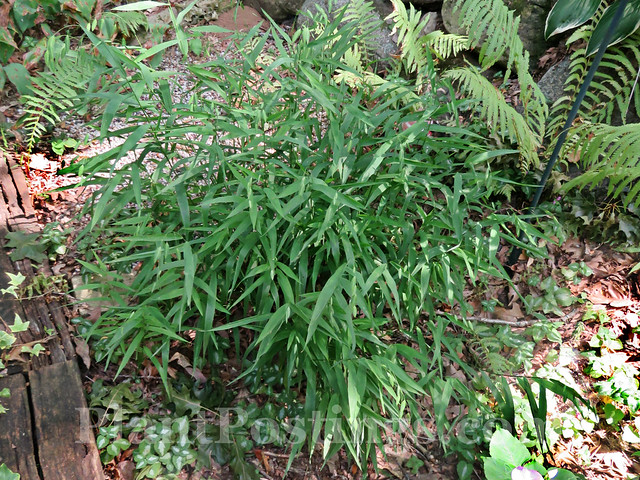
sea oats

Northern Sea Oats (Chasmanthium latifolium) is really filling in its spot this year.

monarch on zinnia

As always, the 'State Fair Mix' Zinnias (Z. elegans) are attracting butterflies and other pollinators.

monarchs mating

Monarch butterflies are plentiful lately, and it's magical to see them mating among the foliage pockets of the Dwarf Korean Lilac.

bluestar amsonia

I took a chance in partial shade with this patch of Hubricht's Amsonia (A. hubrichtii) several years ago. Every year it seems a little happier in its home. As you can see, it's surrounded by Hostas and caged to prevent rabbit damage.

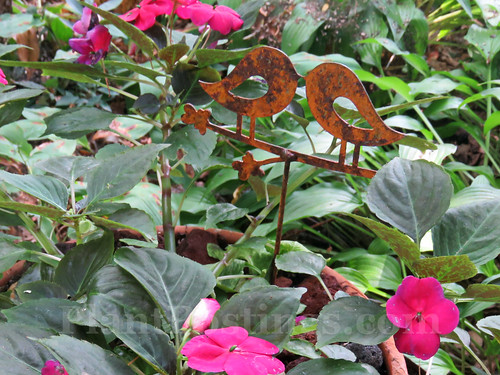
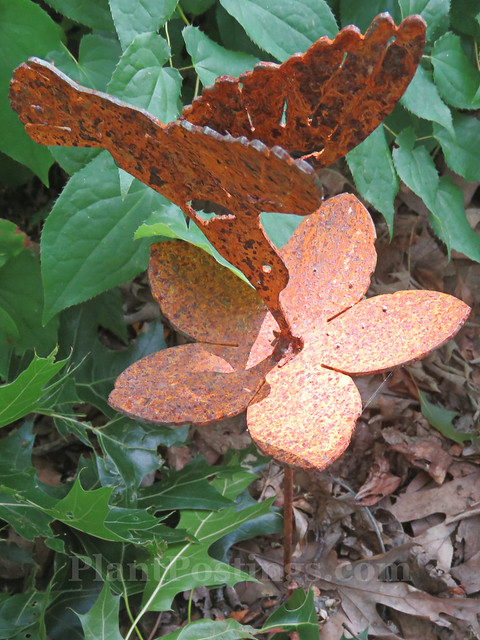
metal art 1

metal art 3

metal art 2

I ordered several garden ornaments from Etsy, and they're adding little touches of whimsy around the garden.
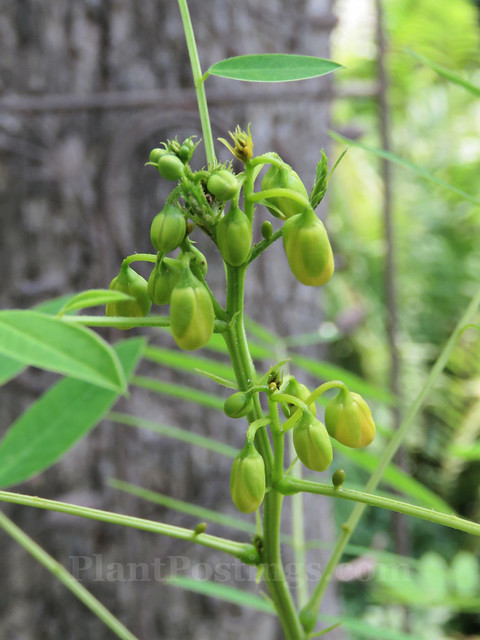
wild senna

The Wild Senna (S. hebecarpa) is budding and beginning to bloom as I write this. It's one of only a few plantings in the middle garden bed that has survived rabbit damage and thrived for several years now.

pollinator garden

The small sunny garden almost always performs well, with sun and supports and fencing from rabbits.
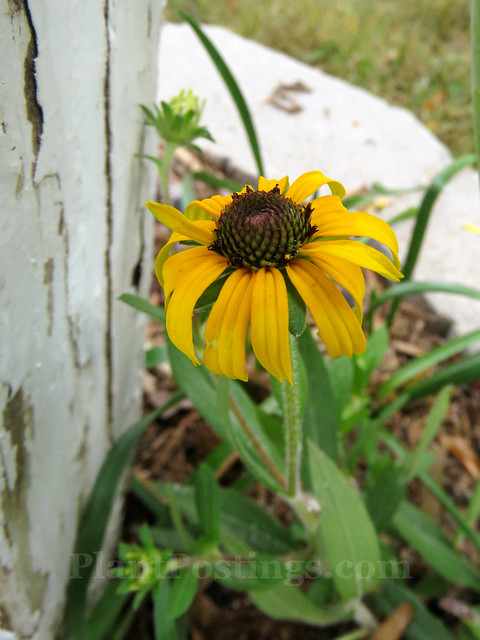
mailbox gold rush

I added a few plants around the mailbox last year, and they're starting to show their personalities. This sweet little plant, Rudbeckia 'American Gold Rush,' was chewed in half by the rabbits but has recovered. I've repeatedly sprinkled rabbit repellent dust around it, and the lack of rain has kept the repellent in place. I've also since planted Daffodils and Alliums around it, which should help repel the rabbits in spring and summer. Fingers crossed.
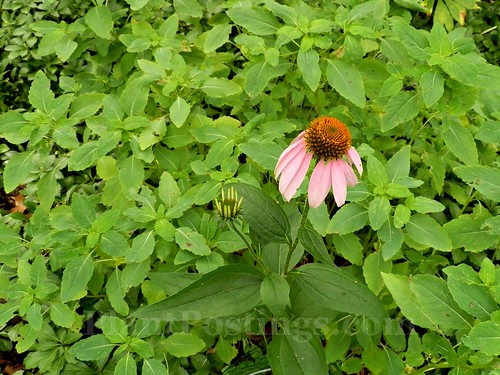
mailbox coneflowers

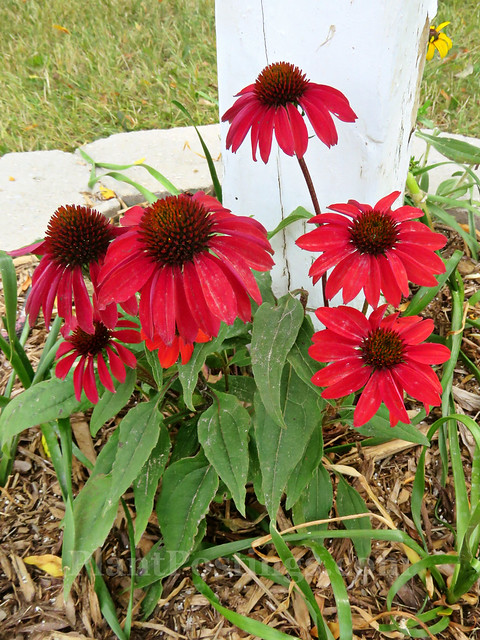
Fortunately, the rabbits didn't get to the adjacent Echinacea 'Sombrero Baja Burgundy' plant. The color of this one is bright and varies with the angle of the sun. This morning, just before posting this, I noticed several bumblebees enjoying its nectar and pollen.
climbing wild rose

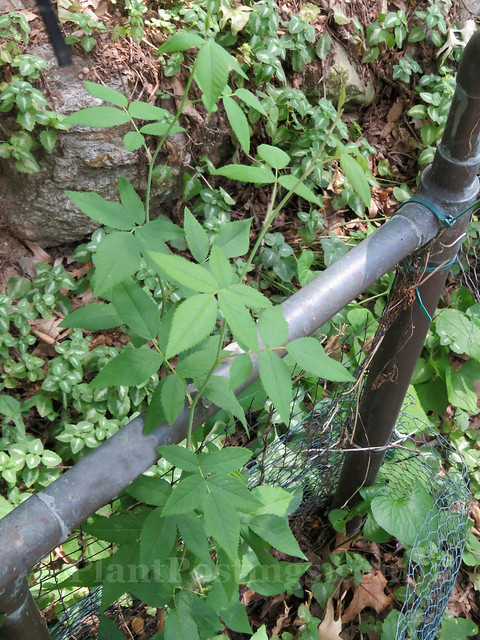
I'm very excited about this new native Climbing Rose (Rosa setigera), also protected from rabbits with caging. I've had many plants in this spot over the years, usually annuals, so hopefully this beauty will take up residence, thrive, and bloom for years to come.   
jewelweed

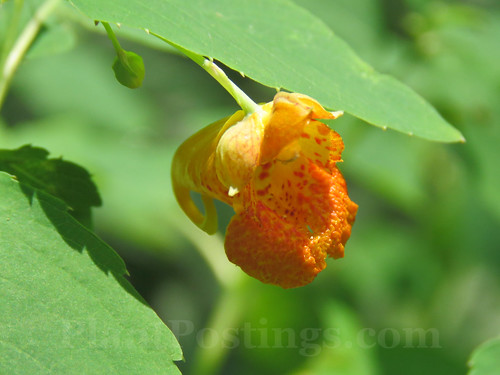
I've read that blooming Jewelweed (Impatiens capensis) is a cue to hummingbird males to begin migrating. It seems early this year, and our little resident male hummingbird is still very active and keeping us entertained, along with some females (and presumably we'll see some juveniles  after they fledge).
hosta and lycoris

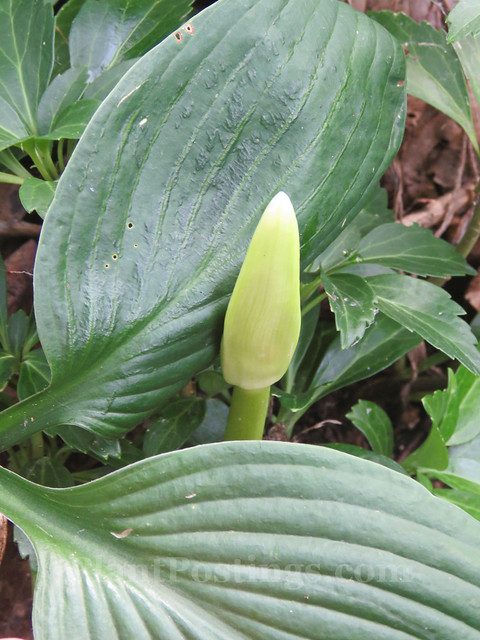
The Surprise Lilies (Lycoris squamigera) are emerging, and likely will be blooming in a few days...believe it or not, they grow inches every day, to a height of 12-24 inches total, and bloom just days after they emerge!
butterflyweed new

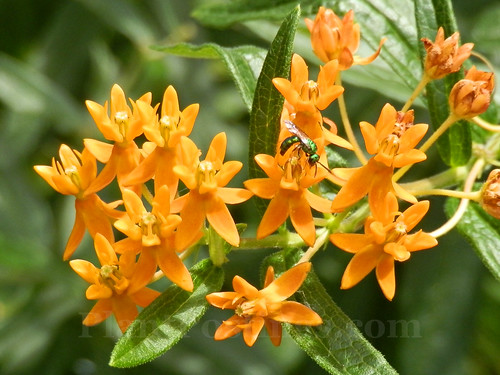
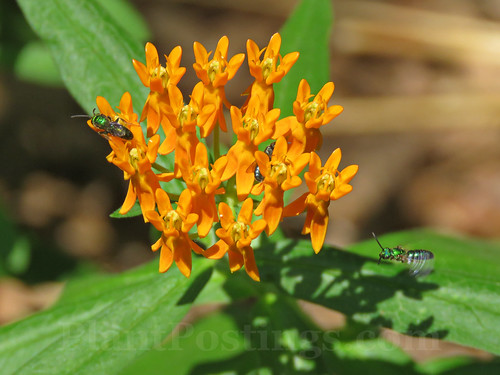
I've planted various milkweeds around the garden for many years, and I'm happy to see several new Butterflyweeds (Asclepias tuberosa) are thriving, blooming, and attracting pollinators. I haven't found monarch eggs on these particular plants, but there are plenty in other parts of the garden.

The garden conditions and results are mixed this year. Since more rain is on the way, I look forward to many more weeks of "likes" and garden smiles in the weeks to come.

September 23, 2020

Surrendering to Seeds

lobelia
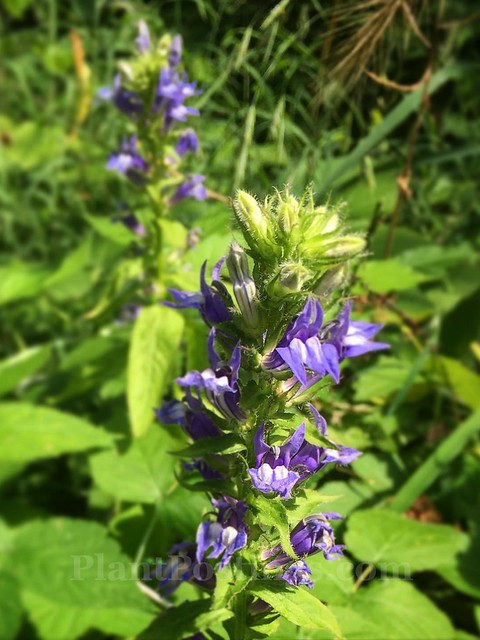
Great Blue Lobelia (Lobelia siphilitica), one of several plants I'll try to grow from seed for next year's garden.

In this season of senescence, I've made a decision about one of the garden plots on our property. It's an area where the wild woods meet the cultivated garden beds. It's an island and focal point in the middle of the backyard. It's filled with an evergreen ground cover of Pachysandra (P. terminalis). It offers dappled sun/shade to plants throughout the day.

And it's infested with rabbits.

I say this because I've spent too much time and money trying to get plants started in this part of the garden. The list of consumed/destroyed plants, gallons of rabbit repellent, and rabbit stories is too long to include here. So, let's just say it's time to surrender.

First of all, I'm not unhappy with the basic framework of this garden area.

ferns

The ferns are lush and lovely in the late spring and early summer.

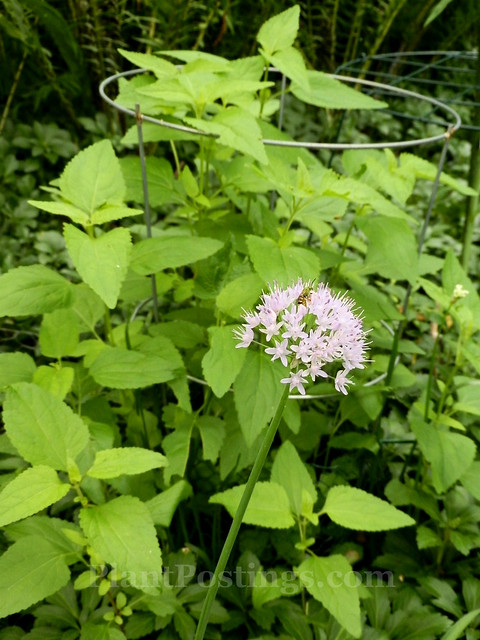
alliums

Especially when joined by the giant Alliums in late May through early July.

swamp milkweed

In mid-summer, Swamp Milkweed (Asclepias incarnata) has shown promise here, too, although the past couple of years have been marginal for this plant in this particular spot.

bugbane

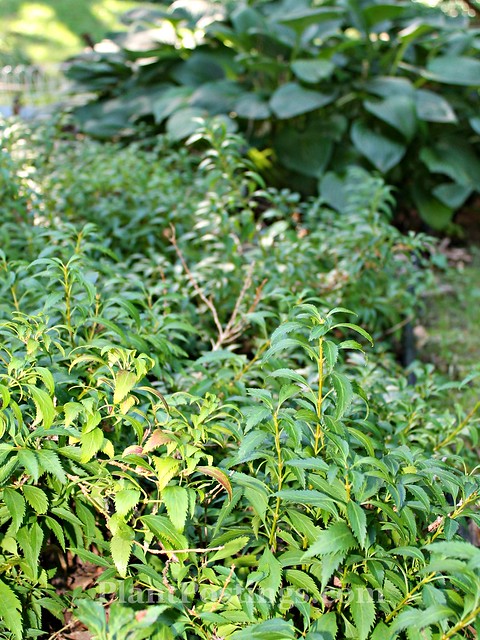
This graceful, towering native plant, Bugbane (Actaea racemosa), will always have a summer place here. Rabbits don't touch it.

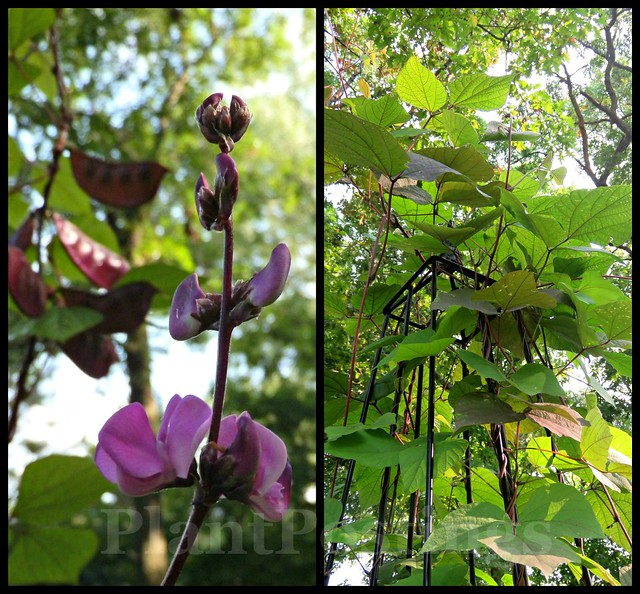
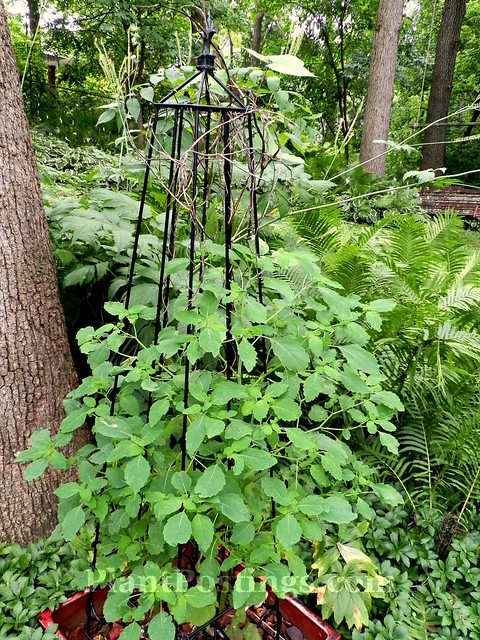
hyacinth bean

Hyacinth Bean vine (Lablab purpureus) is happy here, too, growing in a pot protected from rabbits with caging at the bottom, and growing up an obelisk.

monarda

Wild Bergamot (Monarda fistulosa) is a new addition to this part of the garden. It grows fine here, but the rabbits ate most of it. I scattered seeds from the few flowers that survived. Stay tuned.

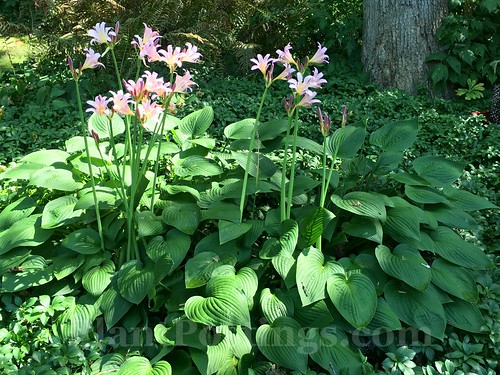
surprise lilies

When summer starts to wind down, the Surprise Lilies (Lycoris squamigera) pop up through skirts of hosta foliage. Rabbits never seem to eat Lycoris.

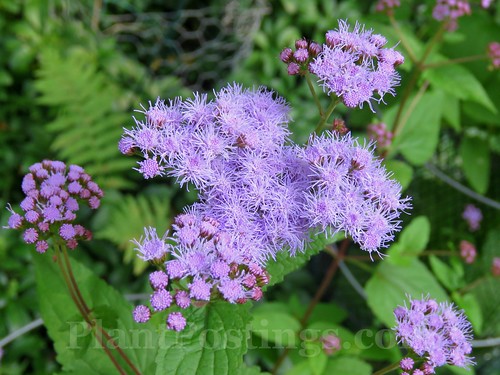
mistflower

And as summer turns to autumn, Blue Mistflower (Conoclinium coelestinum) adds pops of violet to the area. Of course, the rabbits eat this plant voraciously, so it, too, must be caged. The fortunate thing about this plant is that it propagates easily from seed.

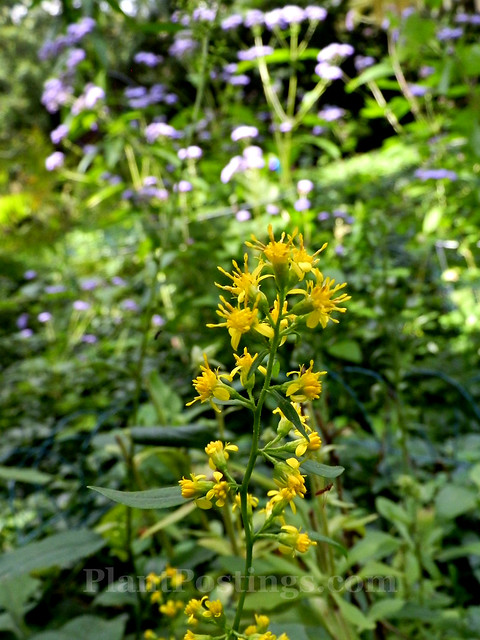
goldenrod

ZigZag Goldenrod (Solidago flexicaulis), another rabbit favorite, has somehow found a way to survive by a thread.

My point? From now on, I will only plant species in this part of the garden that I know repel rabbits, already exist in my garden and can be transplanted, or can be grown in pots. No more investments in plants. Even the ones that rabbits supposedly don't eat often get munched to the ground. I want more color in the middle of summer, and I'm pleased with a few things that happened this year--things I'll repeat and expand on next year. 

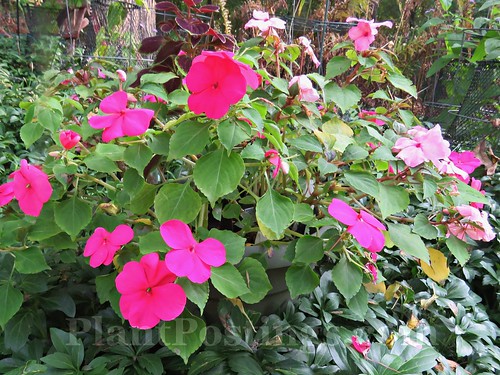
green pots

For example, I added two pots of Impatiens and Coleus. You can barely see the green pots amid the Pachysandra. I'm planning to use more pots (and hopefully fewer rabbit-repelling caging devices) in the garden next summer.

fountain

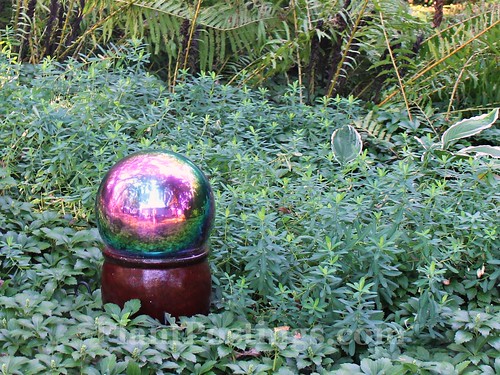
A few new decorative items are adding color midseason, too. I really like this new glass birdbath, and I added a solar-powered fountain to it for more visual interest. Next year, the potted annual plant colors will complement it better.

I'm taking a chance with one new plant--several plugs of Golden Groundsel (Packera aurea). Everything I read about this plant says it forms dense colonies and is mammal-resistant. We'll see.

In late fall, I'll also be scattering seeds of several native plants for partial sun or shade--plants that rabbits generally don't eat, including:

Flowering spurge (Euphorbia corollata)
Dutchmen's Breeches (Dicentra cucullaria)
Downy Wood Mint (Blephilia ciliata)
Midland Shooting Star (Dodecatheon meadia)
Great Blue Lobelia (L. siphilitica)
Hoary Skullcap (Scutellaria incana)

Seeds are less expensive than plants and can cover a wider area. The investment in time, effort, and expectations won't be as great.

I've surrendered to seeds.

May 05, 2020

Bluebells, Bumble Bees, and Bunnies

bluebells 2

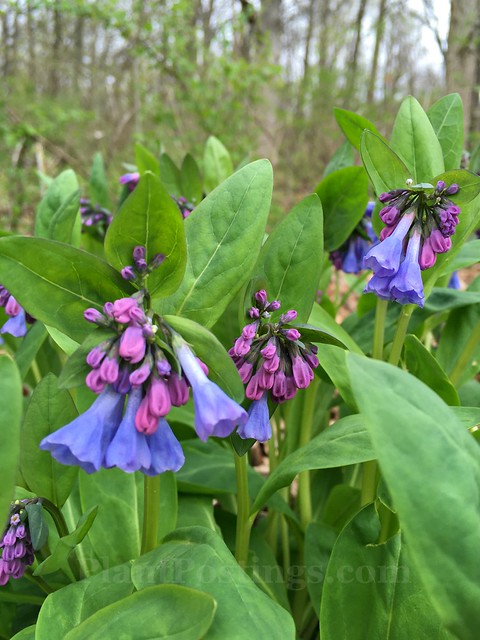
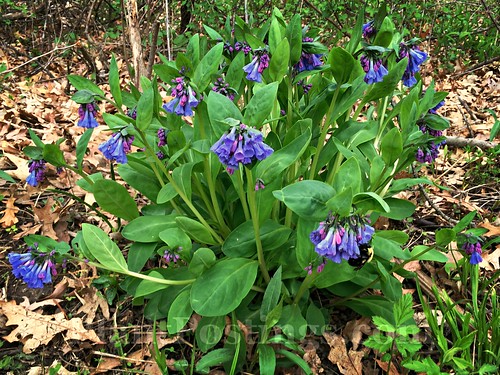
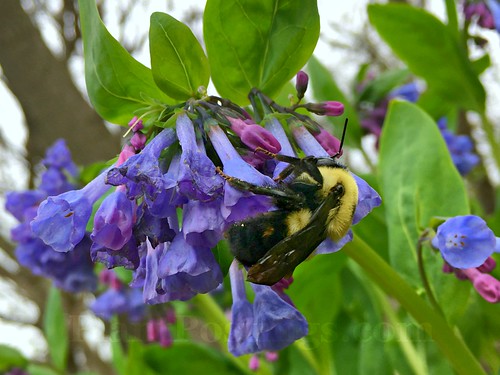
Last week, during a hike at a favorite local state park, I noticed a beautiful patch of Virginia Bluebells (Mertensia virginica). This plant is native to most of Eastern North America and is beloved by many ... gardeners and nature-lovers, alike. This little patch I discovered was noteworthy, both because of its beauty and because it was the only patch I saw that day after hiking in a large area.

bluebells 1

Based on my own experience with Virginia Bluebells, I immediately formed a hypothesis. This patch was near the parking lot. Could it be that Mertensia has trouble establishing elsewhere in the park because of rabbits? Perhaps the rabbits tend to shy away from the busy parking lot area.

bluebells destroyed

My theory was based on many years of trying to get Virginia Bluebells established in my own garden. I do have several patches still growing at home--plants I started from seed several years ago. But the one year they did bloom, the rabbits chewed them to bits just as they were blooming. This year, I don't see any buds, for some reason, although I've caged the plants from the bunnies.

bluebells 3

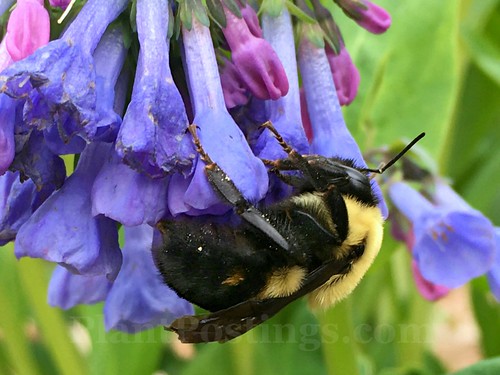
In any case, if you DON'T have a rabbit problem or you have a protected area in your garden, Mertensia virginica is an excellent plant to support native bumble bees. The plant blooms just as the queens are getting active in the spring and looking for early pollen and nectar sources. On this beautiful patch at the state park, I observed a resting queen.

bumble 1

I've noticed many lethargic queens lately, during walks around the block and resting in unusual locations.

bumble 2

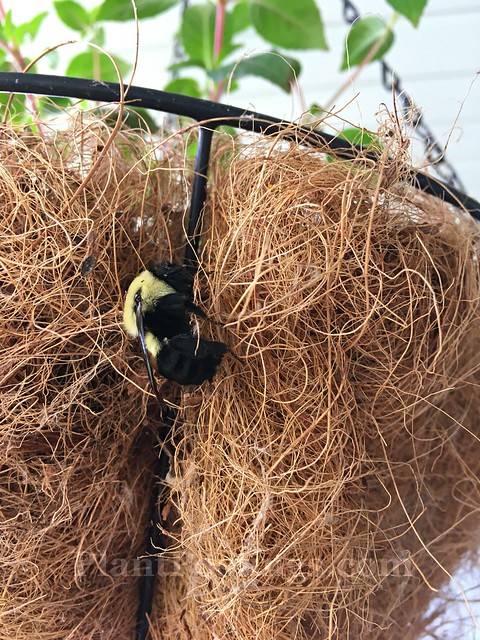
Like this one in a dangerous spot on the front porch. I don't usually interfere with nature, but I very carefully lifted her with a piece of light cardboard and placed her near some blooming flowers. I'm a little worried about the bumble bee queens this spring, because of how cool our weather has been lately, with at least one frost/freeze in the forecast this week. Blooming plants are still rather scarce.

bluebells 4

The Xerces Society for Invertebrate Conservation recently published this excellent article on Five Ways to Support Queen Bumble Bees. Native plants like Virginia Bluebells definitely play an important role--one of many reasons these beautiful blooms are worth protecting from hungry bunnies.

July 30, 2016

Disappointments, Surprises, and a Little Patience

bumble
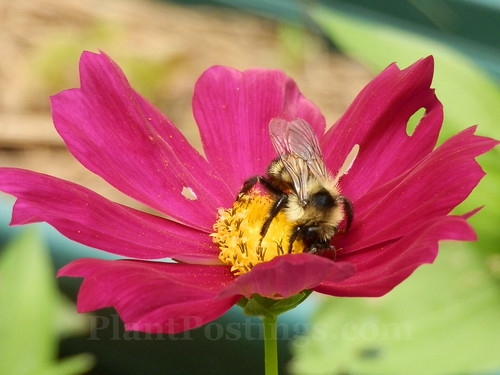
This "vision" worked: a happy bumble bee on a 'Sensation Mix' Cosmos (C. bipinnatus).

Have you ever had a plan or a "vision" for your garden that didn't work out?

That's what happened to me last year. I realized I didn't have enough fall-blooming, native perennials in the shady section of the garden, so I planted some.

In my mind, the Blue Mistflowers (Conoclinium coelestinum) would form a magical, soft swathe around the Swamp Milkweed (Asclepias incarnata). The Zigzag Goldenrod (Solidago flexicaulis) would arch gracefully along the trellis, and the False Asters (Boltonia asteroides) would bob and sway surrounding the Anise Hyssop (Agastache foeniculum) and the 'Vibrant Dome' Asters.

Unfortunately, the rabbits had a different vision. They ate all these plants down to the ground, except for the Milkweed (no taste for it), a few of the Asters, and the Mistflowers (which I rescued in time).

After decades of gardening--much of it in this current unbalanced ecosystem--I should have known. But most of these plants (except for the Asters) are generally considered "rabbit-resistant." Well, apparently these rabbits didn't get the message. I'd say a different animal was to blame, but the clues were obvious (and too numerous to list here). Not to mention trying to chase the long-eared pests out of this part of the garden several times.

So, I had to get creative. While the Agastaches and the Boltonias didn't return this year (whether victims of rabbit death or the freeze/thaw curse, I'll never know), the others did. And I discovered some happy surprises.

misflower

I surrounded the Blue Mistflowers in lava rocks and chicken wire-covered tomato caging, and planted 'Summer Beauty' Alliums around the perimeter. These things seem to be working and soon you won't even see the caging. Fingers crossed.

jewelweed

Oh, I forgot to mention I scattered seeds of Spotted Jewelweed (Impatiens capensis) in various spots around the garden. They really took off! In the spot where the Agastache and the Boltonia were located last year, is now a mound of Jewelweed surrounding a new planting of Purple Coneflower (Echinacea purpurea). I'm thinking this will soon be a popular spot with the hummingbirds. There are Alliums in here somewhere, too.

obelisk

Yes, this is also Jewelweed. It's cuddling the obelisk, at the center of which is a Purple Hyacinth Bean vine, which is about to bloom. I forgot I sprinkled Jewelweed seeds here, too. Surprise!

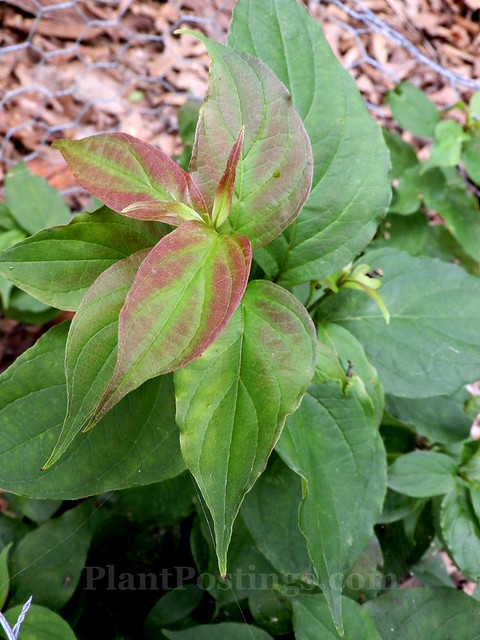
cornus pumila

Other victims of the big-eared, large-fanged, plant-killing monsters were the four Dwarf Red-Tipped Dogwood (Cornus pumila) shrubs. Yep, the rabbits chewed them down to the ground during the winter. So, I rolled out more chicken wire, which will remain around the shrubs until they become established. Thankfully, they recovered from the insult.

OK, so most of those areas are under control ... for now. Here's another surprise:

bugs 1

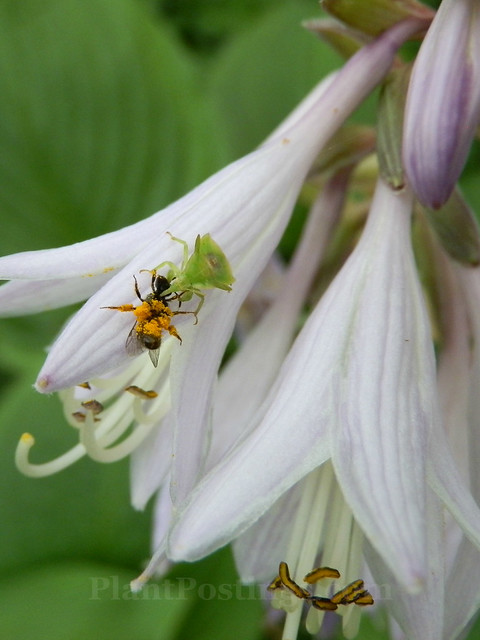
I walked by one of the Hosta flowers the other day and saw this. From a distance it looked like a bit of leaf with a strange pollen-covered bug next to it. On closer examination, I realized the pollen-covered bug was a bumble bee (I think). And with help from a few garden blogger friends (you know who you are...thanks!), I found out the green insect is an Ambush Bug Nymph. A sad, cruel, and yet fascinating natural occurrence.

Quickly shifting the topic...

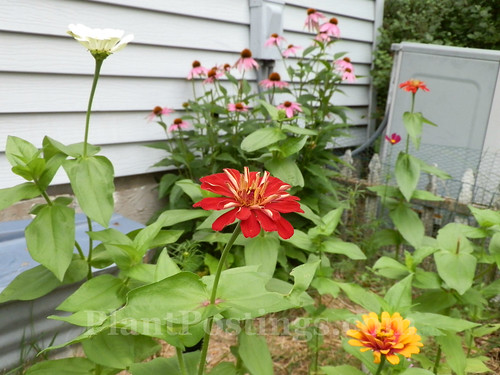
Finally, I'm once again reminded about the rewards of patience. The Zinnias I planted from seed in late winter/early spring are now big and robust and ready for cutting. They'll offer repeat blooms now until October. Yay!

seeded

It's difficult to show a good angle on the cutting garden because it's on a steep hill on the side of the house. But you get the idea here: My only sunny garden is a small patch of land that, when blooming, camouflages (sort of) the window wells, the utility boxes, and the air conditioning unit.

When the Zinnias, Coneflowers, and other sun-lovers are blooming, it's a bright and cheery place full of pollinators.

seed pods

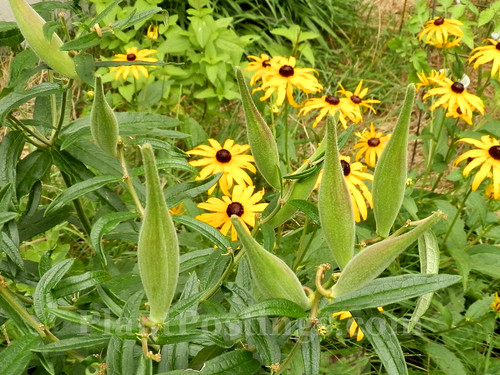
The Butterfly Weed is forming seed pods.

sweat bee

And enough blooms remain to keep the sweat bees full and sassy. Here's a little movie I made to celebrate:


Overall, the disappointments, surprises, and joys have a way of balancing out. And patience (with a few tricks) certainly pays off.

(Oh, and I must say I've tried just about every potion and scare tactic for the rabbits. Each one works temporarily, but in the end the only things that work long-term for me, here in this "rabbit wonderland," are rabbit-repellent plants--not rabbit-resistant ones--and miles of chicken wire.)

September 15, 2015

Late-Season Vignettes and Fab Foliage

succulent collage
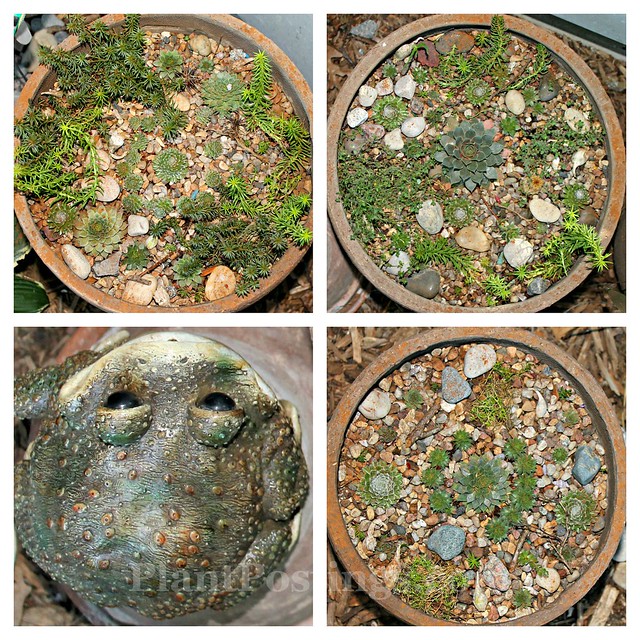
Scallions, hot pepper flakes, cinnamon, thorny sticks, and a croaking toad are all attempts to
repel chipmunks from these succulent pots.

As the growing season winds down and the plants are starting to fade, there are still several vignettes that I'm finding relatively pleasing to the eye. The succulent pots are filling in nicely, although I'm occasionally finding Sempervivums and Sedums upended by chipmunks.

porch pots
Yes, more cinnamon to repel the chipmunks!

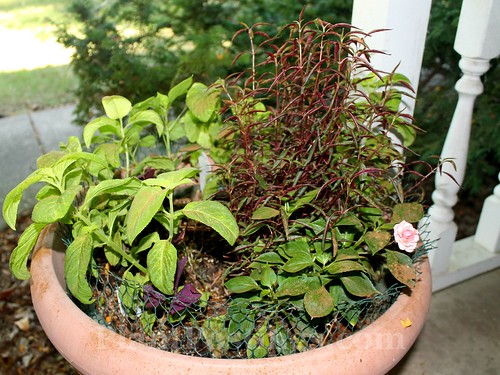
I'm also pleased with the chartreuse, magenta, pink, and green of Coleus, Impatiens, Oxalis, and Alternanthera (although I think they looked better in July).

pond pots

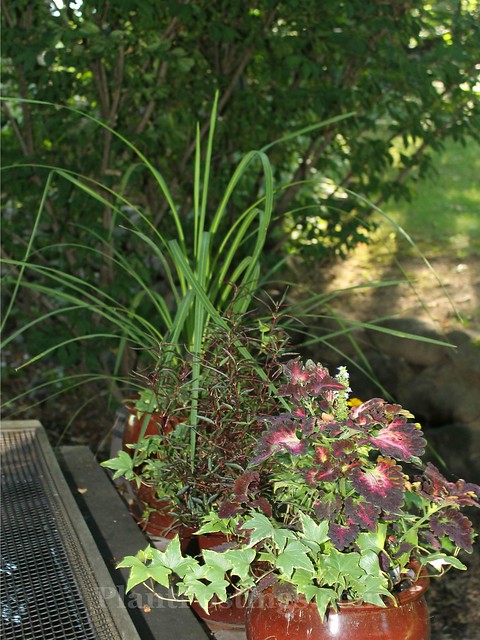
The pots by the pond have improved as the season has progressed--filled with variegated Coleus, Hedera, Alternanthera, a Cordyline and a few Marigolds (Tagetes spp.) blooming in the dappled sun.

whiskey barrel
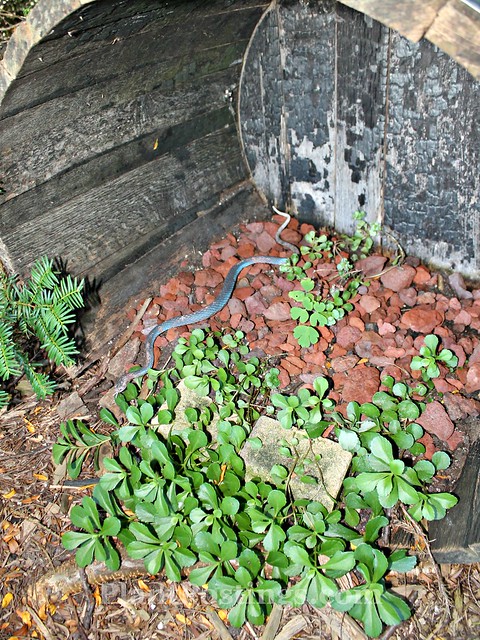
Lava rocks to discourage digging, and a fake snake to scare away critters.

I've finally figured out what works in the north-facing whiskey barrels--various Sedums that spill out the front and Wild Columbine (Aquilegia canadenis), which blooms in the spring, goes dormant, and makes a repeat appearance in late summer/early fall.

dwarf forsythia

Sometimes I curse this dwarf Forsythia (spp. unknown), because it's impossible to rake around it. But it's growing on me. The spring flowers are unimpressive, but the low-growing shrub/hedge makes a nice ground cover in the summer, and the foliage turns to variegated fiery hues (starting to show here) in the fall. This time of year, it complements the blue/green of its neighbor large-leafed Hosta.

cushion spurge

Finally, the Euphorbia polychroma has performed well this growing season, forming a pleasant ground cover. While the surrounding ferns are fading and the Hostas are nibbled away by the rabbits, the blue/green of the Euphorbia still looks relatively decent.

I'm linking this post to Pam's Foliage Follow-Up at Digging, and Anna's Wednesday Vignettes at Flutter & Hum. Visit these excellent blogs for more garden inspiration.

* * * * * * * * * * * * * * * * * *

There's still time to participate in the "Garden Lessons Learned" meme. Feel free to write a post or share one you've already written about your "Lessons Learned" during the past season. Then share your links or simple observations in the comments at: Garden Lessons Learned, Quarter 3, 2015. The link will be available always under the "Lessons Learned" tab at the top of this blog.

Please also join in Donna's Seasonal Celebrations at Gardens Eye View! You can join in with a post that fits both memes, or separate posts for one or both of them. I'll include wrap-ups on PlantPostings' Facebook page, starting within the next few days and leading up to the equinox.