Showing posts with label autumn-blooming plants. Show all posts

October 18, 2025

Seasonal Transitions for 'Six on Saturday'

tomato

Every day ... every hour ... the landscape transitions to autumn. Tomatoes still ripen in the potager, while Mother Nature warns that cooler, darker days are on the way.

In the meantime, the colors are particularly vibrant this October! Tree and shrub foliage is shifting to its dramatic palette of vibrant hues. But because we've had no frost, many annuals and perennials are still budding, blooming, and thriving.

So, for this week's "Six" I decided to focus on blends of growing-season stalwarts framed by signals of autumn:

clinopodium and autumn leaves

Lesser Calamint (Clinopodium nepeta) with a backdrop of fallen Crabapple (Malus spp.) and Chokeberry (Aronia melanocarpa) leaves.

impatiens and ozawa

Still-blooming New Guinea Impatiens (I. hawkeri); and beyond are frost-portender 'Ozawa' Alliums (A. thunbergii) and browning Ostrich Ferns (Matteuccia struthiopteris).

oxalis and senna

'Zinfandel' Oxalis (O. vulcanicola) near the multicolored, changing leaves of Wild Senna (S. hebecarpa).

viburnum and parthenocissus

The red berries and green foliage of Cranberrybush Viburnum (V. trilobum), partnered with the warm, colorful tones of Virginia Creeper (Parthenocissus quinquefolia) climbing a tree in the woods. (The Viburnum berries will remain through part of winter, although the foliage soon will color, brown, and drop).

hydrangea and callicarpa

'Invincibelle Lace' Hydrangea (H. arborescens subsp. radiata) still blooming and green, while its neighbor, Beautyberry (Callicarpa 'Pearl Glam') sports autumn shades of dark brown and green, coral, and magenta.

cosmos and sedum

And a bloom of 'Sensation Mix' Cosmos (C. bipinnatus) plopped amongst burgundy blooms of 'Autumn Joy' Sedum (Hylotelephium spectabile).

The transitions of autumn are certainly dramatic. I'm linking in with "Six on Saturday" over at Garden Ruminations. Thanks to Jim for hosting!

September 27, 2017

Plant of the Month: Purple Coneflower

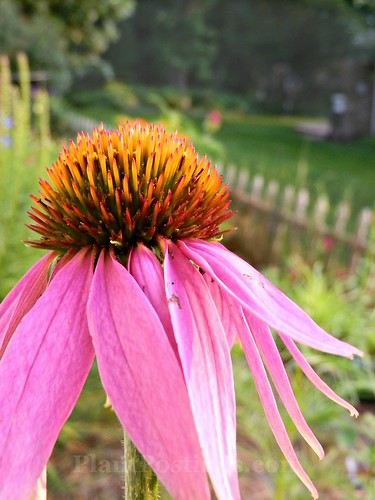
echinacea 2

Yes, I know Purple Coneflower (Echinacea purpurea) is a common North American perennial found in many gardens. Perhaps that's why I haven't featured it as "plant of the month" until now. Maybe I take it for granted.

echinacea 1

Though most of us are familiar with this beautiful, tough, flowering plant, many probably aren't aware how well it will grow in dappled or partial shade conditions. I've had it growing in the latter for many years--in my west-facing potager, where it gets bright sun for half the day. The initial plants have reliably regenerated every year for nearly two decades.

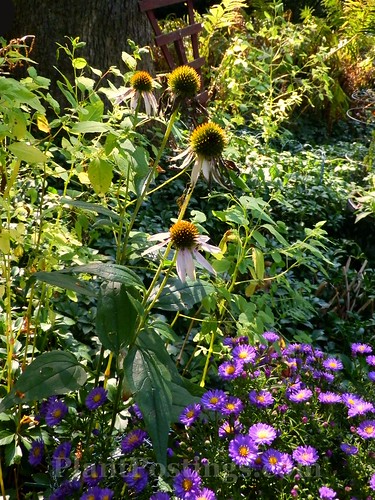
coneflowers and asters

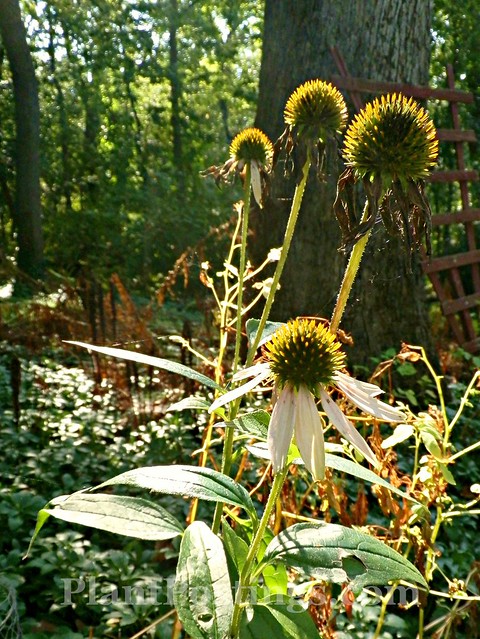
I introduced Purple Coneflower to the Oak-shaded back garden only a couple of years ago. It's taken a bit longer to get established there, but it's beginning to fill out and add its own special magic to its new location. With the south-facing back garden in dappled shade, the plants receive little glints of light throughout the day. When the sun's rays hit it just right, the plants' glowing-orb seed heads appear to be ablaze.

In shade, the blooms last longer, too, which is another pleasant discovery. So from bud in late May through final bloom in late September and seed heads in winter, this plant has staying power in dappled shade!
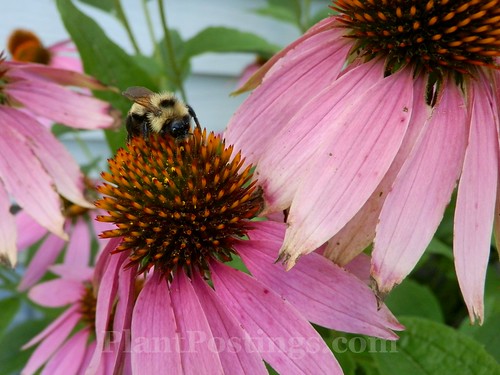
bumble

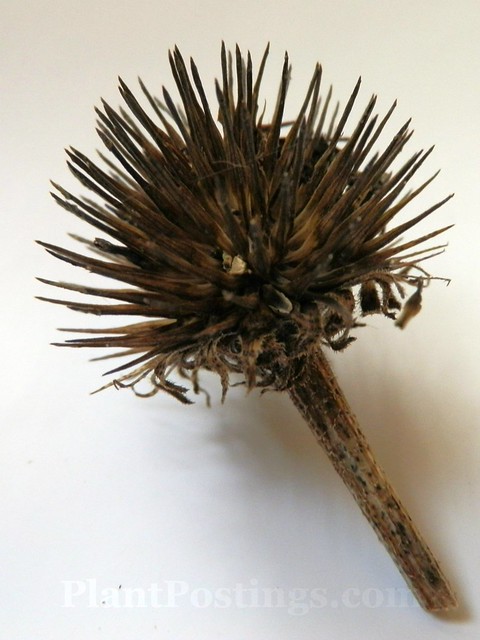
If you don't have any Echinaceas in your garden, you might want to consider them for their ease of care, drought-tolerance, beauty, and long life. They're also great cut flowers, they attract butterflies and hummingbirds, and they provide special value to native bees. In autumn and winter, the seeds offer nourishment to hungry birds.

A few more specifics about Purple Coneflower from the Lady Bird Johnson Wildflower Center:

  • Native to most of Eastern and Central North America;
  • Tolerates a wide range of soil types and moisture conditions;
  • Height: 2-5 ft.; Width: 1-3 ft.; and
  • Flowers are pink to purple, (I've found the hues are softer when grown in shade).

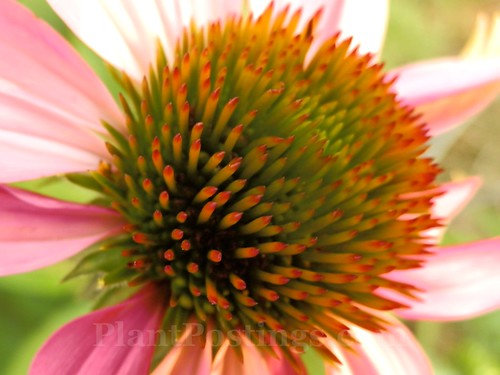
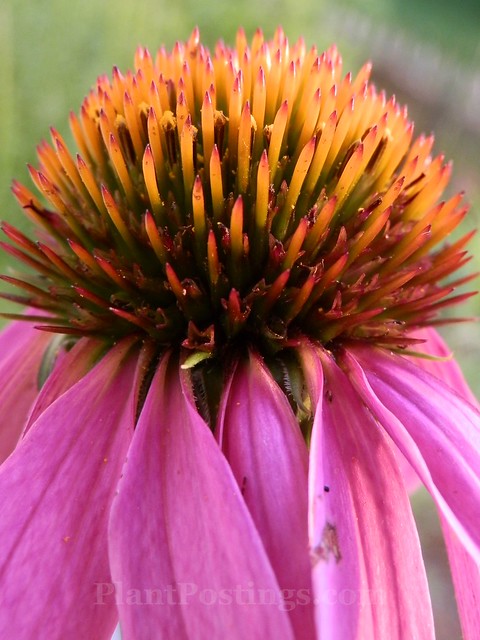
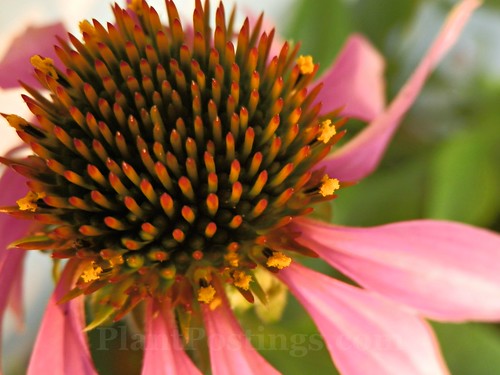
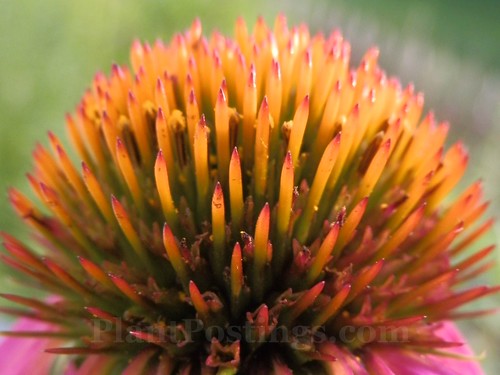
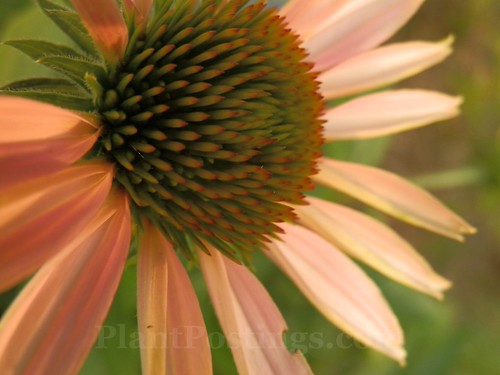
This common beauty is hardy in zones 3 to 10. The name Echinacea comes from the Greek "echino," meaning hedgehog--referring to the spiky cone disk at the center.

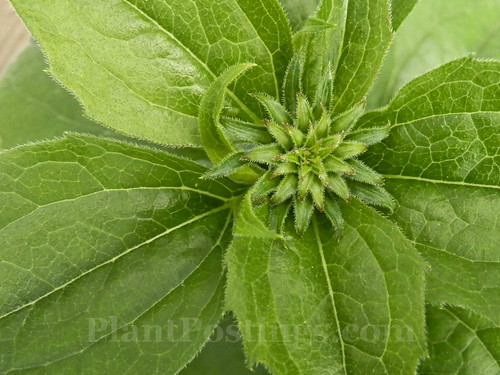
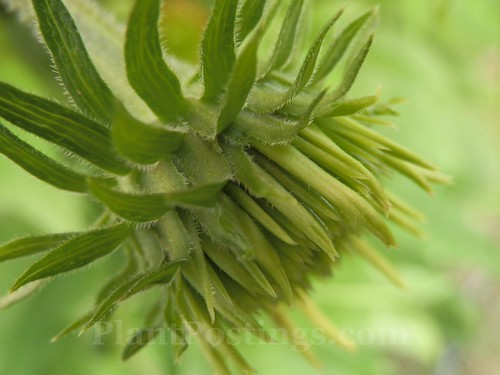
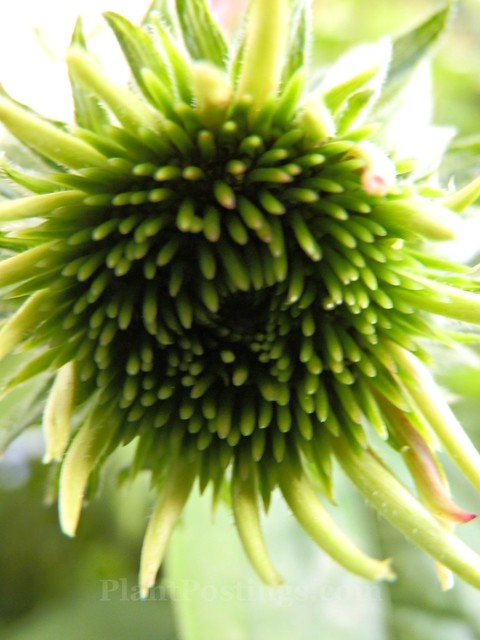
I find the stages of the flower development beautiful to watch as they transition through the growing season.

echinacea

echinacea 6

echinacea 8

echinacea 7

echinacea 5

echinacea 3

coneflower autumn 2

coneflower autumn 1

seed head

Definitely a great plant for sun, partial shade, or even dappled shade.

echinacea 10

I'm linking this post to Gail's Wildflower Wednesday celebration. Head on over to learn about other wildflowers blooming around the world.

October 15, 2016

Warm Days After Flirting With Frost

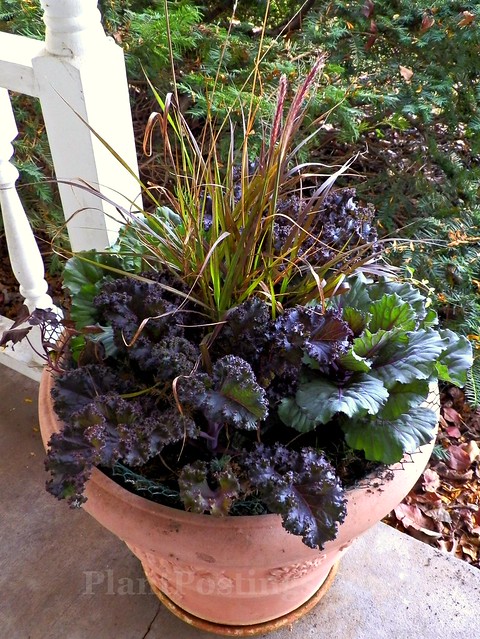
autumn pot

We’ve escaped the icy grips of Father Frost in our garden, which means an extended season of flowers. Yippee. In the countryside and along the roadways, few nectar sources remain except Asters, White Snakeroots, a few Goldenrods, and the occasional reblooming wildflowers--confused, perhaps, that a restart of warmth means it could be spring.

Of course, we know better.

So the autumn march begins ... stuffing front porch pots with hardy kales and cabbages, decorating the house for Halloween and Thanksgiving, planning for upcoming family gatherings, and preparing our psyches for that season of white and gray and brown.

But not quite yet ...

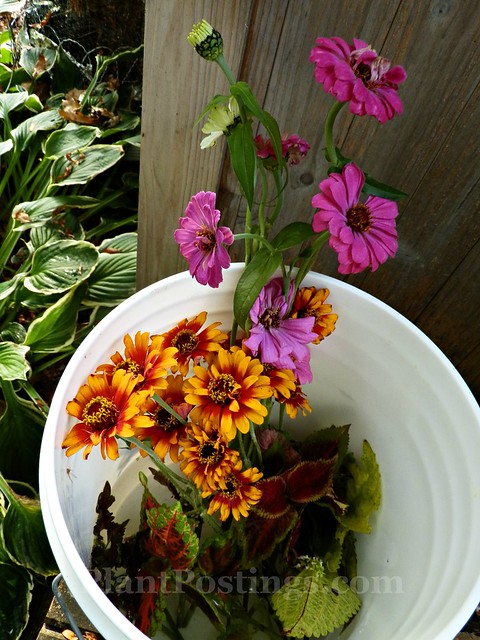
cut flowers

Since we had a threat of frost recently, I clipped the brightest Zinnias and some Coleus foliage for a floral arrangement.

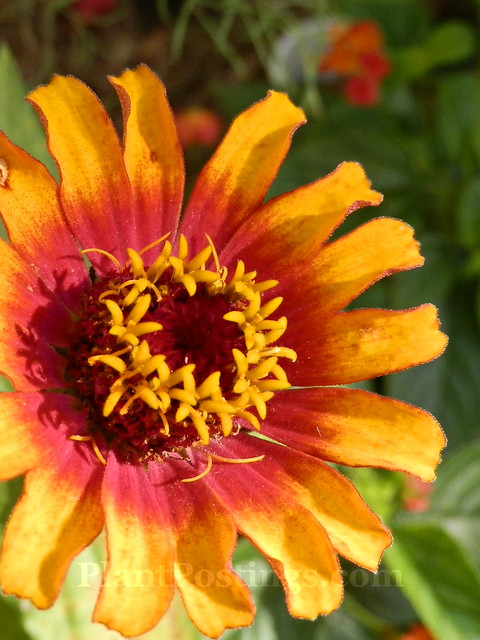
zinnnias

But after two nights in the mid-30s F (~2C), followed by a warm-up, the Zinnias (Z. elegans) are popping into bloom again.

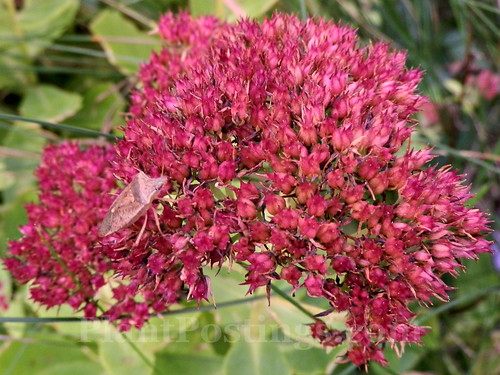
sedum

Of course, Sedum 'Autumn Joy' is in its element.

lantanas

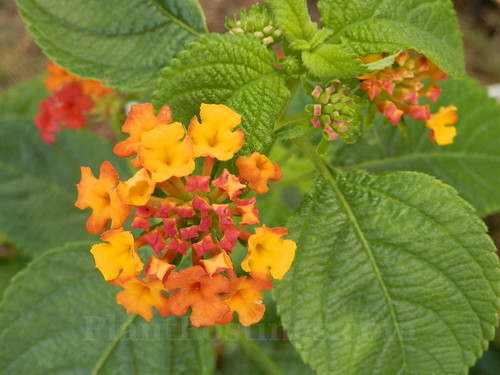
The Lantanas (L. camara) are budding and blooming as if it's May.

pentas

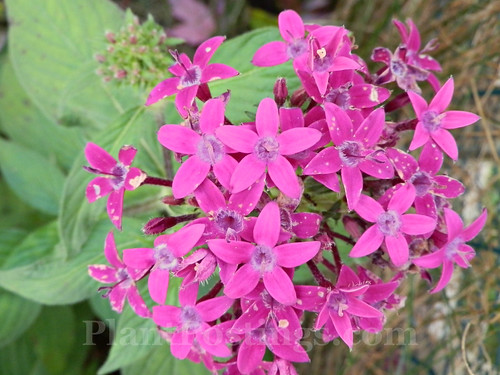
Same with the Pentas (P. lanceolata 'Graffit Violet').

cosmos

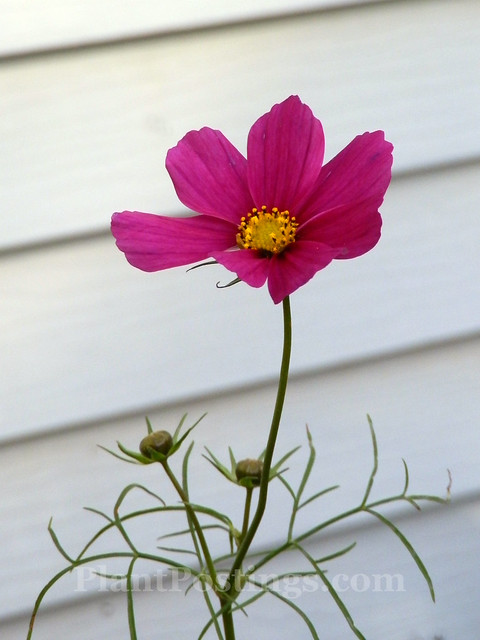
I didn't clip the remaining 'Sensation Mix' Cosmos (C. bipinnatus), thinking they could take a light frost. Turns out, they didn't need to fight for life anyway. I'll have a few more for cuttings next week.

salvia

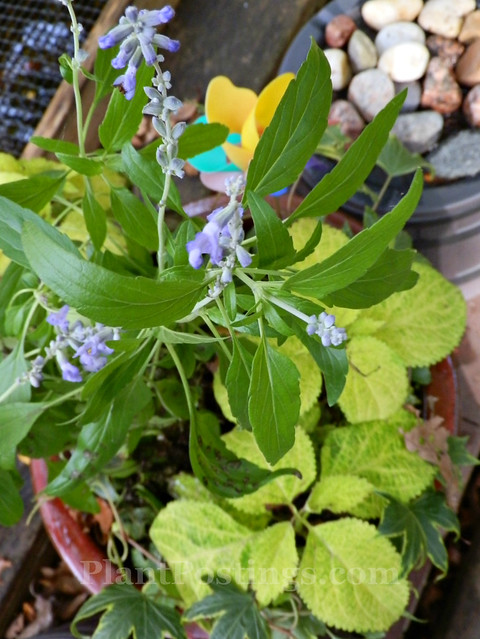
'Cathedral Sky Blue' Salvia (S. farinacea) looks straggly. I could trim it to encourage more blooms, but that would be silly since it's living on borrowed time. Might as well let it bloom for the straggler pollinators.

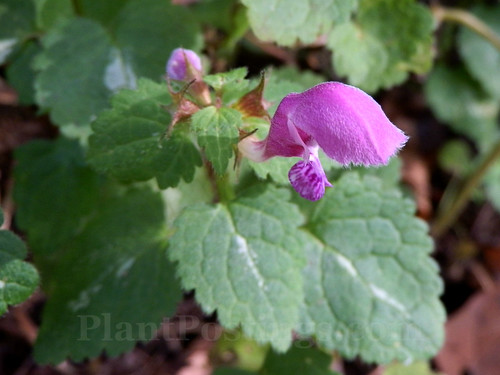
lamium

The Lamiums' (L. maculatum) little hoods also welcome any pollinators still hanging on to the last warm days of the growing season.

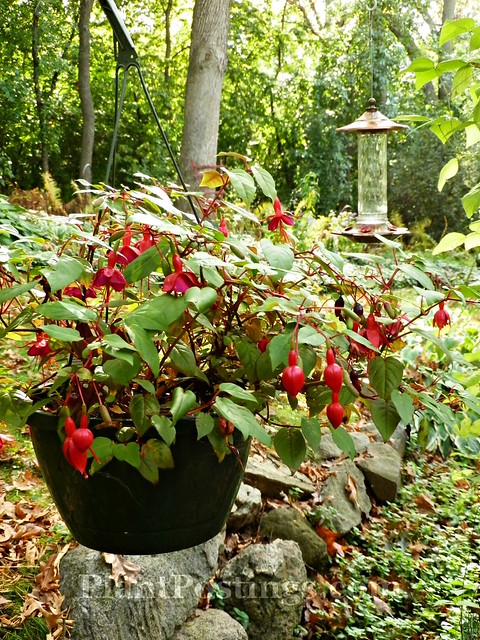
fuchsias

'Marinka' Fuchsias in hanging baskets are like ever-bearing shrubs. I overwintered them last year in the sunroom, and I'll do the same this year. Why not save a few bucks? The hummingbirds do seem to enjoy them so!

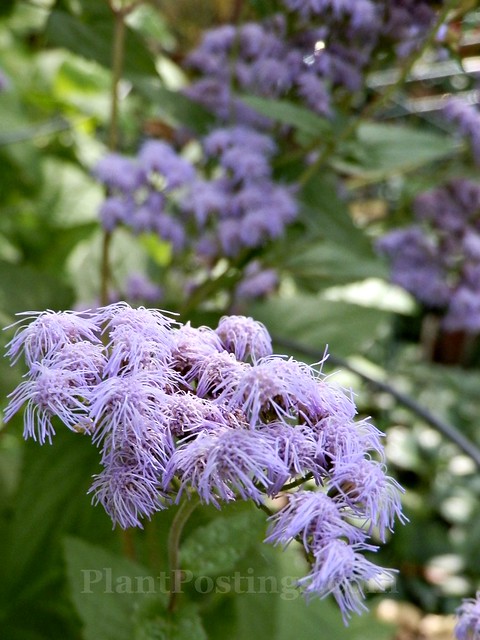
mistflower

Blue Mistflower (Conoclinium coelestinum) has been blooming since August, adding clouds of soft blue to the garden.

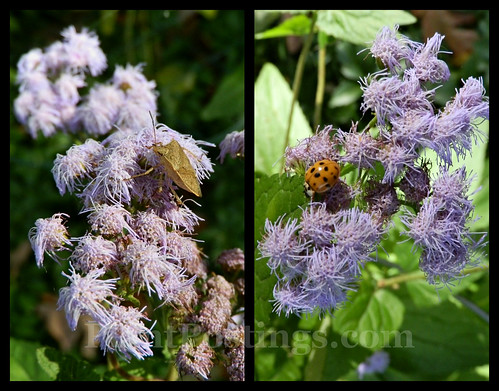
mistflower critters

I haven't seen as many bees on the Mistflower lately (unlike earlier in the season when they were busy buzzing around it), but I did notice a stink bug and a lady beetle, among other insects.

asters and mistflower

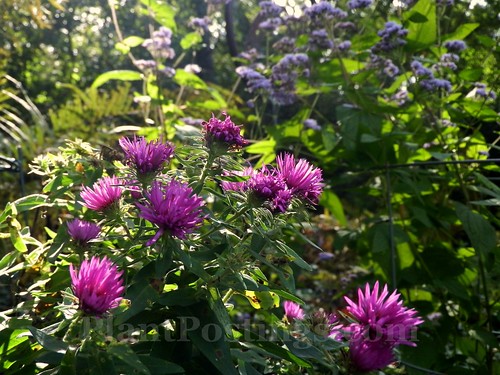
My vision for this part of the garden is starting to take shape: Mistflower makes a pretty backdrop for the 'Vibrant Dome' Asters (Symphyotrichum novae-angliae).

The days are shorter and the light is lower in the sky. Autumn is with us, but it's a mild one this year.

How about you? What's blooming and brightening your garden this October?

Garden Bloggers' Bloom Day
Foliage Follow-Up

September 27, 2016

Plant of the Month: Zigzag Goldenrod

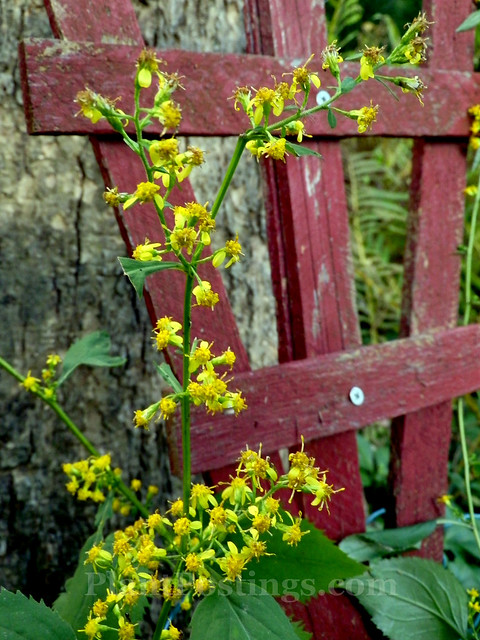
trellis

Goldenrods (Solidago spp.) are among the best nectar sources for supporting late-season native bees and migrating butterflies like the Monarch, according to The Xerces Society for Invertebrate Conservation.

shade

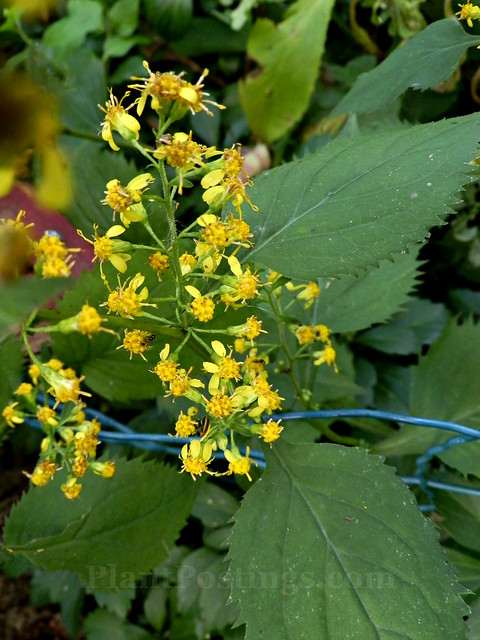
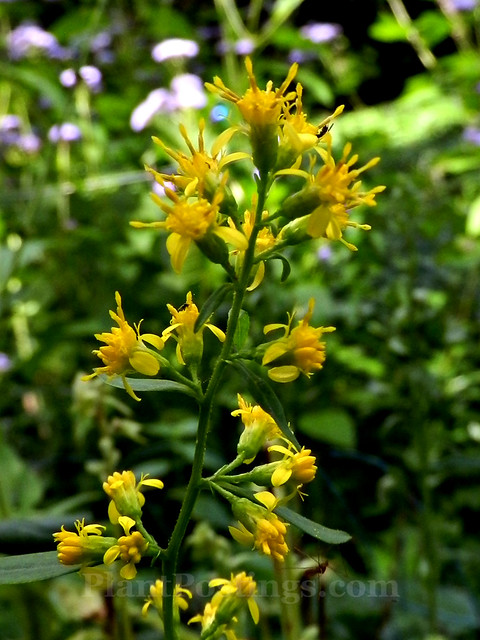
If you have a shady garden as I do, the choices within this genus are somewhat limited. But one of the Goldenrods that performs well in partial shade, and even in heavy shade, is Zigzag Goldenrod (Solidago flexicaulis), also known by the nickname Broadleaf Goldenrod. It also tolerates sunny locations. It's a sweet little bloomer in addition to helping the pollinators.

trellis 2

Just as the Coneflowers, Joe Pyes, and other summer bloomers fade, Zigzag Goldenrod shares its bright, yellow flowers. My patch is blooming against a trellis, filling in an area where Foxglove was the focal point during the early summer.

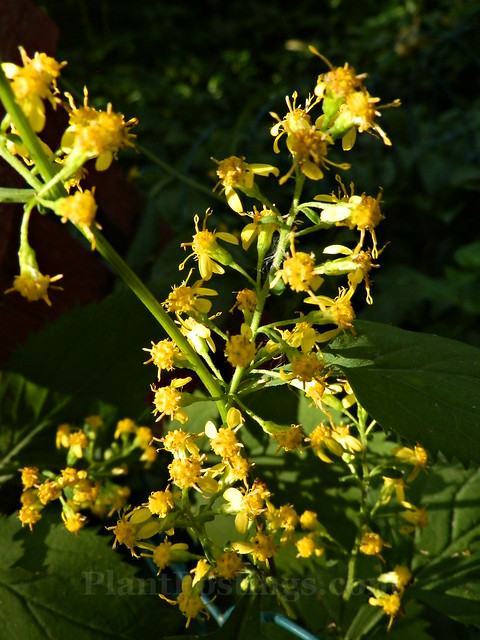
blooms & foliage

Zigzag Goldenrod is native to most of Eastern North America, according to the Missouri Botanical Garden. It prefers moist, woodland soils, but when established will tolerate some drought. Other plant characteristics include:

  • Height and spread: 1 ft. to 4 ft.;
  • USDA hardiness zones 3 to 8;
  • Propagates by self-seeding and rhizomes;
  • Prefers medium moisture and soil, but tolerates a range of soils and precipitation; and
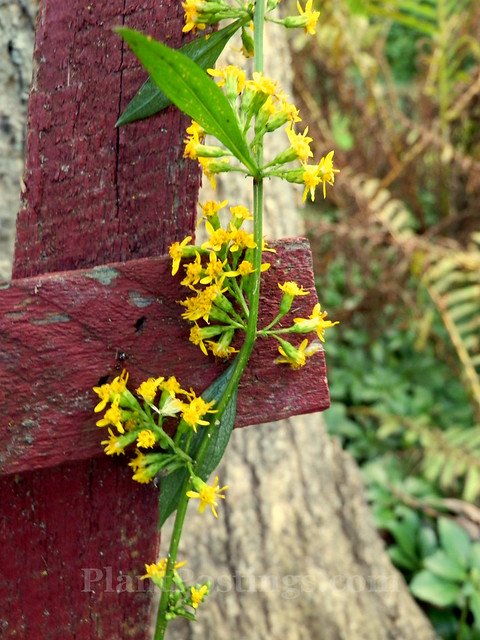
  • Distinguished by zigzag stems and toothed, broad leaves.

insects

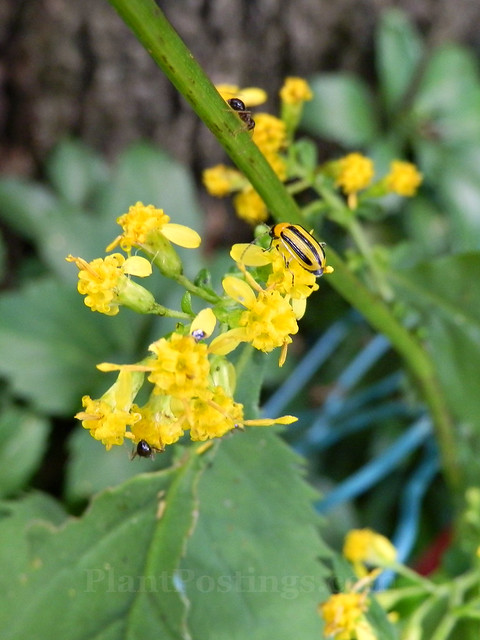
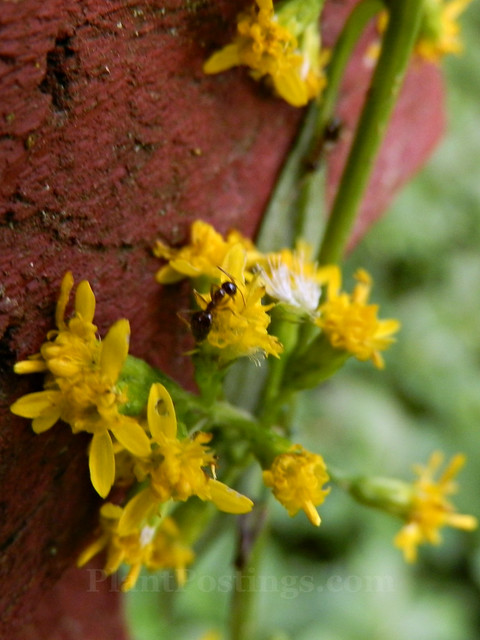
On the day I took most of these photos the wind was strong, so the bees weren't landing much. But I did see quite a few insects on the plants--spiders, ants, and beetles of various types.

cucumber beetle

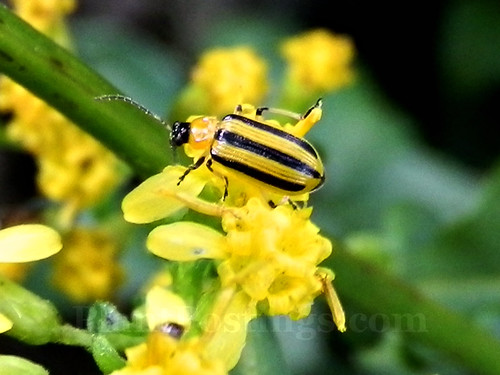
I think this is a Striped Cucumber Beetle--not a friend of the vegetable gardener. Fortunately, no veggies are located in this part of the garden, and the beetles didn't appear to be damaging the flowers. Maybe that's a good technique--plant the Goldenrod outside the vegetable garden to attract the beetles away from your edibles. Just a thought?

flluffy

I also like the appearance when the flowers begin to fade--the seedheads are fluffy and attractive.

flower stem

Zigzag Goldenrod has been in my garden for only a few years, but it's earned my admiration and respect for its beauty and functionality in the autumn landscape.

(I'm linking this post to Wildflower Wednesday.)

September 21, 2015

A Season of Goodbyes (and a Few Surprises)

IMG_4791

If you live in a place that changes with the seasons, you know the tug of realizing--at some point each autumn--you've probably seen the last [fill-in-the-blank] of the year until next spring. Migratory species leave; perennials dry up and go dormant; the picture-perfect, carefree, comfortable days are numbered.

But if you're like me, you occasionally experience a surprise, or two, or three ... or more.

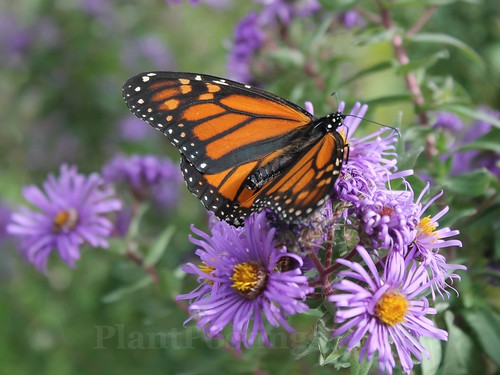
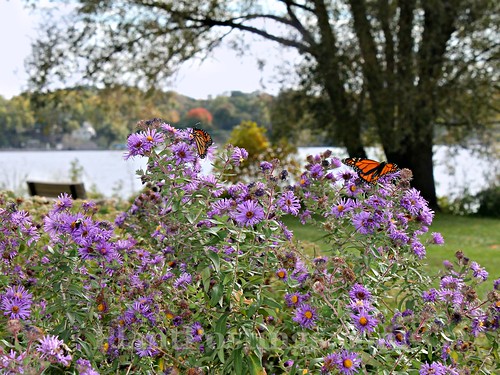
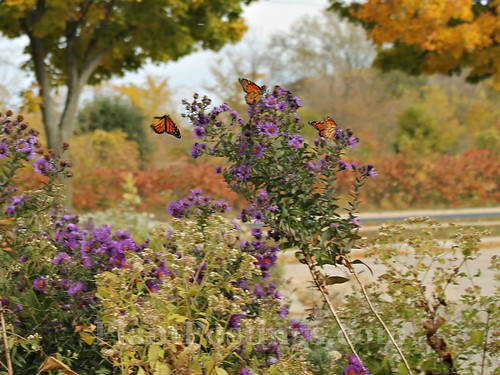
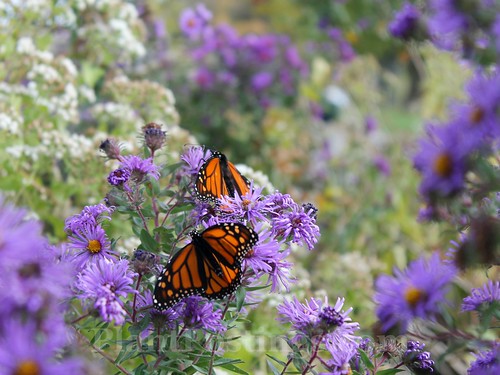
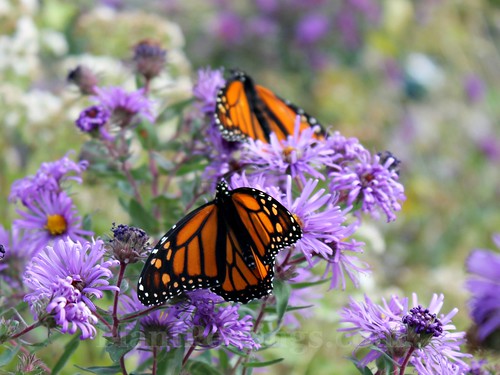
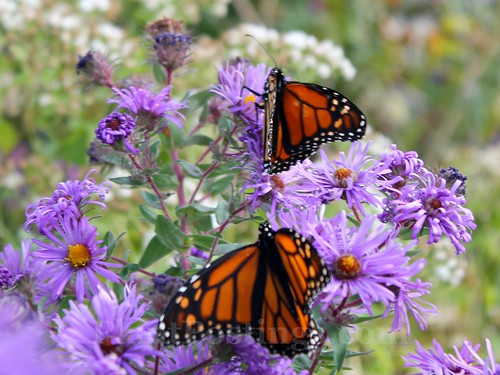
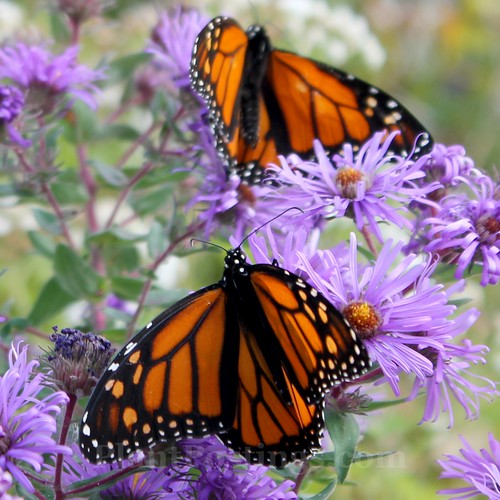
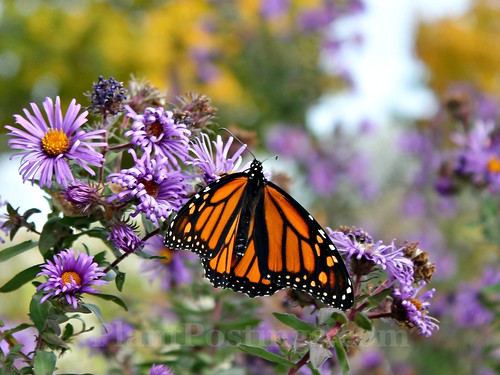
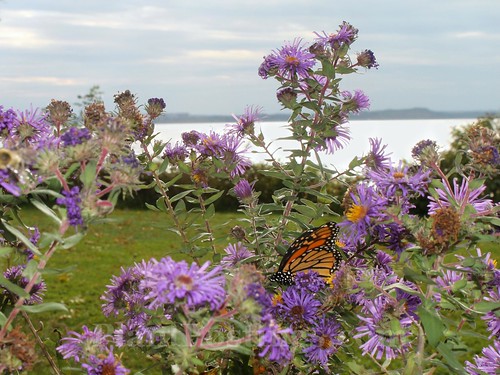
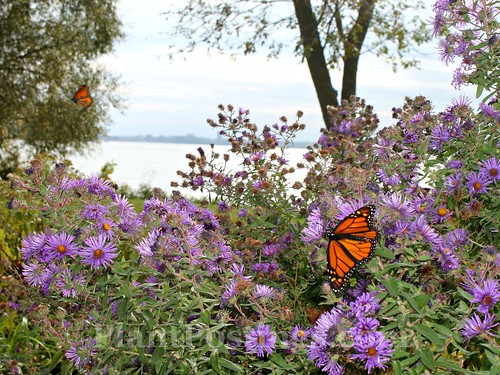
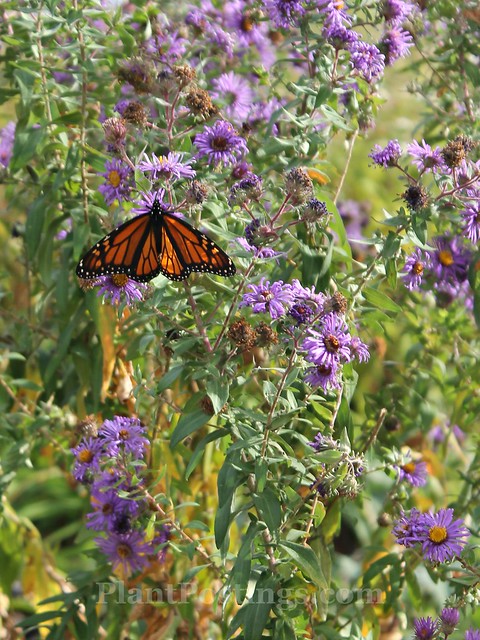
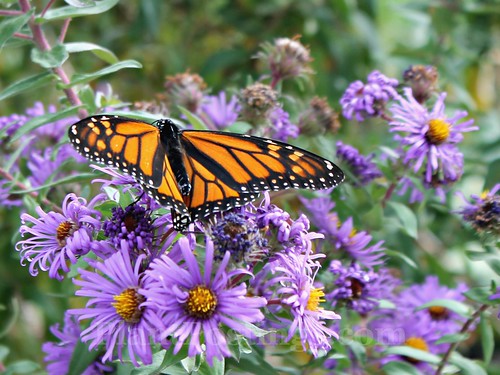
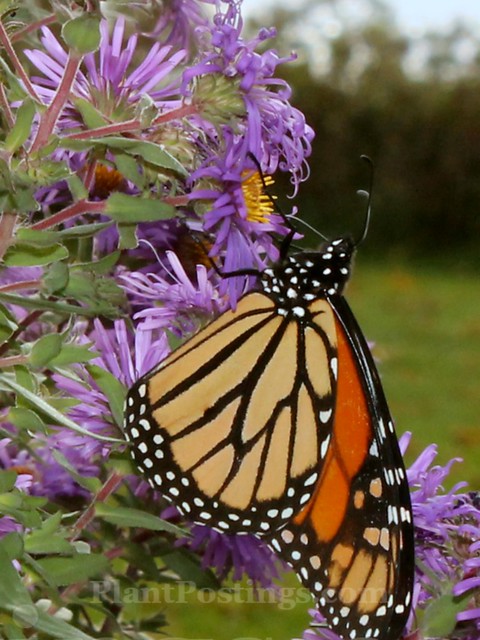
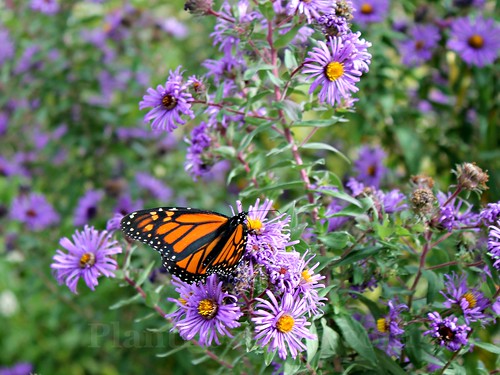
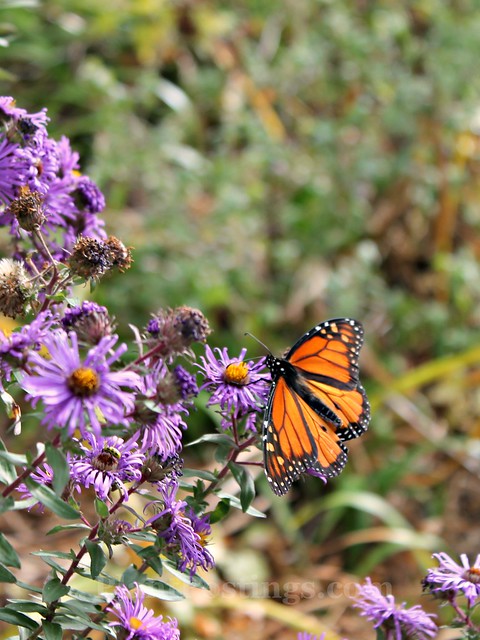
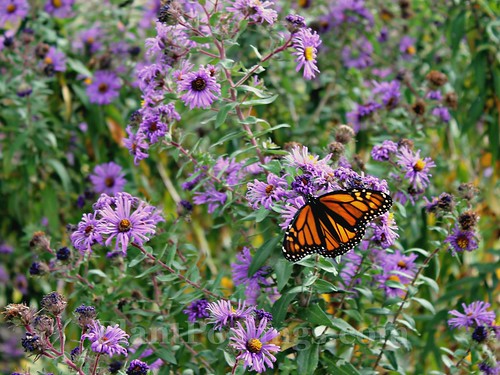
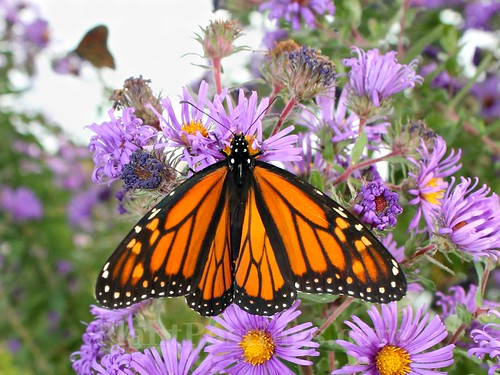
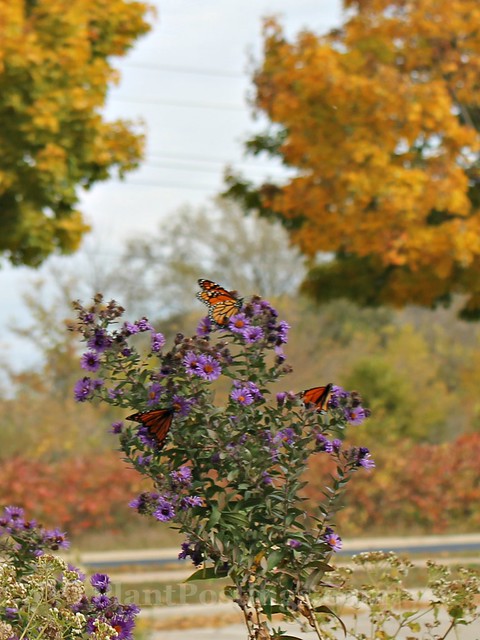
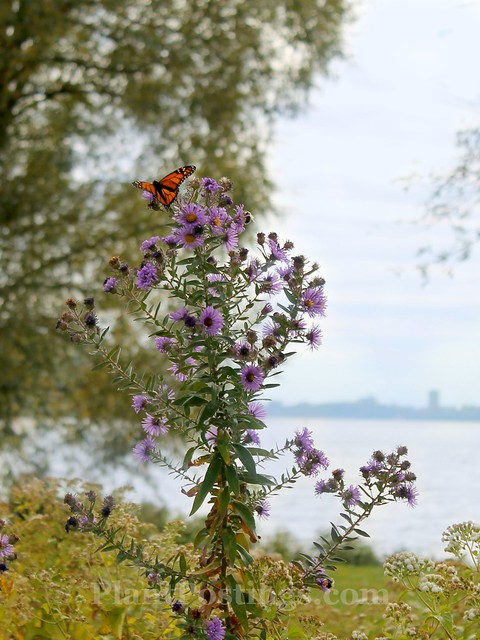
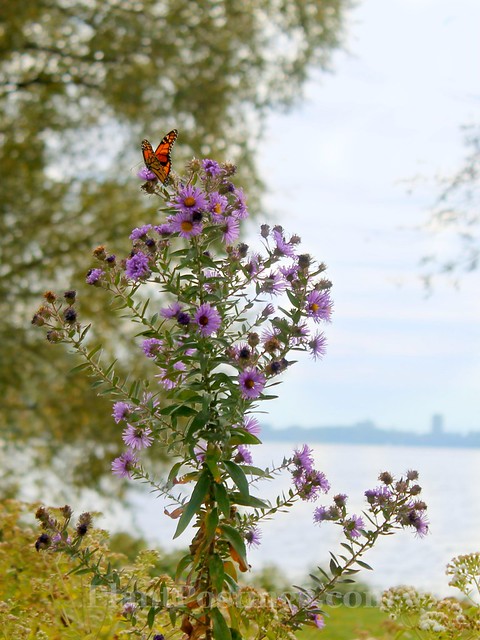
Like the time last October, when I decided to drive around town to capture a few photos and memories of the autumn colors before they faded. I figured I'd seen the last Monarch butterfly of the season, since I hadn't seen one for at least a week.

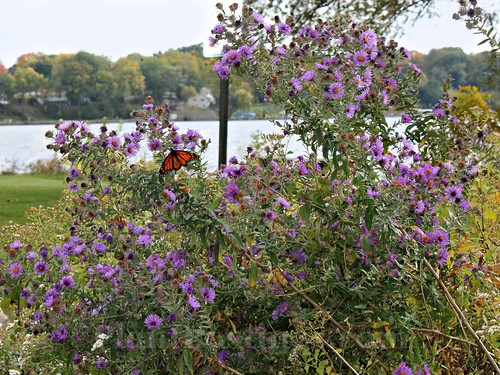
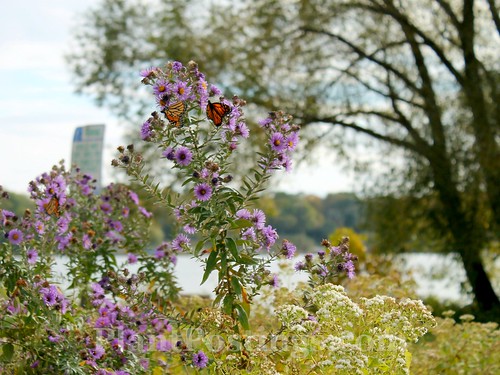
And then I saw one, as I drove up to a city park along Madison's Lake Mendota.

IMG_4775

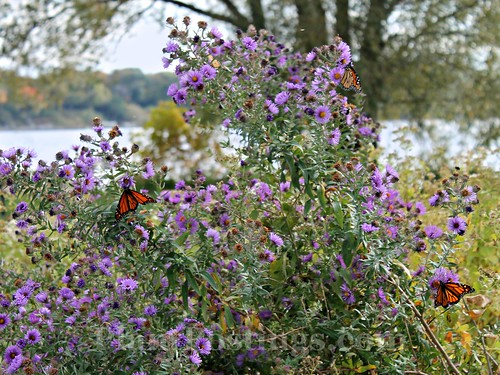
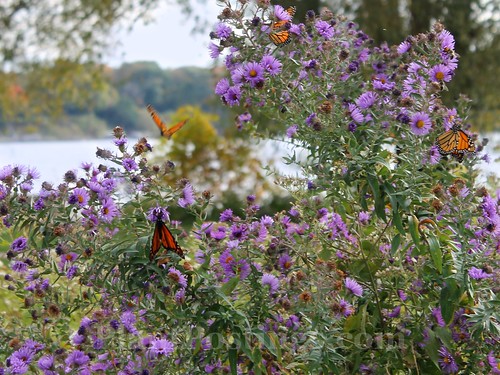
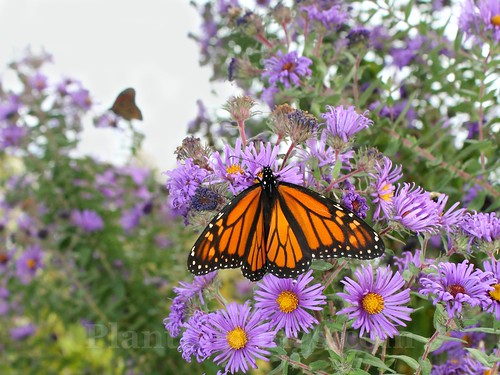
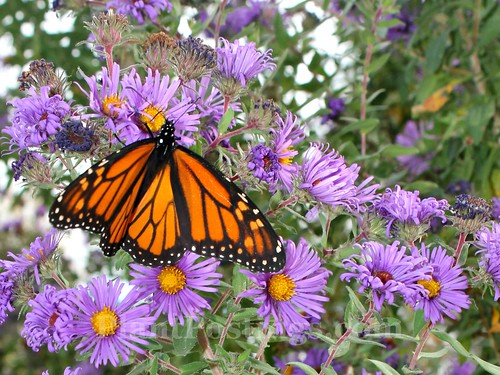
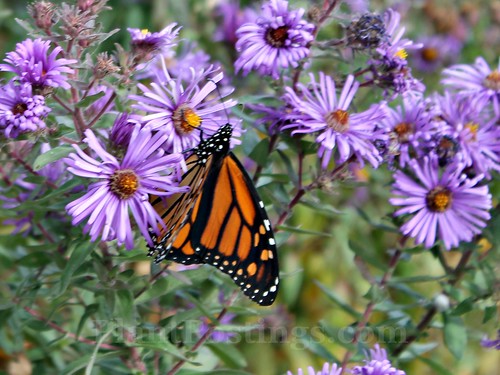
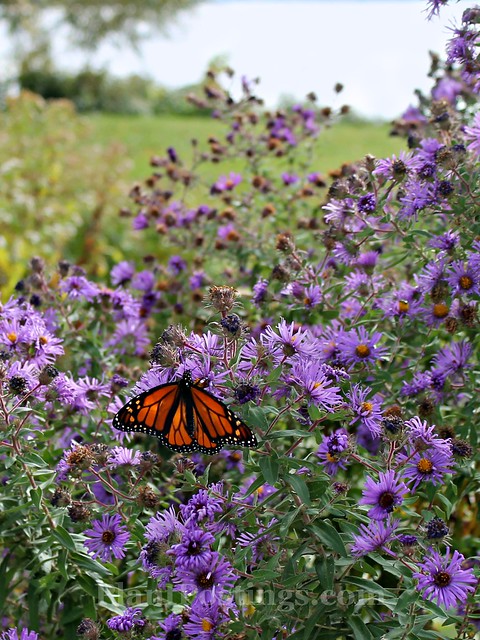
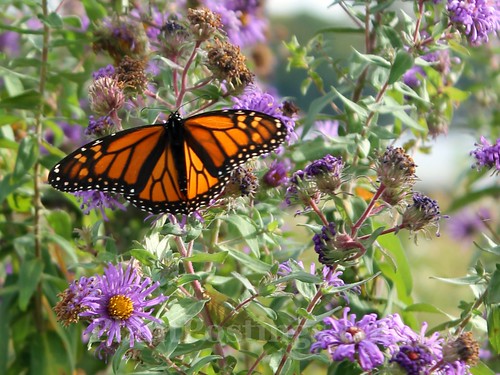
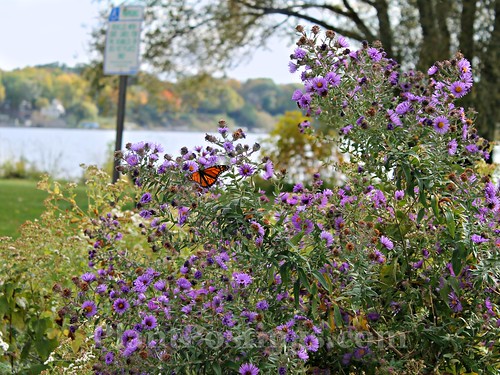
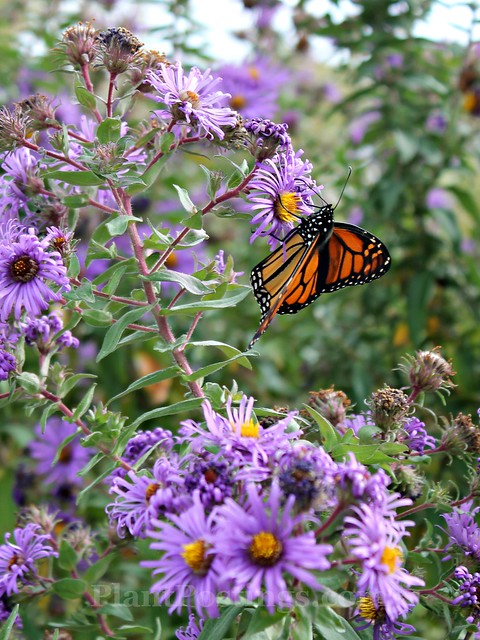
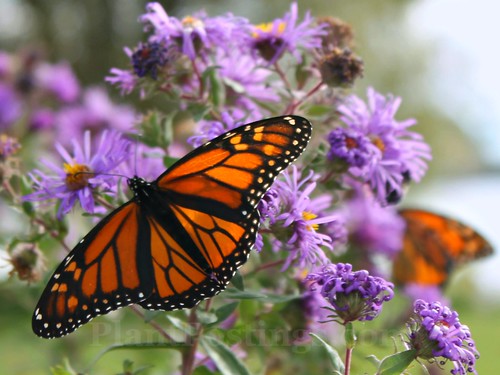
I clambered out of my car and carefully inched over to the beautiful stands of Asters (Symphyotrichum novae-angliae), to snap a joyful photo of the little beauty.

And then I noticed another one.

IMG_4777

And a couple more.

IMG_4778

IMG_4779

IMG_4810

And then a few more.

IMG_4811

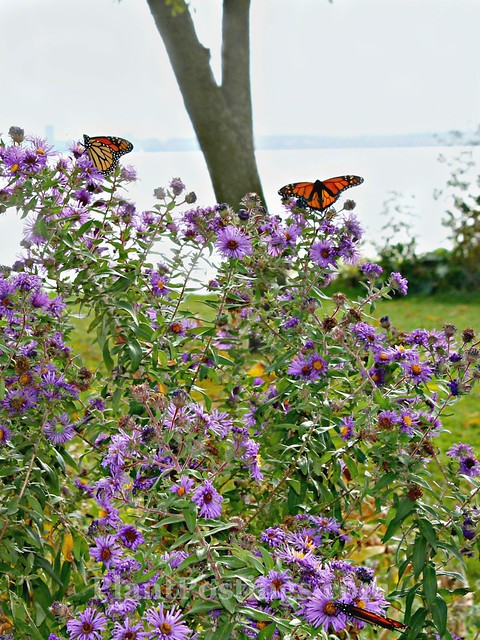
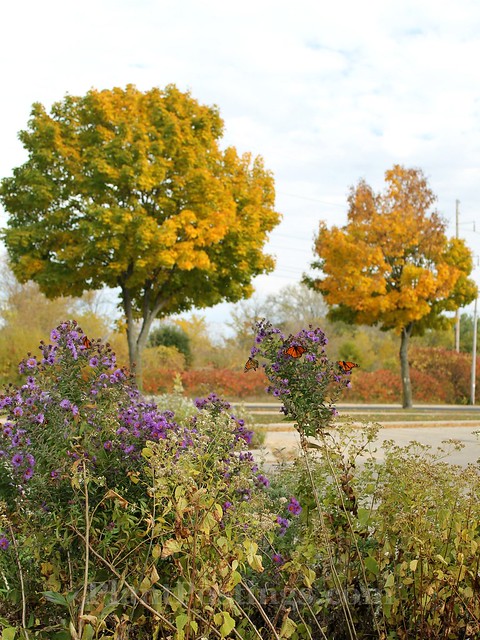
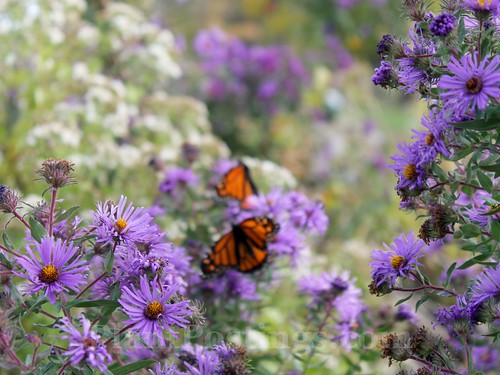
I looked across the parking lot and saw more.

IMG_4813

IMG_4815

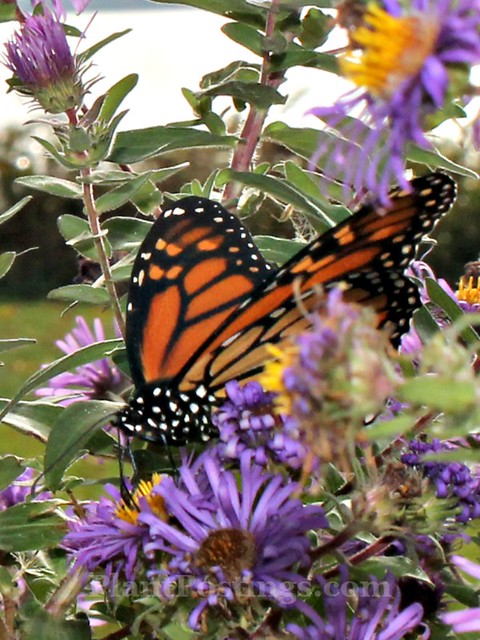
Gosh, they were loving those Asters.

IMG_4843

IMG_4842

They weren't moving very fast, because it was rather chilly and the skies were cloudy, so it was easy to photograph them.

IMG_4836

IMG_4837

IMG_4838

IMG_4839

IMG_4840

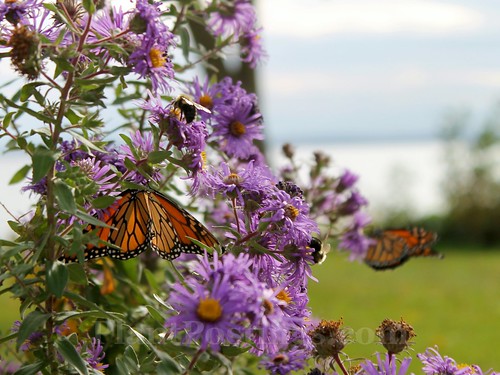
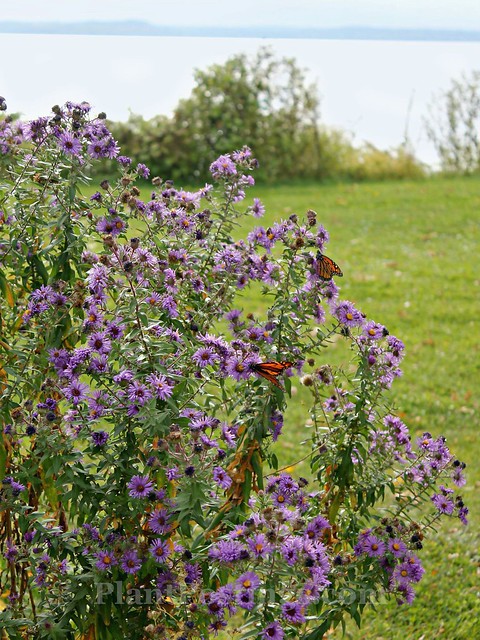
Apparently this grouping of Asters and other fall-blooming plants was placed at just the right spot for Monarchs flying off the lake--a way-station of nectar for butterflies on their journey south.

IMG_4832

IMG_4830

A few bumblebee friends joined them.

IMG_4829

I was captivated by this unexpected, late-season gift of grace. I took it all in, snapped a few photos, and observed.

IMG_4827

IMG_4826

IMG_4825

IMG_4824

IMG_4818

IMG_4817

IMG_4807

IMG_4806

IMG_4801

IMG_4799

IMG_4798

IMG_4787

IMG_4783

IMG_4781

IMG_4844

IMG_4816

Until it was time for me to leave,

IMG_4803

And time to wish them safe travels,

IMG_4804

Until their great-grandchildren returned the next year.

monarch display

I'm linking this post to Donna's "Seasonal Celebrations" at Gardens Eye View, and Michelle's Nature Notes over at Rambling Woods. Please visit their beautiful blogs for more seasonal inspiration.

Happy autumn (and spring to those in the Southern Hemisphere)! And may you have many more butterflies and [fill-in-the-blanks] in your future!