September 23, 2020

Surrendering to Seeds

lobelia
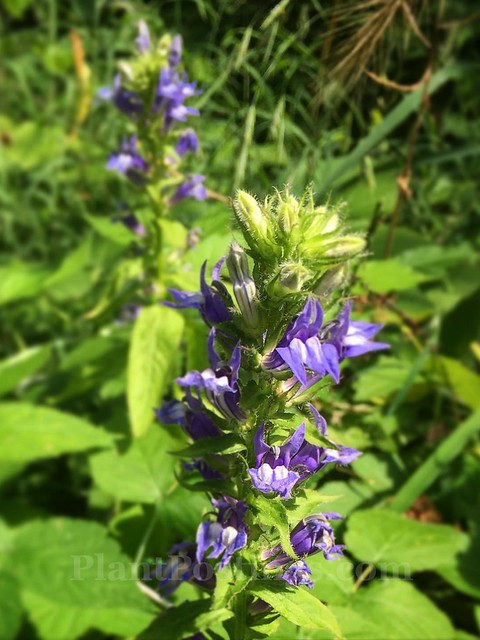
Great Blue Lobelia (Lobelia siphilitica), one of several plants I'll try to grow from seed for next year's garden.

In this season of senescence, I've made a decision about one of the garden plots on our property. It's an area where the wild woods meet the cultivated garden beds. It's an island and focal point in the middle of the backyard. It's filled with an evergreen ground cover of Pachysandra (P. terminalis). It offers dappled sun/shade to plants throughout the day.

And it's infested with rabbits.

I say this because I've spent too much time and money trying to get plants started in this part of the garden. The list of consumed/destroyed plants, gallons of rabbit repellent, and rabbit stories is too long to include here. So, let's just say it's time to surrender.

First of all, I'm not unhappy with the basic framework of this garden area.

ferns

The ferns are lush and lovely in the late spring and early summer.

alliums

Especially when joined by the giant Alliums in late May through early July.

swamp milkweed

In mid-summer, Swamp Milkweed (Asclepias incarnata) has shown promise here, too, although the past couple of years have been marginal for this plant in this particular spot.

bugbane

This graceful, towering native plant, Bugbane (Actaea racemosa), will always have a summer place here. Rabbits don't touch it.
hyacinth bean

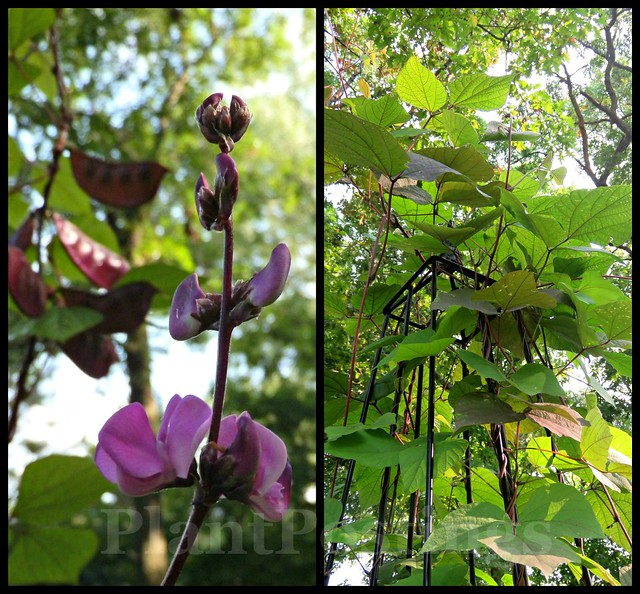
Hyacinth Bean vine (Lablab purpureus) is happy here, too, growing in a pot protected from rabbits with caging at the bottom, and growing up an obelisk.

monarda

Wild Bergamot (Monarda fistulosa) is a new addition to this part of the garden. It grows fine here, but the rabbits ate most of it. I scattered seeds from the few flowers that survived. Stay tuned.
surprise lilies

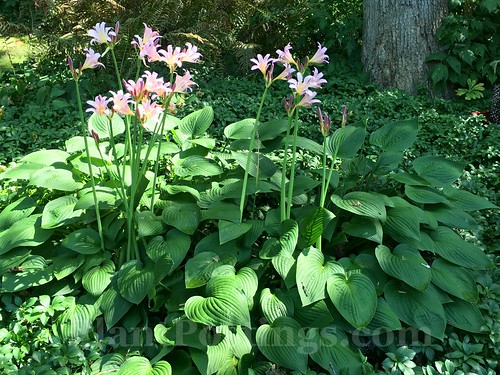
When summer starts to wind down, the Surprise Lilies (Lycoris squamigera) pop up through skirts of hosta foliage. Rabbits never seem to eat Lycoris.
mistflower

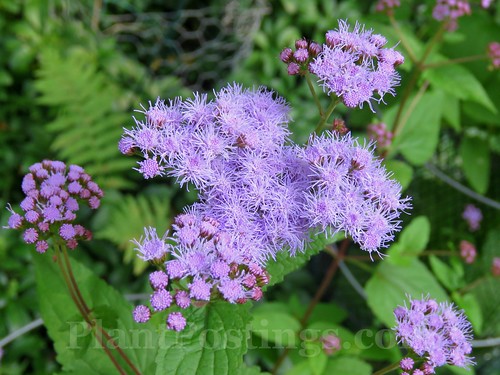
And as summer turns to autumn, Blue Mistflower (Conoclinium coelestinum) adds pops of violet to the area. Of course, the rabbits eat this plant voraciously, so it, too, must be caged. The fortunate thing about this plant is that it propagates easily from seed.
goldenrod

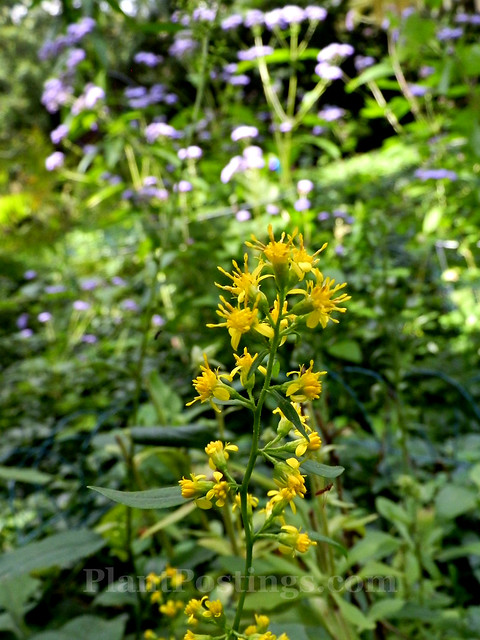
ZigZag Goldenrod (Solidago flexicaulis), another rabbit favorite, has somehow found a way to survive by a thread.

My point? From now on, I will only plant species in this part of the garden that I know repel rabbits, already exist in my garden and can be transplanted, or can be grown in pots. No more investments in plants. Even the ones that rabbits supposedly don't eat often get munched to the ground. I want more color in the middle of summer, and I'm pleased with a few things that happened this year--things I'll repeat and expand on next year. 
green pots

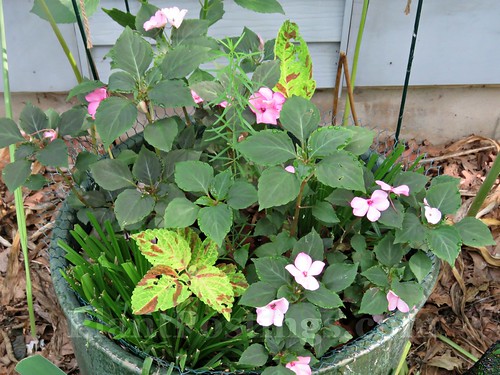
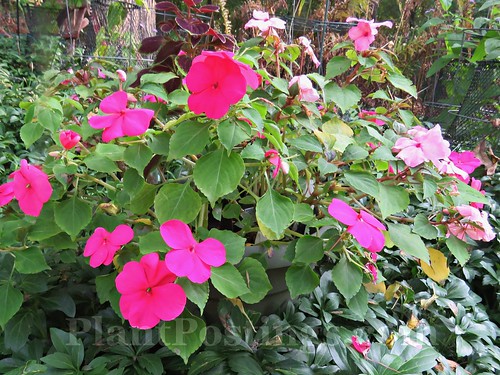
For example, I added two pots of Impatiens and Coleus. You can barely see the green pots amid the Pachysandra. I'm planning to use more pots (and hopefully fewer rabbit-repelling caging devices) in the garden next summer.

fountain

A few new decorative items are adding color midseason, too. I really like this new glass birdbath, and I added a solar-powered fountain to it for more visual interest. Next year, the potted annual plant colors will complement it better.

I'm taking a chance with one new plant--several plugs of Golden Groundsel (Packera aurea). Everything I read about this plant says it forms dense colonies and is mammal-resistant. We'll see.

In late fall, I'll also be scattering seeds of several native plants for partial sun or shade--plants that rabbits generally don't eat, including:

Flowering spurge (Euphorbia corollata)
Dutchmen's Breeches (Dicentra cucullaria)
Downy Wood Mint (Blephilia ciliata)
Midland Shooting Star (Dodecatheon meadia)
Great Blue Lobelia (L. siphilitica)
Hoary Skullcap (Scutellaria incana)

Seeds are less expensive than plants and can cover a wider area. The investment in time, effort, and expectations won't be as great.

I've surrendered to seeds.

September 06, 2020

Reflecting on Gardening Mentors

painting

Dear gardening friends: I've been holding off on blogging and visiting my favorite blogs for some time now. My mom passed in July. I won't go into the details because there's just too much. Plus, we all face death at some time or another, so you all know how difficult it is to lose someone you love. She didn't die from COVID-19, although that certainly complicated things.

Anyway, my emotions are a little ragged, life has been a little crazy, and we're still busy with this and that. I'm just now getting back to thinking about blogging. I love it, and I love your blogs, too. I do plan for many plant conversations in the months ahead!

My mom, my paternal grandmother, and my dad were my first gardening and nature influencers and mentors. Mom was a gardener (she always had beautiful borders and interesting plants) and Dad was a Boy Scout executive (he helped me appreciate nature at a very early age). (Dad is still with us, and he certainly is facing adjustments of his own.) Grandma was a gardener, plant-lover, and painter. The vase with flowers shown here was one Grandma painted, Dad framed, and Mom appreciated enough to hang on her bedroom wall. I am honored and blessed to be able to display it in my own home now to remember them all.

Thank you for being patient with me. Garden bloggers and writers are truly special. I appreciate you all!

July 10, 2020

On the Bright Side: Pots of Plenty

IMG_5659

Several personal and professional activities have kept me away from gardening and blogging lately, and the garden and my lack of blogging activity show it.

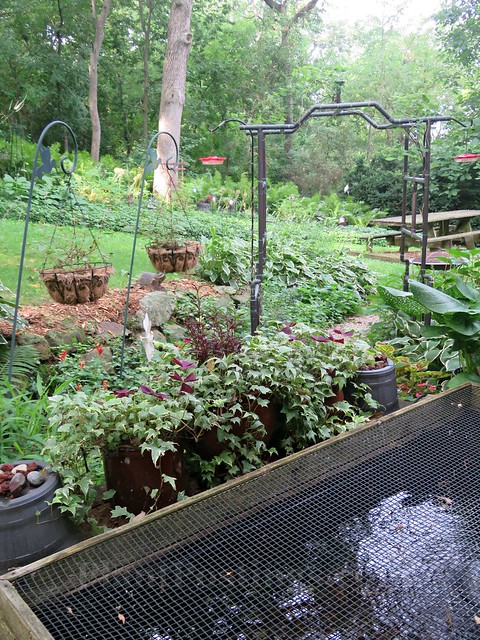
Fortunately, the potted plants are doing pretty well with heat, sunshine, and plenty of watering. The old standbys—potted English Ivy (Hedera helix), Purple Shamrocks (Oxalis triangularis), and 'Red Threads' Alternanthera (A. ficoidea)—are happy to be outside after overwintering in the sunroom.

IMG_5642

They're part of a grouping around the fish pond on the patio that creates a happy little outdoor "room" during the growing season.

IMG_5653

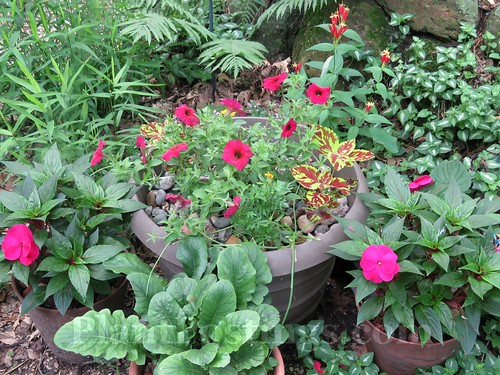
It's always pleasant when the groupings work better than expected—this one includes New Guinea Impatiens (I. hawkeri) 'Magnum Magenta,' a pot of 'Supercal Premium Bordeaux' Petunias (Petchoa cross), and 'Splish Splash' Coleus (C. scutellarioides). Surrounding foliage of Gerbera jamesonii, Chasmanthium latifolium, Lamium maculatum, and ferns frame the flowers. (Also, blooming Spigelia marilandica in the background—although it clashes a bit).

The big pot also includes Marigolds (Tagetes spp.) and scallions (I need to trim them back!) around the edges to discourage squirrels and chipmunks.

IMG_5651

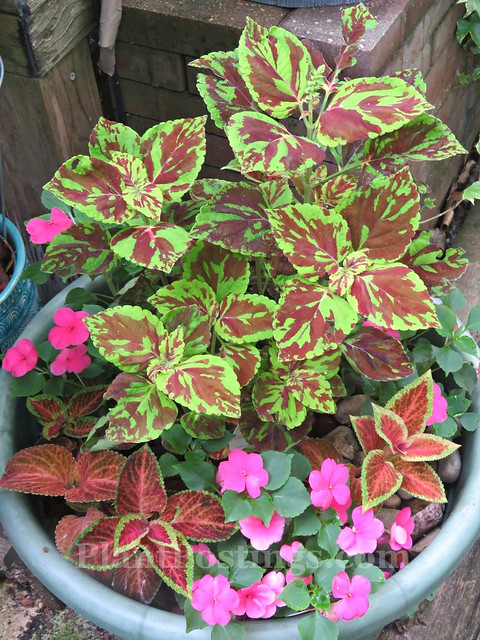
For some reason, I had trouble getting Coleus going this spring/summer, which has never happened to me before. I'm not sure why, but this pot worked out, with a variety of Coleus and some bright pink Impatiens (I. walleriana). 'Splish Splash' Coleus, by far, has performed the best for me this year, and I'm adding cuttings of it to other locations.

IMG_5649

Not the best stage for the 'Super Cascade Pink' Petunias, but there will be more in this pot as they bloom until the first frost. I like them surrounded by the Impatiens, which also have many months of flowers and foliage to share. Calla Lily (Zantedeschia aethiopica) foliage in the background.

IMG_5647

This pot is mostly Coleus, including 'Vino,' which struggled at first but came back, and more 'Splish Splash.'

IMG_5661

This is probably my favorite pot, although rain damage has it looking a little ragged. I like the idea of combining native plants and annuals in planters. In this case, I added a native sedge (I think it's Calex lurida) that I found in the yard and a tiny sprig of Whorled Milkweed (Asclepias verticillata) that I found in the sunny garden. This pot gets dappled sunlight all day, since it faces south and has the benefit of bright sun for a portion of the day. Hopefully, the milkweed will survive the winter in the pot and expand next year. Again, more 'Splish Splash' and Impatiens.

IMG_5669

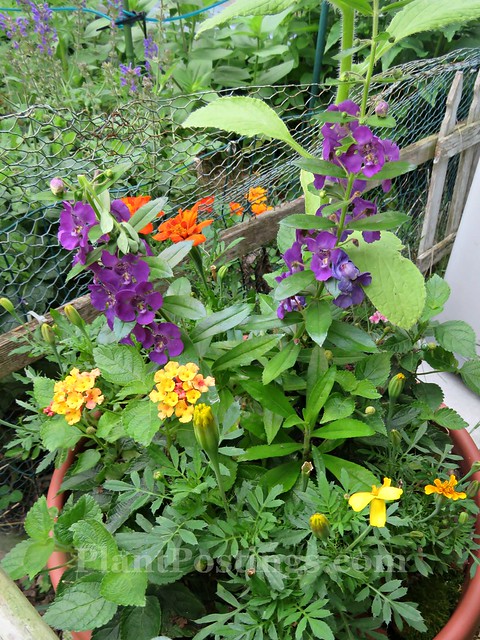
Next to the sunny garden, I have a pot that's hard to photograph as it's surrounded by fencing and the air conditioning unit. But it certainly brightens its spot, filled with Marigolds, 'Bandana Rose' Lantanas (L. camara), and 'Angelface Blue' Angelonia hybrid.

IMG_5667

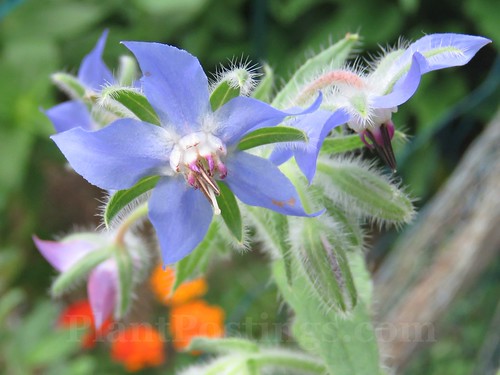
I couldn't capture it in the above photo, but a volunteer of Borage (Borago officinalis), from last year, seeded itself in the pot. I'll cut it back after it's finished blooming, but I like it here. That blue!

I hope you're all doing well in spite of the strange times. Gardens are always good therapy—even when we wish we had more time (or more quality time) to spend in them.