It's spring ephemeral time in my garden and each day brings new blooms and new discoveries. With warm weather, they're fading fast, but I managed to capture a few, including Claytonia virginica, nicknamed Spring Beauties.
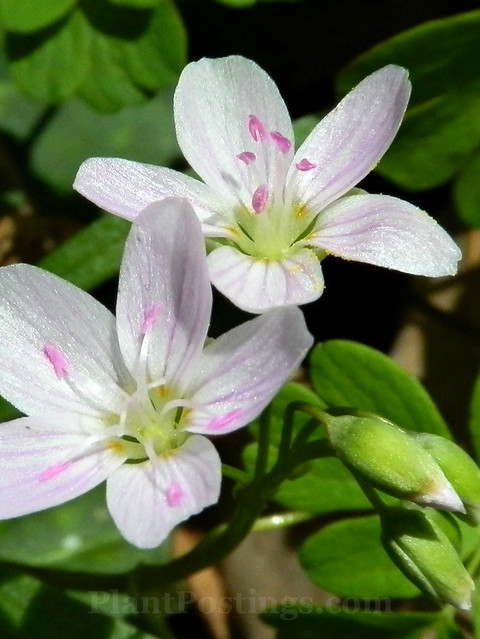
From a distance, Spring Beauties look similar to other tiny white wildflowers, but on closer inspection several features set this ephemeral apart. Each stem holds a floppy grouping of buds that open into five-petaled, half-inch flowers. The petals are lined with pinkish/lavender stripes. The five stamens actually have pink anthers!
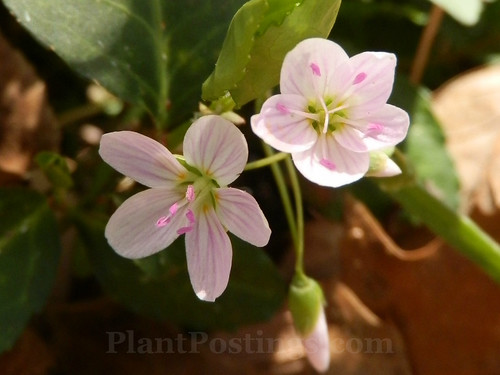
The stigma forms a three-part prong that reminds me of the cross-shaped stigma on the Evening Primrose.
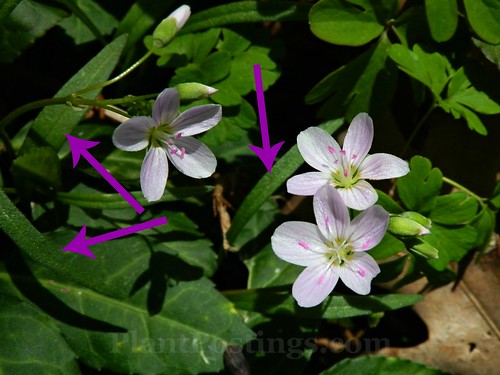
In my garden, the foliage of the Spring Beauties intermingles with the more showy foliage of neighboring ephemerals and ground covers. But the arrows in the photo show its grass-like structure.
This tiny treasure is visited by numerous pollinators, including various bees, flies, and occasionally butterflies and moths, according to Illinoiswildflowers.info. A close relative, Claytonia carolina, is found more often in the Southern U.S., although C. virginica is native to most of Eastern North America, so their ranges overlap.
Apparently, the underground tubers of Spring Beauty are not only edible, but quite tasty. Because of this, another nickname for the plant is Fairy Spud. Edible plants specialist, Euell Gibbons devoted a chapter to Spring Beauties in his book, "Stalking the Wild Asparagus," describing them as similar to boiled Chestnuts, but with a "softer, smoother texture." Click here to see and learn more about the tubers.
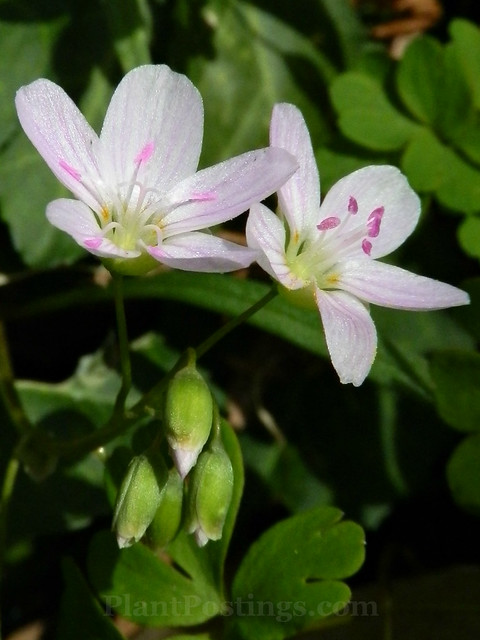
Spring Beauties are hardy in USDA zones 5 to 9, and are most common in partially shaded or woodland locations, according to the Brooklyn Botanic Garden. The plant is listed as endangered in Massachusetts and protected in Rhode Island.
Here are a couple of other ephemerals recently blooming in my garden:
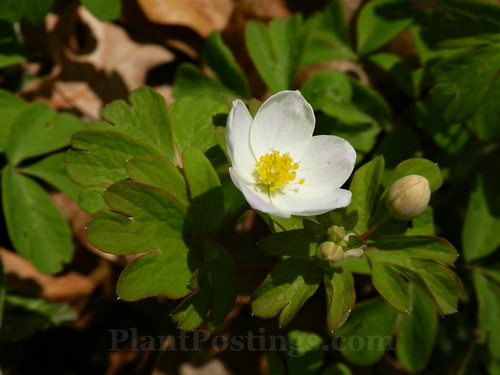
False Rue Anemone (Enemion biternatum), and
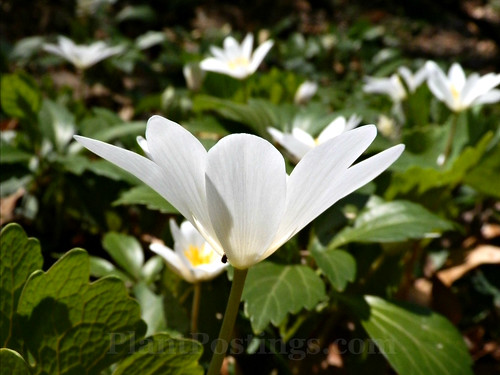
Bloodroot (Sanguinaria canadensis).
Euell Gibbons described the blooms of Spring Beauties as "food for the soul." I agree, and feel the same can be said for other native ephemerals that appear in Midwestern woodlands this time of year.