Showing posts with label plant experiments. Show all posts

July 16, 2026

Welcome Home!

passionflower 6

I'm just getting back from this year's Garden Fling in Buffalo, N.Y.an amazing gathering of like-minded garden bloggers and social media mavens. More on that to come in the days and weeks ahead! Meanwhile...

Recently, I'd been thinking this could be the year: the year the Maypops (Passiflora incarnata) overwintered outdoors would bloom.

Five years agoI planted two sets of Maypops--one in a pot that I've overwintered in the sunroom each year since, and one I planted in the garden below a trellis against the house. While the indoor plant has bloomed the past four years (obviously milder conditions), the outdoor grouping has grown but never bloomed...until now!

passionflower 1

Imagine my surprise when we got home, and I peaked behind the foliage on the trellis to find this! Yay!

passionflower 2

It was a little bedraggled from scorching in the hot sun without water. (And of course each individual flower only lasts a day or two.)

passionflower 4

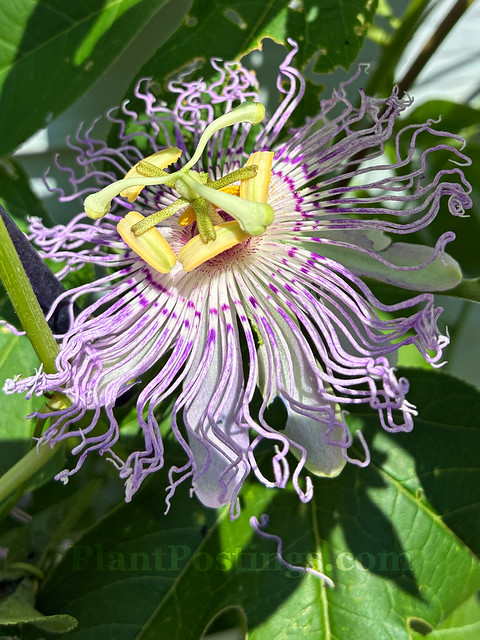
But after watering, a new bloom opened today, and there are several buds for more flowers in the weeks ahead! I love the way the foliage and flowers snake around supports and structures in the garden. It's such a fascinating plant.

passionflower 5

I like the Maypops paired with another surprise this summer--bright pink Hollyhocks (Alcea rosea), also planted from a seed mix a couple of years ago.

hollyhocks

passionflower 3

While outdoor Maypops die back to the ground in winter in my climate, it appears I can expect these beauties to bloom going forward, even in my USDA zone 5b garden. I'm so glad I planted them!

June 13, 2026

Oh, the Sunny California Poppy!

bloom and bud 1

Have you ever grown Poppies?

For several years now, I've admired California Poppies (Eschscholzia californica) and Papaver Poppies. I've wanted to add them to my own garden--not on a massive scale, but as highlights of color near the house. I don't have much sun here, and I tend to grow sun-loving ornamentals and annuals in bright corners and in my small potager garden.

While I haven't tried Papavers yet (stay tuned), until recently I had no luck with California Poppies. I tried starting the seeds in pots early in the growing season, and when that didn't work I sprinkled the seeds along the edge of the potager. But a combination of known and unknown factors prevented their growth.

The potager is on the west side of the house. It gets several hours of indirect light, and then several more hours of strong, afternoon baking sun. The Zinnias and Cosmos love it. But all I got from sprinkling Poppy seeds there was a few tiny, feathery seedlings that disappeared soon after they sprouted. I'm guessing chipmunks and/or robins were responsible--digging around or eating the seeds and/or the seedlings. Or perhaps the seedlings got lost in the mulch and in competition with other plants.

Anyway...in late winter/early spring this year I tried a different technique:

seedlings 1

seedlings 2

I sowed the Poppy seeds directly into a rectangular planter box, and put the planter in the sunroom in March. I figured that would give them an early start, and protect them from critters.

As the weather warmed, I placed the pot in our mini cold frame to acclimate them to outdoor conditions. Then, after the last frost, I moved them to the potager.

spinner

I placed wind spinners around them to dissuade the critters from digging in the pot (so far, so good).

Because they're in a planter, I can easily move them around to try new locations. Fingers crossed they'll continue to thrive and bloom over there. If they struggle, we'll adapt.

new foliage

The foliage is so lacy and fun. Depending on the light, sometimes it has a slight blue cast, and with hot weather it yellows.

buds

The buds are fun, too!

bloom

And then the flowers!

I'm thrilled that I've finally had success with these pretty plants bearing beautiful, sunny flowers and lacy foliage! Maybe next year I'll try Papavers!

bloom and bud 2

(Check out this fun, time-lapse video of California Poppies growing from planted seed to flower and back to seed.)

April 30, 2014

My little Camellia experiment

Well, I did it.

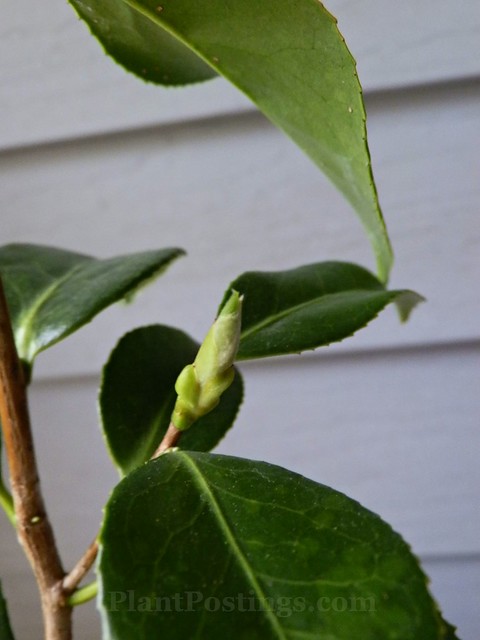
cam bud

Earlier this spring, I ordered a Camellia from Camellia Forest Nursery.

I was so excited, I didn't stop to take pictures of the package and the unveiling of the plant ... like all good garden bloggers do. Instead, I simply ripped open the box!

And there inside was a sweet one-year-old plant in a little pot. Camellia japonica 'April Pink.' Soft pink, formal double flowers. Hardy to USDA zone 6B. Click here to see what the blooms will look like.

OK, I know what you're thinking: "Beth, you live in Wisconsin. Your winter lows can reach -20F (-29C), or occasionally colder. You have no business trying to grow a Camellia."

And, of course, you are right.

I posted about this crazy Camellia fetish of mine here.

Crazy and misinformed as this decision might seem, I did receive some coaching and encouragement from fellow garden bloggers and Camellia experts. Camellia Forest Nursery says gardeners as far north as Toronto, Ontario, successfully grow cold-hardy Camellias.

And one other thing: This Camellia will be inside during the coldest months of the winter. It will keep the Lemon tree company in the cool sunroom. Because this plant prefers part shade, it will be placed away from direct light, of course.

I don't know if this experiment will work, but I've been told that other people in cold climates grow Camellias in conservatories and partially heated rooms. So I just had to try it.

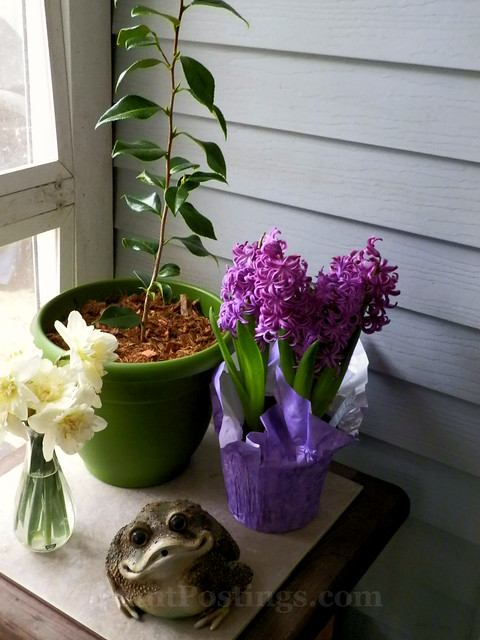
table

I found a new small pot and the perfect spot for this little Camellia during the spring, summer, and fall: on the back screen porch in a shaded corner that gets indirect light most of the day.

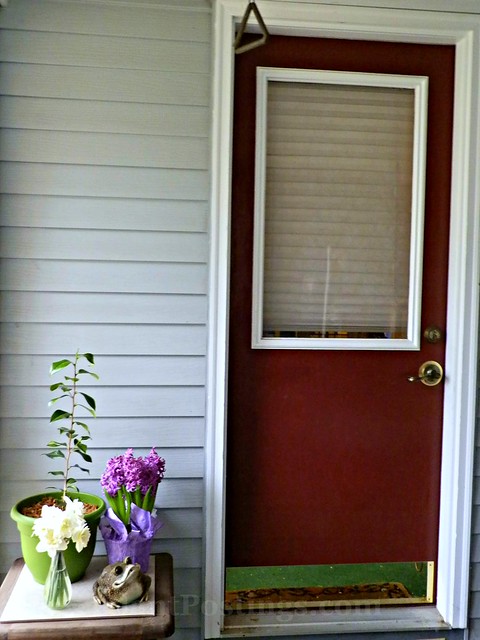
porch1

I'm showing this angle so you can see where it sits next to the house.

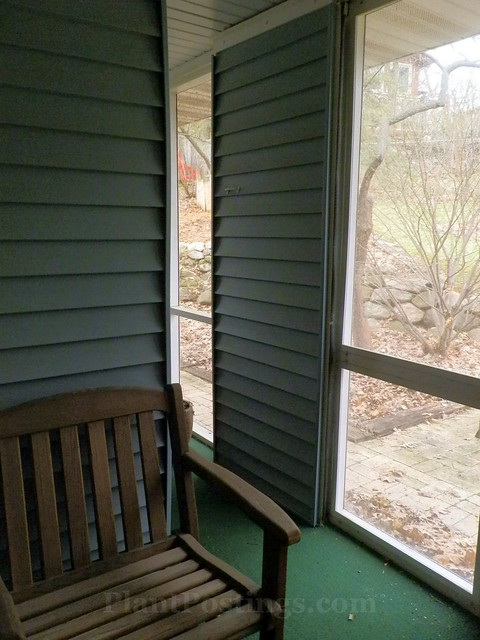
porch2

We close off this part of the porch and put clear acrylic panes over the screens from November through April, which helps to keep the temperature a little warmer and the winds a little less harsh.

stem buds

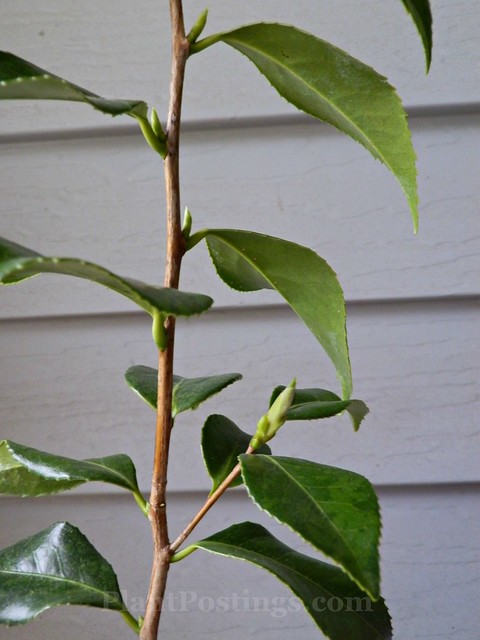
The Camellia seems to be doing well so far, and the buds are starting to swell. More new buds are developing along the stem.

What do you think? Am I crazy to try this?

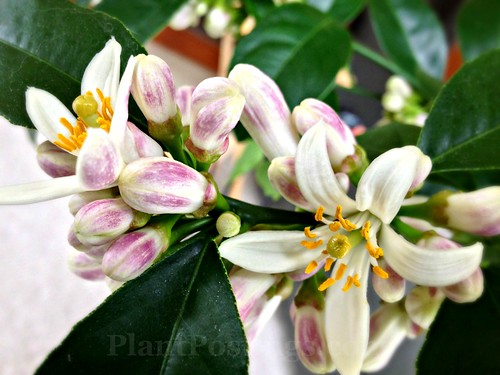
By the way, the Lemon tree is blooming.

lemon1

It started blooming the day after Easter.

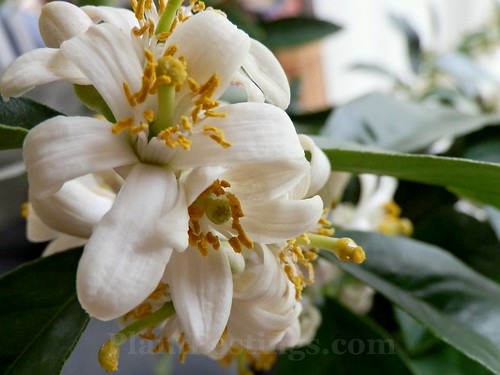
lemon2

I used a little brush to help pollinate the flowers because it's too cold to set the tree outside just yet for natural bee pollination. Looks like some Lemons are starting to form. This is fun!