Showing posts with label shade trees. Show all posts

January 09, 2019

Have You Seen the Angel Oak?

angel oak 1

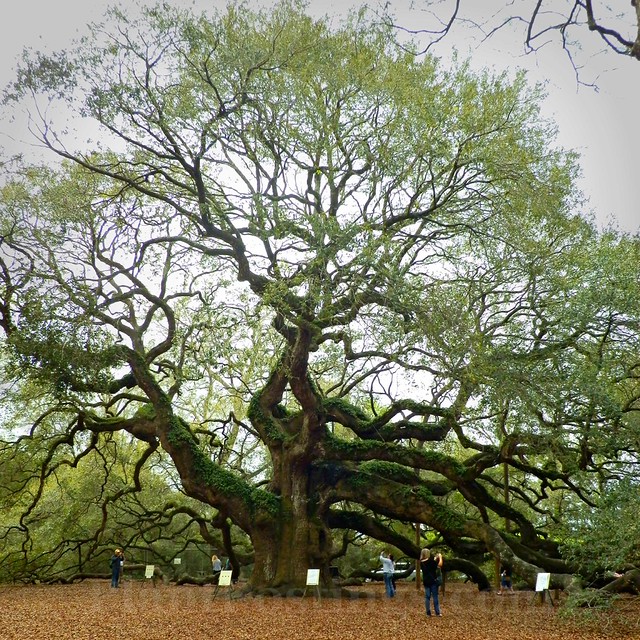
If you're ever traveling near Charleston, S.C., you really must make an effort to see the "Angel Oak." This 400-500-year-old Southern Live Oak tree (Quercus virginiana) covers about 17,200 square feet and is 65 feet tall. It's thought to be one of the oldest living things in the U.S.
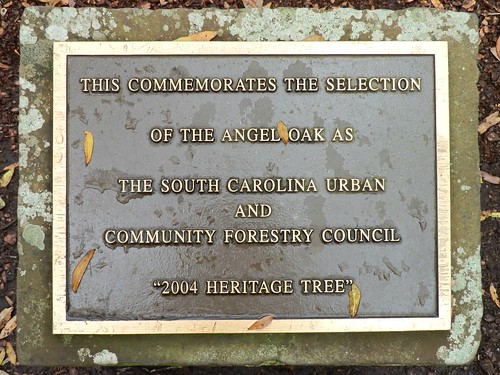
marker

There's no charge to visit Angel Oak Park, located on Johns Island, just a few miles southwest of Charleston. It's quite an expansive property, with plenty of space to view, walk near, and explore below and among the branches of this amazing tree.

The day we were there, in March, the weather was misty, but comfortable. We were on our way between Charleston and Savanna, Ga. As always, I wish I'd had more time to explore, and of course pictures can't do it justice. But believe me, it was wonderful!
leaning in

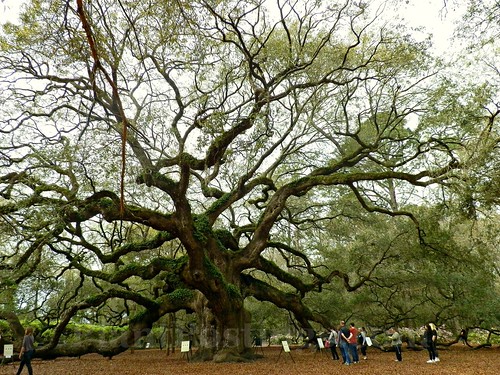
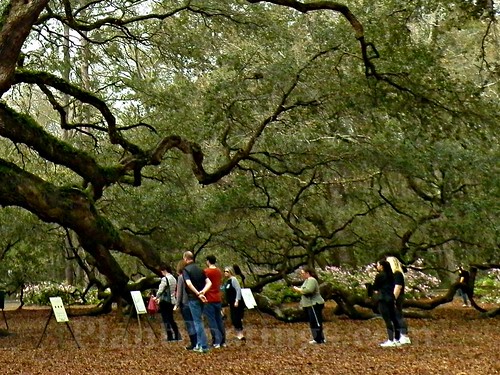
While looking through my photos to decide which ones to post, I noticed the people in this photo were leaning in! This was very flat ground; not a hill. I find their posture with the tree fascinating.
leaning in cropped

Zooming in: Was it empathy and respect for this incredibly long-lived and stunningly beautiful tree that caused them to lean toward it?
resting branches

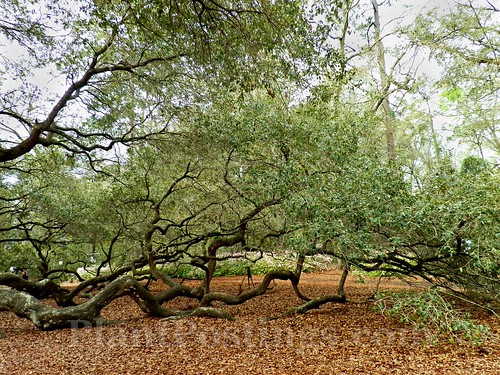
Some of the tree's branches are so large they're like separate trees, themselves. Many are so big and heavy that they rest on the ground, which only happens with the very oldest Live Oaks.
trunk

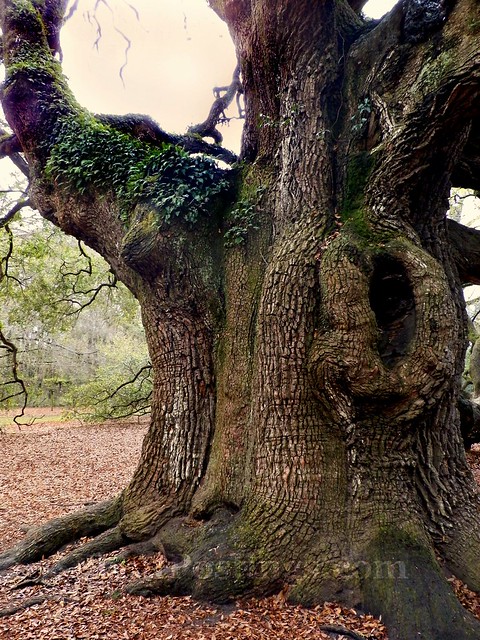
The main trunk has a circumference of 28 feet.
supporting life

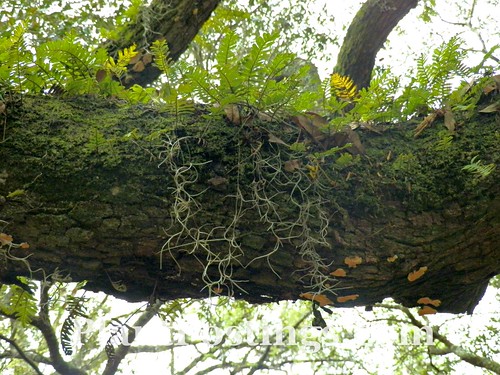
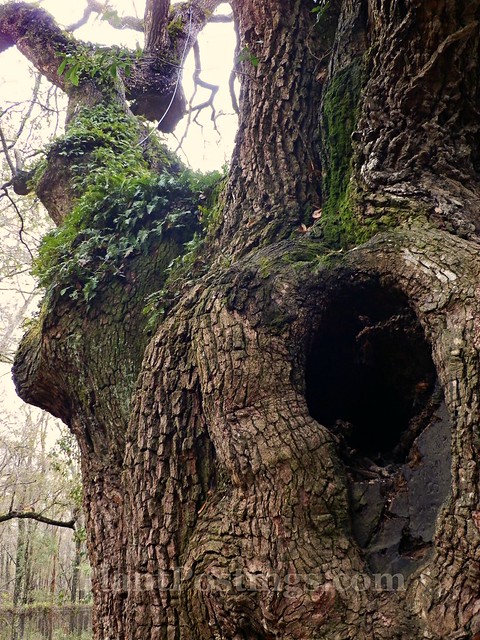
There are so many awesome features of this tree, but what really hit me and amazed me on observing it was that it's obviously a complex ecosystem unto itself--a community of living and nonliving things that work together. The knots, the bark, the branches, and the tree holes support insects, birds, mammals, fungi, mosses, lichens, bromeliads, and other life forms. I could have spent hours studying all the nooks and crannies and secret treasures.
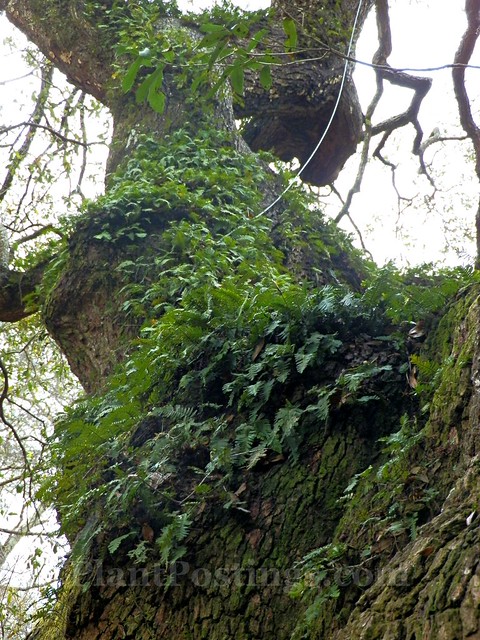
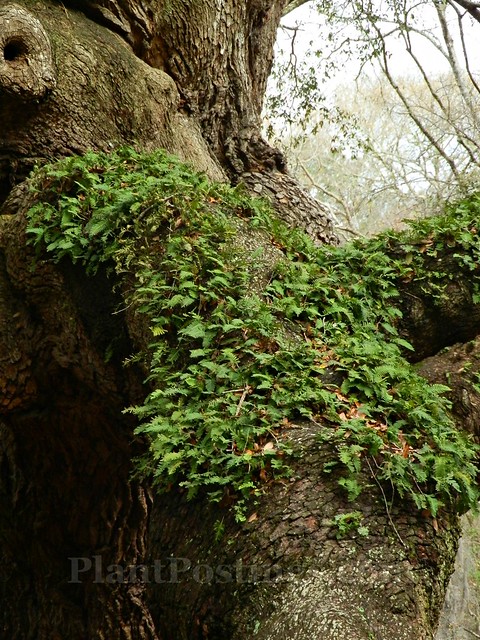
ferns and mosses

ferns

spanish moss

Love the Spanish Moss (Tillandsia usneoides)!

angel oak 2

Good memories; amazing tree! Have you seen it?

August 11, 2014

Tree following: nuts, nuts, everywhere

yum

The ground underneath a Shagbark Hickory (Carya ovata) tree is a dangerous place to be during late summer and early fall--particularly if you have a sizeable squirrel population in your neighborhood. Many times I've come close to getting bopped on the head by falling nuts!

I'm joining in Loose and Leafy's "Tree Following" meme, and my posts each month are about our Shagbark Hickories.

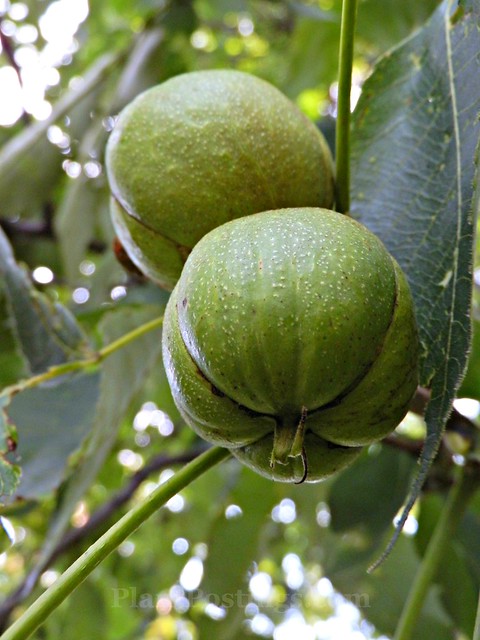
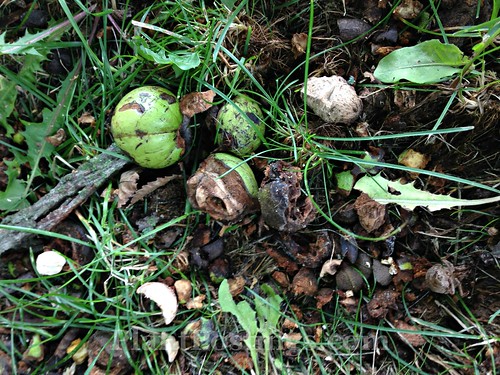
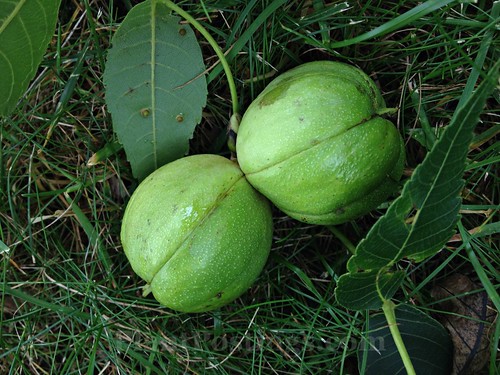
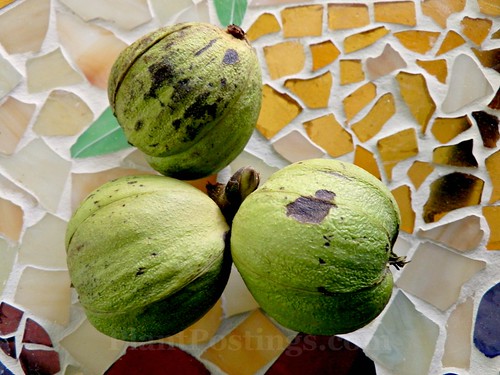
nuts

I suppose the Hickory nut drop probably wouldn't cause serious damage to my head--and might even knock some sense into me. But it can be quite a surprise to see the moderately sized nuts (one to two inches in diameter) dropping from several yards up in the tree.

Someone asked me in the comments of an earlier post if I harvest and eat the Hickory nuts. The answer is "no." And the main reason is that the squirrels get to them first! Even before the nuts are full-size the squirrels gnaw on the branches to dislodge the nuts.

Occasionally, I manage to grab a few nuts as they drop before the squirrels snatch them up, but the nutmeats are quite small at this stage, and hardly worth all the effort for a few bites.

Here are a few observations:

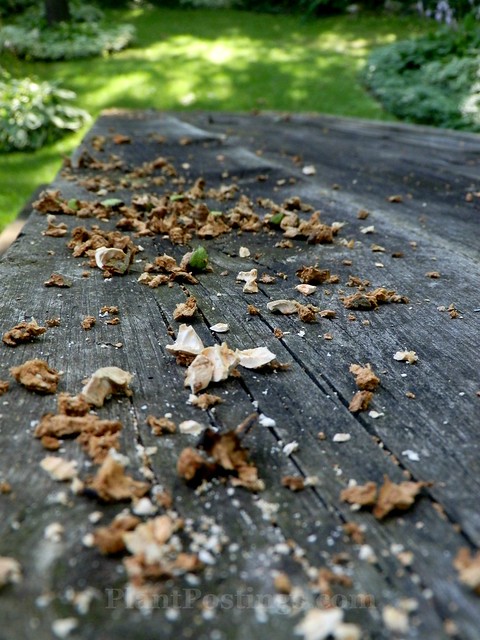
evidence1

Evidence of a squirrel party;

evidence2

More evidence;

evidence3

More evidence;

nuts2

Fresh nuts;

drying

Nuts dried for about a week.

I've read that you should dry the nuts in the sun for two weeks and the husks will naturally pull away from the nut. But if I leave them outside, the squirrels will get them!

So I've been drying them inside in a sunny window for about a week. They're not quite ready, but I'll break them open so you can see what's inside.

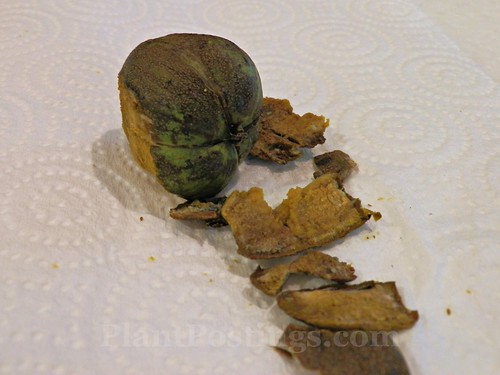
husk

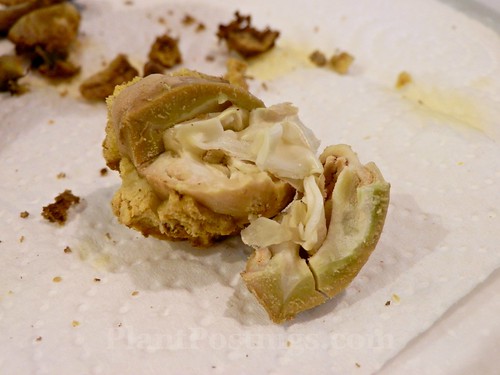
Sliced and partially peeled hull;

shell

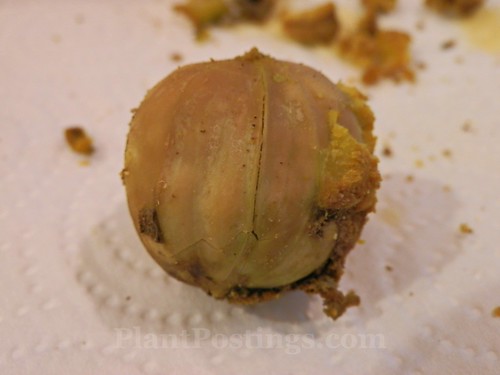
Hulled Hickory nut in the shell;

nutmeats

And cracked open.

You can see that the nutmeats themselves are rather small. If they had a chance to grow larger before the squirrels got them, however, they might be more substantial and tasty.

The taste?

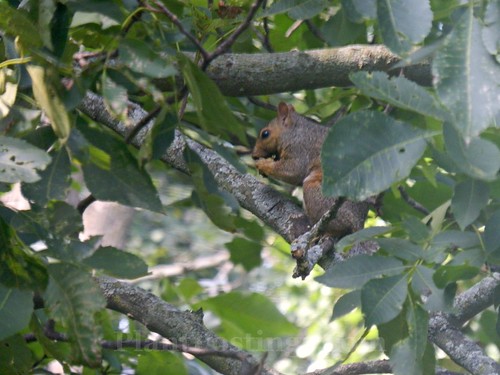
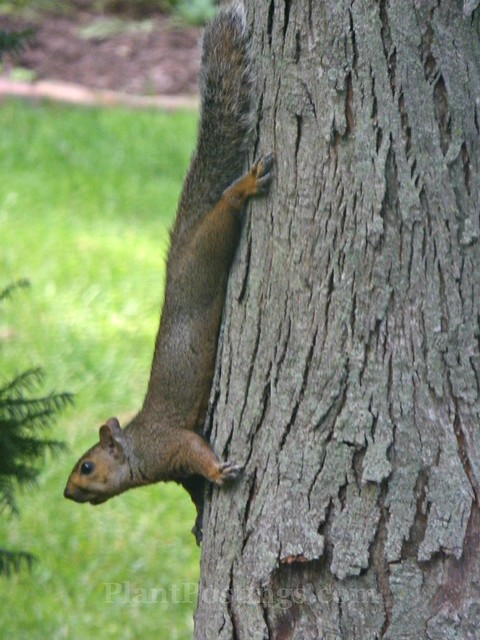
snack

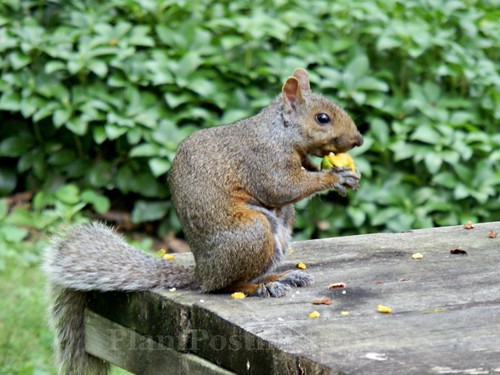
Apparently, this little fellow thinks they're delish.

Personally, I find them ... rather bland. But maybe if I'm able to get some larger ones and let them dry a little longer, I'll be a convert.

leaf

So, that's a brief update on the Shagbarks. The leaves are still deep green and not much sign of changing color. One could say the trees are at the peak of their productivity--providing food, beauty, shade, and shelter all at the same time.

To read about trees other bloggers are following, visit Lucy at Loose and Leafy.

hangin
Hey, this is my tree!!

July 08, 2014

Tree Following: The Shady Shagbarks

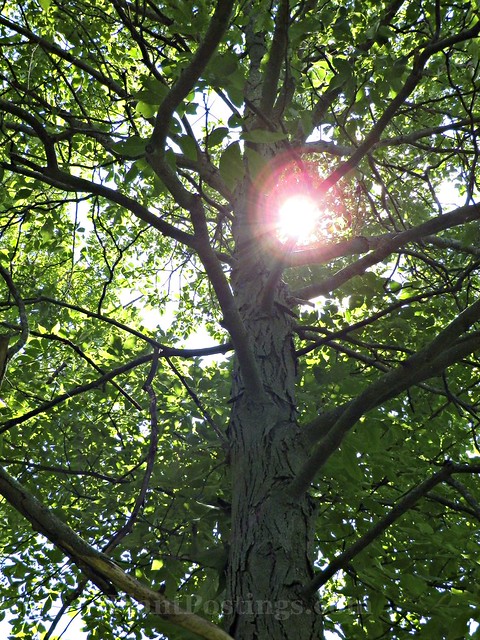
sun

It's the height of summer and our Shagbark Hickories (Carya ovata) are saving us money on our air-conditioning (A/C) bill.

I'm joining Loose and Leafy's "tree following" meme each month with updates on our twin Shagbark trees.

This is the time of year when they really earn their keep! I rarely turn on the A/C anyway, until temperatures hit about 85F/30C and higher. But fortunately, we've been hovering around 80F/27C for several weeks--which is perfectly comfortable in my book. It's fabulous to have the windows open, with fresh air pouring in!

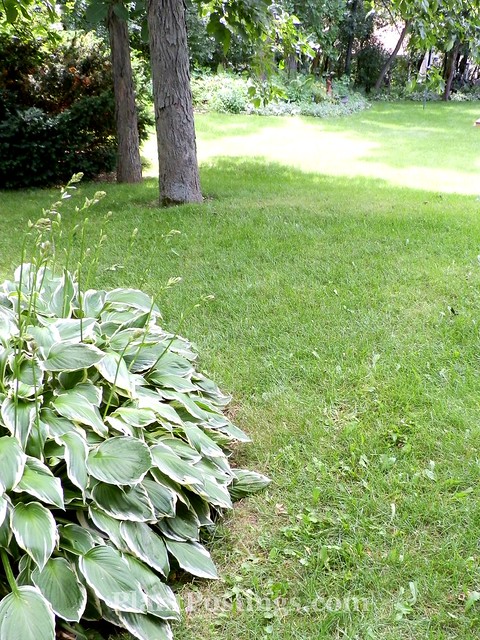
shade

The Shagbarks help, no matter how hot it gets. The other day, I walked from the sunny west-side potager to the shade of the Shagbarks, and the temperature seemed to drop about 10 degrees! Their patch of ground provides deep shade for humans, other mammals, birds, and other critters.

Other observations about the Shagbarks in July:

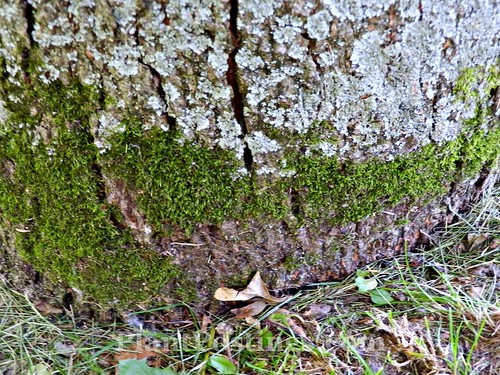
moss and lichen

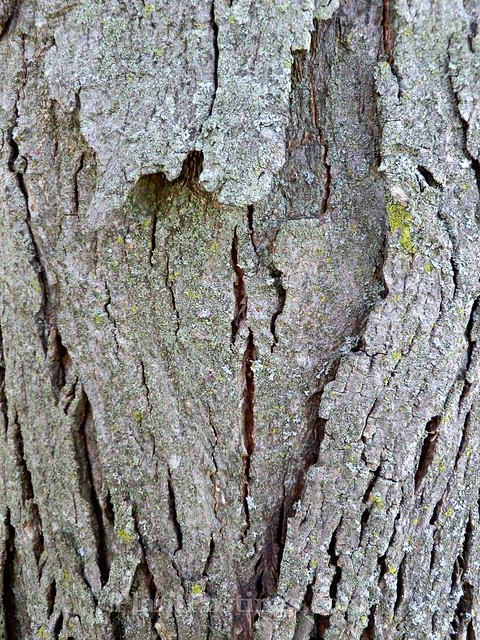
It's true what they say about moss: It does, indeed grow on the north side of the tree. There's a bit of moss on the other sides, but a very healthy patch on the north. The tree bark also has a healthy coating of lichens.

sawflies

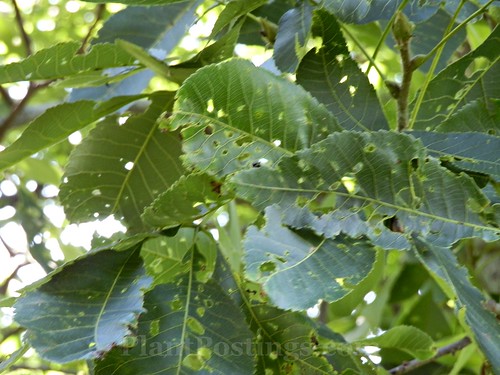
Earlier in the growing season, I noticed there were holes in some of the leaves. I don't believe the infestation has gotten any worse, but the leaves are now larger and the holes are bigger. The leaves are never perfect, but they seem a little more affected this year. I'm pretty sure it's a sign of sawflies. I'm monitoring it, but my understanding is that the trees should be fine if we don't have repeated infestations. I'll try some organic treatments of the soil around the trees--where next year's larvae will hatch.

leaf

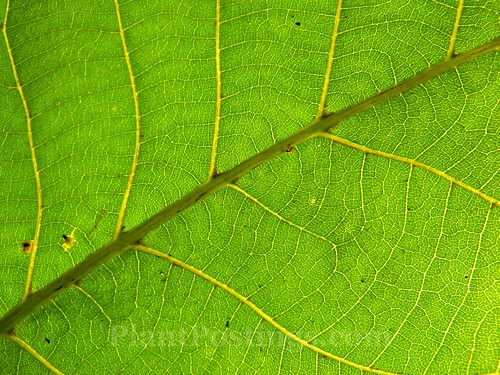
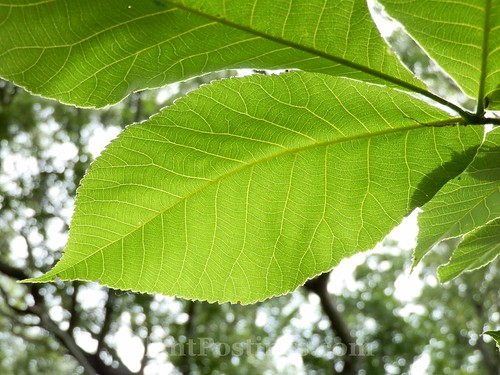
Many of the leaves are near-perfect: Catching the sun in their capillaries and carrying on the miracle of photosynthesis.

nuts

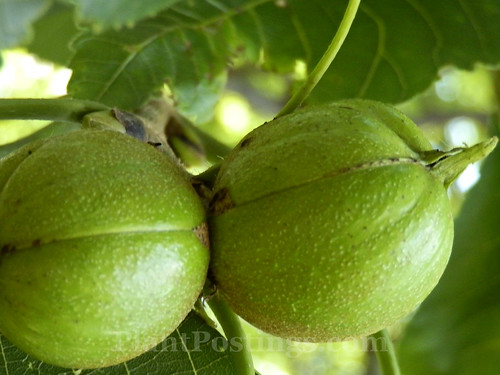
Hickory nuts--a definite hit with our resident squirrels--are forming. I'd estimate these are about one inch in diameter at this point.

heart

The bark is as interesting as ever. The heart shape that I've included in previous posts is now aging and splitting, and I'm starting to see other shapes (maybe a good post for next month).

bats

Is there a bat up there? Indiana and Little Brown Bats often use Hickories for daytime roosting. (Check out the link: It's fascinating!)

All in all, the Shagbark Hickories are looking good. Plenty of moisture, warmth, and sunshine should help them recover from 2012's drought and last winter's polar vortex. Their deep taproots (several feet deep, depending on the soil) protect them from both extremes, but also make them difficult to transplant.

To learn how other bloggers' trees are faring this July, visit Lucy at Loose and Leafy. Happy tree following!