Showing posts with label tree following. Show all posts

May 11, 2016

Tree Following: The Mystery Buckeye Unfurls

Buckeye Collage

My little potted Buckeye tree (Aesculus spp.) unfurled quickly over the course of a few days in mid-April, and now it continues to grow. Here's a rough video, using unedited still shots from the past few weeks.


Click here for more information about the mystery Buckeye. For more "tree following" posts from around the world, visit The Squirrelbasket.

April 07, 2016

Tree Following: The Mystery Buckeye in April

seasons

Are you following a tree this year? It's a fun activity for any garden blogger or nature blogger, or really anyone who likes trees.

To participate in the formal "tree following" meme, simply publish regular updates about your selected tree throughout the year, and then add your monthly links to The Squirrelbasket's link box, on or near the seventh of each month.

I first posted about my "mystery Buckeye" tree in January. I didn't post in February or March because the potted tree was in the garage, dormant for the winter. Now it's beginning to transition to new life. If you look at the first photo in this post, you'll see the small terminal bud of the tree in autumn, winter, and early spring. Notice how plump that tiny bud has become!

porch

I recently pulled the pot out of the garage, and placed it along the east side of the house, adjacent to the screen porch. This is very near the place I initially found the tree--in the garden bed near the rock wall. Our severe "subzero" weather is done for the season, and the potted tree will now fare better outside, where it can break dormancy as spring unfolds.

Apologies for the messy view. We've had cool days lately, so I haven't gotten around to hosing down pots and cleaning the porch. I wasn't planning to show this view, but it gives you an idea of the size of my little tree.

Yes, it's very small; insignificant, perhaps. Remember, this is a seedling I found in my garden, likely delivered by a resident squirrel.

bud one

Wait ... this tiny tree isn't insignificant. In fact, it's a miracle about to happen!

bud two

Notice the reddish color and the lateral growth buds.

bud four

This little tree might look very small now, but it's about to expand--dramatically.

bud three

A week of warm weather will do it now! I'm very excited!

What type of Buckeye (Aesculus spp.) tree do we see here? Can anyone guess from the buds or the foliage? To read more about this Buckeye tree, visit my January post. To participate in or learn more about tree following, visit The Squirrelbasket. Happy tree following!

January 07, 2016

Plant of the Month: A Mystery Buckeye

seedling

Last spring, I noticed an interesting seedling plant at the edge of a garden bed. The leaves unfurled in mid-April, just as the Lilies-of-the-Valley (Convallaria majalis) surrounding it were poking through and about to bloom.

foliage

It became clear that this was some type of Buckeye (Aesculus spp.). But which one? Seven species of Buckeye are native to North America, according to the Arbor Day Foundation. I posted a photo of the foliage to a plant identification Facebook group I belong to, but there was no definitive answer.

I'm thinking the variegated coloring of the foliage is a clue? Some suggestions were Red Buckeye (A. pavia), Ohio Buckeye (A. glabra), or even Horse-Chestnut (A. hippocastanum), which is native to the Balkans and Southeast Europe but widely cultivated in temperate zones. Someone mentioned this little tree could be a hybrid.

autumn

Because I considered it a highly desirable gift from a visiting squirrel or some other garden critter, I potted up the tree, and then tended and observed it throughout the growing season. I placed pine cones around it to serve as mulch and to discourage digging by cats and rodents.

While I wanted to keep the tree, I decided its ultimate garden placement would depend on the species--the largest Buckeyes are tall trees, while the smallest are shrub-size.

season end

Somewhere along the way I ran across information about Bottlebrush Buckeye (A. parviflora), and began to wonder if this was its identity. As spring faded to summer, and then to autumn, two characteristics of Bottlebrush Buckeye were evident with my little tree. First, the leaves showed signs of a light leaf scorch.

pot

In addition, the foliage retained its green color well into mid-autumn, even as other trees around it had colored and lost their leaves. Both characteristics are common with Bottlebrush Buckeye, according to the Lady Bird Johnson Wildflower Center.

Unfortunately, I became busy with other things and neglected to take photos of the foliage when it changed color. I also neglected to take photos of the foliage in the spring, as it unfurled. All the more reason to focus on this tree for this year's "tree following" meme over at the Squirrelbasket.

(For an excellent post about the beauty of Buckeyes unfurling in springtime, check out Karin's post from last spring over at Southern Meadows.)

autumn bud

However, I did manage to look closely at the terminal bud. So much promise there!

winter

For winter, my little Buckeye is living in the garage, with warm layers of snow and leaf mulch for insulation. In a warmer climate, I'd leave it outdoors, but potted plants need a little help through our bitter winters.

winter bud

No matter what the species, I'll find a place for it in my garden. Buckeyes are considered good luck. Plus, the hummingbirds love the flowers, and one can never have too many hummingbird-attracting plants!

If/when this little treasure blooms, I'll have more clues about its identity. Join me near the seventh of each month for updates posted in the tree following meme. This will be a fun mystery to solve!

(Also, check out Dozen for Diana over at Elephant's Eye on False Bay.)

December 06, 2014

A Year in the Life of the Shagbark Hickories

bark

And so we come full circle with our "tree following" posts. What a wonderful learning experience this has been!

Lucy at Loose and Leafy hosts this tree following meme, and it's been a privilege to participate this year. I dedicated my posts to our twin Shagbark Hickories (Carya ovata). Each month revealed new things about them. (To read earlier posts, click this link or search for "Shagbark" in my search bar).

Now in my part of the world, December and November have switched places this year. I have no images to show of snow catching on the bark of the Shagbarks, because we've hit a patch of mild weather. There's even talk of a non-white Christmas here in Southern Wisconsin. (Whether this happens or not, I won't be the one to complain about a mild December.)
Here are my December 2014 garden observations about the Shagbark Hickories:

leaves on snow

Most years, the Hickories lose at least some of their leaves before the snow flies. This year, the snow dropped first--in early November. Slip-sliding around with a rake didn't make much sense, so my chores are delayed.

It's interesting to trace where some of the leaves have fallen.

bench

No picnics on this bench for a while.

planter

Hickory leaves are mixed with Oaks as winter mulch for the hardy plants in one of my pots.

draped

Some of the curled leaves are impaled on the nearby Lilac shrub.

chestnut

The color and texture of the dried Hickory leaves reminds me of cognac-colored leather.

moss and lichen

Even in winter, the trees host healthy mosses and lichens.

hairy

A few avian visitors fly from the feeders to the Hickory branches and back again. This photo of a Hairy Woodpecker was taken a few weeks ago, before the Hickory leaves (in the background) dropped.
trunk

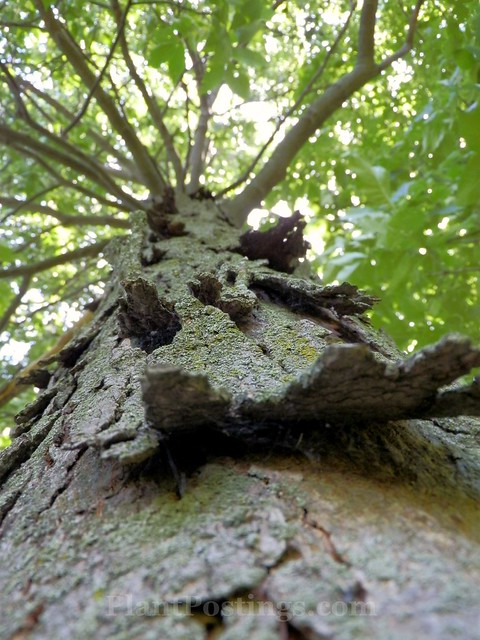
Though the branches are now bare, the Hickories remain strong and stately.

buds

And their winter buds portend the promise of another year of life.

Thanks to Lucy at Loose and Leafy for hosting the tree following meme. Visit her blog on the 7th of each month to learn more about trees from around the world.

I'm also linking in with Michelle's Nature Notes at Rambling Woods.

~ ~ ~ ~ ~ ~ ~ ~ ~ ~ ~ ~ ~ ~ ~ ~

(Thanks to those who've participated in and commented on PlantPosting's "Lessons Learned" meme. The meme remains open indefinitely, and we'd love to learn from your experiences. Click here or on the "Lessons Learned" tab to participate.)

November 06, 2014

Tree following: late autumn camouflage

curly leaves

Let's be honest: We're entering the gray/brown time of year here in the Upper Midwest. While there's beauty in even the starkest of seasons, it can be a little shocking after, arguably, the most colorful month on our calendar: October, with its unbelievable bright reds, oranges, yellows, and greens.

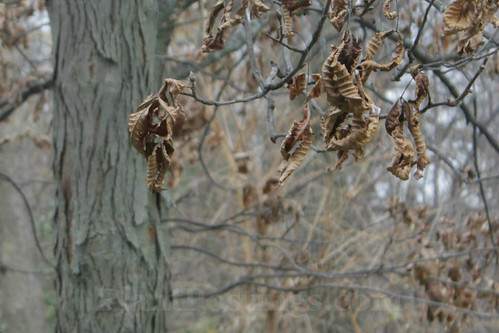
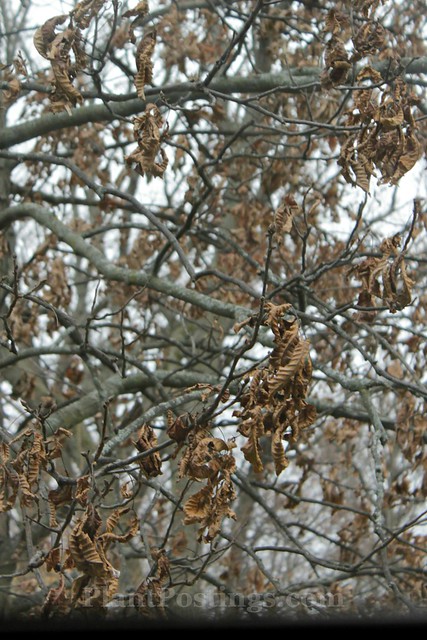
The reality is that the Shagbark Hickories are still alive outside my kitchen window, though they appear to be dying as their leaves curl ... brown and gnarly against the cold winds of November.

window

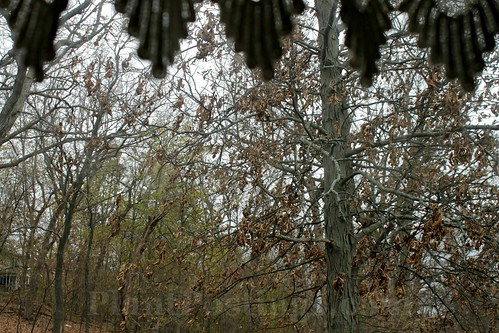
I've been following our Shagbark Hickories (Carya ovata) this year, linking my posts with Lucy's tree following meme, over at Loose and Leafy. I thought it would be fun this month to show you the view out my kitchen window. This is looking up a bit, through a less-than-perfect pane of glass, but you get the idea. Some of the trees still have leaves, but most are bare.

Note that I used the description "late autumn" for the title. It's cold here, and many of you in other climes would consider this late autumn or even deep winter weather--with highs slightly above freezing, and lows much below that. Snow is in the forecast for three days next week.

gray and brown

So these leaves are emblematic of what's ahead for us for the next few months.

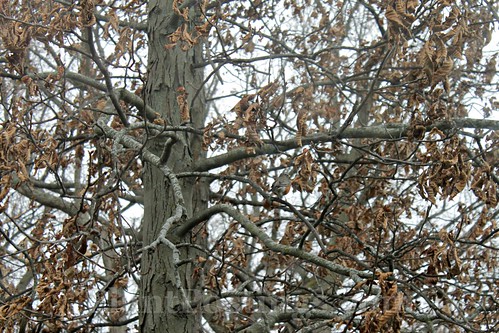
I was starting to feel a little down about it all--dry, curled leaves ... gray bark and sky ... cold, short days--when some hardy birds entered my field of view.

robin bath

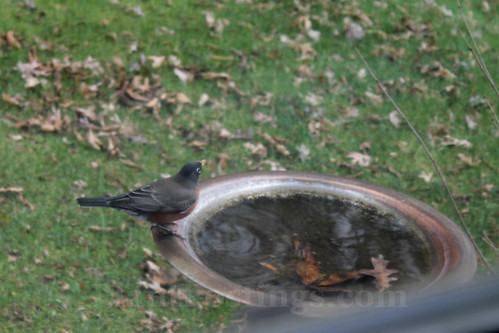
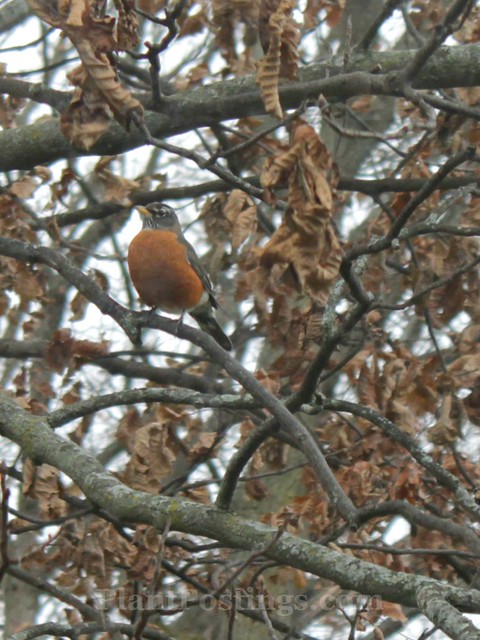
It started with a brave, little Robin just below the window. This is shot through a screen, but it shows my view. Other birds followed, and I found myself looking up into the Shagbark trees again.

where's robin

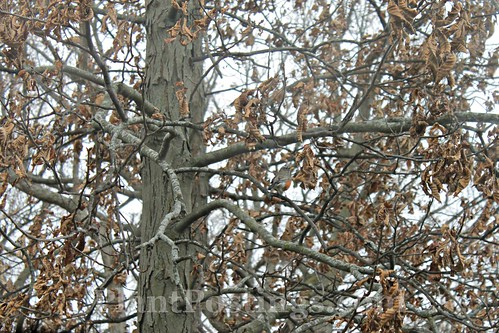
Do you see the Robin?

where's robin 2

How about now?

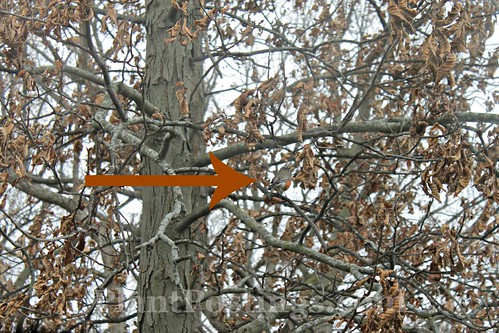
where's robin revealed

Does this help? How's that for camouflage? (You can click on any of the photos for a larger view.)

robin pumped

These little guys brightened my day. And it's likely snow will brighten the Shagbarks--and the landscape--for my next tree following post in December.

Head on over to Lucy's blog to learn about trees from around the world. I'm also linking in with Tina's Wildlife Wednesday meme at My Gardener Says, although I'm a day late.

curly 2

August 11, 2014

Tree following: nuts, nuts, everywhere

yum

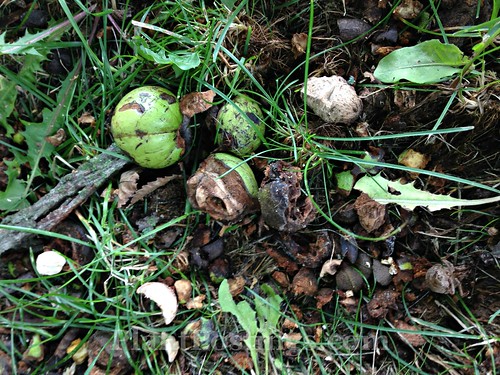
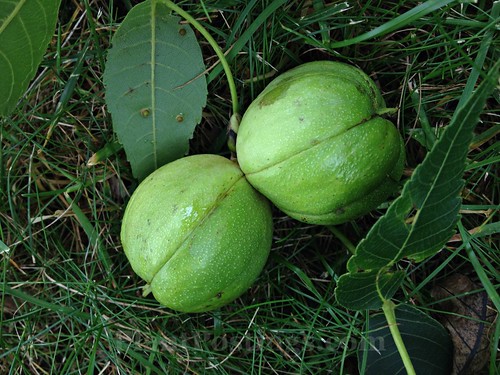
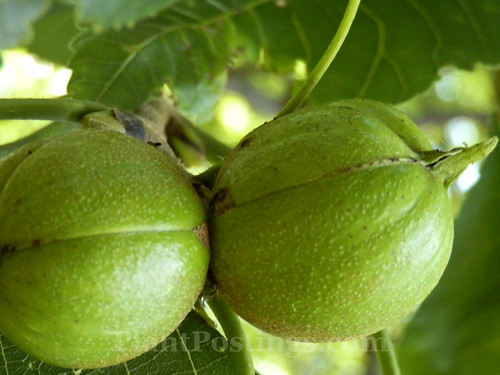
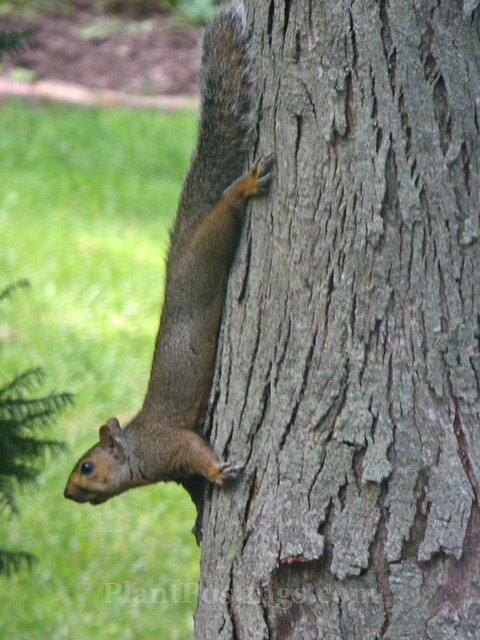
The ground underneath a Shagbark Hickory (Carya ovata) tree is a dangerous place to be during late summer and early fall--particularly if you have a sizeable squirrel population in your neighborhood. Many times I've come close to getting bopped on the head by falling nuts!

I'm joining in Loose and Leafy's "Tree Following" meme, and my posts each month are about our Shagbark Hickories.

nuts

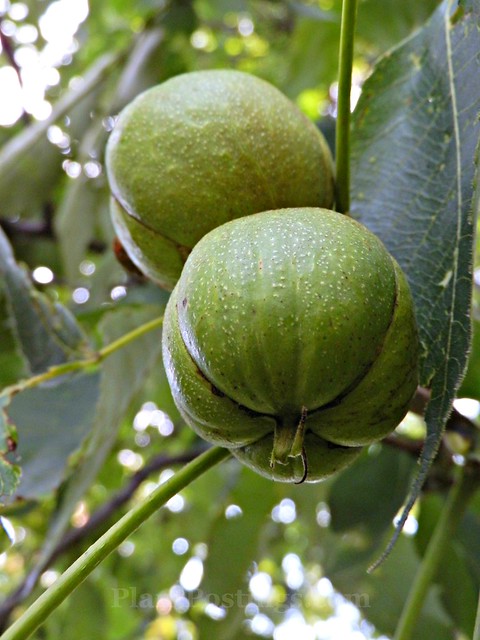
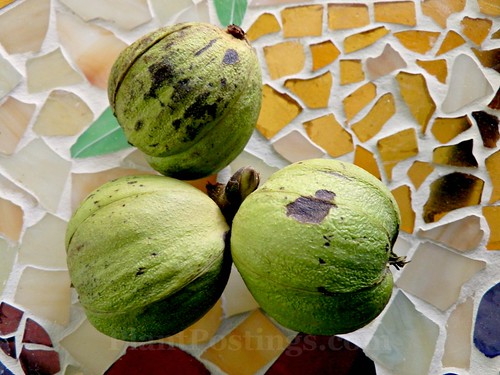
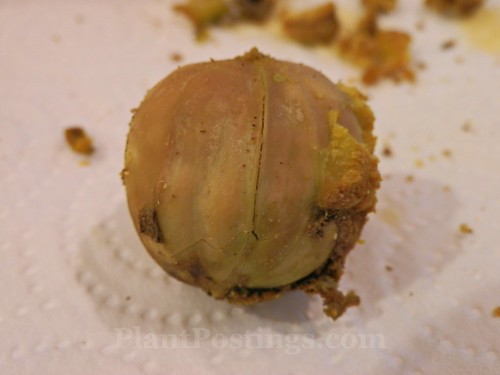
I suppose the Hickory nut drop probably wouldn't cause serious damage to my head--and might even knock some sense into me. But it can be quite a surprise to see the moderately sized nuts (one to two inches in diameter) dropping from several yards up in the tree.

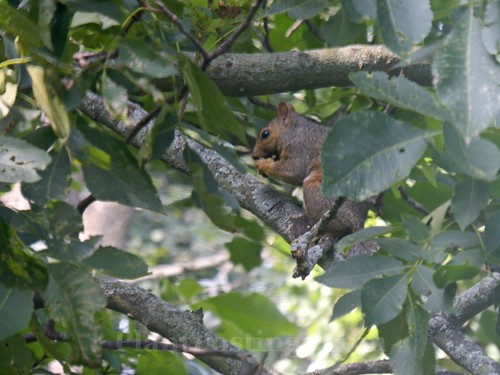
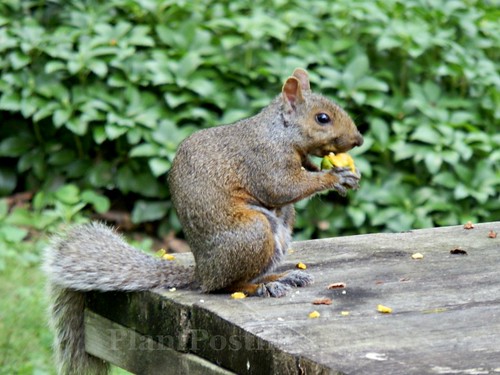
Someone asked me in the comments of an earlier post if I harvest and eat the Hickory nuts. The answer is "no." And the main reason is that the squirrels get to them first! Even before the nuts are full-size the squirrels gnaw on the branches to dislodge the nuts.

Occasionally, I manage to grab a few nuts as they drop before the squirrels snatch them up, but the nutmeats are quite small at this stage, and hardly worth all the effort for a few bites.

Here are a few observations:

evidence1

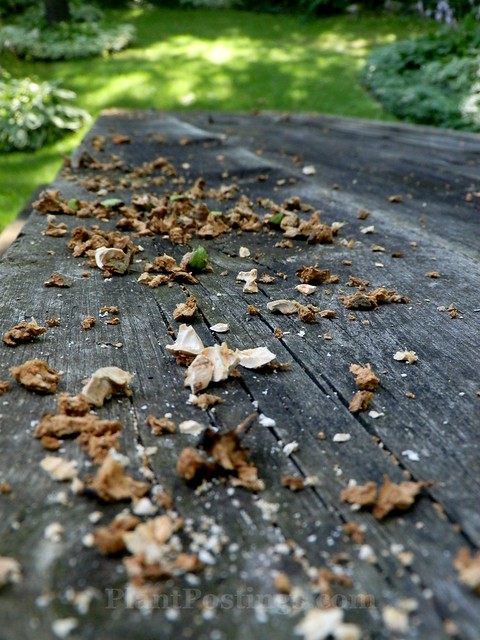
Evidence of a squirrel party;

evidence2

More evidence;

evidence3

More evidence;

nuts2

Fresh nuts;

drying

Nuts dried for about a week.

I've read that you should dry the nuts in the sun for two weeks and the husks will naturally pull away from the nut. But if I leave them outside, the squirrels will get them!

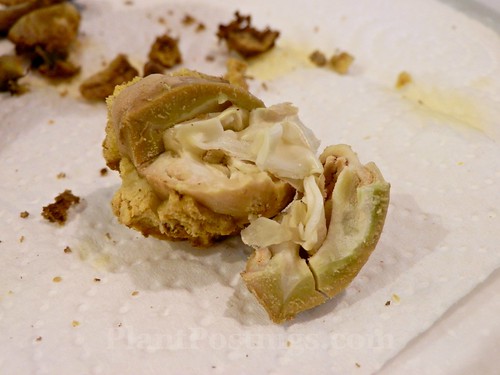
So I've been drying them inside in a sunny window for about a week. They're not quite ready, but I'll break them open so you can see what's inside.

husk

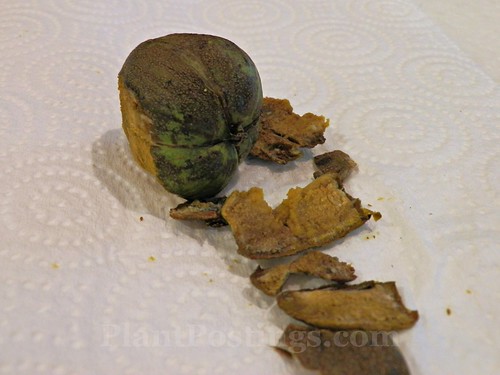
Sliced and partially peeled hull;

shell

Hulled Hickory nut in the shell;

nutmeats

And cracked open.

You can see that the nutmeats themselves are rather small. If they had a chance to grow larger before the squirrels got them, however, they might be more substantial and tasty.

The taste?

snack

Apparently, this little fellow thinks they're delish.

Personally, I find them ... rather bland. But maybe if I'm able to get some larger ones and let them dry a little longer, I'll be a convert.

leaf

So, that's a brief update on the Shagbarks. The leaves are still deep green and not much sign of changing color. One could say the trees are at the peak of their productivity--providing food, beauty, shade, and shelter all at the same time.

To read about trees other bloggers are following, visit Lucy at Loose and Leafy.

hangin
Hey, this is my tree!!

July 08, 2014

Tree Following: The Shady Shagbarks

sun

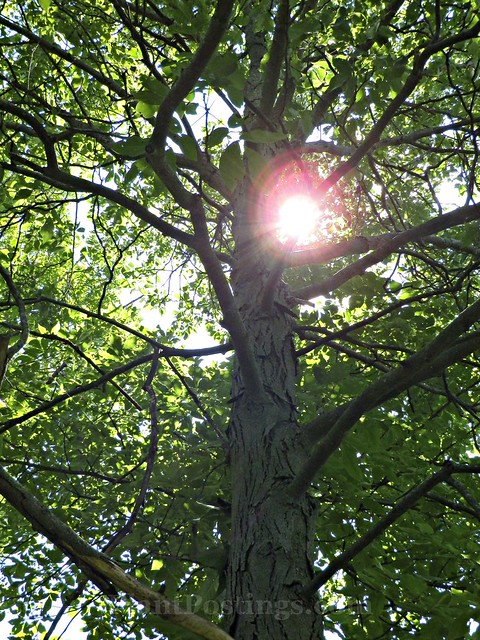
It's the height of summer and our Shagbark Hickories (Carya ovata) are saving us money on our air-conditioning (A/C) bill.

I'm joining Loose and Leafy's "tree following" meme each month with updates on our twin Shagbark trees.

This is the time of year when they really earn their keep! I rarely turn on the A/C anyway, until temperatures hit about 85F/30C and higher. But fortunately, we've been hovering around 80F/27C for several weeks--which is perfectly comfortable in my book. It's fabulous to have the windows open, with fresh air pouring in!

shade

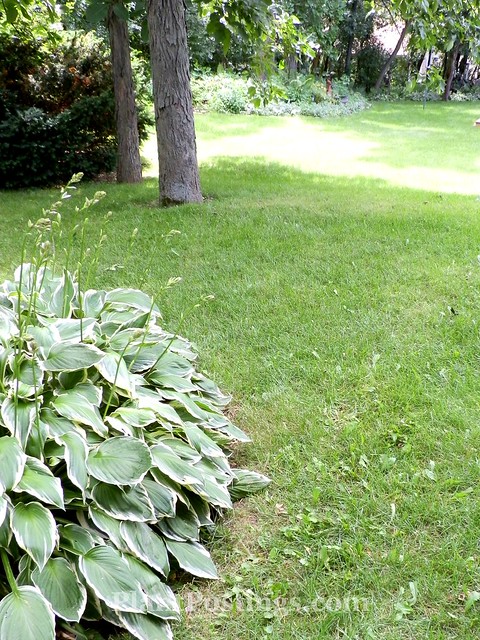
The Shagbarks help, no matter how hot it gets. The other day, I walked from the sunny west-side potager to the shade of the Shagbarks, and the temperature seemed to drop about 10 degrees! Their patch of ground provides deep shade for humans, other mammals, birds, and other critters.

Other observations about the Shagbarks in July:

moss and lichen

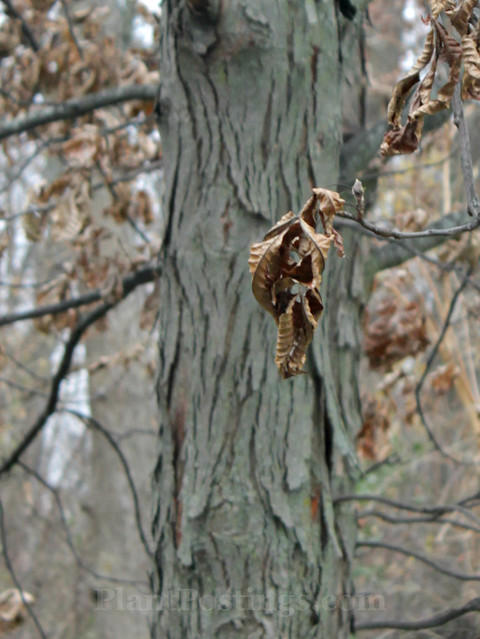
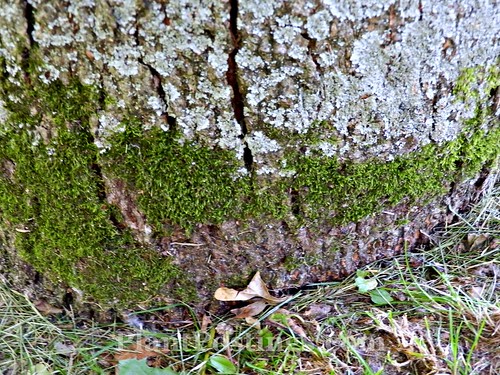
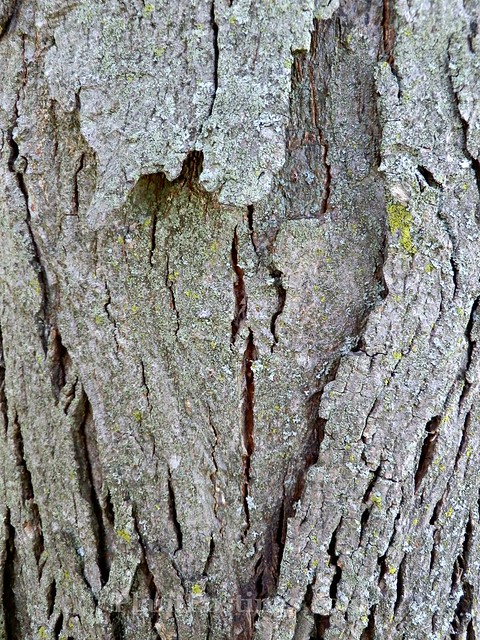
It's true what they say about moss: It does, indeed grow on the north side of the tree. There's a bit of moss on the other sides, but a very healthy patch on the north. The tree bark also has a healthy coating of lichens.

sawflies

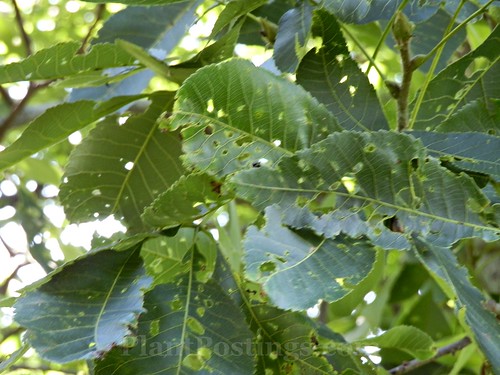
Earlier in the growing season, I noticed there were holes in some of the leaves. I don't believe the infestation has gotten any worse, but the leaves are now larger and the holes are bigger. The leaves are never perfect, but they seem a little more affected this year. I'm pretty sure it's a sign of sawflies. I'm monitoring it, but my understanding is that the trees should be fine if we don't have repeated infestations. I'll try some organic treatments of the soil around the trees--where next year's larvae will hatch.

leaf

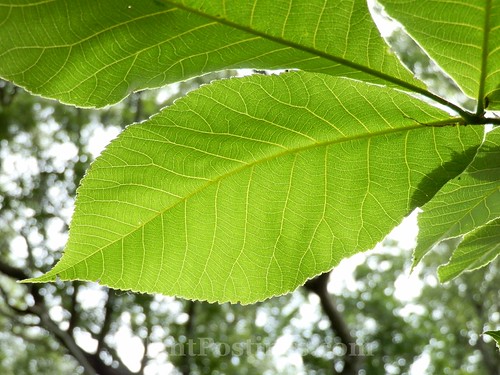
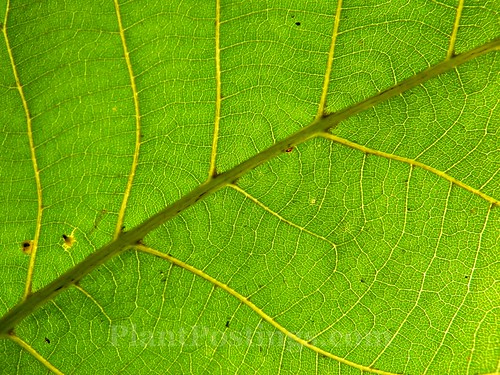
Many of the leaves are near-perfect: Catching the sun in their capillaries and carrying on the miracle of photosynthesis.

nuts

Hickory nuts--a definite hit with our resident squirrels--are forming. I'd estimate these are about one inch in diameter at this point.

heart

The bark is as interesting as ever. The heart shape that I've included in previous posts is now aging and splitting, and I'm starting to see other shapes (maybe a good post for next month).

bats

Is there a bat up there? Indiana and Little Brown Bats often use Hickories for daytime roosting. (Check out the link: It's fascinating!)

All in all, the Shagbark Hickories are looking good. Plenty of moisture, warmth, and sunshine should help them recover from 2012's drought and last winter's polar vortex. Their deep taproots (several feet deep, depending on the soil) protect them from both extremes, but also make them difficult to transplant.

To learn how other bloggers' trees are faring this July, visit Lucy at Loose and Leafy. Happy tree following!