July 25, 2016

A Twin Cities Fling: Part I

eloise 1

Have you heard of the Garden Bloggers' Fling? In 2008, a visionary group of garden bloggers organized a conference and welcomed bloggers from all corners of North America and beyond to join them in Austin, Texas. Since then, garden bloggers have convened in a different city each year to tour gardens, share information, and form friendships.

I first attended the Fling last year in Toronto. This year, the Fling was in the Twin Cities, an easy drive for me. It was great to reconnect with friends I'd made last year, spend time with bloggers I'd previously known only online for many years, and explore amazing gardens in Minneapolis/St. Paul.

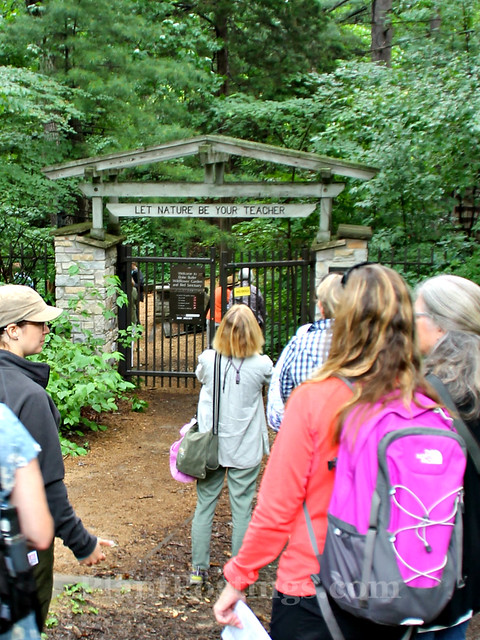
Our first day started in the Eloise Butler Wildflower Garden, the oldest native-plant garden in the U.S. In addition to featuring woodland, wetland, and prairie habitats, it's home to more than 130 species of birds. It reminded me of the UW-Madison Arboretum, one of my favorite places here at home. The sign welcoming us to the garden invited us to "Let Nature Be Your Teacher."
eloise 2

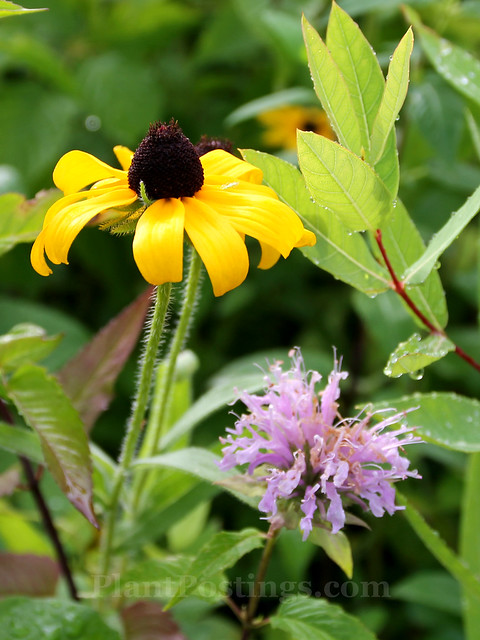
Along the paths were plentiful native North American perennials, including Black-Eyed Susans (Rudbeckia hirta) and Wild Bergamot (Monarda fistulosa).
eloise 3

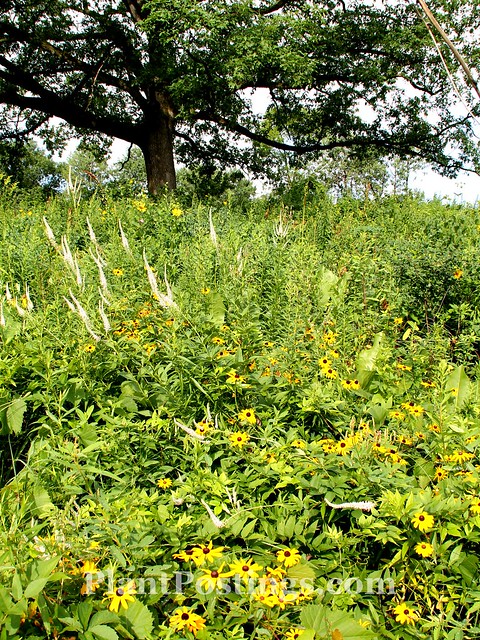
Acres and acres of wildflowers.

eloise 4

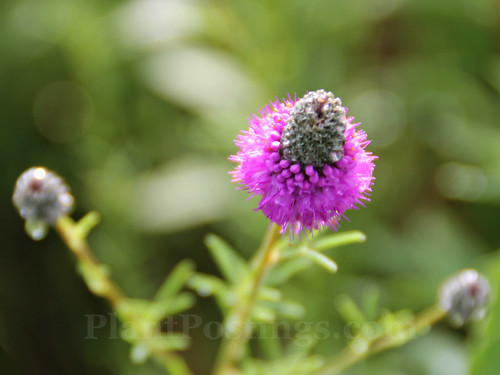
I also saw one of my new favorites, recently added to my own garden: Purple Prairie Clover (Dalea purpurea). At a recent conference, a presenter mentioned beekeepers like this plant because their bees' honey is more flavorful when Purple Prairie Clover is a food source. It also has special value for native bees.
eloise 5

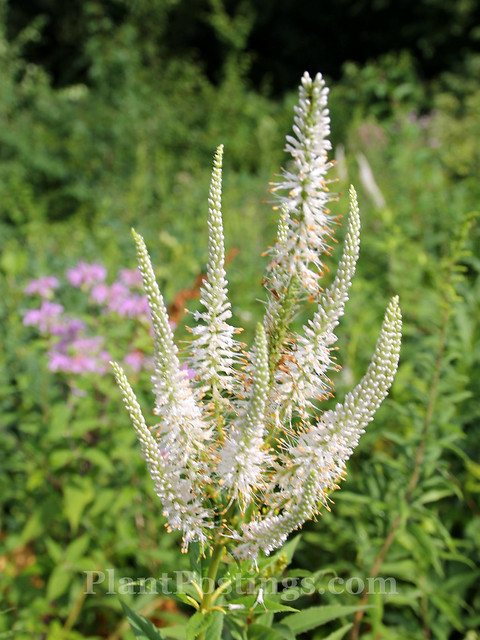
Culver's Root (Veronicastrum virginicum)--a tall, architecturally pleasing plant--also was in full bloom.
eloise 6

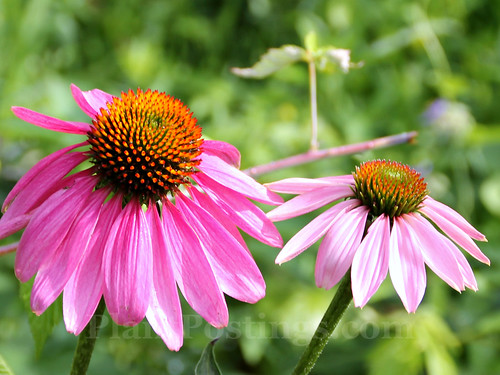
As were the always lovely Purple Coneflowers (Echinacea purpurea).
hamilton 1

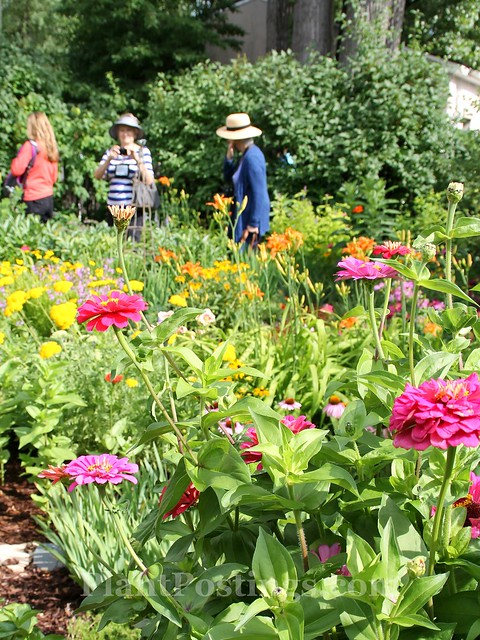
Our next stop was the garden of Donna Hamilton. Donna converted a former grocery store and grounds into a studio and gardens. Bright summer blooms--annuals and perennials--were on display here.
hamilton 3

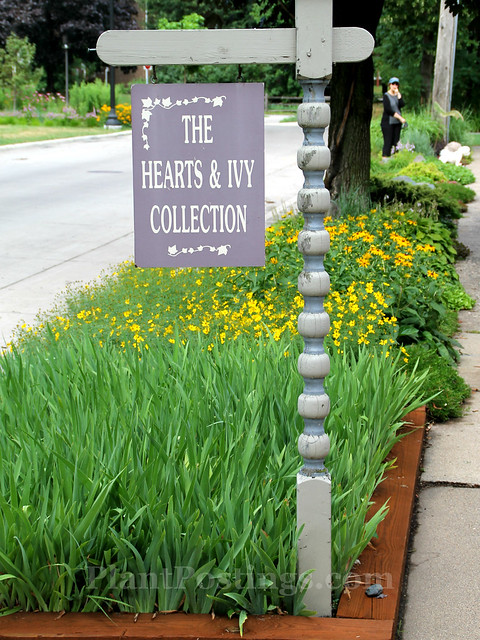
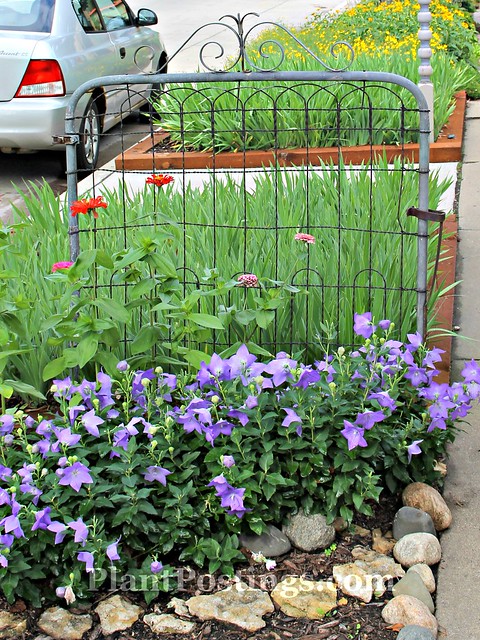
My favorite part was her creative flair with her hellstrip--a simple sign flanked by graceful, low-growing plants, planned for blooms and texture throughout the growing season.
hamilton 2

Earthy stones marked the border, and an ornamental gate door added class and whimsy.
lyndale 2

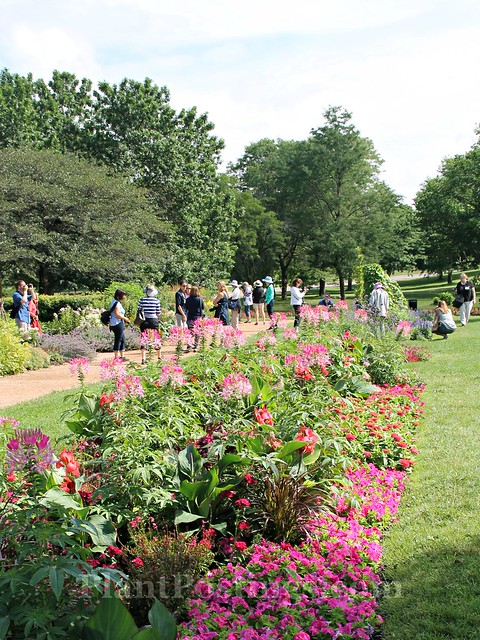
Next stop: Lyndale Park Gardens. The most rewarding part about the Garden Bloggers' Fling is that we get to see so many gardens in a short time. That's also the most frustrating part. I could have spent hours in this garden. We barely had time to scratch the surface.

As you can see from the photo above, the bloggers enjoyed the wide open spaces and the dramatic display gardens.
lyndale 1

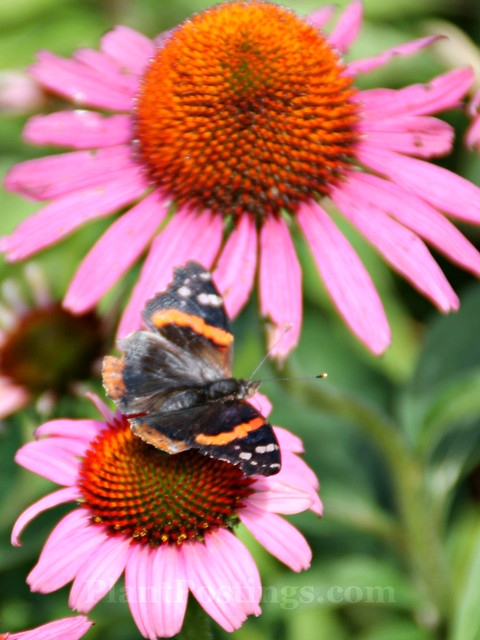
Many pollinators, including this Red Admiral butterfly, found Lyndale a welcoming habitat.
lyndale 3

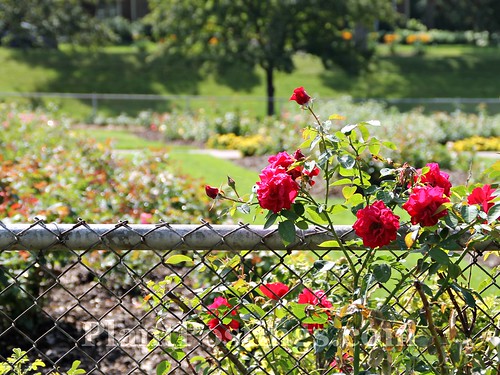
Roses were a highlight of this public garden: I must get back to explore it in more detail!
hayes 1

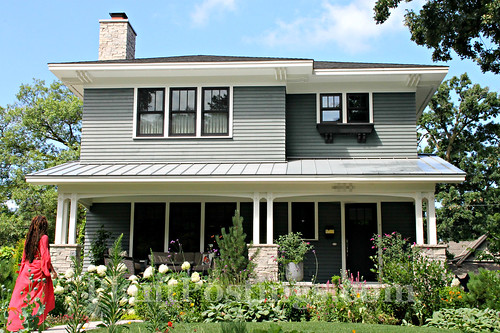
I was pleased to find this lovely photo on my camera memory card of fellow blogger Gryphon at Southern Exposure Seed Exchange walking the path to the beautiful home of Rhonda Fleming Hayes. Rhonda, an award-winning writer and photographer, is author of Pollinator Friendly Gardening. Elegance and grace marked her entire property.
hayes 2

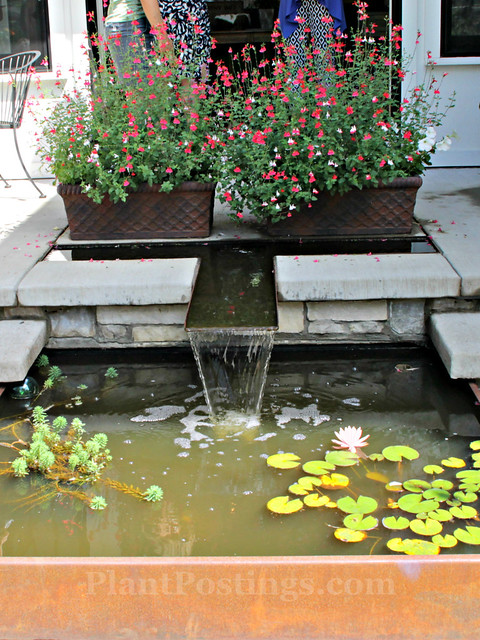
I loved her use of colorful planters spilling into a waterfall ... spilling into an ornamental pond.
hayes 3

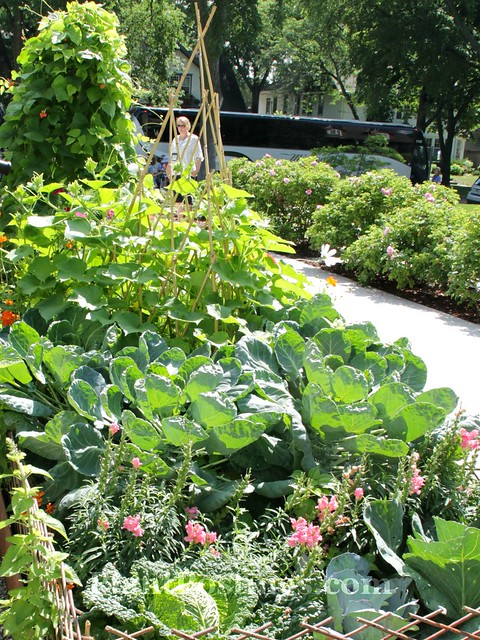
Rhonda also combined ornamentals with edibles in stunning displays.
bachmans 1

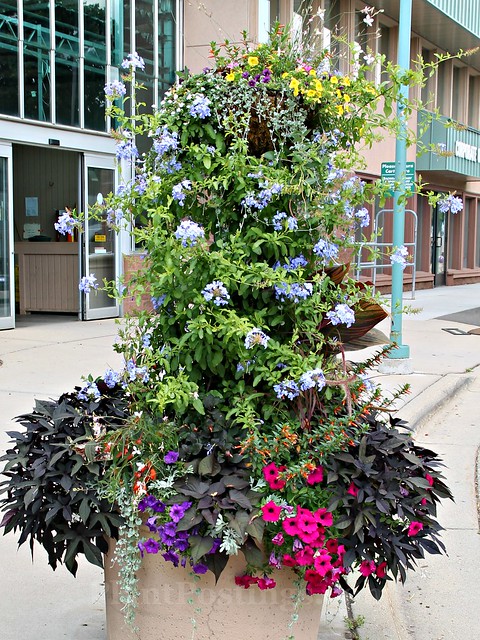
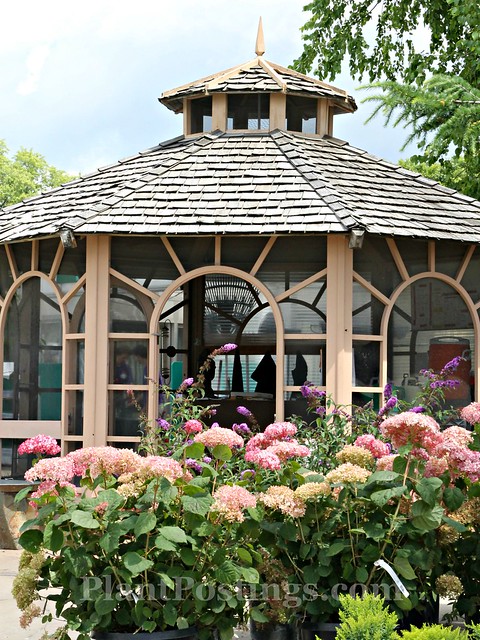
For lunch, we stopped at Bachman's Floral Gift & Garden for a tour, a chance to shop, and tasty refreshments.
bachmans 2

Bachman's has been a Twin Cities fixture for more than 125 years. As one local conveyed to the group, area residents realize that an arrangement or product from Bachman's is always something special.
latham 3

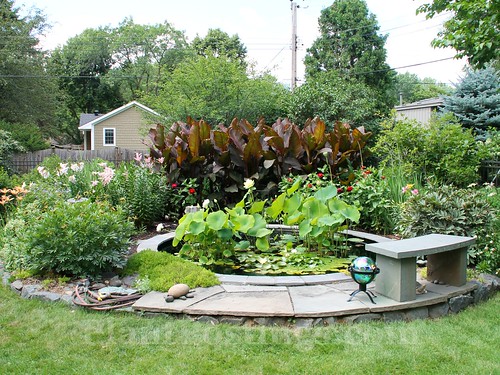
The tour continued with a stop at "Latham Park," as neighbors describe the home of Dianne and Dan Latham. Their pond, surrounded by beautiful flagstones and plants of all textures and sizes was one of many highlights.
latham 1

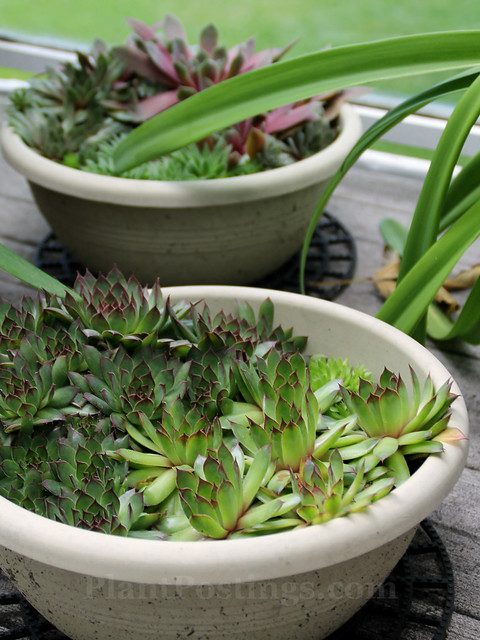
The Lathams' garden was exquisite--both in its grand design and its tiny details, like these lovely pots of succulents.
latham 2

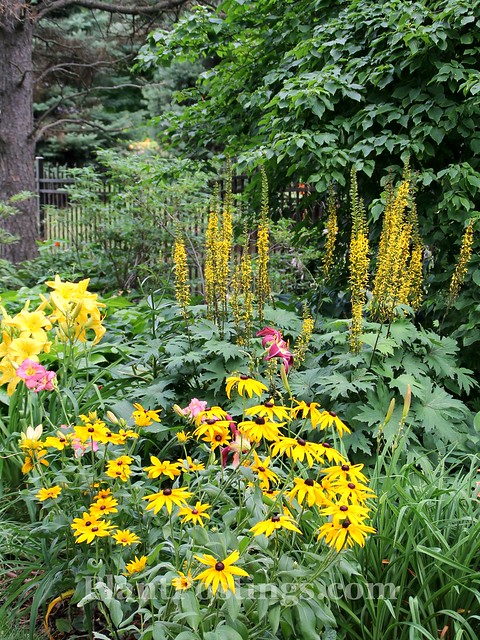
The plant combinations--here, Rudbeckias, Daylilies, and Ligularias--were familiar ones for me, but combined exquisitely.
noerenberg 4

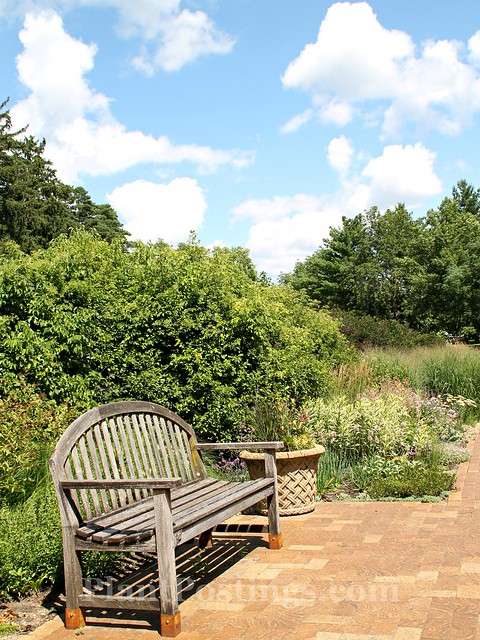
Next, I truly wish I'd had more time to sit on this bench and take in the magic of Noerenberg Memorial Gardens. This place was comfortable and magical.
noerenberg 1

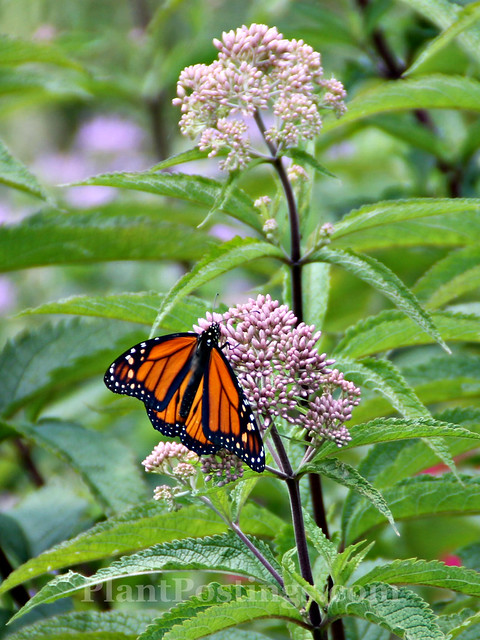
Native and pollinator-friendly plants welcomed visitors--for example, a Monarch butterfly on Spotted Joe Pye Weed (Eutrochium maculatum, formerly Eupatorium).
noerenberg 5

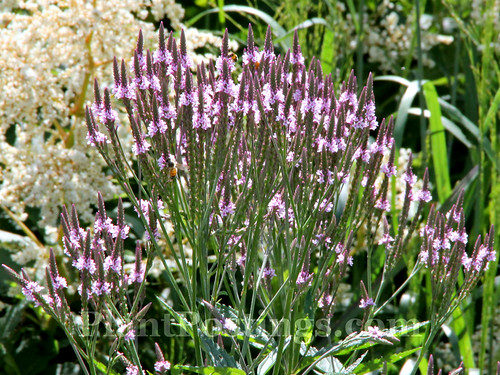
The light magically captured the candelabra effect of Blue Vervain (Verbena hastata), which was covered in honeybees and native bees.
noerenberg 3

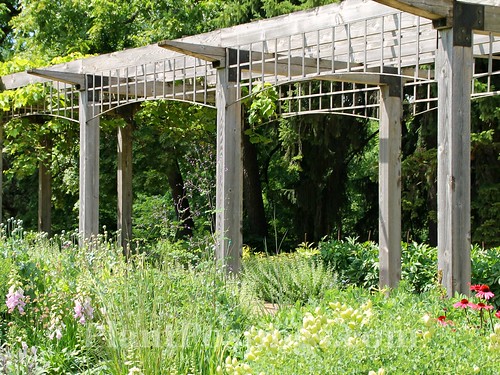
This public garden also had dramatic hardscapes, including this tall (10 feet?) grape arbor, surrounded by plants originally planted by the Noerenberg family.
noerenberg 2

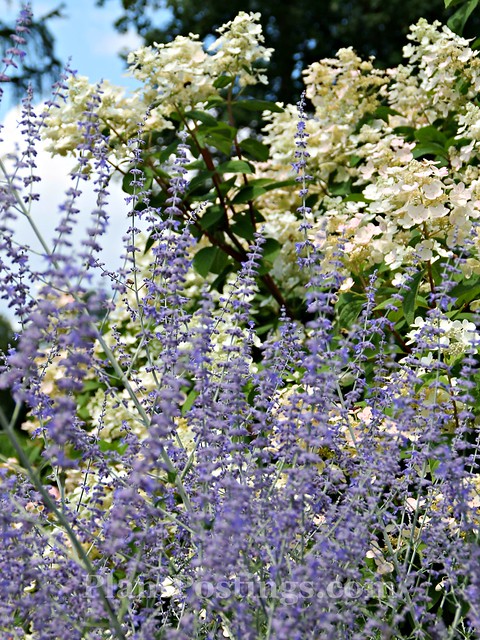
Care and creativity were evident at every turn. I enjoyed the artful combinations of plants, such as Panicle Hydrangea (H. paniculata), framed by Russian Sage (Perovskia atriplicifolia).
kelley & carmichiel 5

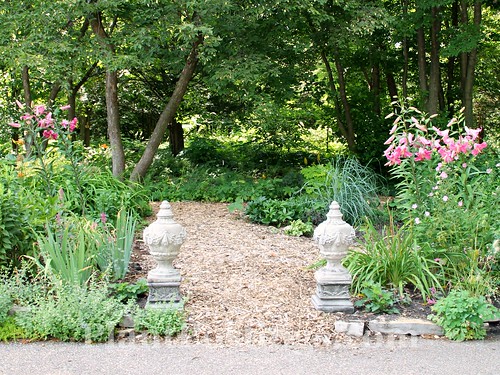
Our final stop of the day was the private garden of Steve Kelley and Arla Carmichiel. Arla is the horticulturist at Noerenberg Gardens and Steve owns Kelley and Kelley Nursery. I loved the graceful elegance of their garden.
kelley & carmichiel 3

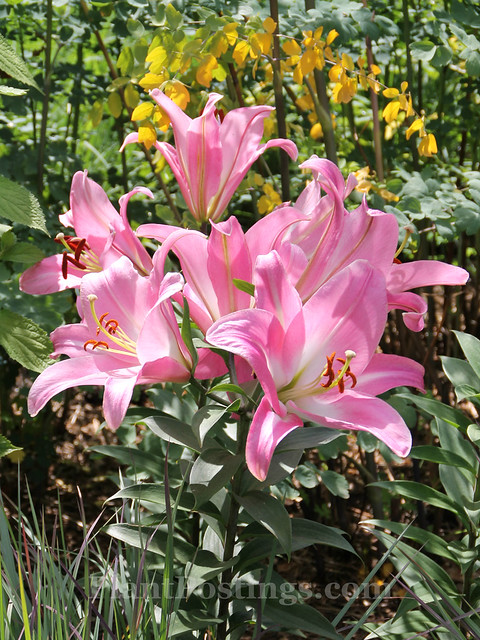
And the plants were amazing, like this gigantic lily. I neglected to get the name, but this might be 'Table Dance,' an Oriental-Trumpet (OT) hybrid.
kelley & carmichiel 4

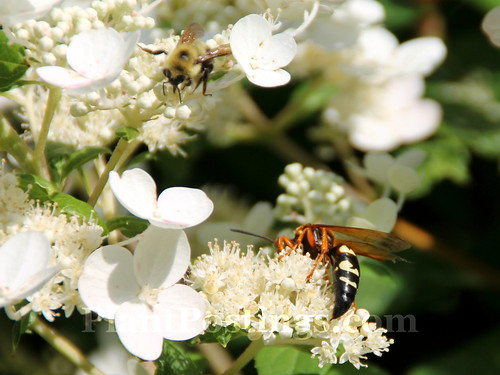
At Noerenberg and at the Kelley/Carmichiel home, Panicle Hydrangeas were pollinator favorites.
kelley & carmichiel 2

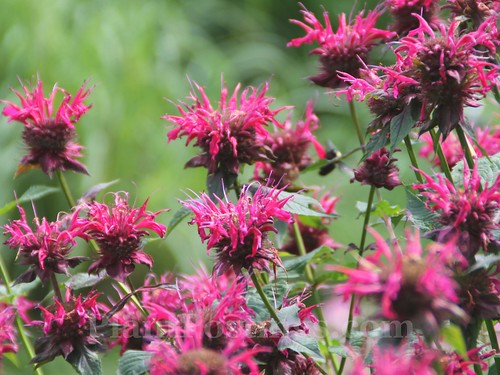
It was a delight to see Beebalm (Monarda didyma), another pollinator favorite, in full bloom.
kelley & carmichiel 1

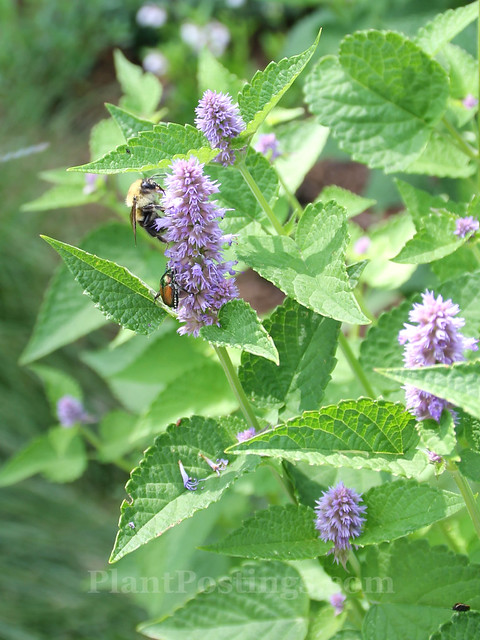
And, of course, the gentle softness of Anise Hyssop (Agastache foeniculum).

Most of our first day was spent in Minneapolis and near suburbs; the other days we ventured to St. Paul and even into Western Wisconsin. After a full first day of garden touring, we enjoyed an evening of networking, discussion, and hors d'oeuvres, sponsored by Garden Design magazine.

Thanks to all the organizers, sponsors, gardeners, and homeowners for a fabulous first day at the Garden Bloggers' Fling! More to come here on this blog, and others to be posted in the future at the Fling website.

July 14, 2016

When Life Gives You Sunshine...

zowie2

My garden is shady. Most of the time I try to celebrate it, enjoy the plants that thrive in shade, and appreciate the benefits of a sheltered habitat. But I also love the sun, and I have a few tiny patches of brightness where sun-loving plants reign. In July, especially, they put on a colorful show.

It's Garden Bloggers Bloom Day, and I'm focusing on my little cutting garden/potager. It's mostly a flower garden, because the only edibles growing there now are tomatoes, onions, lettuces, and a few herbs. But let's take a look at the bright July flowers:

salvia

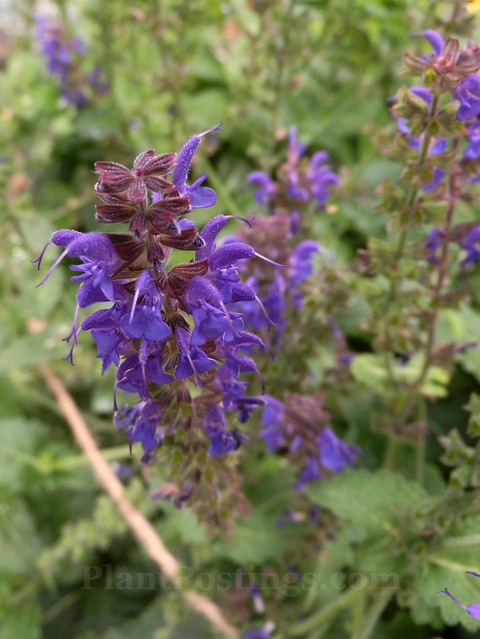
If you deadhead Salvias, like 'May Night' (Salvia x sylvestris), they'll reward you with repeat blooms throughout the summer. This is the second round for me this growing season.

butterflyweed

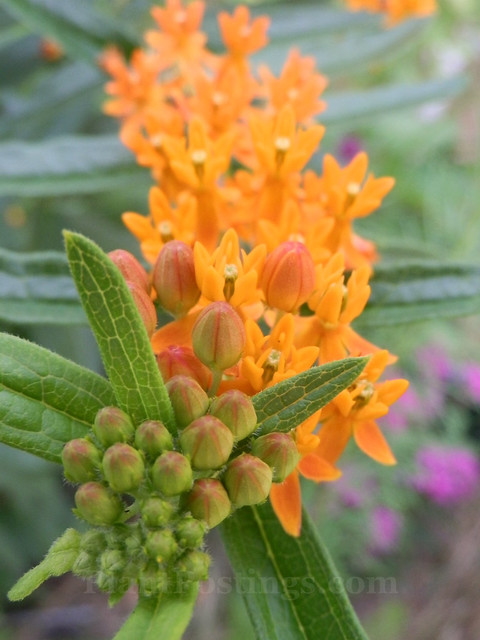
I'm thrilled that each year this patch of Butterflyweed (Asclepias tuberosa) expands further--this on a plant that struggled to establish itself the first couple of years. Various pollinators nectar on Butterflyweed and it's a host plant for Monarchs. Beyond this, it's such a stunning bloomer.

drumstick allium

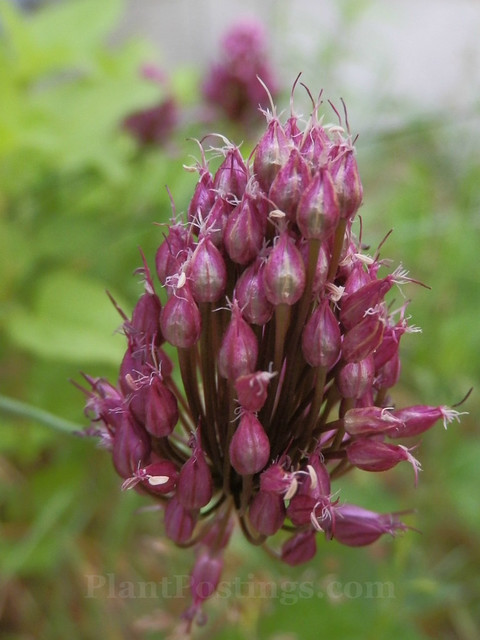
The Drumstick Alliums (A. sphaerocephalon) are leaning and fading, but they enjoyed their time in the sun.

susan

As the Drumsticks fade, the Black-Eyed Susans (Rudbeckia hirta) begin to unfurl. And their entrance always welcomes a party of pollinators to the garden.

pentas

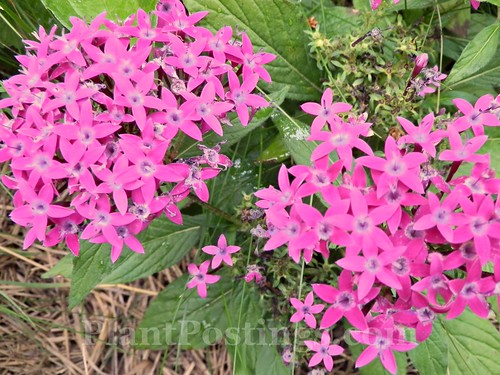
In this little, sunny cutting garden, I grow a combination of perennials and annuals--all chosen for their pollinator value. Last year, I tried Pentas (P. lanceolata) as annuals for the first time and this year I chose a bright pink variety, 'Graffiti Violet.'

state fair

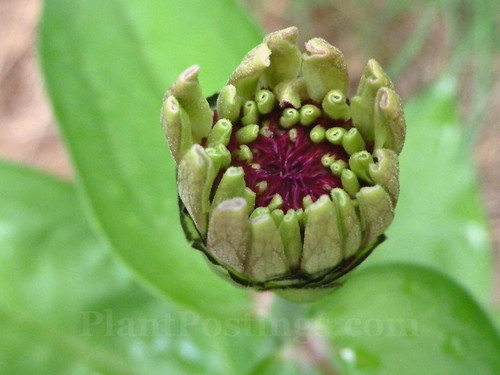
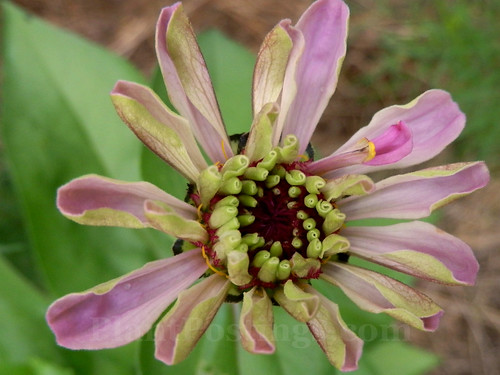
One of my favorite annuals, Zinnia (Z. elegans), attracts pollinators and produces excellent cut flowers with a long vase life. 'State Fair Mix' is a fabulous choice because of its size and beauty--five-inch blooms on three-foot stems, in a range of colors.

state fair 2

Every day now, more Zinnia blooms unfurl. And when deadheaded and maintained, they'll continue blooming into October.

zowie1

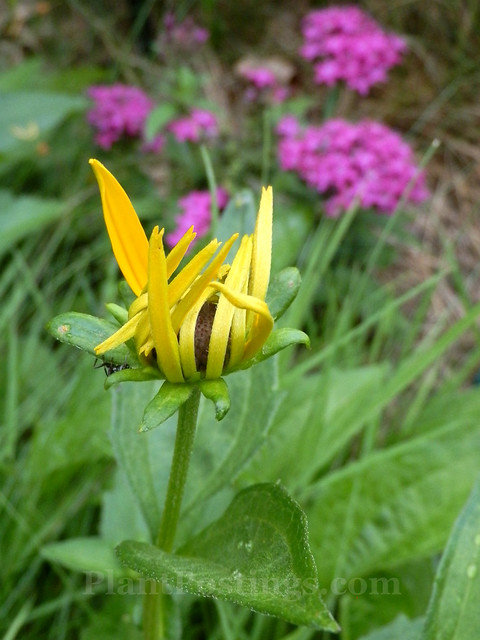
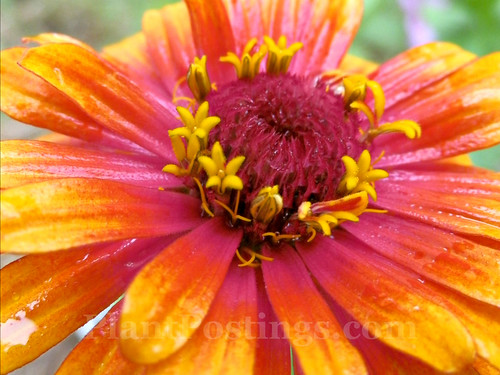
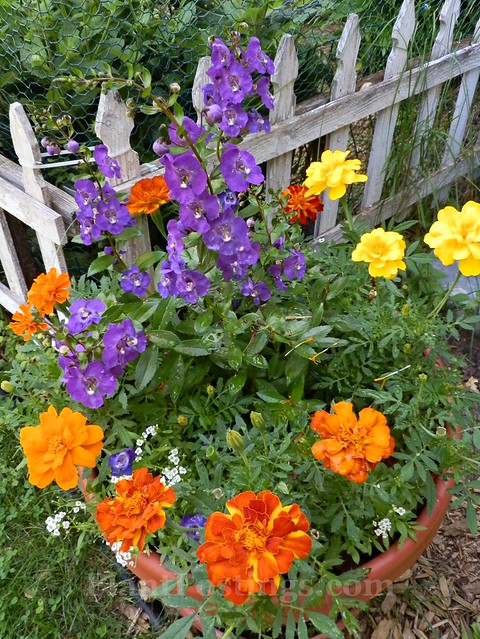
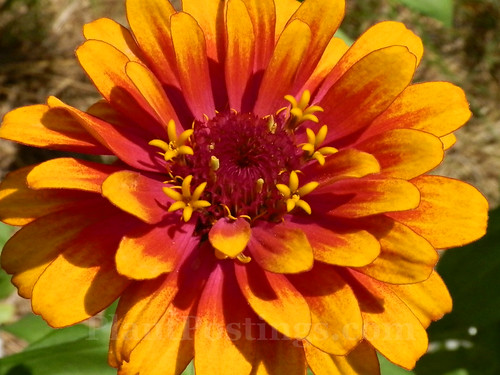
I grew my Zinnias from seed this year, and on the advice of fellow garden blogger, Rose, at Prairie Rose's Garden, I tried 'Zowie! Yellow Flame.' The name says it all! This cultivar (also shown at the beginning of this post) will be another great source for cut flowers.

liatris

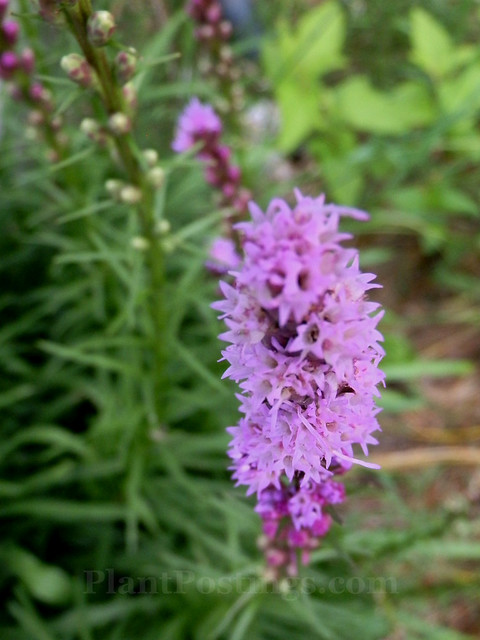
Blazing Star Liatris (L. spicata) spikes are great for colorful structural elements in floral arrangements.

lantana

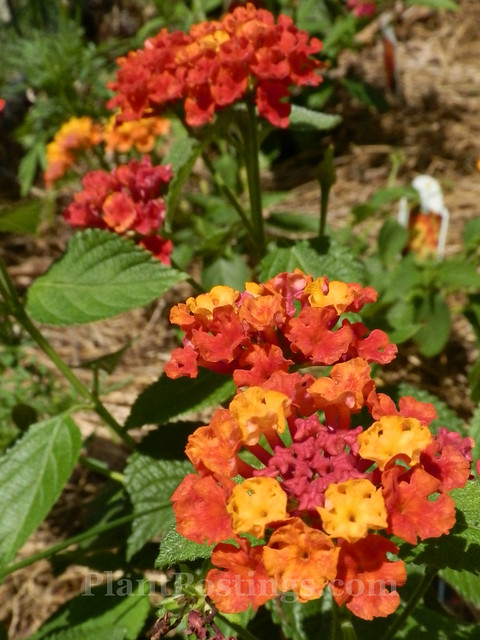
I'm still analyzing my preferences among the Lantana (L. camara) cultivars. This year, my garden includes 'Flame,' 'Citrus,' and 'Bandana Red.'

cosmos

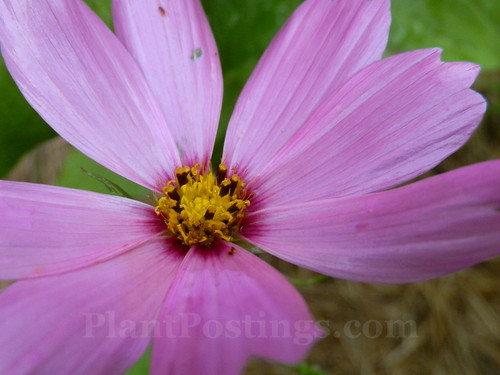
Another great cut flower and pollinator favorite is Cosmos (C. bipinnatus). I grew these from seed this year, too, and I chose 'Sensation Mix.'

angelonia and marigolds

At the corner of the cutting garden, a pot of Marigolds (Tagetes spp.), Sweet Alyssum (Lobularia maritima), and Angelonia (A. augustifolia 'Angelface Blue') welcomes hummingbirds and other garden friends.

bumble cone

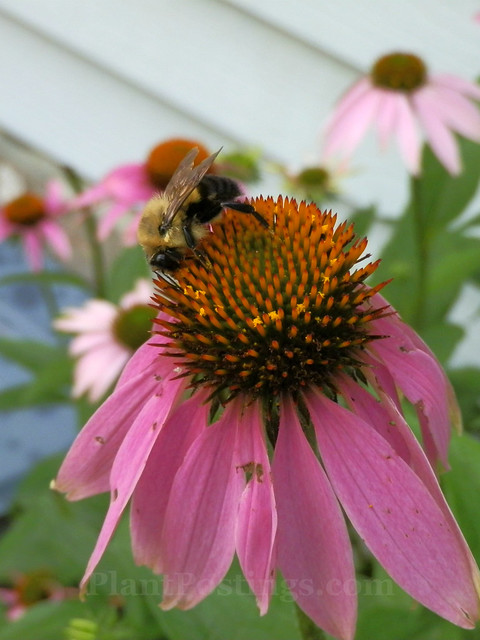
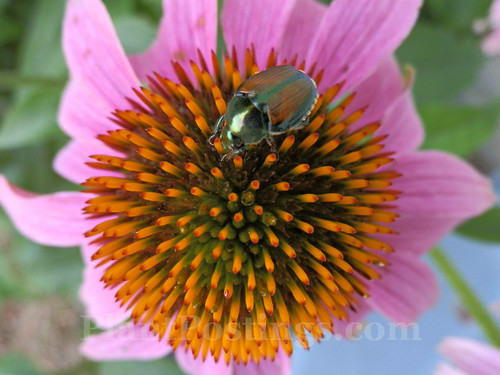
And the queen of the cutting garden has to be Purple Coneflower (Echinacea purpurea). This native stalwart sets the color theme, supports pollinators of all types, provides great cut flowers, and blooms in profusion for weeks on end. It thrives in wet years, during drought, and everything in between. Unfortunately, it's also a favorite of Japanese Beetles.

beetle cone

I'm trying to make peace with these beautiful insects. I'm not succeeding, but thankfully their destructive phase is short.

What's blooming in your garden this July? Head on over to May Dreams Gardens to read about flowers in gardens around the world.

July 06, 2016

Plant of the Month: Apache Plume

apache plume

I'm just returning from an extended road trip to the Four Corners region of the Southwest U.S.--where New Mexico, Arizona, Utah, and Colorado meet. Of course, this "plant nerd" had to photograph a few growing things along the way.

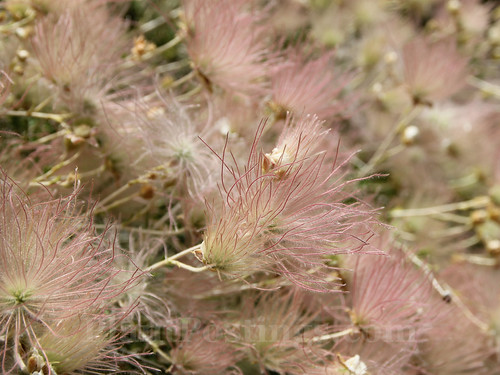
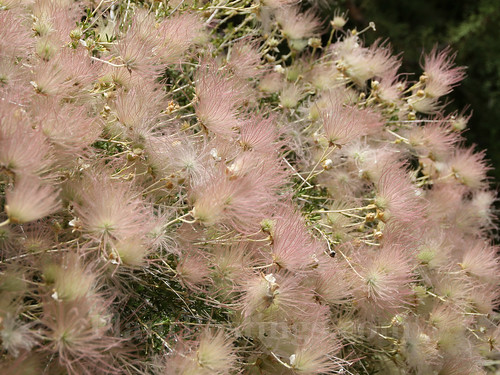
One, in particular, that caught my eye was a unique shrub with fluffy seedheads: Apache Plume (Fallugia paradoxa). It's the only species in its genus.

santa fe

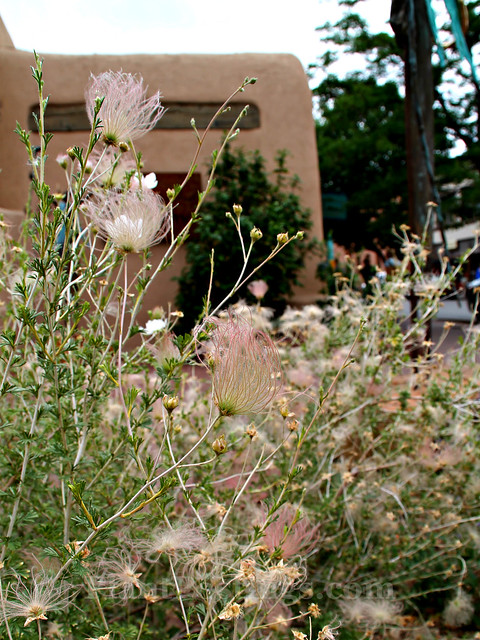
We saw it in Santa Fe, New Mexico, where its rosy glow nicely framed the local pueblo-style architecture.

grand canyon

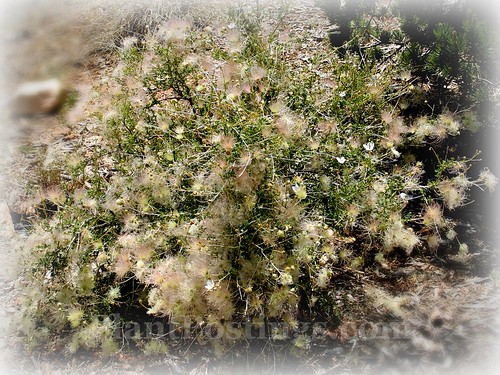
And at Grand Canyon National Park in Arizona, where the shrubs were plentiful along the paths, blending naturally with their surroundings.

Apache Plume is native to only eight U.S. states--California, Nevada, Utah, Colorado, Oklahoma, Texas, New Mexico, and Arizona, as well as Northern Mexico. If I lived in one of those locations, I would plant one or more. Thing is, it has a very specific preference for dry, rocky locations. In good garden soil with organic matter, it can look rangy and produces fewer flowers, according to Texas A&M University.

I'm thinking this is not a plant for most temperate gardens, but best enjoyed in its native setting.

seedhead

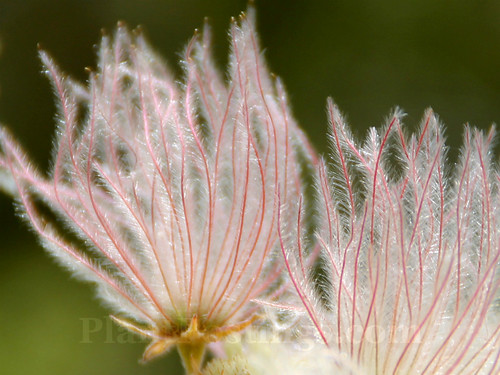
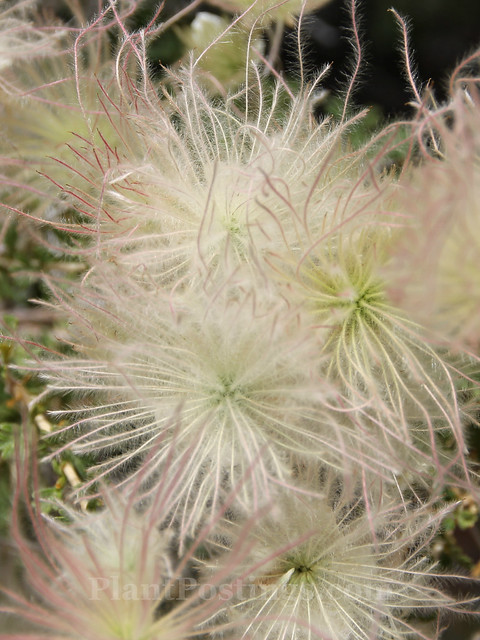
From a distance, Apache Plume resembles a Smokebush (Cotinus) cultivar, but its seedheads/fruits are very similar to those of its cousin in the Rose family, Prairie Smoke (Geum triflorum).

bloom

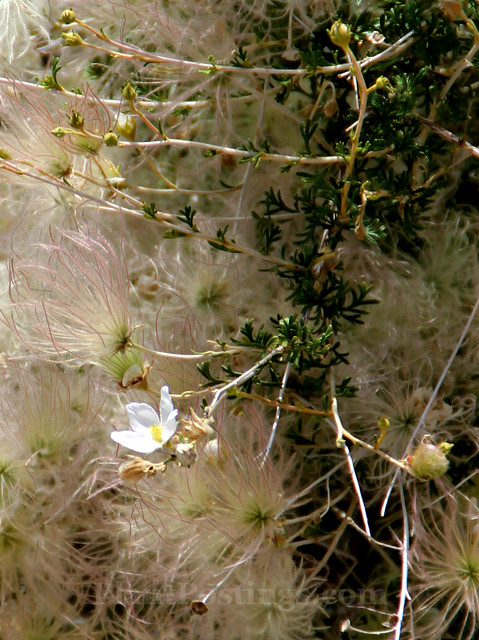
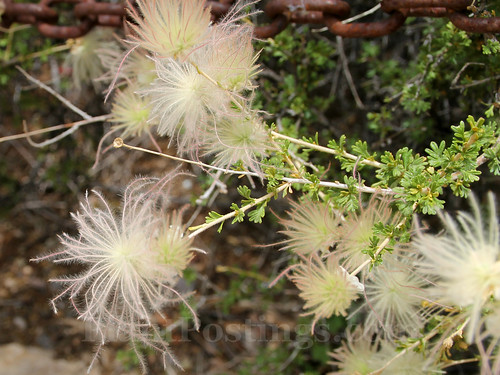
The small white flowers resemble related blooms in the Rose family. When the petals drop, the feathery achene fruits/seeds puff out, giving it a soft, fluffy appearance. It's the kind of seedhead you want to touch, and it's very soft.

seeds & foliage

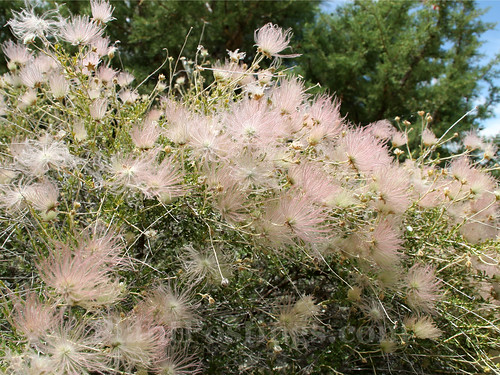
The foliage is semi-evergreen; small, deeply lobed leaves along slender, twiggy branches. Among the many Apache Plume shrubs we saw during the trip, the seedhead colors ranged from a creamy white to a lovely rose-pink.

light

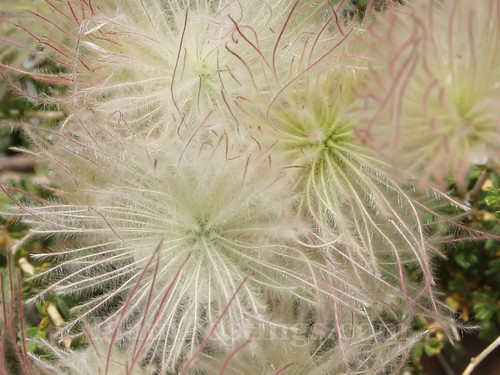
The plumes are very attractive with bright light shining through their filaments.

fluff

Go ahead: Try to resist touching those soft, powder-puff plumes!

fluff 2

Apache Plume is hardy to zone 5, but, again, best-suited to its native habitat in the Southwest U.S. It grows to 6 ft. tall and wide, according to the Lady Bird Johnson Wildflower Center. It grows in part shade to full sun, and is a good choice for a xeriscape garden.

Historically, its branches were used for sweeping and its steeped leaves for tea and hair-washing. In its dry, rocky native habitat, it's an important forage and cover plant for wild animals and a nectar source for pollinators.

pink cloud

At its peak display, it looks soft enough for a pillow ...

(Linking this post to Dozens for Diana.)