Showing posts with label sun-loving plants. Show all posts

October 25, 2025

Celebrating an Anniversary and a Never-Ending Love of Plants

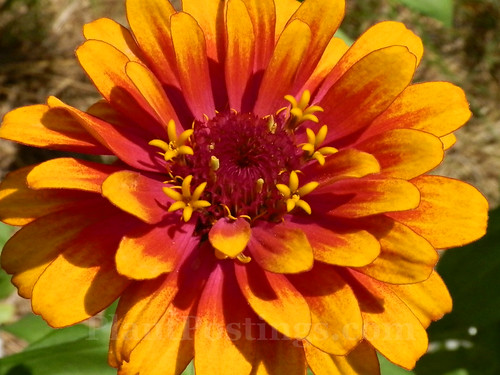
Floating Zinnias

Fifteen years ago today, I started this blog! During that time, I’ve posted at least once a month, except in August 2020, the month after my mom died. But much joy remains when I think of her, and my dad, who died this year. Both were amazing mentors—in gardening and in many other aspects of life.

I’ve been considering what to say about this blogoversary for several weeks now. Generally, I don’t have trouble coming up with words to describe a situation or an experience, but I had trouble with this one.

Maybe it’s best to simply say…PlantPostings.com has become a fundamental part of my life. The basics from my first few posts have remained the same, but there are a few changes:

• My garden zone has warmed slightly—from USDA plant hardiness zone 5a to zone 5b.

• As with most gardens, some plants have disappeared, while many others have been added.

• I’ve become active in the Wisconsin Master Naturalist program and the annual Garden Fling gathering, among other garden and nature organizations, communication venues, and horticultural opportunities.

But many things have stayed the same, borrowing wording from my first two posts back in October 2010:

• I'm fascinated by plants—by their rich variety of colors, forms, growth patterns...you name it! And I never tire of studying and nurturing them.

• I’m particularly fascinated by perennials that survive and thrive in northern climates.

• Most of this garden is shady during the growing season, which limits the types of plants that will grow here. But I've been able to cheat a little in spots with dappled sunlight—nurturing plants that generally grow better in the sun.

• I also have a very small bright, sunny garden on the west side of the house. That's where I grow vegetables and a few sun-loving annuals and perennials.

• Every year, this place looks different. Plants come and go. The dominance of ground covers and volunteer plants shifts.

Notably, the long-lived Oak (Quercus spp.) and Shagbark Hickory (Carya ovata) trees are the same ones that were here and established when we moved in, more than 20 years ago.

Fifteen years of blogging…wow, it’s hard to believe! Thank you, friends and readers, for stopping by and sharing your knowledge, encouragement, and joy.

Finally, I’ll end with wording from the end of my second post: “I inherited this beautiful oasis.... It’s actually a pretty magical place.”

August 09, 2025

Vignettes for Six on Saturday

center oak vignette

For this "Six on Saturday," I'm focusing on plant combinations and "vignettes" that have met or exceeded my expectations this summer. The first is the grouping in the center of the back garden under the middle Oak tree.

At the center, Wild Senna (S.  hebecarpa) isn't blooming yet, but its tall, healthy stalks provide structure. In the pot, the purple Shamrock Oxalis (O. vulcanicola 'Zinfandel') is happy in the partial shade. Patches of lavender Alliums (A. tanguticum 'Summer Beauty') flank the sides, and ground covers and Ostrich Ferns (Matteuccia struthiopteris) frame the front and back.

mixed pots

My potted plants in this partially shady spot just off the patio are colorful and overflowing, as usually happens by this time of the summer. They get dappled sun, off and on all day. The pots combine a mix of various Coleus, Impatiens, Dracaena Spikes, and Callas.

mexican sunflower and false sunflowers

In the side garden--which gets continuous, western sun all afternoon--the Mexican Sunflowers (Tithonia rotundifolia 'Goldfinger') and the False Sunflowers (Heliopsis helianthoides) are performing beautifully this year, with bright and complimentary colors. While I've planted them near each other in the past, they seem particularly happy this summer.

side garden

Nearby, the Black-Eyed Susans (Rudbeckia hirta) seem happy, too, paired with 'Autumn Joy' Sedums (Hylotelephium spectabile). I had to plant some new Butterflyweed seedlings (Asclepias tuberosa), because the plants in this spot sadly disappeared during the winter (not enough snow cover?). Hopefully, they'll return and fill in next spring and summer. Fortunately, I have other Milkweeds in other locations for the monarch butterflies.

angelonia angeldance and sunpatiens

Another combination I've planted together in the past pairs Tropical Impatiens (I. hawkeri) and Angelonias (A. angustifolia). This duo is SunPatiens 'Compact Purple Candy' and AngelDance 'Violet Bicolor' Angelonia. The colors are luscious, and the plants are great companions in the pot.

alliums by mailbox

Finally, I added 'Summer Beauty' Alliums (A. tanguticum) around the mailbox a couple of years ago. They've filled in, they're VERY happy in this spot, and they're covered with pollinators of all types. More on that later...

Thanks to Jim for hosting the "Six on Saturday" meme! To join, head on over to Garden Ruminations.

February 20, 2021

A Local Gem: Six Months Out

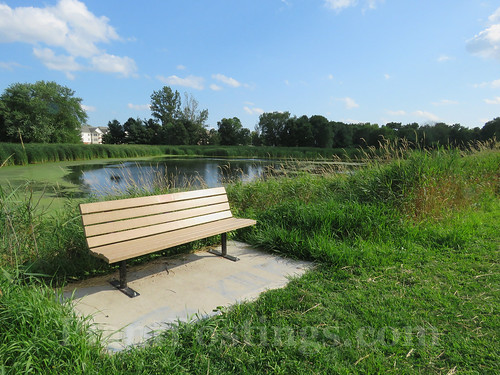
wetland

I happened upon a gem of a place in late summer 2019: a 56-acre natural area surrounded by residential property and commercial development. While I've lived near it my entire 35+ years in the Madison area, I'd never explored it. Discovering it felt like found treasure.

I posted about the Edna Taylor Conservation Park in June last year, but I'd never posted about my original (August 2019) impressions until now. As we're climbing out of a deep subzero freeze from the wobbly polar vortex, it seems fitting to project six months out from February to the warm, fertile conditions of August.

The verdant park includes wetlands, woodlands, oak savanna sections, and more. Interestingly, despite the fact that it's a sizeable property, one would hardly know it exists when traveling the perimeter...until venturing in beyond the wooded entrance and exploring the riches beyond.

Edna Taylor, a writer, teacher, and dairy farmer, owned a large portion of the property and sold it to the city of Madison to help create the conservation park. It includes six linear Indian effigy mounds and one panther-shaped mound, all listed on the National Register of Historic Places. PortalWisconsin.org does a great job of describing this special place, which is free to all visitors.

Among other things, it's a great place to do butterfly surveys.

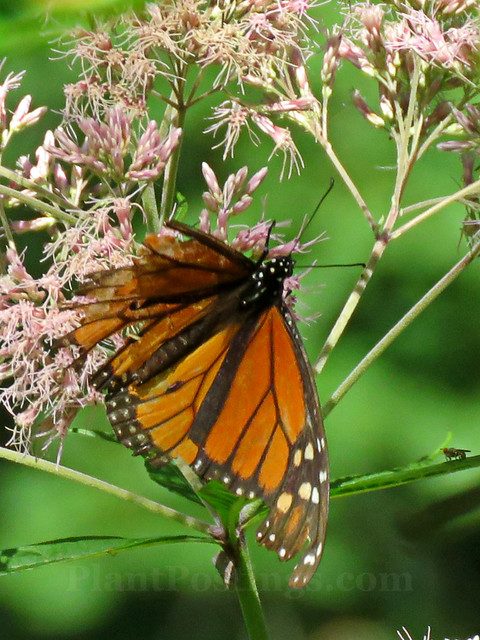
joepye monarch 1

joepye monarch 2

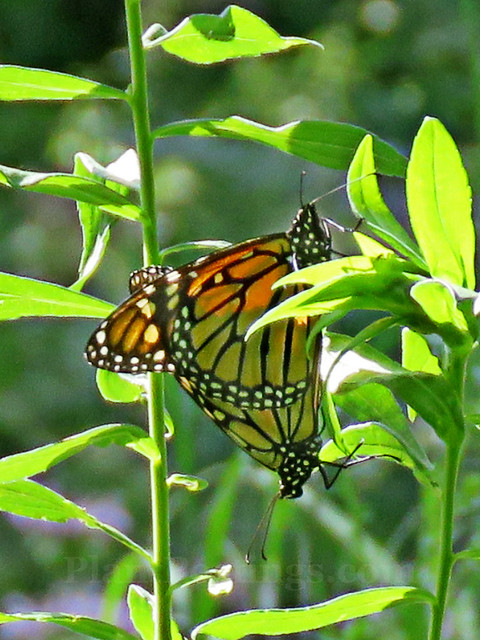
mating

Old, tattered monarchs and healthy, thriving, and mating monarchs on Sweet Joe Pye Weed (Eutrochium purpureum) and other plants.

skipper on thistle

Silver-spotted skippers on Bull Thistles (Cirsium vulgare).

viceroy

And viceroys on fields of grasses.

shagbark hickory

There are so many reasons for any person to appreciate this special place. For me, beyond its richness with natural resources and natural beauty, its habitats and conditions are similar to those in my backyard garden: oak, maple, and shagbark hickory trees, woodland edges, rolling hills...the list goes on. So, it's a great place to take note of plants likely to thrive in my own garden.

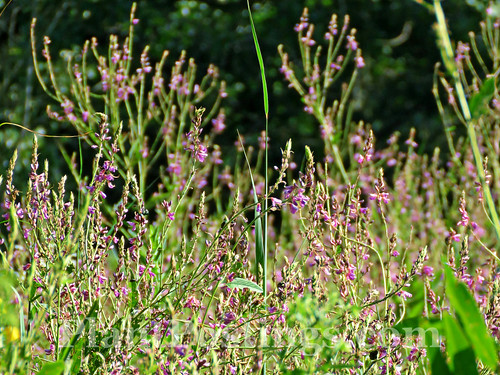
showy tick-treefoil

Soon after traversing the land bridge between wetlands shown in the first photo on this post, one encounters an upland path that winds around beautiful woodland-edge meadows. In early August, the masses of Showy Tick-Treefoil (Desmodium canadense) were thick, bright, and dramatic.

thin-leaved sunflower

Several species of native sunflowers, including Thin-Leaved (Helianthus decapetalus), were beginning their late-summer show.

self-heal

The understated and edible Self-Heal (Prunella vulgaris) popped in here and there along the hiking paths.

rudbekia fulgida

Several Rudbeckia species including Orange Coneflower (R. fulgida) graced the woodland edges and open areas with their sunny faces.

monarda

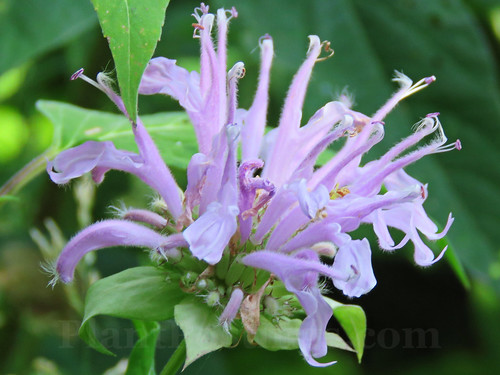
One plant I was surprised to see in shade was Wild Bergamot (Monarda fistulosa). I was aware it would grow in partial shade, but I was surprised to see so much of it in heavy shade. Because of this, I added this plant to my garden; alas, the rabbits seem to like it, too.

prairie coneflower

I've always enjoyed Prairie Coneflower (Ratibida pinnata), so I was happy to see it. I think my garden might be a little too shady for this one, but maybe at some point I'll add it.

compass plant

Among my favorite plants of the late summer in this part of the world are the Silphiums. This photo of a Compass Plant (Silphium laciniatum) recalls many happy, warm hikes.

plaque

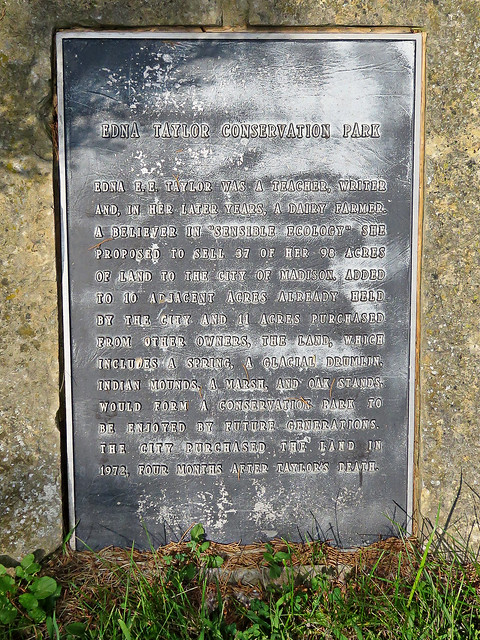
This plaque near the entrance to the main hiking trail at the park provides a brief synopsis and tribute to Edna Taylor herself.

woodland edge

What a wonderful resource for residents and visitors to the area. But I'm certain many aren't even aware of this amazing park's existence. I look forward to many more hikes and discoveries in this special place.

August 19, 2019

Garden Coping Skills

IMG_4878

I was feeling a little depressed about the garden recently.

It's been a wet, messy, overgrown growing season. Everything looks lush and full, but for many reasons it's not "normal" and I haven't had the time to address all my garden problem areas.

So, I decided to focus on the positive: the plants that are performing well...the happy surprises...the basic, simple discovered joys.

IMG_4799

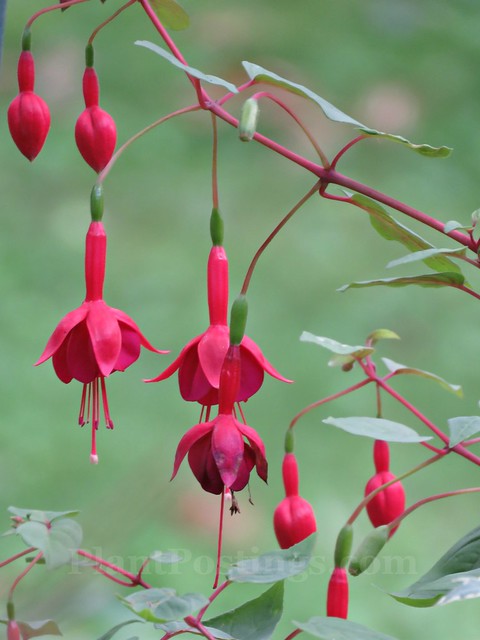
Starting in dappled shade: Fuchsia 'Marinka' (first photo) has successfully overwintered for several years now. It took a while to get going this spring, but it's blooming like crazy now.

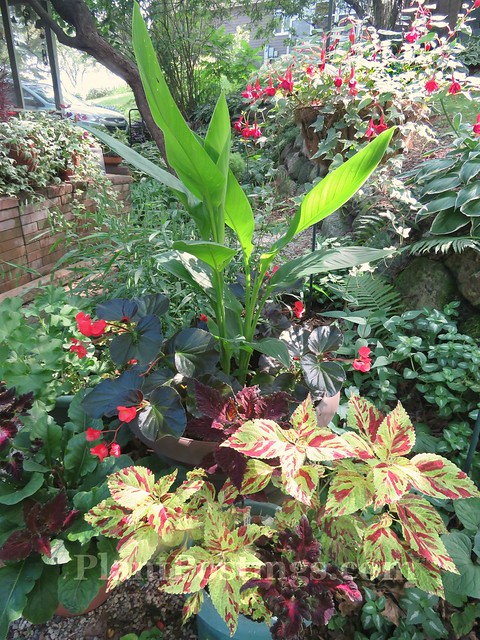
The potted plants by the pond (above) are happy, too, anchored by an AAS Winner Canna 'South Pacific Orange.' It may never bloom in the shade, which is probably a good thing because the foliage looks great with the other plants, and the flowers would clash.

IMG_1586

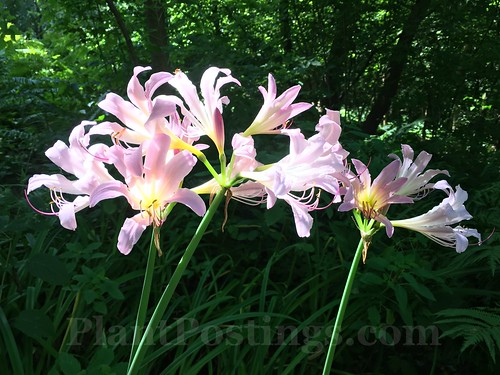
The Naked Ladies, aka Resurrection Lilies, aka Assumption Lilies (Lycoris squamigera), seem to magically catch the limited dappled sunlight in a back corner of the garden. They survived a major neighborhood digging project for upgraded cable access. That entire back area was a mess, and I've simply let the plants repopulate and find their way.

IMG_1570

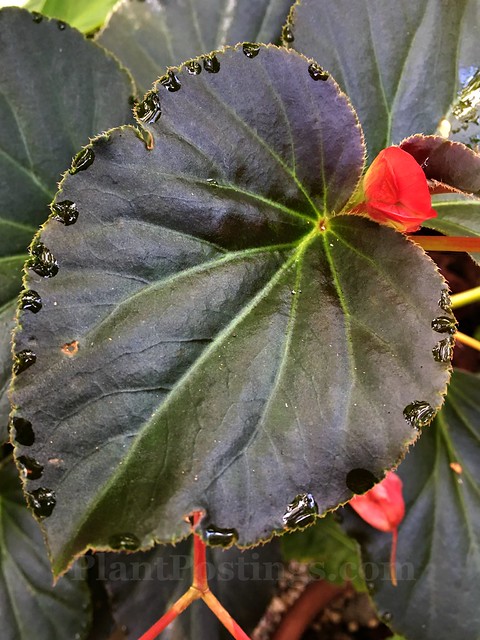
Here's another plant that really should be in more sun, but it's stunning in dappled shade: AAS winner Begonia 'Viking XL Red on Chocolate.' I mean it's flowering even in the shade, but the foliage is incredible! The leaves are huge and waxy and they really do look chocolaty and good enough to eat (but don't!).

IMG_1577

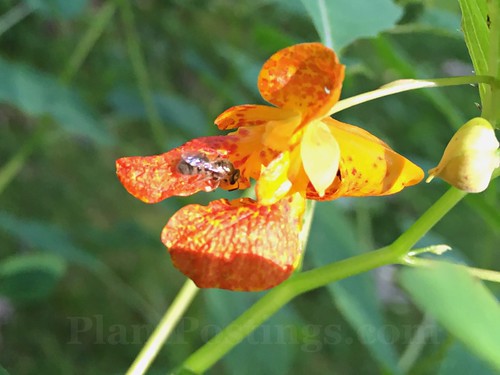
The Spotted Jewelweed (Impatiens capensis) is blooming and attracting hummingbirds and other pollinators.

IMG_4808

In spite of its pot tumbling over several times in heavy storms (long story), this combination of Coleus 'Colorblaze Lime Time' and New Guinea Impatiens 'Sonic Light Pink' is still going strong. I love the color combination.

IMG_4803

I'm happy to see that the new Wild Bergamot (Monarda fistulosa) I planted a few weeks ago seems to be taking off and filling in its areas. The rabbits don't seem to be eating it, as they've done with just about every other plant I've tried in this part of the garden. It won't bloom this year, but if it survives the winter and the rabbits, maybe it will bloom next summer.

IMG_4833

Now to the sun: The potager garden is a sloppy mess, but it's full of butterflies, bees, and other garden friends (and adversaries).

IMG_4835

IMG_4814

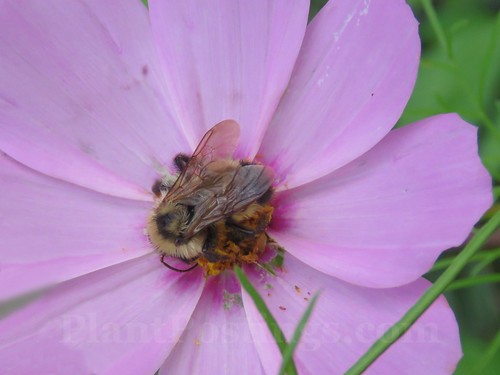
I could spend hours watching bumbles hugging Cosmos (C. bipinnatus). There's just so much to like about Cosmos, and they just keep on giving throughout the growing season.

IMG_4837

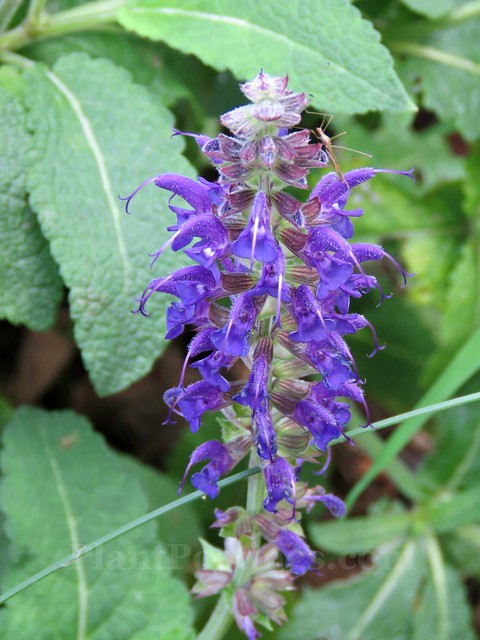
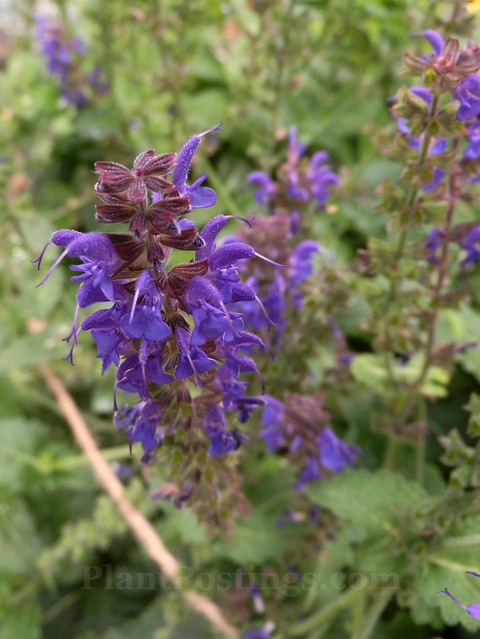
The 'May Night' Salvia (Salvia x sylvestris) is on its fourth or fifth (or more?) bloom cycle after repeated deadheading.

IMG_4830

The Calamint (Calamintha nepeta) is blocking the rabbits from an uncaged part of the garden. Because it's a mint rabbits tend to stay away. Plus, the pollinators love it.

IMG_4816

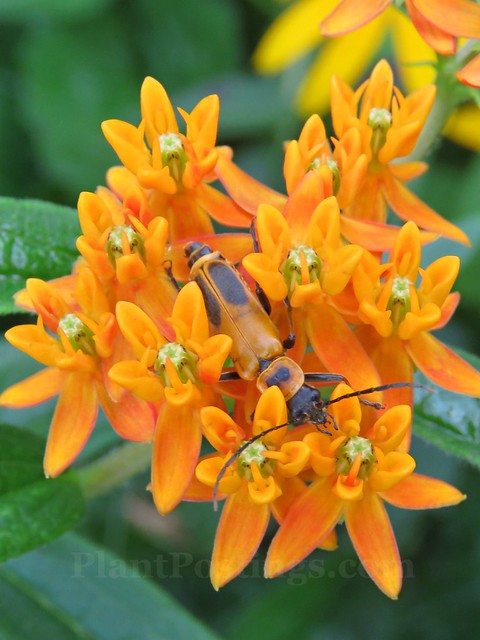
It's nice to have a late-season flush of color from the Butterflyweed (Asclepias tuberosa). I found quite a few monarch eggs and caterpillars on the buds of this plant this season. The goldenrod soldier beetle blends right in, (probably hunting for eggs...oh well).

IMG_4829

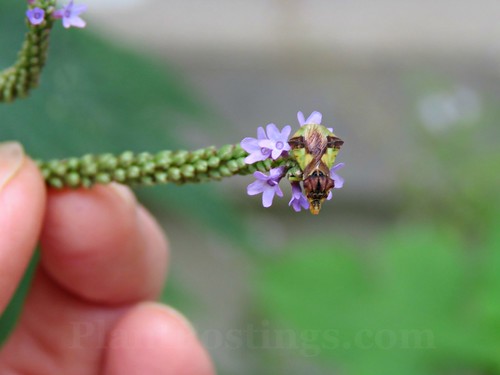
The Blue Vervain (Verbena hastata) has really filled in this year, and I like the way its "fingers" of seeds are reaching for the sun.

IMG_4826

This tiny assassin bug is waiting for a pollinator meal. Should I interfere with nature?

IMG_4802

'Goldfinger' Tithonia, grown from seed, took a little longer to bloom this season, but the flowers will open very soon (scratch that--they're blooming today, but I didn't have a chance to take another photo and upload it).

IMG_4836

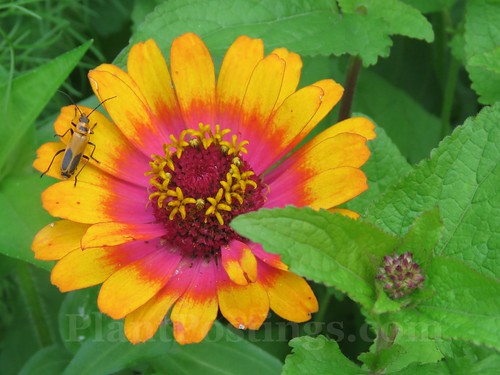
'Zowie! Yellow Flame' Zinnias (also grown from seed) always brighten my day, and soon they'll have companion Blue Mistflowers (Conoclinium coelestinum) blooming by their sides.

It might be a messy, sloppy, overgrown season, but there are always garden surprises and successes to celebrate.

July 14, 2016

When Life Gives You Sunshine...

zowie2

My garden is shady. Most of the time I try to celebrate it, enjoy the plants that thrive in shade, and appreciate the benefits of a sheltered habitat. But I also love the sun, and I have a few tiny patches of brightness where sun-loving plants reign. In July, especially, they put on a colorful show.

It's Garden Bloggers Bloom Day, and I'm focusing on my little cutting garden/potager. It's mostly a flower garden, because the only edibles growing there now are tomatoes, onions, lettuces, and a few herbs. But let's take a look at the bright July flowers:

salvia

If you deadhead Salvias, like 'May Night' (Salvia x sylvestris), they'll reward you with repeat blooms throughout the summer. This is the second round for me this growing season.

butterflyweed

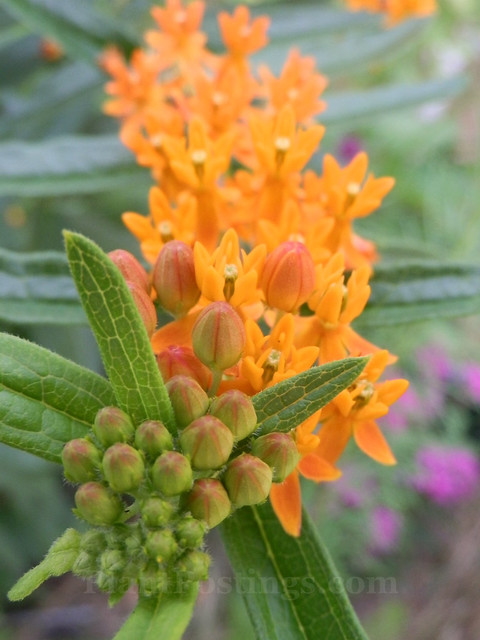
I'm thrilled that each year this patch of Butterflyweed (Asclepias tuberosa) expands further--this on a plant that struggled to establish itself the first couple of years. Various pollinators nectar on Butterflyweed and it's a host plant for Monarchs. Beyond this, it's such a stunning bloomer.

drumstick allium

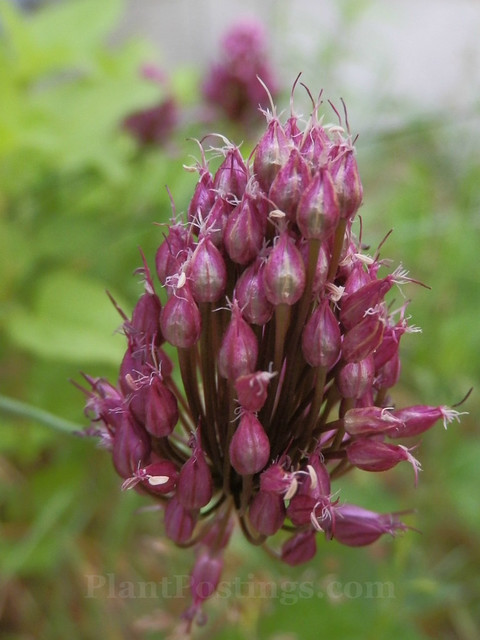
The Drumstick Alliums (A. sphaerocephalon) are leaning and fading, but they enjoyed their time in the sun.

susan

As the Drumsticks fade, the Black-Eyed Susans (Rudbeckia hirta) begin to unfurl. And their entrance always welcomes a party of pollinators to the garden.

pentas

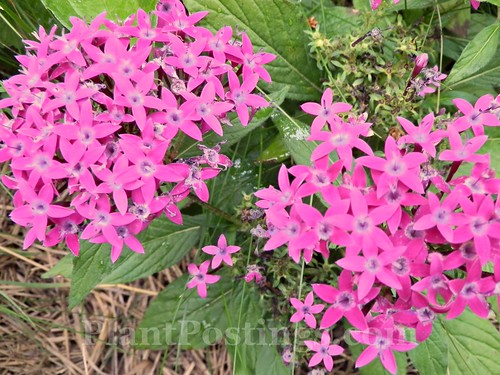
In this little, sunny cutting garden, I grow a combination of perennials and annuals--all chosen for their pollinator value. Last year, I tried Pentas (P. lanceolata) as annuals for the first time and this year I chose a bright pink variety, 'Graffiti Violet.'

state fair

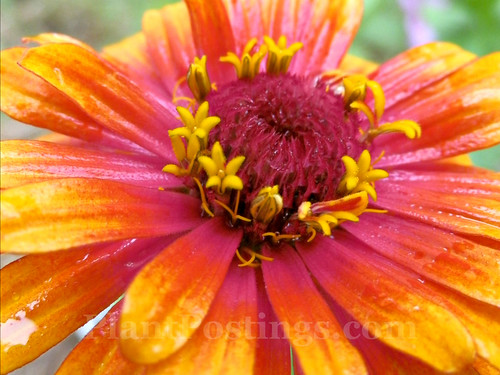
One of my favorite annuals, Zinnia (Z. elegans), attracts pollinators and produces excellent cut flowers with a long vase life. 'State Fair Mix' is a fabulous choice because of its size and beauty--five-inch blooms on three-foot stems, in a range of colors.

state fair 2

Every day now, more Zinnia blooms unfurl. And when deadheaded and maintained, they'll continue blooming into October.

zowie1

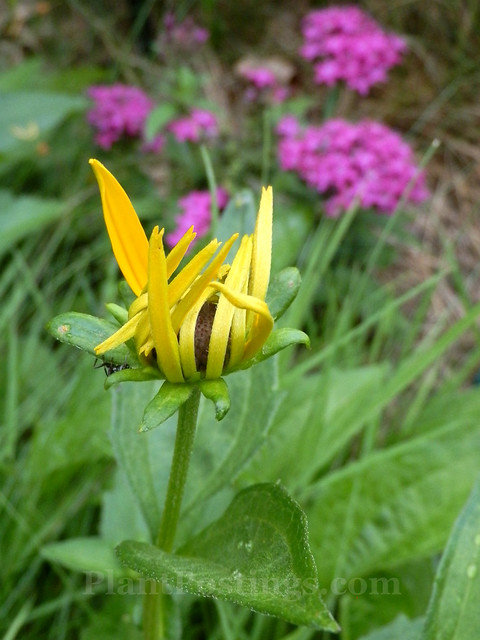
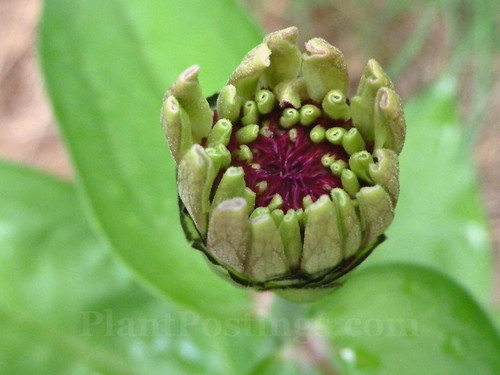
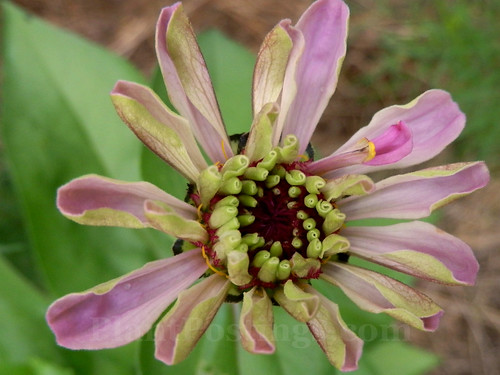
I grew my Zinnias from seed this year, and on the advice of fellow garden blogger, Rose, at Prairie Rose's Garden, I tried 'Zowie! Yellow Flame.' The name says it all! This cultivar (also shown at the beginning of this post) will be another great source for cut flowers.

liatris

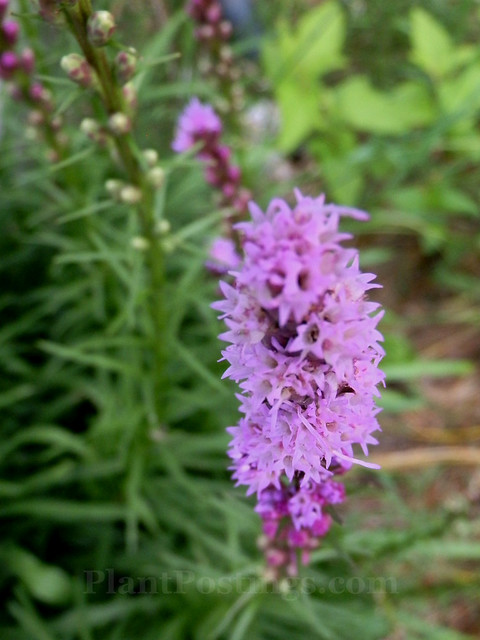
Blazing Star Liatris (L. spicata) spikes are great for colorful structural elements in floral arrangements.

lantana

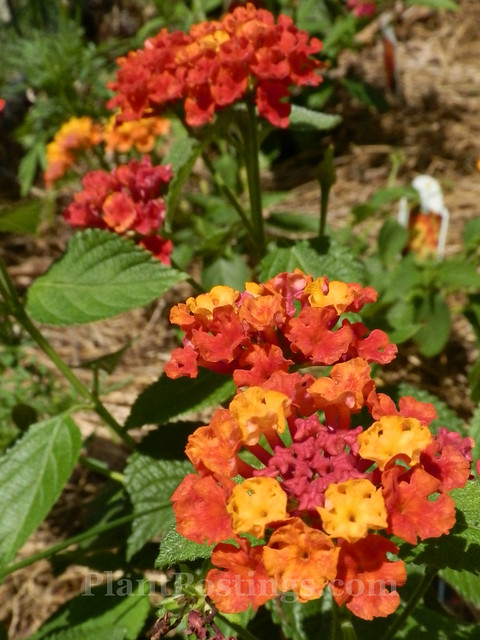
I'm still analyzing my preferences among the Lantana (L. camara) cultivars. This year, my garden includes 'Flame,' 'Citrus,' and 'Bandana Red.'

cosmos

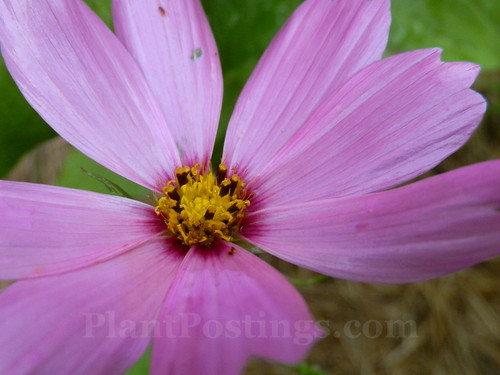
Another great cut flower and pollinator favorite is Cosmos (C. bipinnatus). I grew these from seed this year, too, and I chose 'Sensation Mix.'

angelonia and marigolds

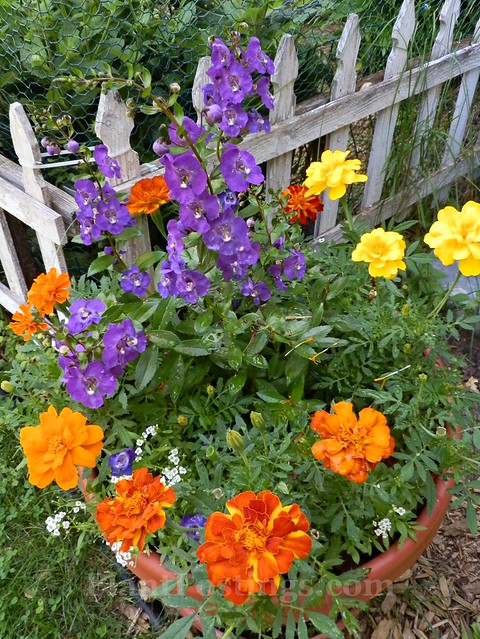
At the corner of the cutting garden, a pot of Marigolds (Tagetes spp.), Sweet Alyssum (Lobularia maritima), and Angelonia (A. augustifolia 'Angelface Blue') welcomes hummingbirds and other garden friends.

bumble cone

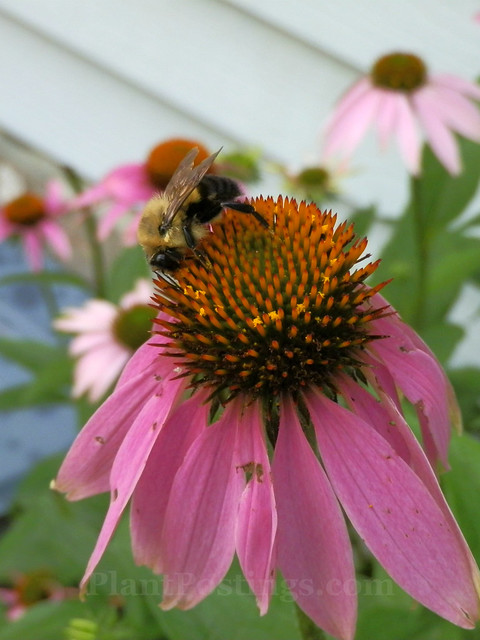
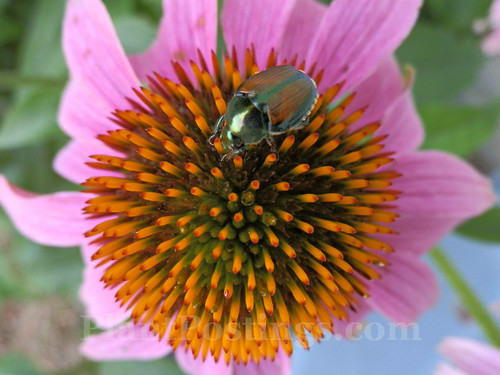
And the queen of the cutting garden has to be Purple Coneflower (Echinacea purpurea). This native stalwart sets the color theme, supports pollinators of all types, provides great cut flowers, and blooms in profusion for weeks on end. It thrives in wet years, during drought, and everything in between. Unfortunately, it's also a favorite of Japanese Beetles.

beetle cone

I'm trying to make peace with these beautiful insects. I'm not succeeding, but thankfully their destructive phase is short.

What's blooming in your garden this July? Head on over to May Dreams Gardens to read about flowers in gardens around the world.