Showing posts with label potager. Show all posts

July 15, 2024

The Bright Blooms of July

Heliopsis & Echinacea

The blossoms are lush on this Garden Bloggers' Bloom Day. We've had plentiful rain and warm temperatures, and the plants are happy.

Once again, I'm limiting coverage here to one area, since there are so many things blooming. Items in this post are found on the sunny side of the house, in and around the potager garden.

Echinacea

The Purple Coneflowers (Echinacea purpurea) are plentiful and bright.

Heliopsis

False Sunflowers (Heliopsis helianthoides) are blooming, budding, and brightening their space along the front porch railing.

Meanwhile, other blooms are nearing their completion, but beautiful still...

Allium

These include the Drumstick Alliums (A. sphaerocephalon), here poking up out of foliage of Blue Mistflower (Conoclinium coelestinum), which will bloom later this summer;

Salvia

'May Night' Salvia (Salvia x sylvestris), which offers repeat blooms with deadheading; and

Alcea

Hollyhocks (Alcea rosea), the current star of the mix. 

Asclepias tuberosa

Always brightening their spots and welcoming monarch butterflies are the milkweeds, including Butterfly Weed (Asclepias tuberosa); and

Asclepias incarnata

Swamp Milkweed (Asclepias incarnata), which has a lovely vanilla scent.

Cosmos

The Cosmos (C. bipinnatus 'Sensation Mix') I grew from seed will bloom until the first hard frost, providing plentiful cut flowers in the weeks ahead.

Zinnias

Joining them in vases and as repeat bloomers (with cutting) are the 'State Fair Mix' and 'Zowie Yellow Flame' Zinnias (Z. elegans). These are also hummingbird and bee favorites.

Lantana

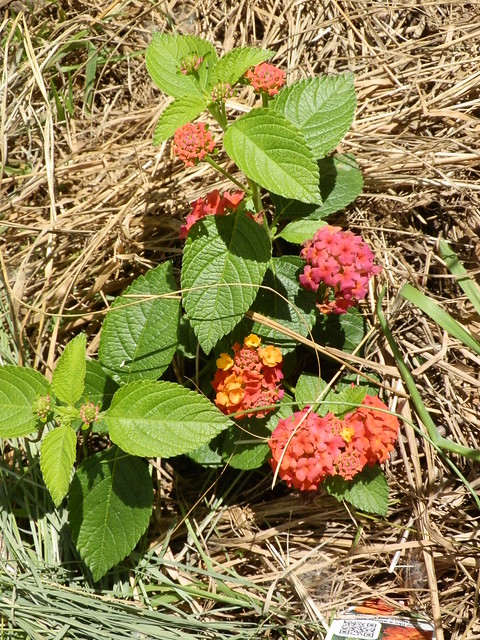
For some reason (too much rain?) the Lantanas (L. camara) dropped most of their blooms, but they're producing more buds. Shown here are Bandolero 'Pineapple' and Bandolero 'Guava' varieties.

Angelonia

Another bloom that will continue all summer (with cutting) is the Angelonia (A. angustifolia). This plant was mismarked, but I'm guessing it's Angeldance 'Fuchsia Bicolor.' I really love it and hope I'll be able to find it again next year.

Still other bloomers are just getting going...

Rudbeckia

Black-Eyed Susans (Rudbeckia hirta) add even more golden tones to the potager. I enjoy them in full bloom and at this stage, as the flower petals begin to unfurl.

Liatris

Blazing Star Liatris spikes (L. spicata) share such a beautiful complementary lavender-blue to the group.

Gladiolus

Finally, the Gladioli (Gladiolus Grandiflora hybrids) are just beginning to add their drama to the garden and in vases.

Thanks to Carol at May Dreams Gardens for hosting Garden Bloggers' Bloom Day! What's blooming in your garden?

July 25, 2016

A Twin Cities Fling: Part I

eloise 1

Have you heard of the Garden Bloggers' Fling? In 2008, a visionary group of garden bloggers organized a conference and welcomed bloggers from all corners of North America and beyond to join them in Austin, Texas. Since then, garden bloggers have convened in a different city each year to tour gardens, share information, and form friendships.

I first attended the Fling last year in Toronto. This year, the Fling was in the Twin Cities, an easy drive for me. It was great to reconnect with friends I'd made last year, spend time with bloggers I'd previously known only online for many years, and explore amazing gardens in Minneapolis/St. Paul.

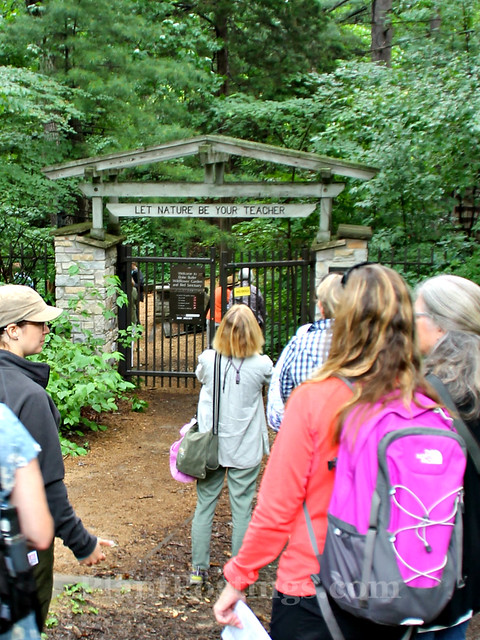
Our first day started in the Eloise Butler Wildflower Garden, the oldest native-plant garden in the U.S. In addition to featuring woodland, wetland, and prairie habitats, it's home to more than 130 species of birds. It reminded me of the UW-Madison Arboretum, one of my favorite places here at home. The sign welcoming us to the garden invited us to "Let Nature Be Your Teacher."
eloise 2

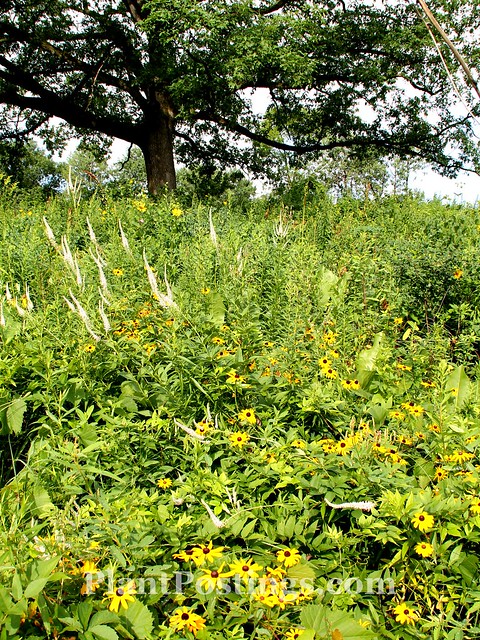
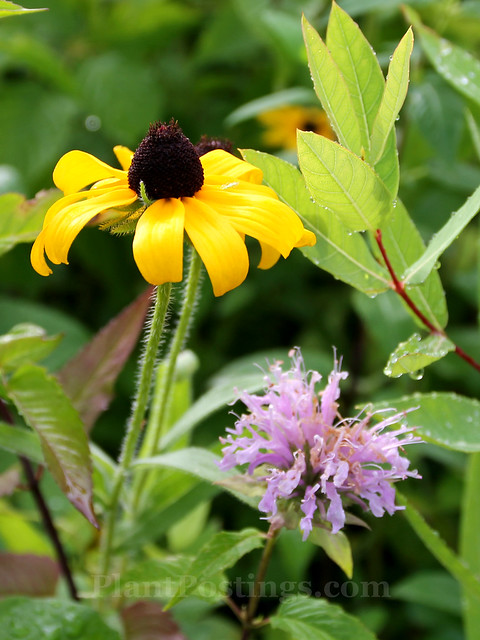
Along the paths were plentiful native North American perennials, including Black-Eyed Susans (Rudbeckia hirta) and Wild Bergamot (Monarda fistulosa).

eloise 3

Acres and acres of wildflowers.

eloise 4

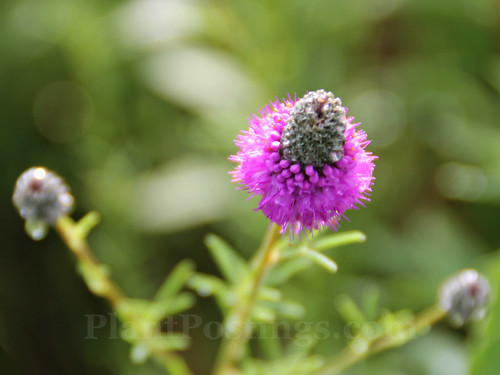
I also saw one of my new favorites, recently added to my own garden: Purple Prairie Clover (Dalea purpurea). At a recent conference, a presenter mentioned beekeepers like this plant because their bees' honey is more flavorful when Purple Prairie Clover is a food source. It also has special value for native bees.
eloise 5

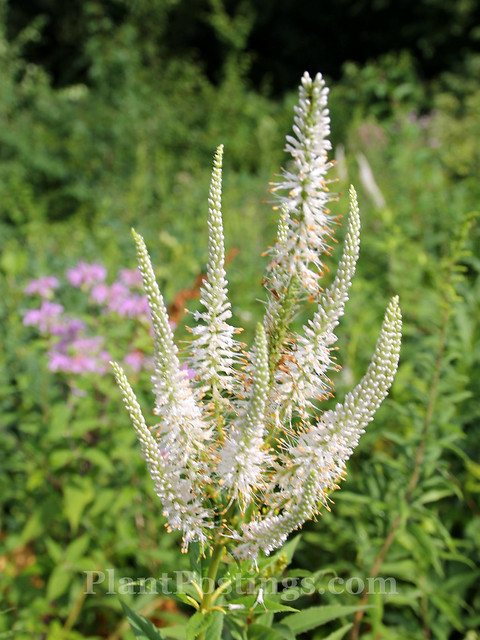
Culver's Root (Veronicastrum virginicum)--a tall, architecturally pleasing plant--also was in full bloom.
eloise 6

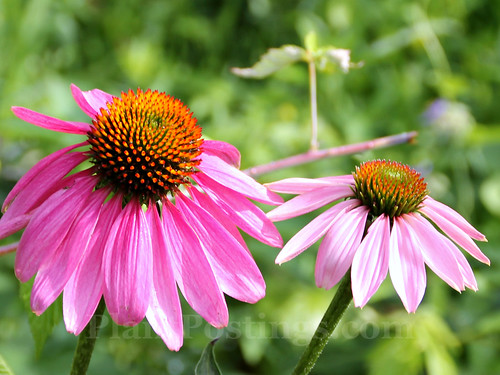
As were the always lovely Purple Coneflowers (Echinacea purpurea).

hamilton 1

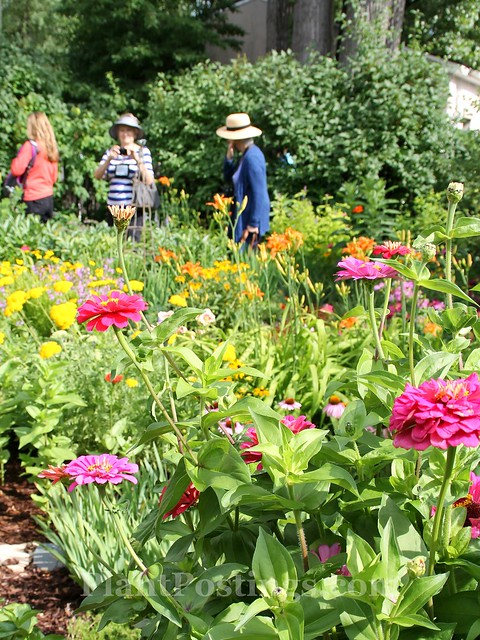
Our next stop was the garden of Donna Hamilton. Donna converted a former grocery store and grounds into a studio and gardens. Bright summer blooms--annuals and perennials--were on display here.
hamilton 3

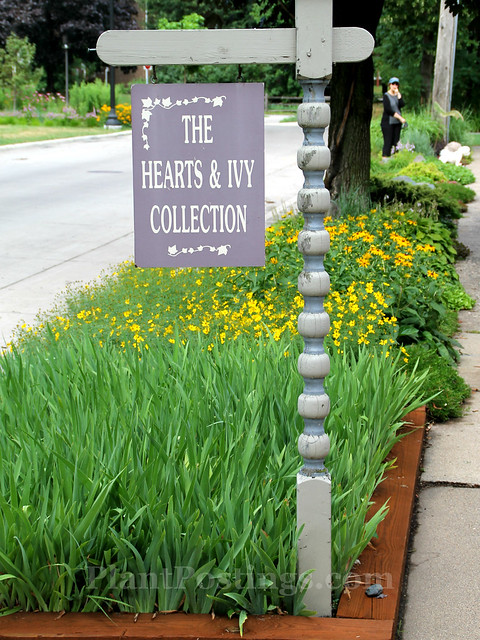
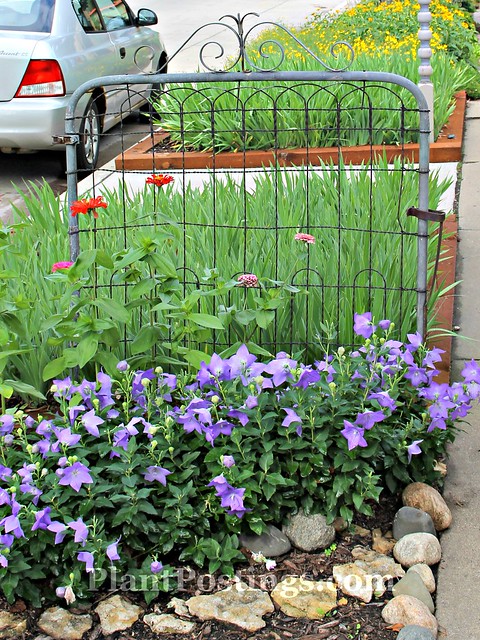
My favorite part was her creative flair with her hellstrip--a simple sign flanked by graceful, low-growing plants, planned for blooms and texture throughout the growing season.
hamilton 2

Earthy stones marked the border, and an ornamental gate door added class and whimsy.
lyndale 2

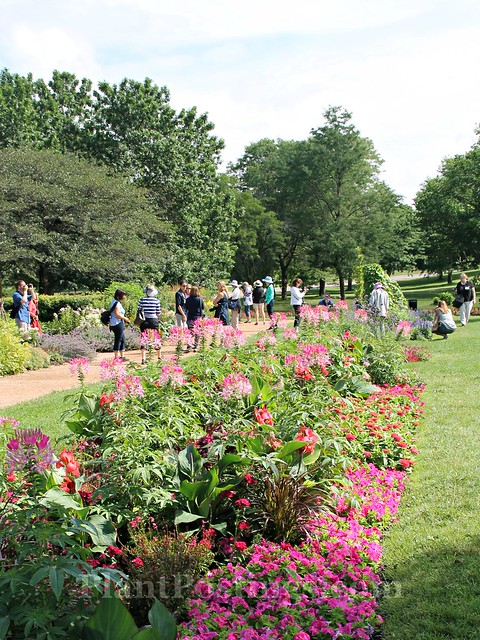
Next stop: Lyndale Park Gardens. The most rewarding part about the Garden Bloggers' Fling is that we get to see so many gardens in a short time. That's also the most frustrating part. I could have spent hours in this garden. We barely had time to scratch the surface.

As you can see from the photo above, the bloggers enjoyed the wide open spaces and the dramatic display gardens.
lyndale 1

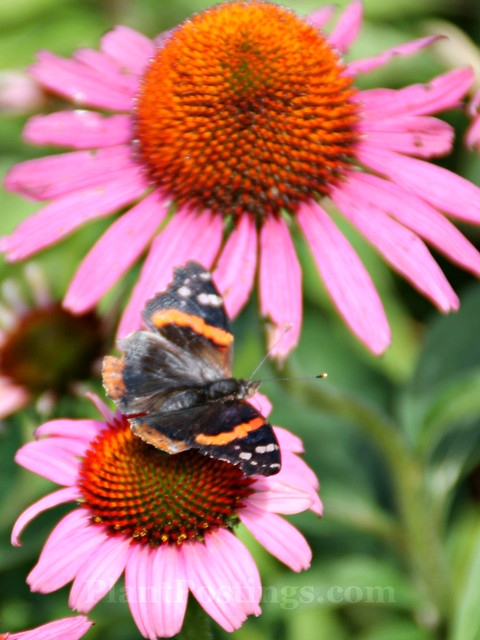
Many pollinators, including this Red Admiral butterfly, found Lyndale a welcoming habitat.
lyndale 3

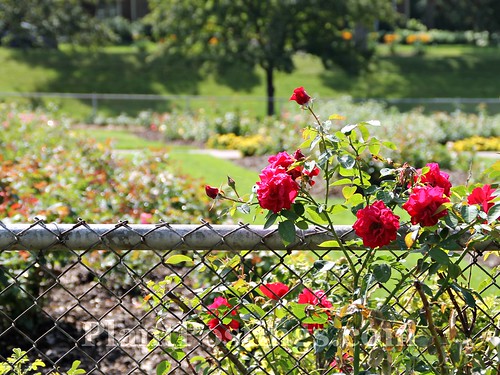
Roses were a highlight of this public garden: I must get back to explore it in more detail!
hayes 1

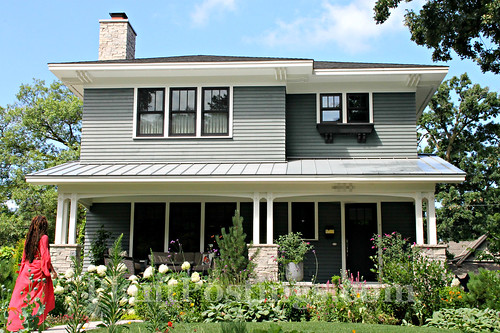
I was pleased to find this lovely photo on my camera memory card of fellow blogger Gryphon at Southern Exposure Seed Exchange walking the path to the beautiful home of Rhonda Fleming Hayes. Rhonda, an award-winning writer and photographer, is author of Pollinator Friendly Gardening. Elegance and grace marked her entire property.
hayes 2

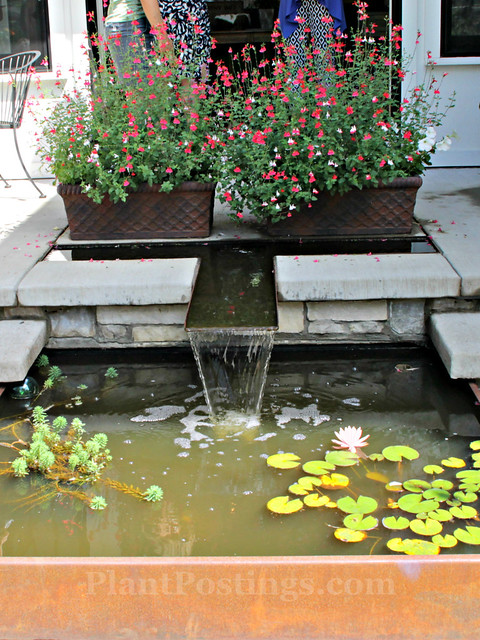
I loved her use of colorful planters spilling into a waterfall ... spilling into an ornamental pond.
hayes 3

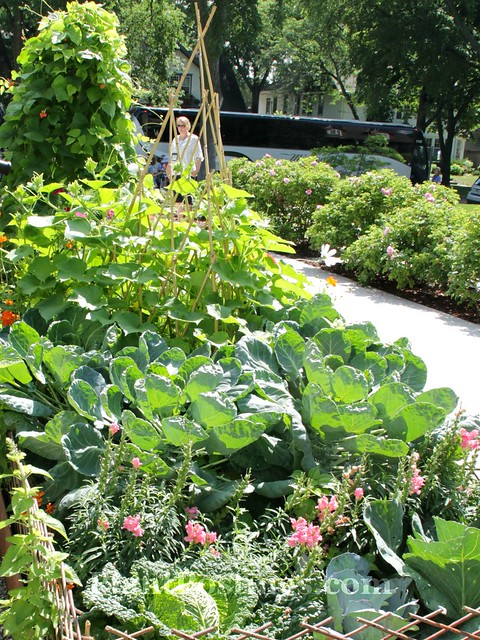
Rhonda also combined ornamentals with edibles in stunning displays.
bachmans 1

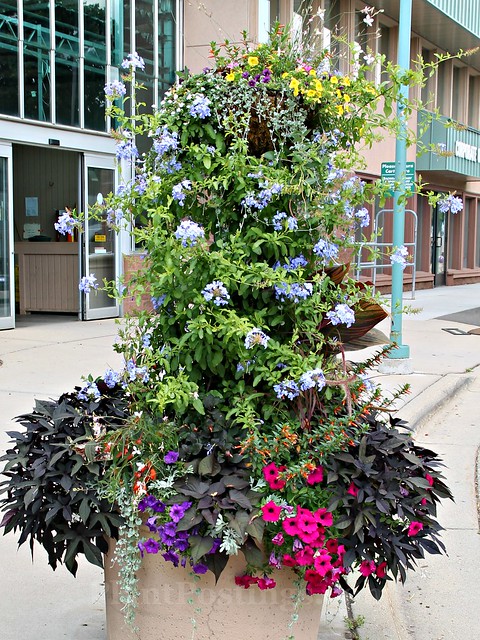
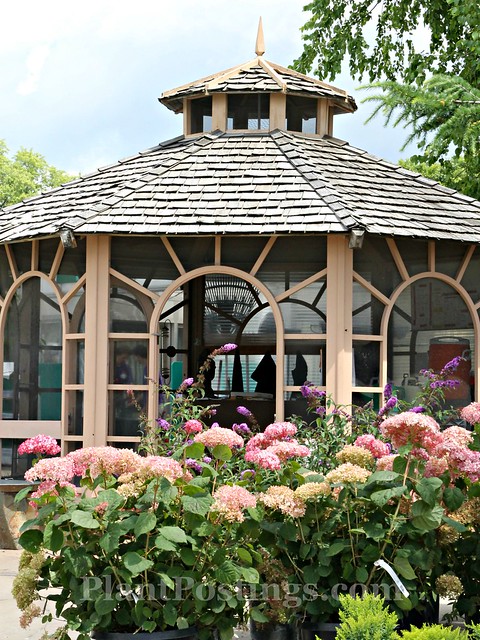
For lunch, we stopped at Bachman's Floral Gift & Garden for a tour, a chance to shop, and tasty refreshments.
bachmans 2

Bachman's has been a Twin Cities fixture for more than 125 years. As one local conveyed to the group, area residents realize that an arrangement or product from Bachman's is always something special.
latham 3

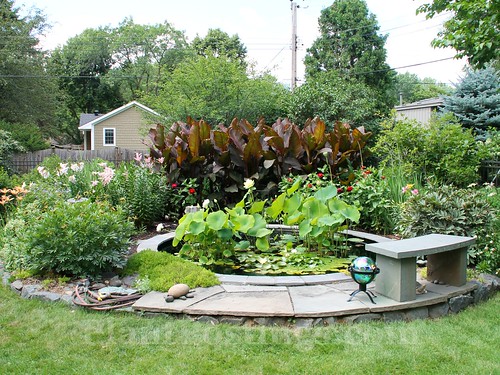
The tour continued with a stop at "Latham Park," as neighbors describe the home of Dianne and Dan Latham. Their pond, surrounded by beautiful flagstones and plants of all textures and sizes was one of many highlights.
latham 1

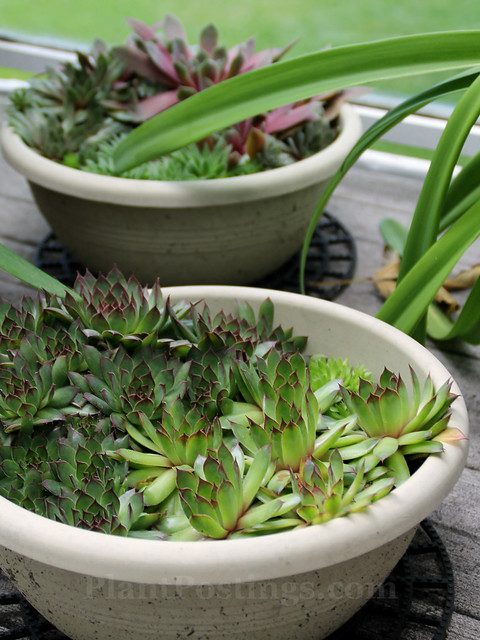
The Lathams' garden was exquisite--both in its grand design and its tiny details, like these lovely pots of succulents.
latham 2

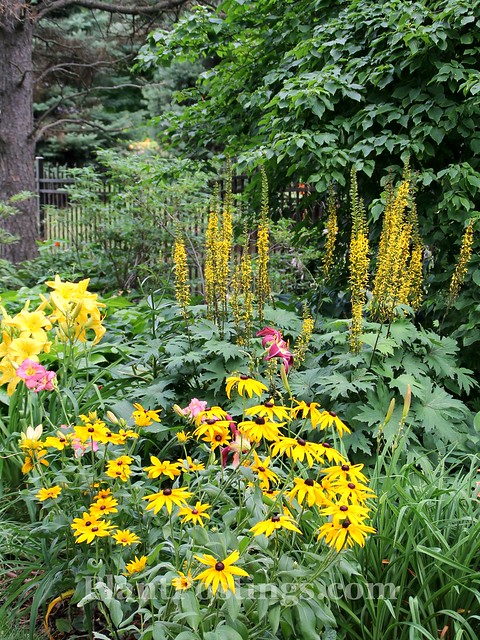
The plant combinations--here, Rudbeckias, Daylilies, and Ligularias--were familiar ones for me, but combined exquisitely.
noerenberg 4

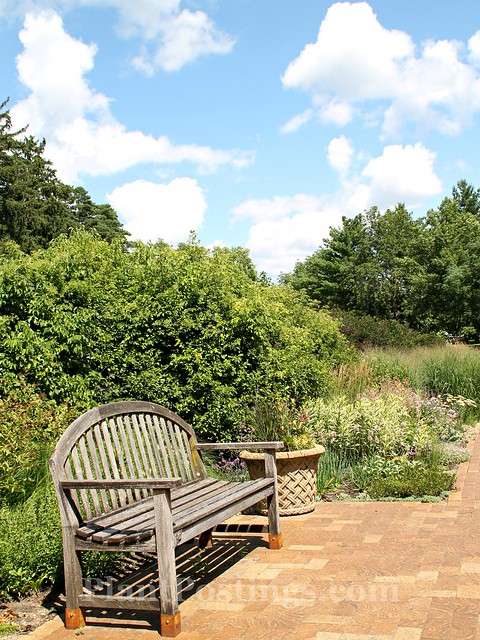
Next, I truly wish I'd had more time to sit on this bench and take in the magic of Noerenberg Memorial Gardens. This place was comfortable and magical.
noerenberg 1

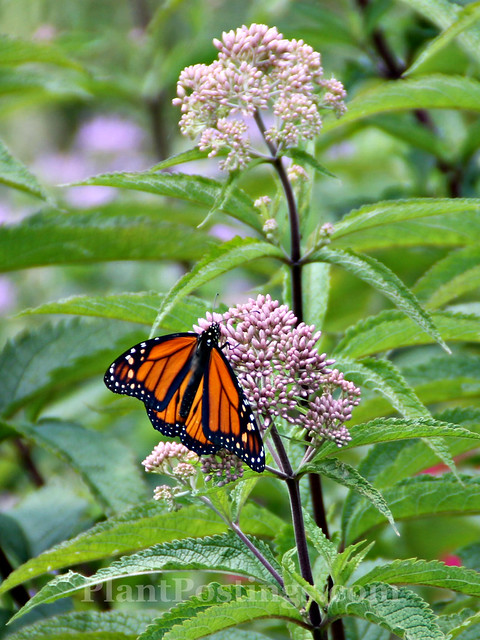
Native and pollinator-friendly plants welcomed visitors--for example, a Monarch butterfly on Spotted Joe Pye Weed (Eutrochium maculatum, formerly Eupatorium).
noerenberg 5

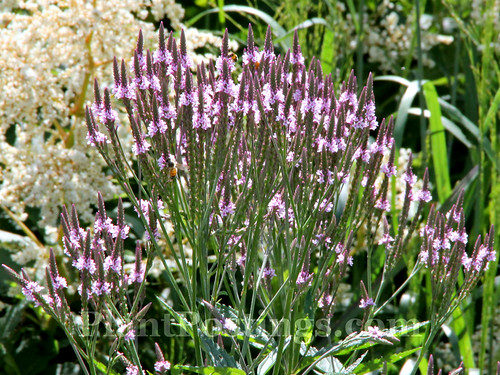
The light magically captured the candelabra effect of Blue Vervain (Verbena hastata), which was covered in honeybees and native bees.
noerenberg 3

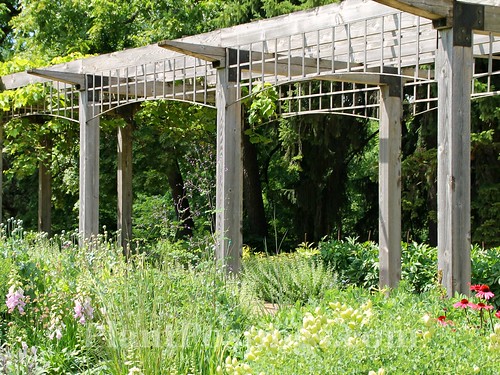
This public garden also had dramatic hardscapes, including this tall (10 feet?) grape arbor, surrounded by plants originally planted by the Noerenberg family.
noerenberg 2

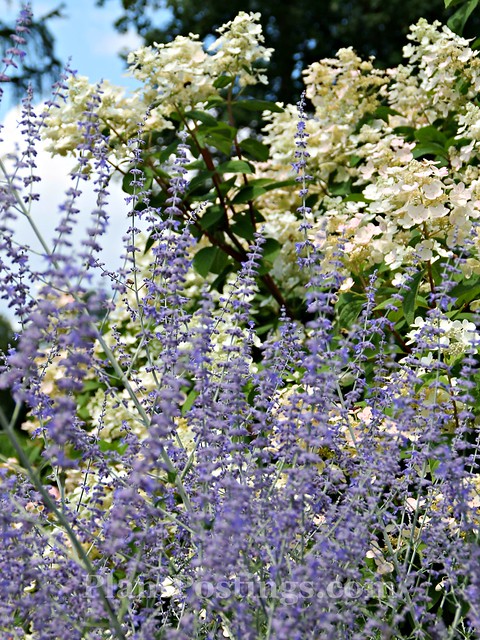
Care and creativity were evident at every turn. I enjoyed the artful combinations of plants, such as Panicle Hydrangea (H. paniculata), framed by Russian Sage (Perovskia atriplicifolia).

kelley & carmichiel 5

Our final stop of the day was the private garden of Steve Kelley and Arla Carmichiel. Arla is the horticulturist at Noerenberg Gardens and Steve owns Kelley and Kelley Nursery. I loved the graceful elegance of their garden.
kelley & carmichiel 3

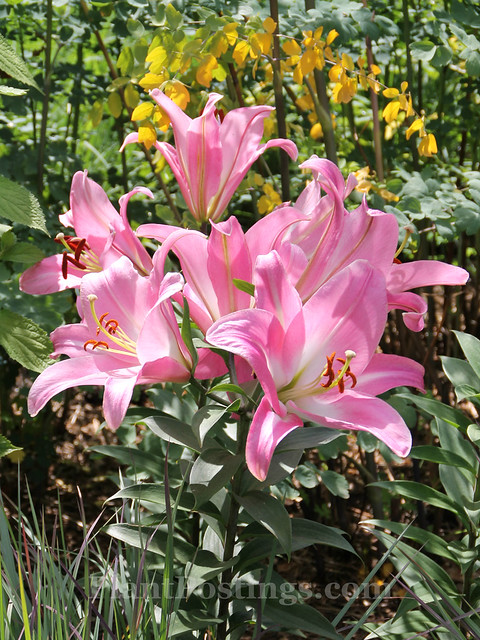
And the plants were amazing, like this gigantic lily. I neglected to get the name, but this might be 'Table Dance,' an Oriental-Trumpet (OT) hybrid.
kelley & carmichiel 4

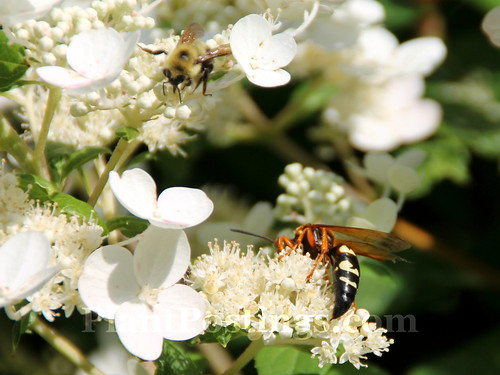
At Noerenberg and at the Kelley/Carmichiel home, Panicle Hydrangeas were pollinator favorites.
kelley & carmichiel 2

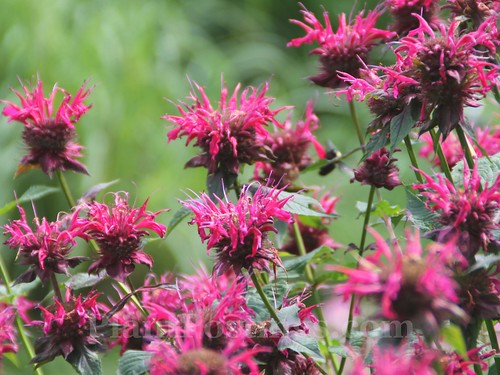
It was a delight to see Beebalm (Monarda didyma), another pollinator favorite, in full bloom.
kelley & carmichiel 1

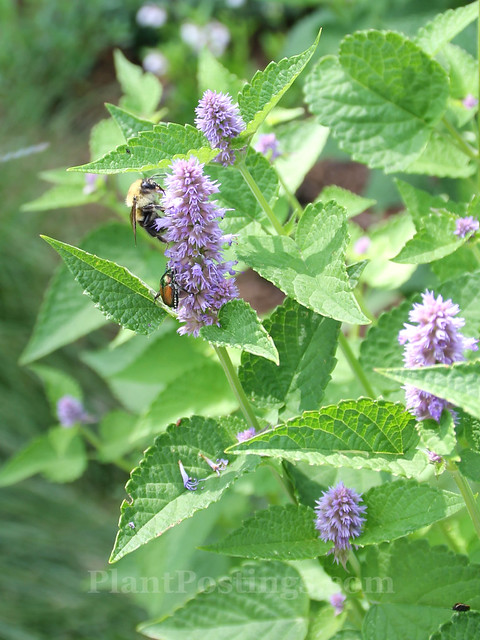
And, of course, the gentle softness of Anise Hyssop (Agastache foeniculum).

Most of our first day was spent in Minneapolis and near suburbs; the other days we ventured to St. Paul and even into Western Wisconsin. After a full first day of garden touring, we enjoyed an evening of networking, discussion, and hors d'oeuvres, sponsored by Garden Design magazine.

Thanks to all the organizers, sponsors, gardeners, and homeowners for a fabulous first day at the Garden Bloggers' Fling! More to come here on this blog, and others to be posted in the future at the Fling website.

June 06, 2014

Dear friend and gardener:
Welcome to my potager

waxwings
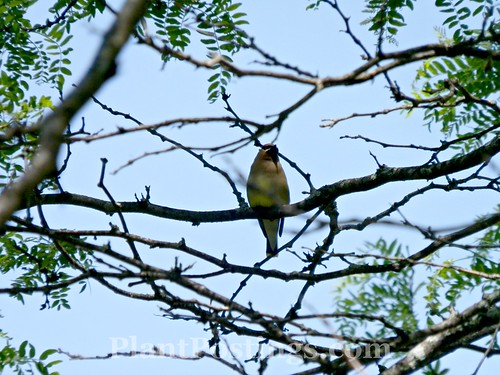
The cedar waxwings are still happy and hanging around the neighborhood.

How would you describe the perfect conditions to grow just about any plant and keep the people and creatures happy? How about: plentiful sun, occasional rain; average highs around 75F-80F/24C-27C and average lows around 55F/13C; long days and short, calm nights. Oh, and near-perfect Midwestern silt loam soil. What am I forgetting?

Anyway, you get the idea. Conditions have been near-perfect for growing things around here, and the plants seem to be growing inches every day.

It's time to talk summer gardening!


Three garden bloggers started a virtual garden club several weeks ago, under the name "Dear Friend and Gardener": Carol Michel of May Dreams Gardens, Dee Nash of Red Dirt Ramblings, and Mary Ann Newcomer of Gardens of the Wild Wild West. They invited others to join in. So I did.

The idea is to share our adventures of growing our own food, flowers, and herbs. So the focus of this post is on my one small patch of sun in this zone 5 Southern Wisconsin garden--my potager. Most definitions of potager refer to a small garden that combines both edible and ornamental plants.

That's how I've always done it. It's a great form of companion planting. The flowers attract the pollinators, which pollinate the edibles. The edibles add nutrients back to the soil, which boost the flower production. There are more intricacies, which I'll explain in a later post.

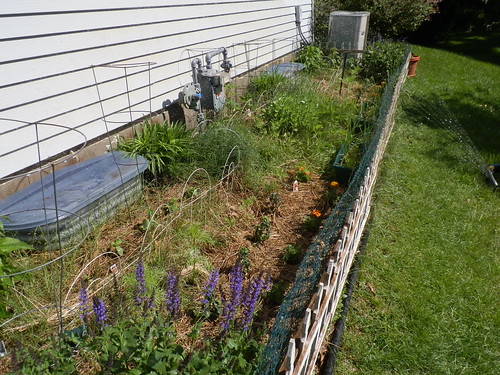
But first, let me show you the progress so far this season. Warning: These are unedited photos, straight out of the camera. The idea with this post is to show what I'm growing, and frankly, my potager isn't fancy. It's a working garden where I grow a few veggies for the family and flowers for church and home. You'll see that I still need to weed the grass out of the Drumstick Alliums, the garden is planted near the utility meter and the air conditioner (the only side of the house where I have sun!), and the window-well covers need to be replaced. The potager is surrounded by multiple layers of fencing to keep out the rabbits!

marshhay
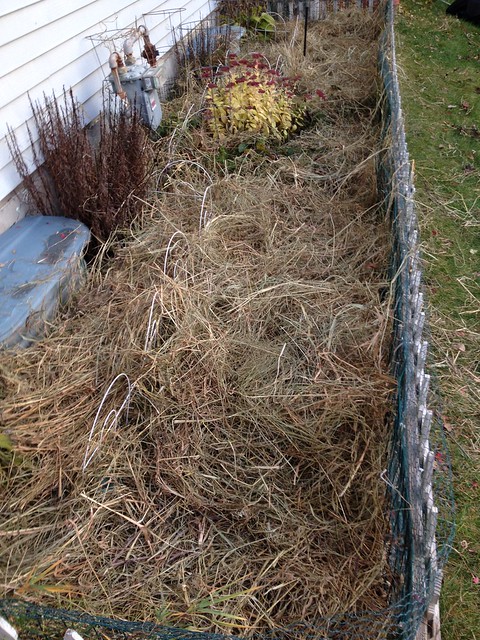
The potager in November 2013: Mulched in with Marsh Hay and ready for the
polar vortex?

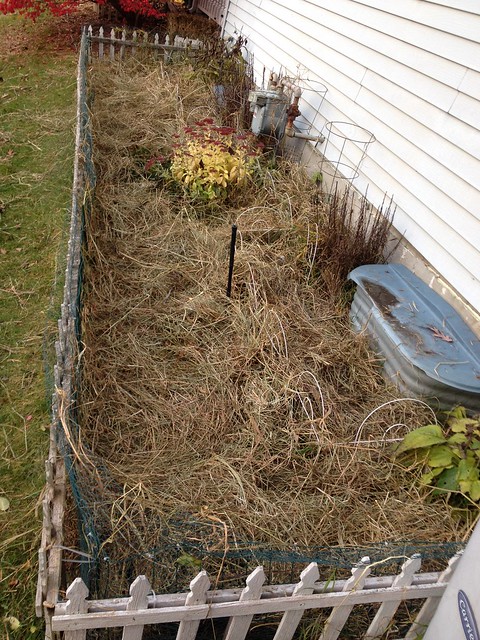
To give you a true picture, I have to start back in November when I put the garden to bed for the winter. I've tried various methods, but I always go back to Marsh Hay. For me, it's the perfect mulch. It contains very few weed seeds (unlike Field Hay and Straw), it knits together and doesn't blow away in the wind, and it breaks down at a slow to moderate rate. In the meantime, it offers the perfect levels of protection and nutrients.
Also, the lasagna, or layered, method of prepping the soil yields incredible results. First, a layer of Marsh Hay, next compost, then newspaper, and finally a thick blanket of additional Marsh Hay. This cuts down on the weeds, and by the following spring the soil is soft, pliable, healthy, and ready for plants.

marshhay2
A different angle in November. Please don't mind the mess.

today2
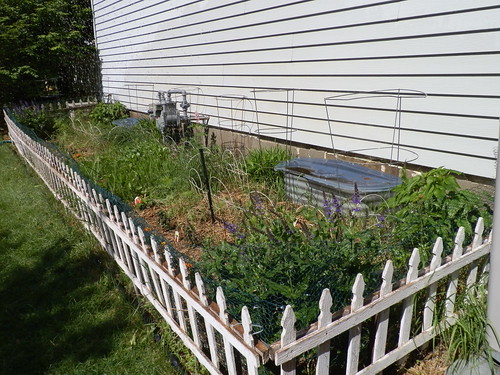
The potager in early June 2014. Again, not exactly lovely, with the utility meter and the
window wells, but I have to take advantage of any sun I can get.

current
A different angle.
So, what am I growing this season? Here are the perennial, annual, biennial, and vegetable potager plants, in no particular order. I added a (C) next to ornamentals I regularly use for cut flowers.
marigolds
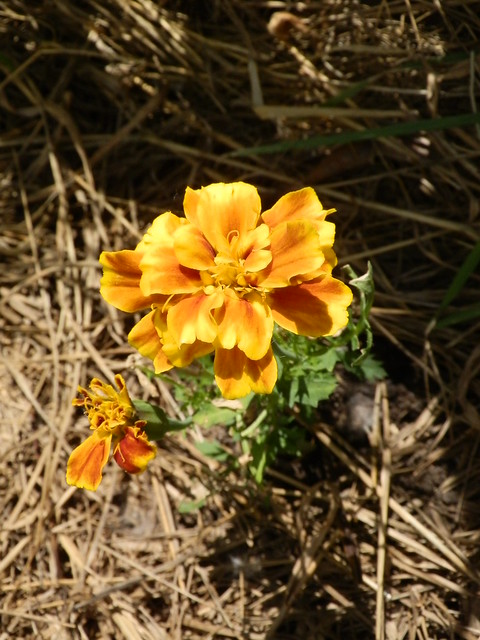
Various garden Marigolds (Tagetes patula).

lupine
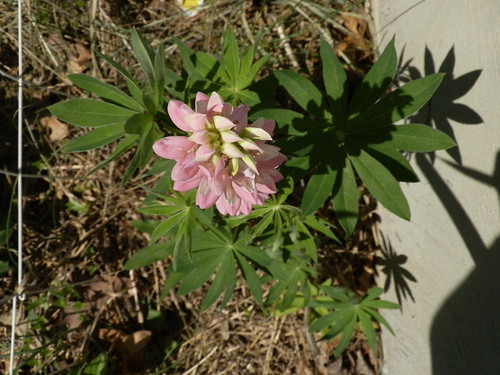
Lupines (C) (Lupinus polyphyllus 'Russell').

liatris
Blazing Star (C) (Liatris spicata).

lettuce
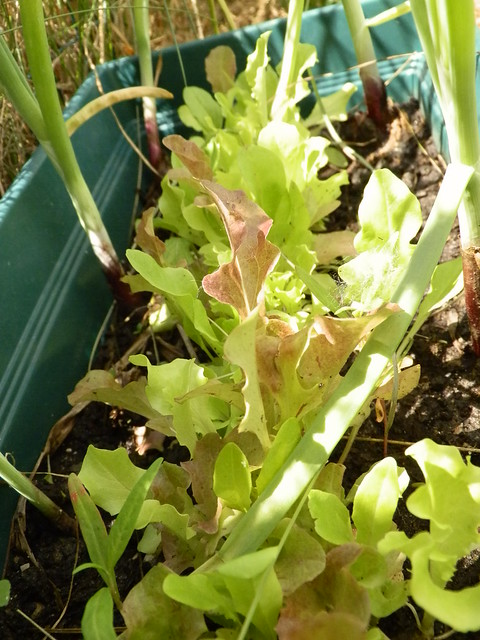
Mesclun Mix Lettuce, grown from seed in raised troughs and bordered by scallions.

lantana
Shrub Verbena (Lantana camara). The pollinators love it.

hollyhocks
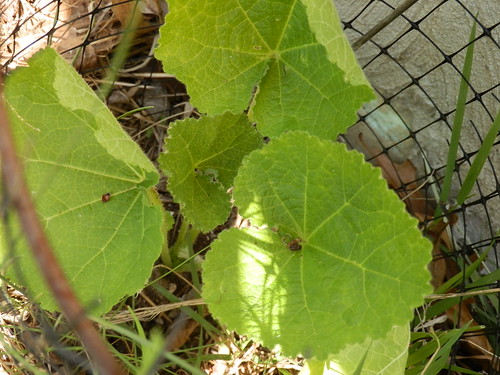
Hollyhocks (Alcea rosea 'Newport Pink Double'). Only $1.99 per plant, so I couldn't resist
adding these biennials again after they died off following the 2012 drought.

echinacea
Coneflower (C) (Echinacea purpurea).

delphinium
Delphinium spp. (C) (Looks like its twin on the other side will bounce back after the meter
guy crushed it!)

cleome
Spider Flower (C) (Cleome hassleriana). The white, fuzzy stuff on the leaves is Cottonwood
seeds. No worries; they'll wash off with rain.

butterfly
Butterfly Weed (Asclepias tuberosa), which has made impressive progress since my
last post.

snapdragon
Snapdragons (C) (Antirrhinum majus 'Rocket Mix').

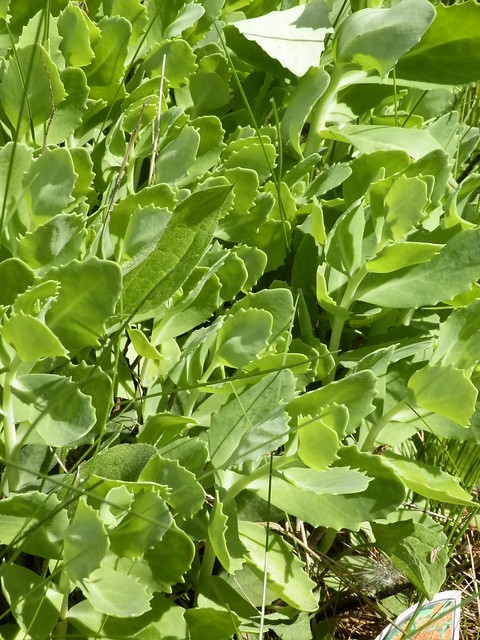
sedum
Stonecrop (C) (Sedum telphinum 'Autumn Joy').

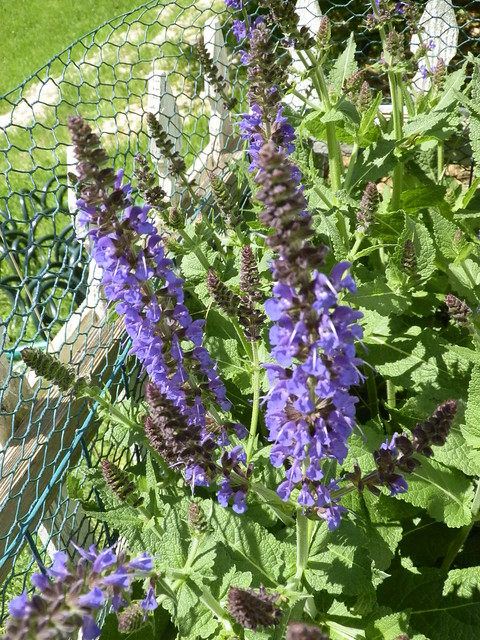
salvia
Ornamental Sage (Salvia nemerosa). Pollinators love this one, too. Doesn't last long in a
vase, though. I guess my worries about it this winter were unfounded because it looks
better than ever.

rudbeckia
Black-Eyed Susan (Rudbeckia hirta). Kind of a mess right now and hard to weed around,
but that will correct itself soon.

betterboy
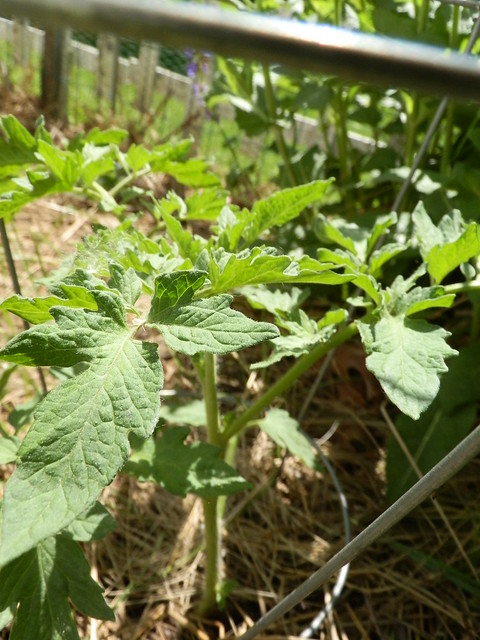
'Better Boy' Tomato. (My mouth is watering just thinking about the harvest.) 

zinnia
Zinnias (C) (Z. elegans 'State Fair Mix'). Don't worry, they grow fast!

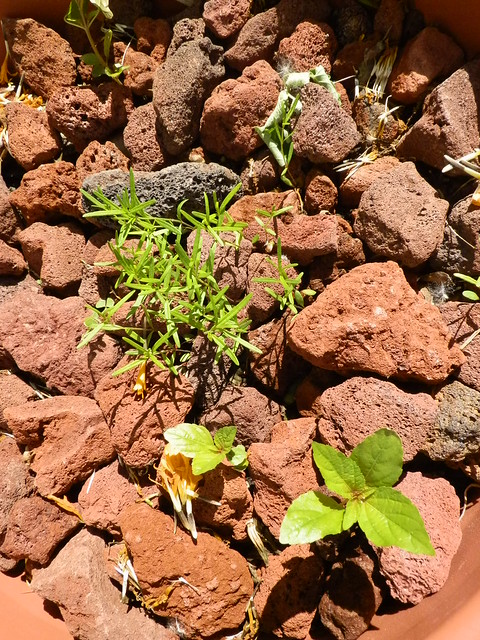
whorled
Whorled Milkweed (Asclepias verticillata), which I started from seed. (Not sure what
the mystery plant is in the lower right--maybe Pigweed; I should probably pull it. I
sprinkled Marigold seeds in the pot and added lava rocks to discourage chipmunks.)

Oh, and I thought I had photos of the Drumstick Alliums and the Cucumbers, but I guess I missed them. I'll share them next month ...

Head on over to the Dear Friend and Gardener page to learn more about edibles and flowers that other folks are growing!