Showing posts with label early summer. Show all posts

June 08, 2026

Onions and Oranges in a Vase

arrangement 1

Ornamental Onions and Mock Oranges, that is.

We're in a transition time for blooms, but there are always options for vase arrangements. I'm linking today to Cathy's "In a Vase on Monday," over at Rambling in the Garden.

Today, I have a couple of vases--a larger one (above), and

arrangement 2

A petite posy.

Salvia x sylvestris & Philadelphus

Both include cuttings from the Mock Orange (Philadelphus), currently at peak bloom. And the smaller vase also has clippings from 'May Night' Salvia (Salvia x sylvestris).

Allium giganteum 'Ambassador'

A large 'Ambassador' Allium (A. gigantieum) is the focal point in the big vase.

H. arborescens subsp. radiata

With buds and cuttings from the Smooth Hydrangea (H. arborescens subsp. radiata).

arrangement 2b

The little bud vase is equally at home in the house or out back. We're experiencing perfect early summer weather. This gardener and garden are happy.

Visit Rambling in the Garden for more vase ideas from around the world. Thanks to Cathy for hosting!

June 02, 2025

A Simple Early Summer Bouquet

vase 1

I prepared a very simple vase this week, for reasons I'll share at the end. Thanks to Cathy for hosting In a Vase on Monday.

Allium 'Globemaster'

The star of the show is Ornamental Onion Allium 'Globemaster.'

Viburnum trilobum

Just as lovely, and supporting the star, is Cranberrybush Viburnum (V. trilobum). The blooms are a little more open than last week, but still good elements for the arrangement.

Viburnum trilobum foliage

The Viburnum foliage is fun, too. It forms the framework, along with the three Hosta leaves.

Iris sanguinea in vase

The Siberian Irises (I. sanguinea) are blooming now, as well, so I included a couple stems in the arrangement.

Iris sanguinea in garden

Here's a view of one out in the garden.

vase 2

So, it's a simple collection. Head on over to Rambling in the Garden to share your garden arrangements, and to see others from around the world.

I'm taking a little break from blogging for a few days, as I'll soon head to the Garden Fling in Memphis, Tenn. The Fishman is caring for the puppy, kitty, and garden while I'm gone. I'll have many things to report on when I get back!
June 23, 2019

A Tiny Floral Teaser

IMG_4513

Do you know where I was last weekend? If so, leave a clue. If not, take a guess. Good luck!

Here are some hints:

IMG_4507

IMG_3852

IMG_4494

IMG_4168

IMG_4254

IMG_4518

IMG_4519

IMG_4017

IMG_4247

IMG_3884

It was a beautiful place! I plan to share more about it in the weeks ahead...

June 27, 2018

Plant of the Month: Prairie Sundrops

Oenothera 1

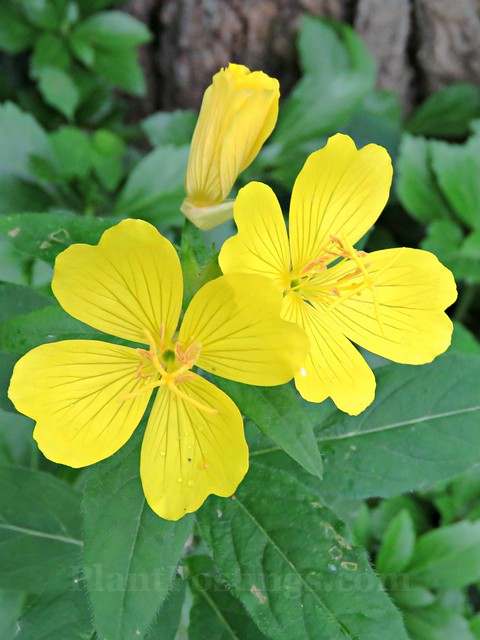
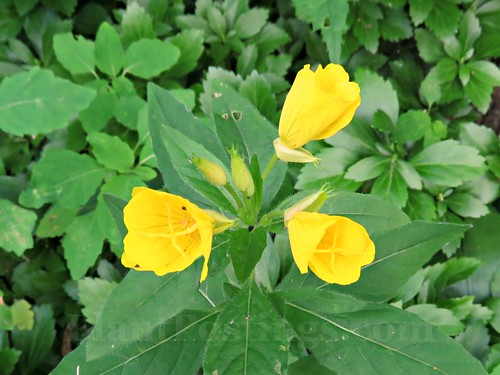
Most of the wildflowers in this garden lived here before we moved in, nearly 19 years ago. Prairie Sundrops (Oenothera pilosella) were among them. Also known as Meadow Evening Primrose, this plant has flowers that open during the day, unlike other species of the Evening Primrose family that close by midday.

Oenothera 2

Prairie Sundrop spreads and can form dense mats. It also can be propagated with seeds.

In my garden, Prairie Sundrop is not aggressive; in fact, it's pretty much stayed in the same general area in the garden for all the years we've been here--in a small patch at the base of one of our old Oaks. It tends to bloom in mid-June through mid-July, and adds a burst of bright yellow just as some of the late spring flowers are fading. My patch is in dappled shade, although most sources recommend full sun to partial shade.

Oenothera 3

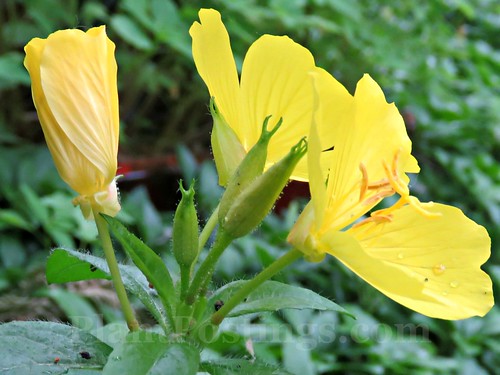
The 2" flowers are attractive in all their stages--from bud to bloom to closed flower. Each flower lasts only a few days, but the flower clusters bring new blooms for a couple of weeks.

Oenothera 4

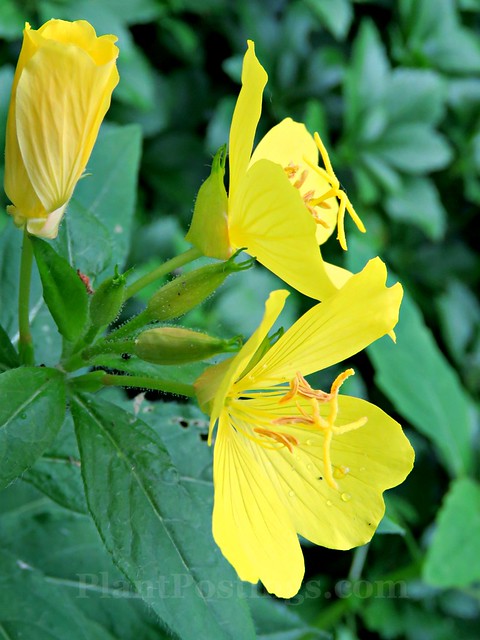
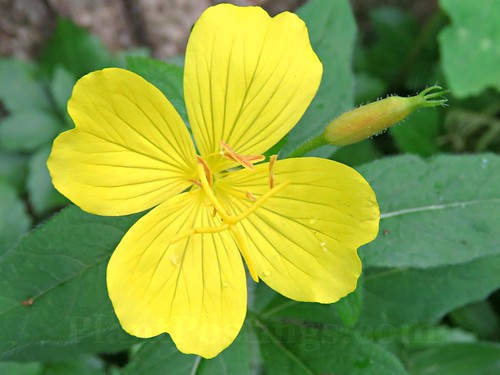
Other than its daytime blooms, this species is similar to Common Evening Primrose (O. biennis) and Narrowleaf Evening Primrose (O. fruticosa), but it's shorter (about 1' to 2' tall), and has hairy stems and fuzzy leaves. In addition, its fruit/seedpod tapers toward the base. Like the other species, each flower has a distinctive cross-shaped stigma. The pollen on the anthers turns reddish as the flower matures.

Prairie Sundrops are native from Eastern Canada through the Midwest and south through Louisiana and Texas. Some sources say they aren't native to Wisconsin, but USDA updated maps say they are (perhaps originally more in the southern part of the state). In any case, they prefer rich, wet mesic to dry mesic soils, according to the Eloise Butler Wildflower Garden Plant Identification Guide. The flowers are visited by bees, butterflies, and other pollinators. Like other Evening Primose species, this one is a host plant to several moth species.

Oenothera 5

I like it. I take it for granted--of course, I shouldn't and I think I need to plant more or spread some seed.

I'm linking this post to Gail's Wildflower Wednesday meme at Clay and Limestone. Head on over to learn about wildflowers blooming around the world.

June 04, 2018

Bees on TV

Roses 2

Recently a local television program filmed a segment on bee monitoring at the UW-Madison Arboretum. The filming occurred during our regular Friday volunteering session, since our group of volunteers includes several trained bee monitors. The rest of us got to tag along.

I served as a spotter and a photographer, and helped search for bees of various species among the blooming plants. Tough gig, eh?

While we were waiting, I took stock of the beautiful blooming native plants.

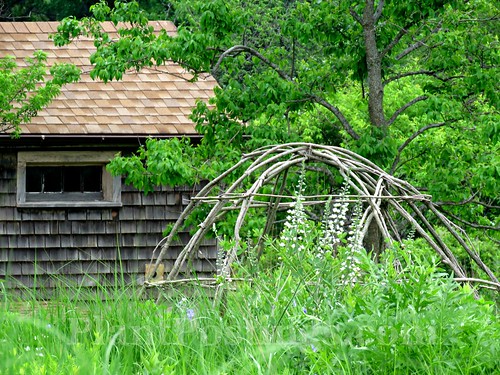
plant hut
Baptisia alba near the plant hut

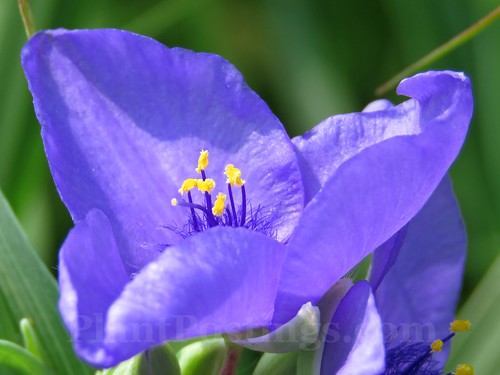
Tradescantia ohiensis

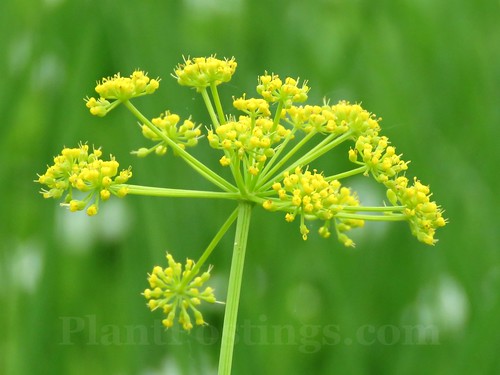
Zizia aurea
Zizia aurea

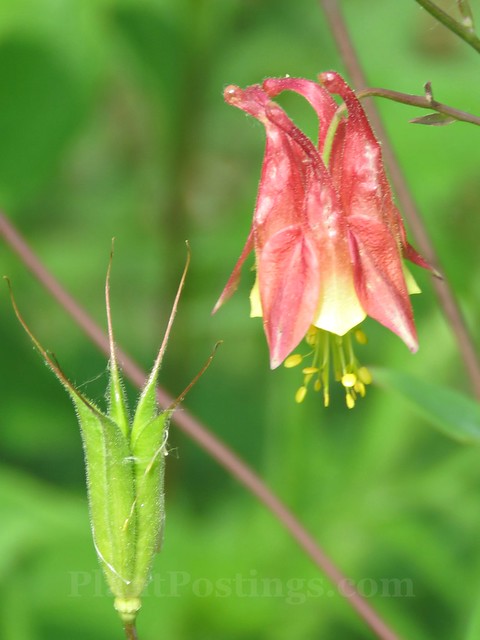
Aquilegia canadensis

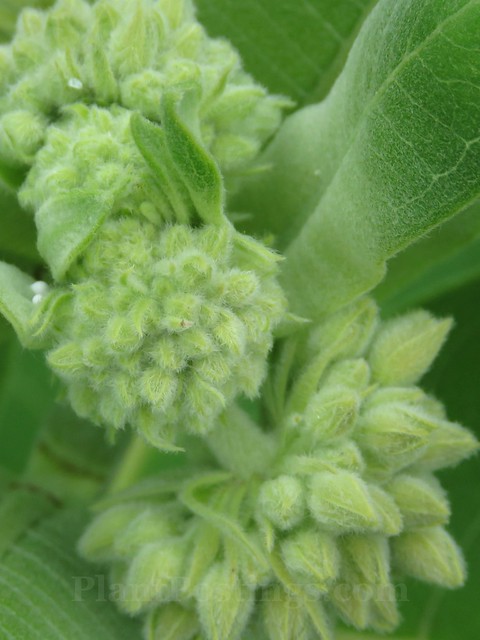
Asclepias syriaca
Asclepias syriaca (not blooming yet, but close and distracting with its fluffy, soft buds)

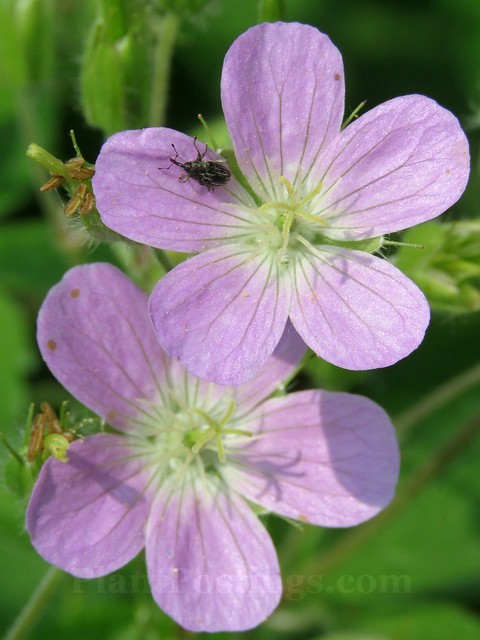
Geranium maculatum
Geranium maculatum

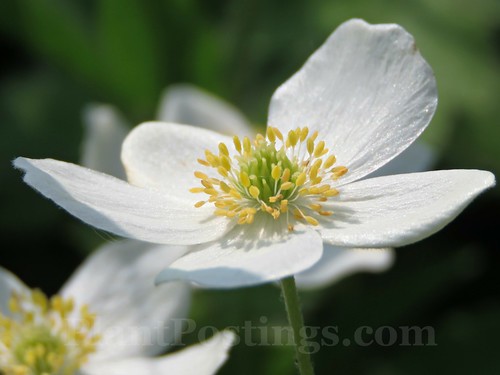
Anemone canadensis
Anemone canadensis

We also checked the plants in the horticultural garden.

horticultural garden

The Azaleas were bright and colorful.

Kolkwitzia amabilis
Kolkwitzia amabilis

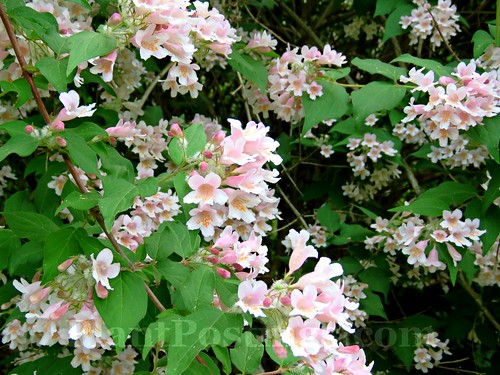
A giant Beauty Bush was covered in a profusion of pink.

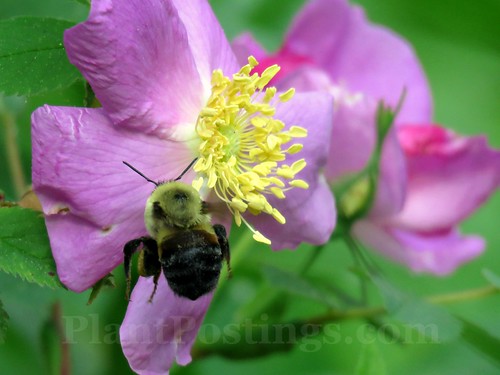
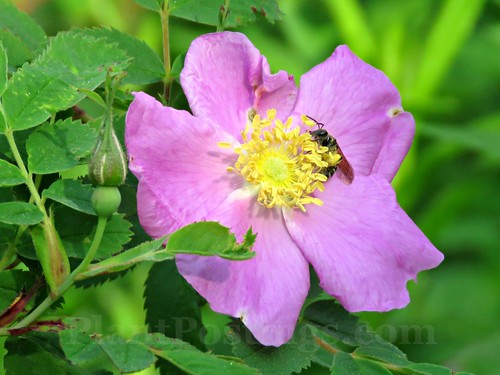
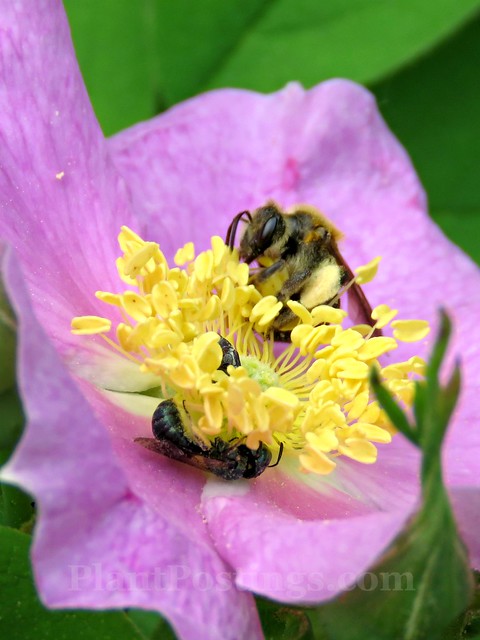
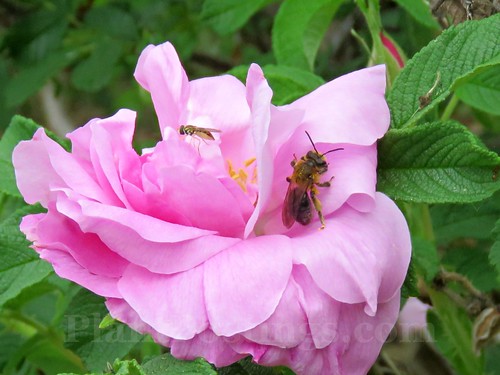
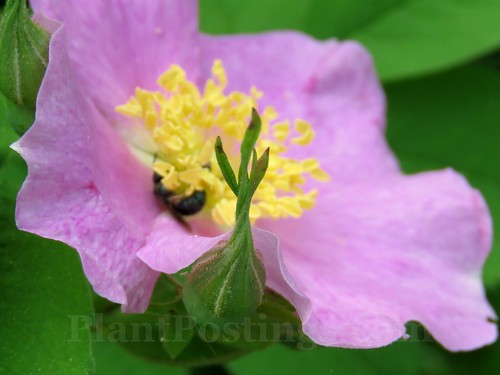
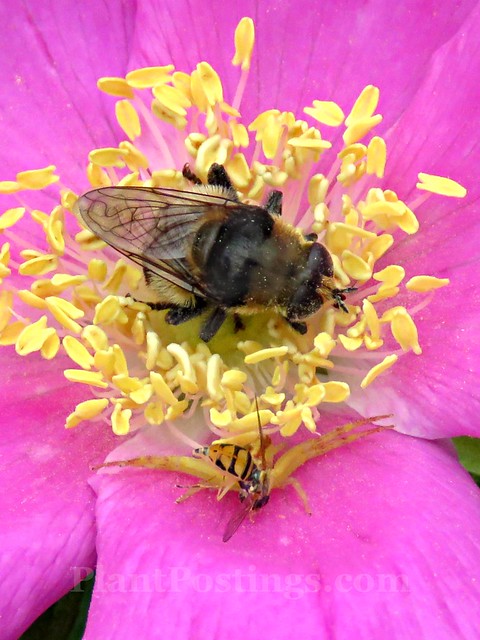
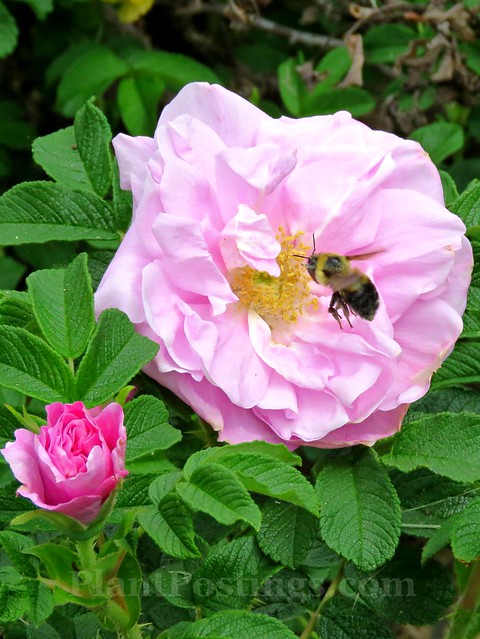
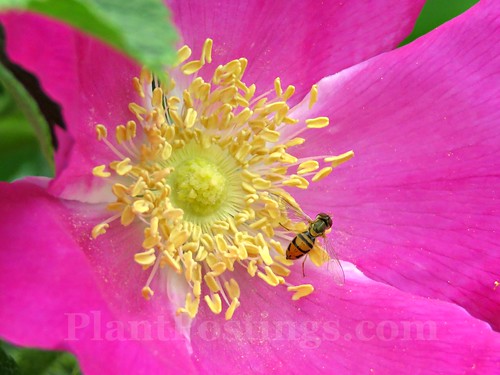
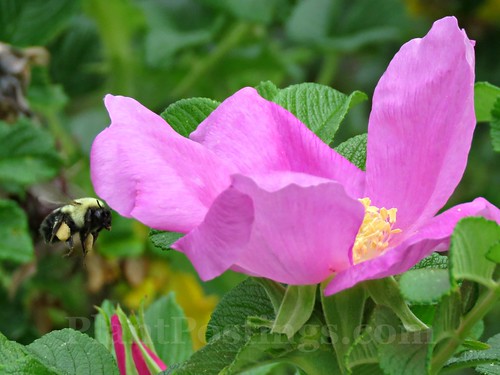
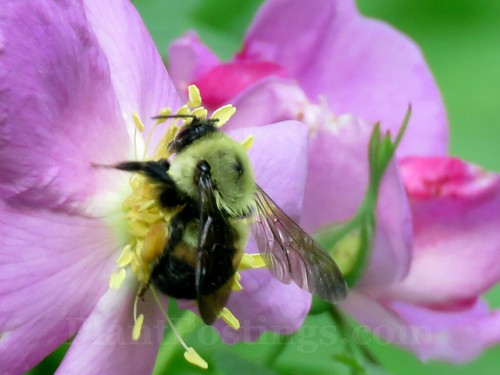
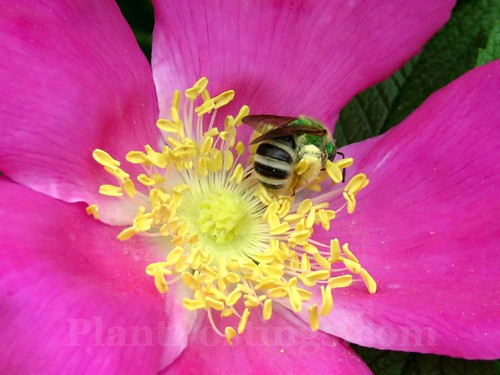
The most popular blooms for all the bees and pollinators we found were the roses--both the native Prairie Rose (Rosa arkansana), and the cultivated varieties. Most of the roses had one, two, three, and sometimes more pollinators, insects, and spiders visiting them at the same time. It was a party among the roses!

Rosa arkansana

Roses 8

Roses 4

Roses 9

Roses 11

Roses 3

Roses 10

Roses 7

Roses 6

Roses 5

Roses 1

Bee monitoring is such an important citizen science activity. To find out how to get involved in your area or online, contact The Xerces Society or Bumble Bee Watch.

I'll let you know when the television program airs.