August 20, 2015

Summertime at Olbrich

red admiral
Red Admiral and other pollinators on 'Summer Beauty' Alliums surrounded by Echinacea spp.

Recently, I posted about the "Roses of Olbrich Botanical Gardens." And while roses are definitely a summer highlight of the Madison, Wis., gardens, the roses are just the beginning.

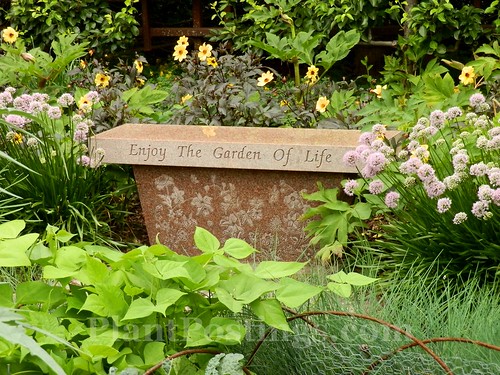
bench
Decorative bench inviting visitors to sit awhile and enjoy the view.

Whether resting on a bench or walking through the pathways, Olbrich in the summertime is a feast for all the senses. Pollinators, plants, and creative combinations are around every corner.

Here are just a few of the highlights visitors might see in mid- to late summer:

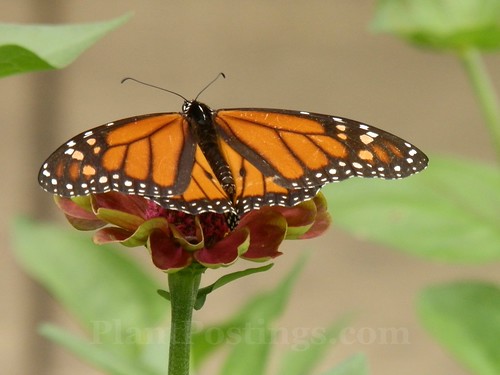
monarch
Monarch resting/nectaring on Zinnia elegans.

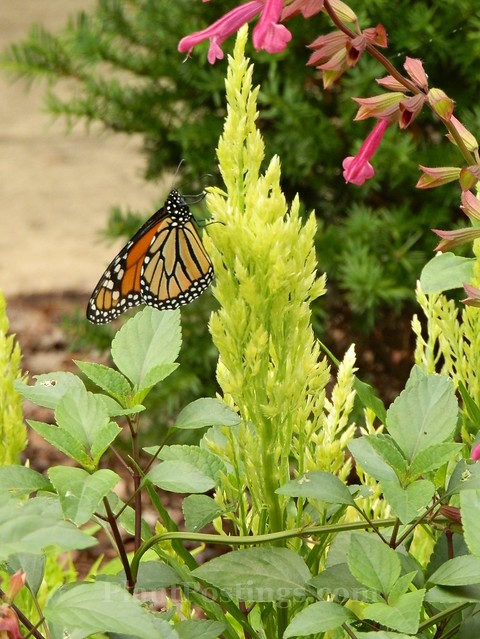
celosia
Another Monarch posing on  chartreuse Celosia plumosa. This looks like 'Sylphid.'

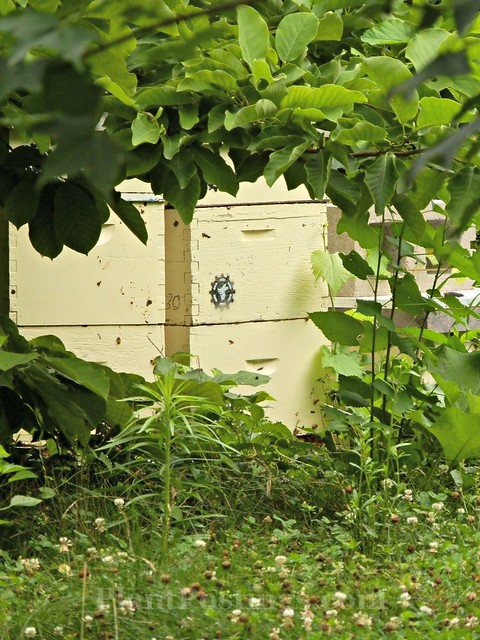
hives
Honeybee hives tucked along the back border of the park.

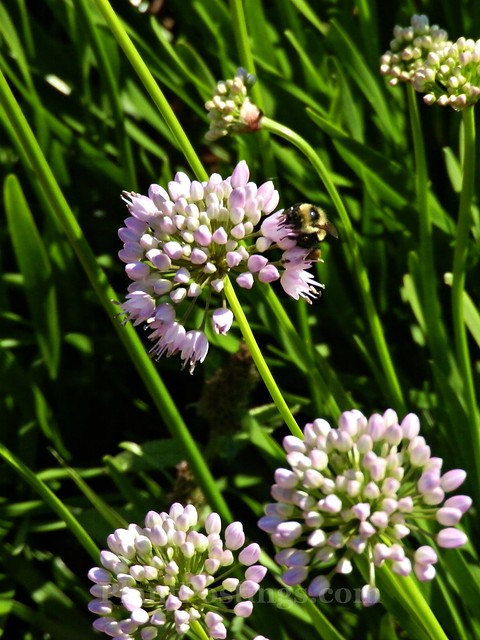
a. cernuum
Bumblebee enjoying ornamental onion (Allium cernuum?).

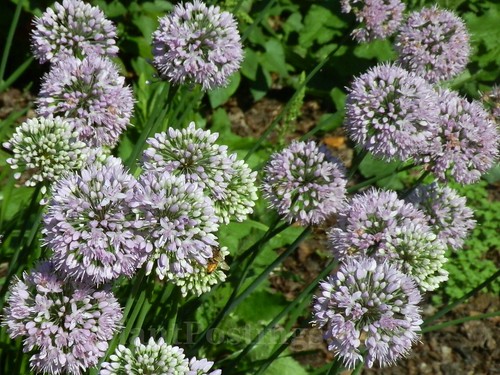
a. tanguticum
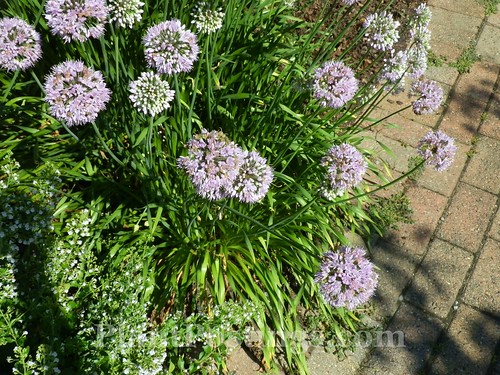
More pollinators on 'Summer Beauty' Alliums (A. tanguticum).

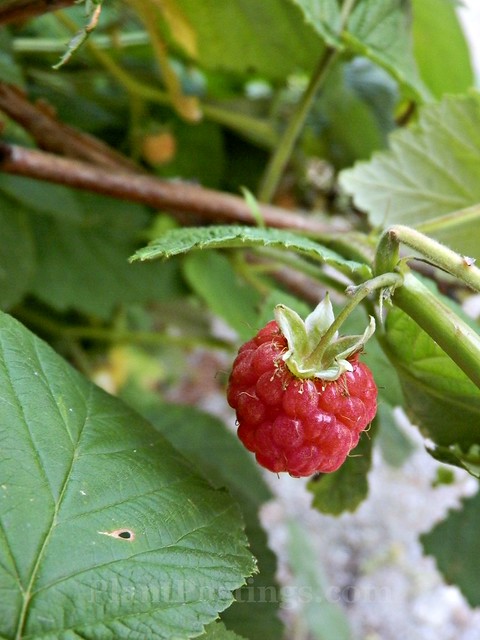
raspberry
Ripe raspberries: yum!

arbor
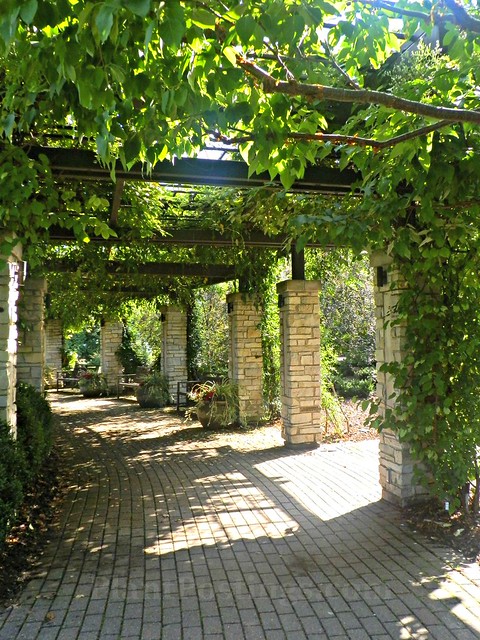
Curving view of the Olbrich's iconic "donors arbor," filled with Wisteria blooms in springtime.

clematis
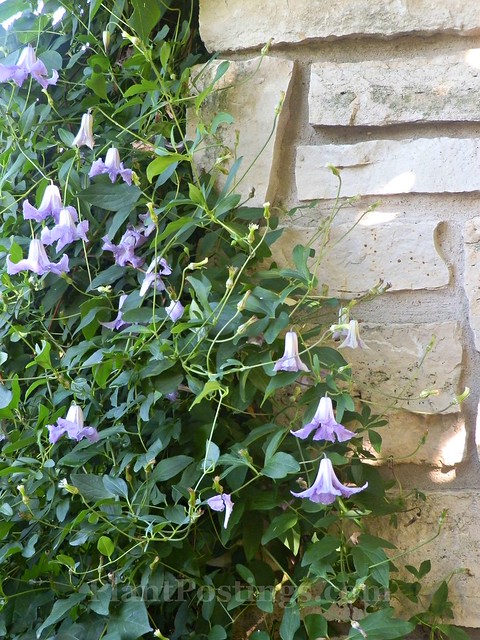
Also climbing along the arbor posts: Clematis verticella 'Betty Corning.'

pots1
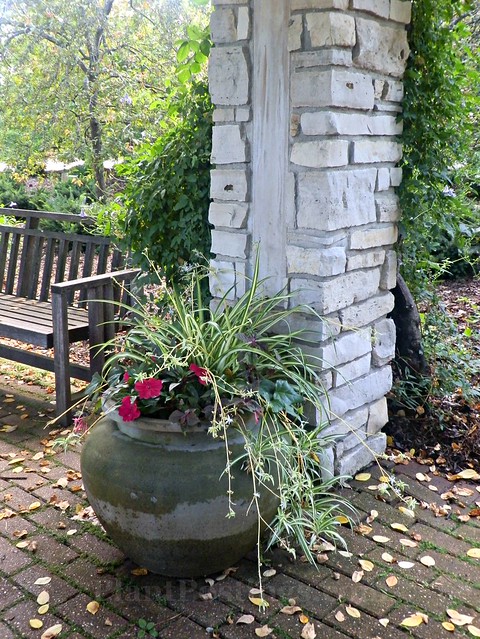
Earthy pots filled with mixed annuals and Spider Plant (Chlorophytum comosum).

pond
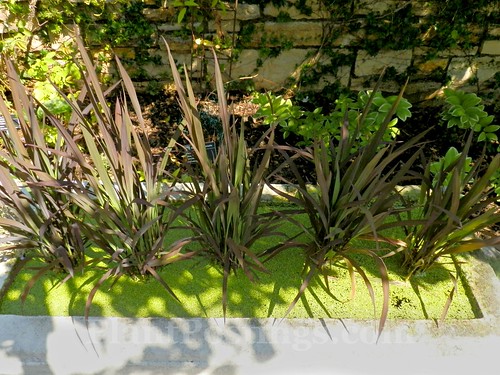
Small ornamental pond purposely coated with algae and planted with ornamental grasses.

container
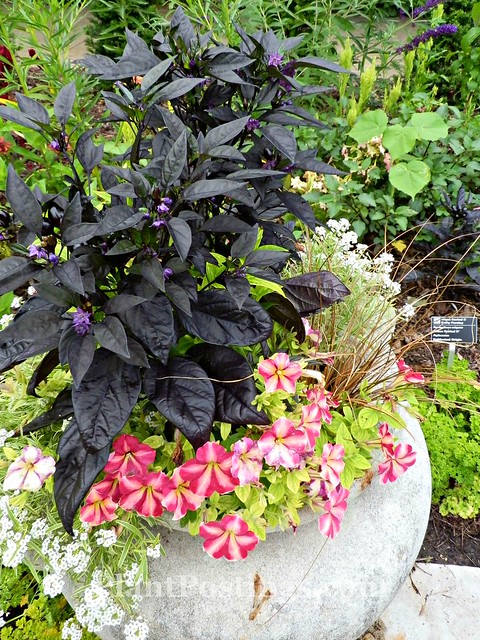
Ornamental pepper 'Black Pearl' planted with 'Candy Stripe' Petunias and Sweet Alyssum.

mixed cordyline
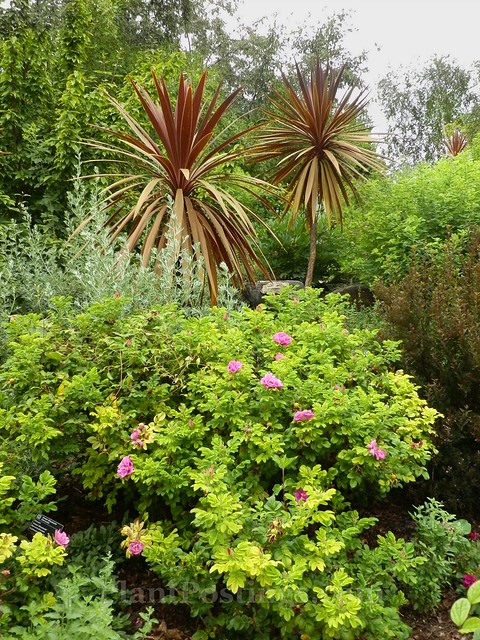
Mixed planting: Red Grass Palm (Cordyline australis) in back and Rugosa Roses in the foreground.

mixed2
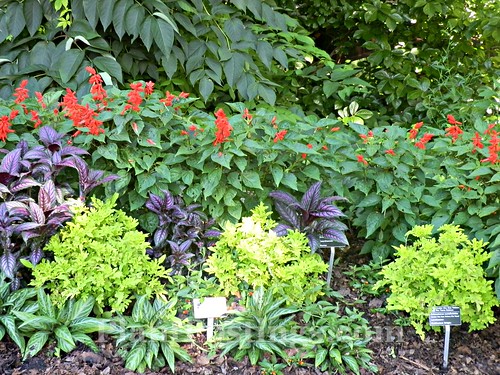
Mixed planting: Brazilian Fireworks 'Maracas' (Porphyrocoma pholiana), Coleus 'Under the Sea Yellow Fin Tuna' (Solenostemon scutellarioides), Persian Shield (Strobilanthes dyerianus), and Scarlet Sage (Salvia splendens).

mixed1
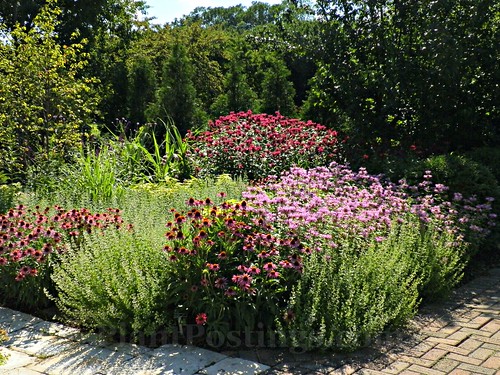
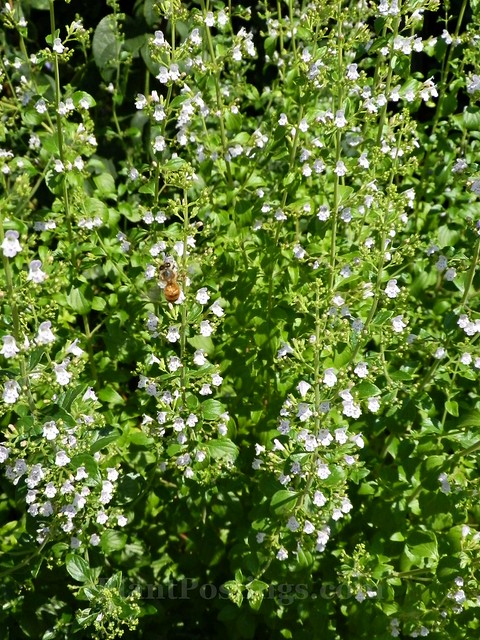
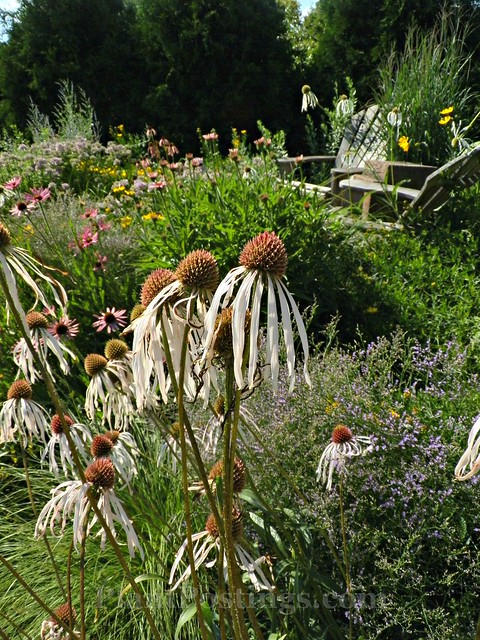
Oblique sun angle back-lighting mixed Echinaceas, Monardas, and Calaminthas.

calamintha1
Lesser Calamint (Calamintha nepeta ssp. nepeta).

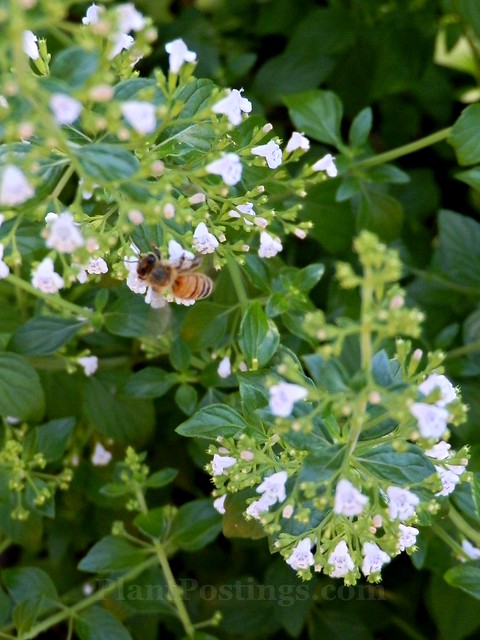
calamintha2
Honeybee nectaring on Lesser Calamint.

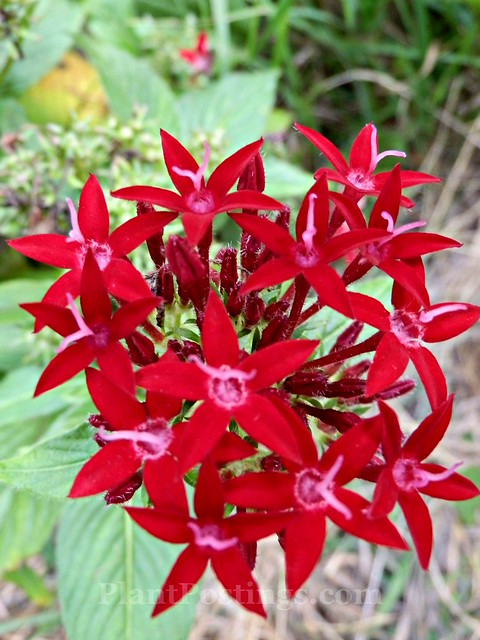
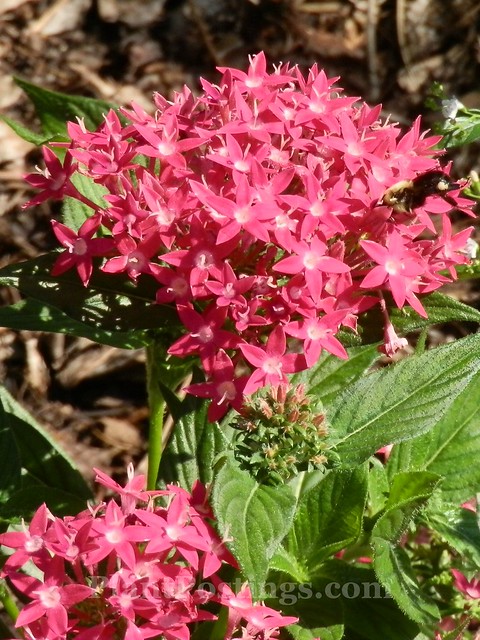
pentas
Pink Pentas (Pentas lanceolata).

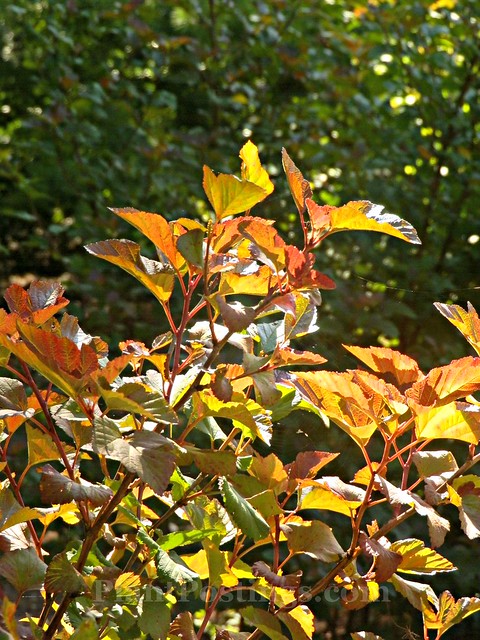
ninebark
Ninebark (Physocarpus opulifolius) 'Amber Jubilee.'

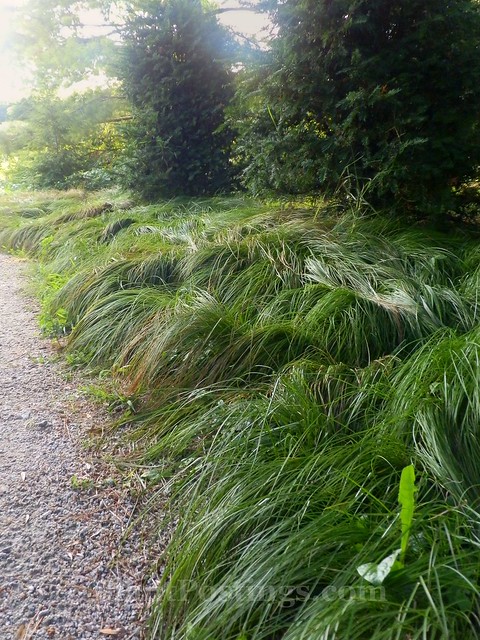
sedges
Swales of Pennsylvania Sedge (Carex pensylvanica) along a shaded walkway.

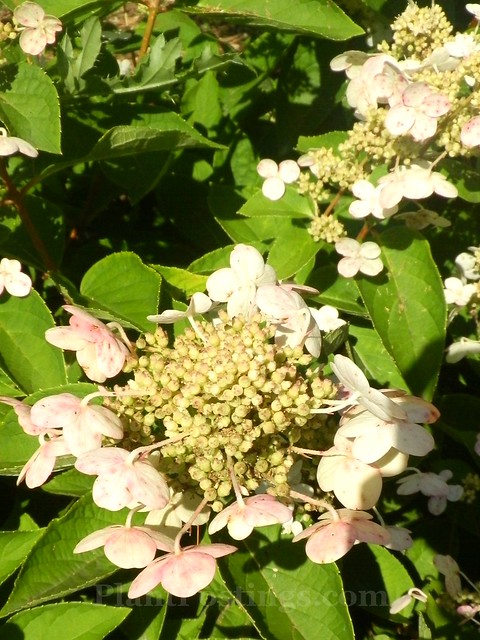
hydrangea
Panicle Hydrangea (H. paniculata 'Dharuma').

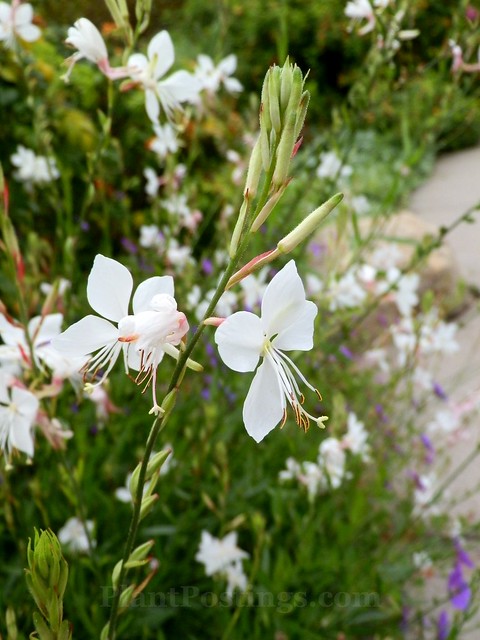
gaura
Gaura (G. lindheimeri).

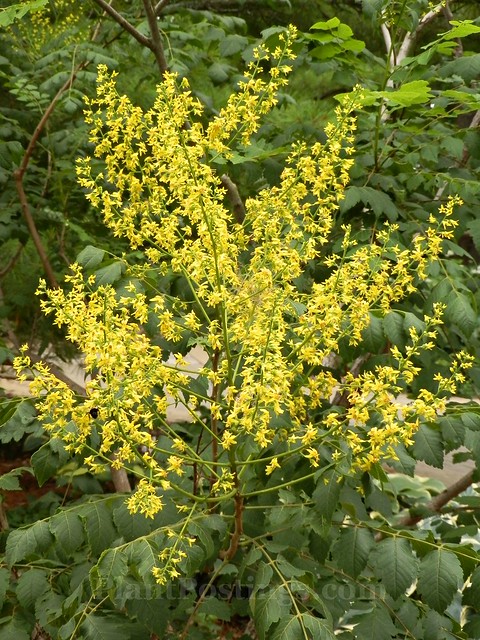
goldenraintree
Panicled Goldenraintree (Koelreuteria paniculata).

echinacea
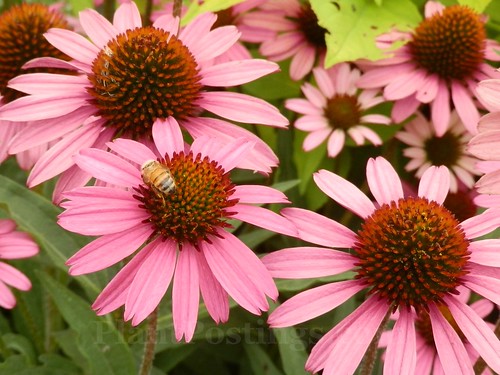
Honeybee on Coneflower hybrid (Echinacea spp.).

amsonia
Drifts of Bluestar Amsonia (A. hubrichtii).

gravel9
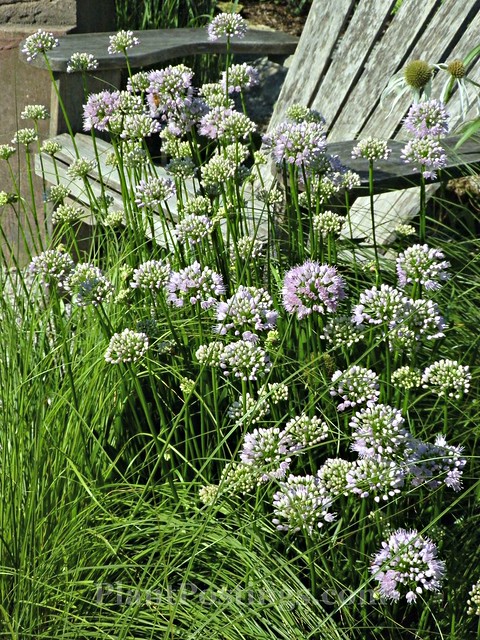
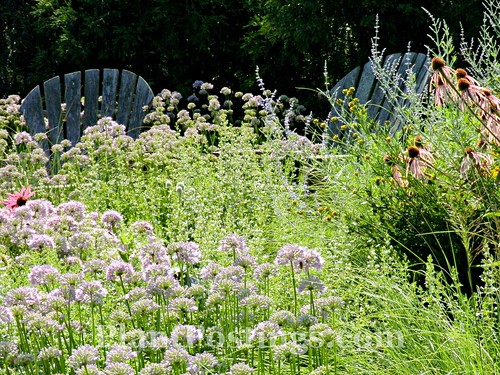
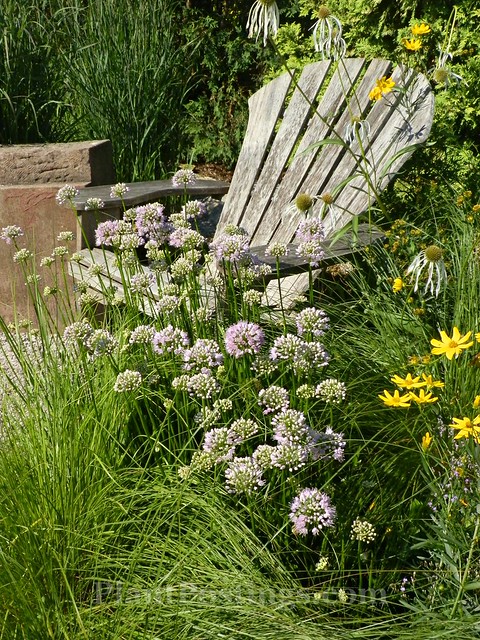
More 'Summer Beauty' Alliums and Lesser Calamint along the walkway.

'Summer Beauty' Alliums are a signature plant of the gardens, and after my recent visit, I decided to order some for my own garden.

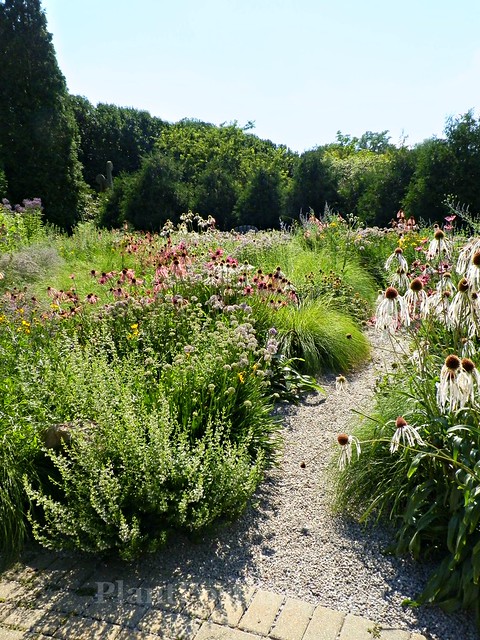
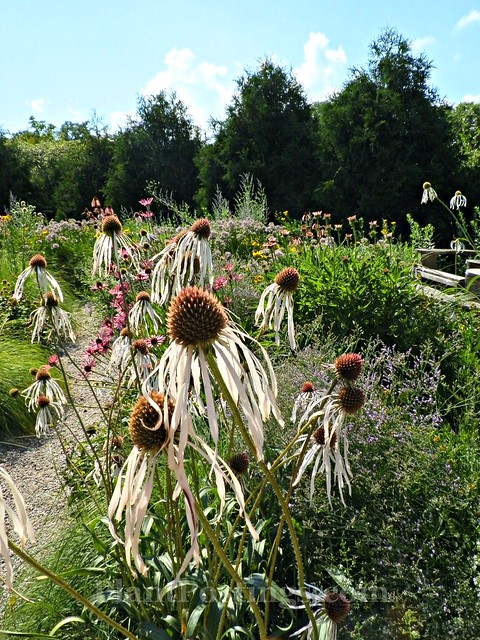
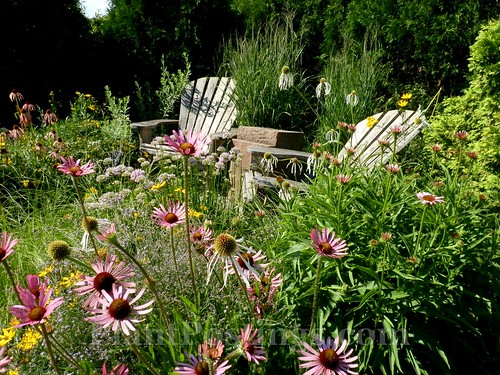
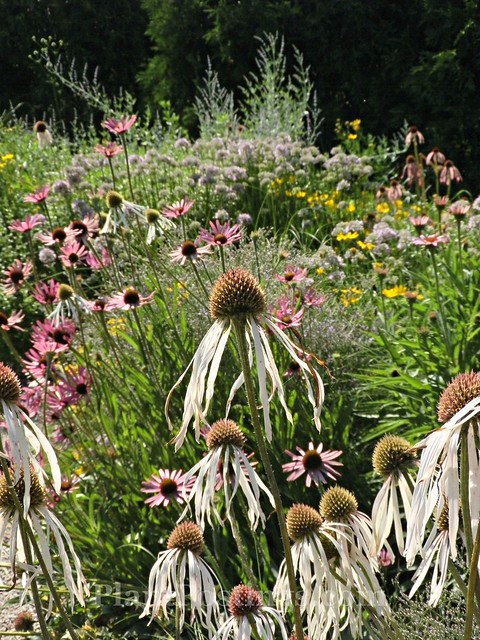
Late afternoon is a great time to visit the gravel garden, as the oblique light casts a surreal glow to the Coneflowers, Sedges, Alliums, and many other pollinator favorites:

gravel2
Gravel garden backlit with oblique light and chock full of pollinators.

gravel1

gravel7

gravel6

gravel4

gravel5

gravel3

gravel8

I hope you enjoyed your virtual visit!

August 14, 2015

Color Swatches and Late Summer Blooms

happiness

It's Garden Bloggers' Bloom Day, and the vibrant, summer colors rule in my USDA zone 5 garden. Even the white Cosmos with their touches of pink and their yellow centers brighten their spaces, attracting pollinators with accessible nectar and pollen.

milkweed collage

Swamp Milkweed (Asclepias incarnata), is the star of the "part shade" back garden, attracting butterflies, bees, and hummingbirds.
obelisk

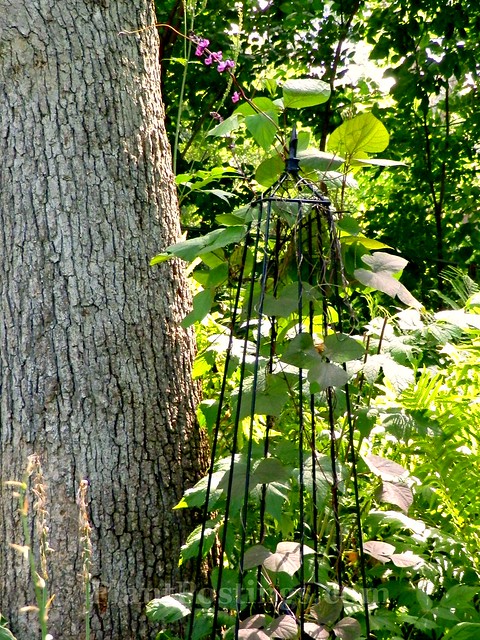
Hyacinth Bean vine (Lablab purpureus), is filling its obelisk.
obelisk top

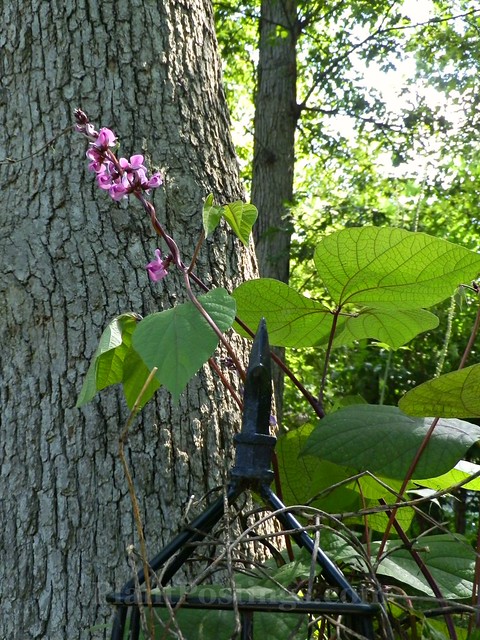
Its blooms are strong and colorful at the top--where the hummingbirds like to hang out.
hummer snacks

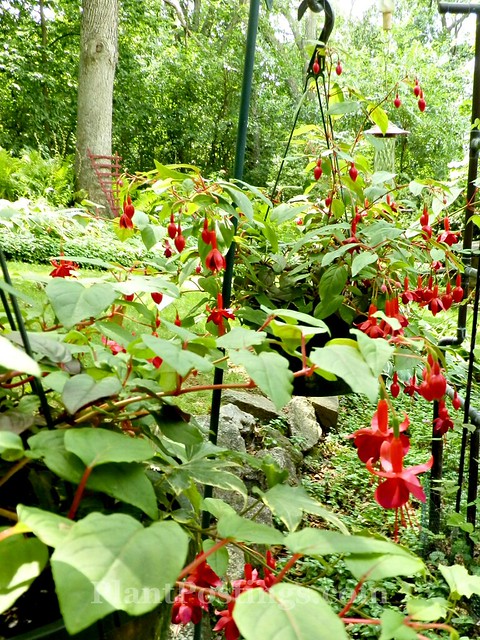
Hummers also flutter around the two hanging baskets of Fuchsia 'Marinka' lined up next to a feeder.

Moving on to the tiny sun garden ...
caged sunflower

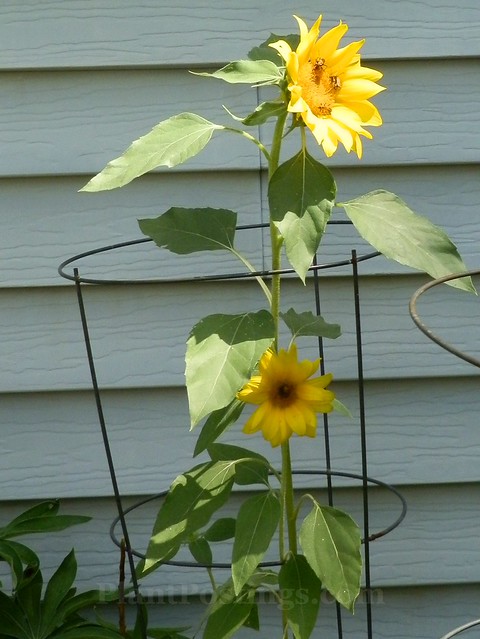
Embarrassingly, I can't recall the cultivar of this Sunflower (Helianthus spp.), but it's a nice size and very pretty. It started from seed planted directly in the soil in May; it's now about four feet tall.
party

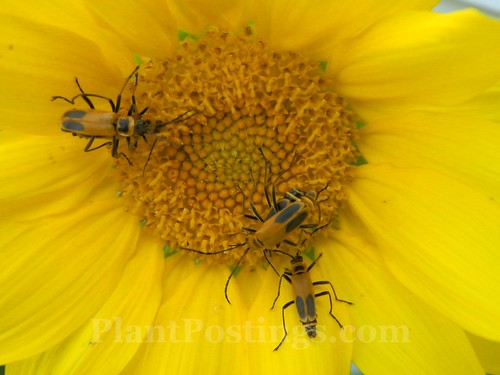
Definitely a popular hangout for pollinator shenanigans (shown here: Goldenrod Soldier Beetles).
rudbeckia

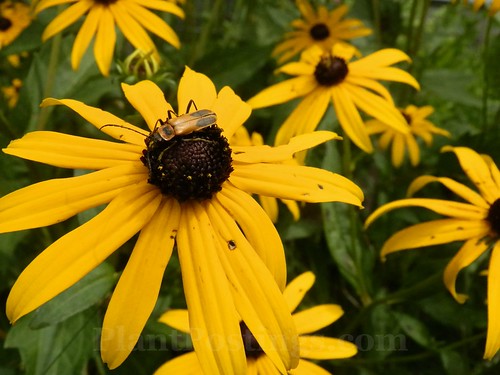
The Black-Eyed Susans (Rudbeckia hirta) attract them, too.

pentas

The jury's still out for me with Pentas (P. lanceolata 'Graffiti Red Lace'). I think it might be the color--just a little too red, so it clashes with other flowers in this garden (I love red flowers, but not in this location). I'll probably opt for purple or pink next summer.
potted

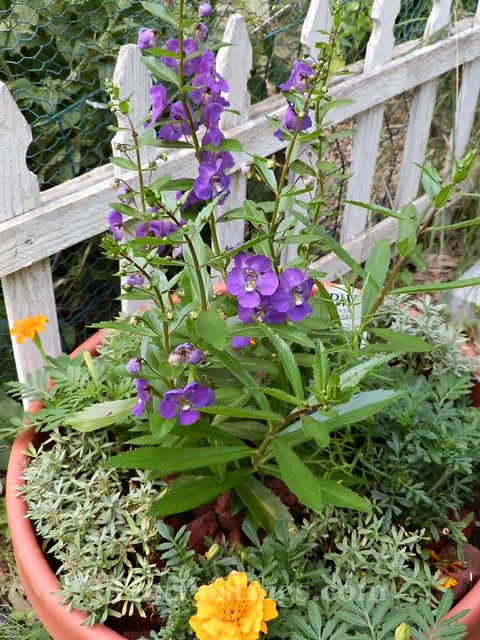
I love the Marigold/Angelonia combination. And both keep blooming all season long, even as the Alyssum is dormant during the heat of the summer.
butterfly seeds

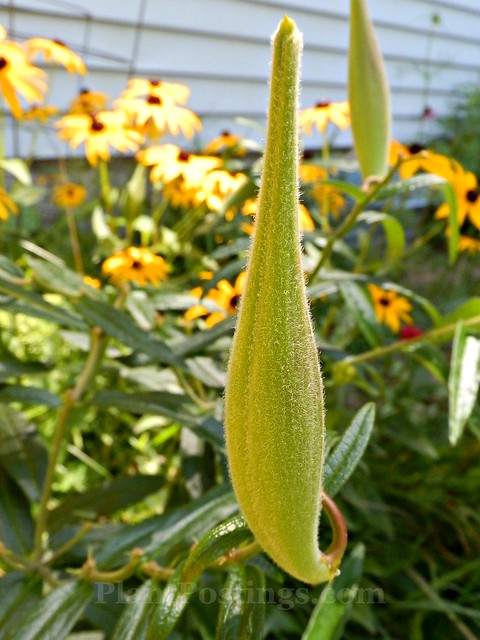
I'm so pleased that the Butterfly Weed (Asclepias tuberosa) plants are finally producing seeds.
butterfly buds

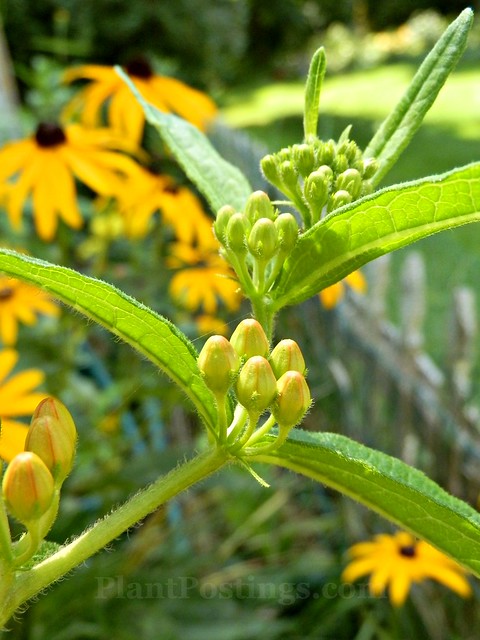
And a second round of buds and blooms.
yum

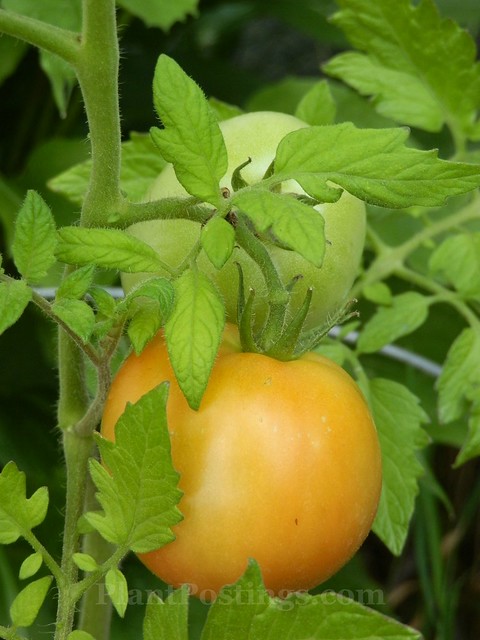
No longer just a bloom, this 'Better Boy' tomato is now harvested and soon will be consumed.
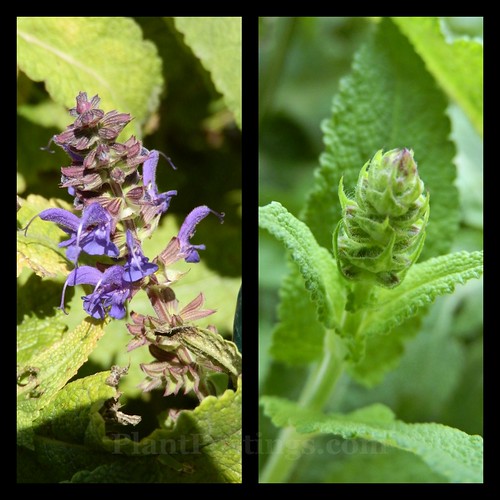
salvia collage

Some Salvia blooms are fading, though after deadheading, new fresh buds are forming.
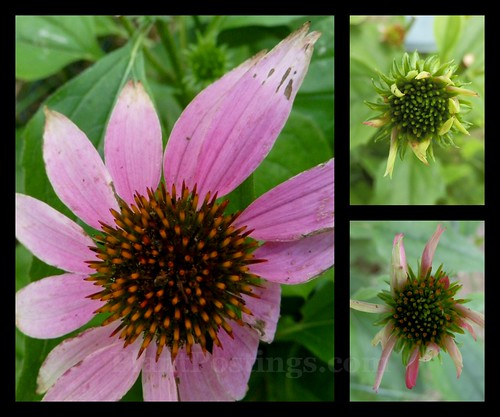
echinacea collage

The Coneflowers (Echinacea purpurea), too, still offer new buds and blooms.
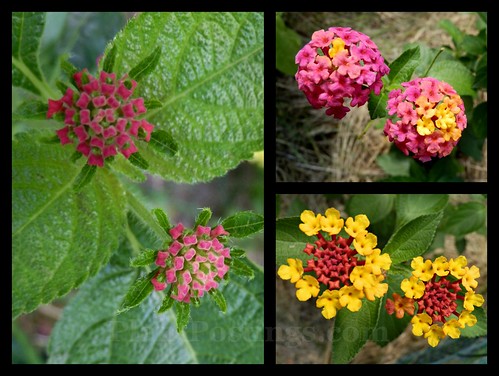
lantana collage

Lantanas ('Blaze' and "Bandana Red') are taller and more productive than they've ever been in my garden before.
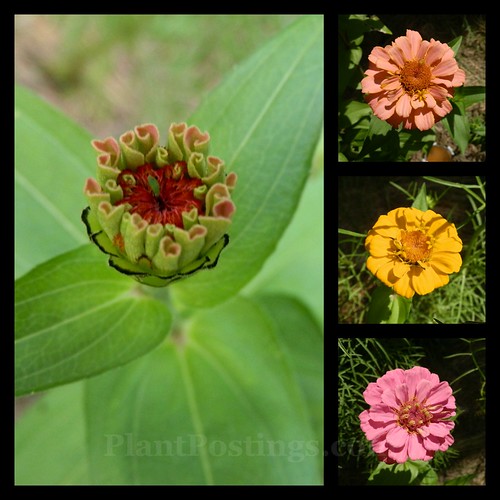
zinnia collage

'Cut and Come Again' Zinnias are true to their name.
cosmos collage

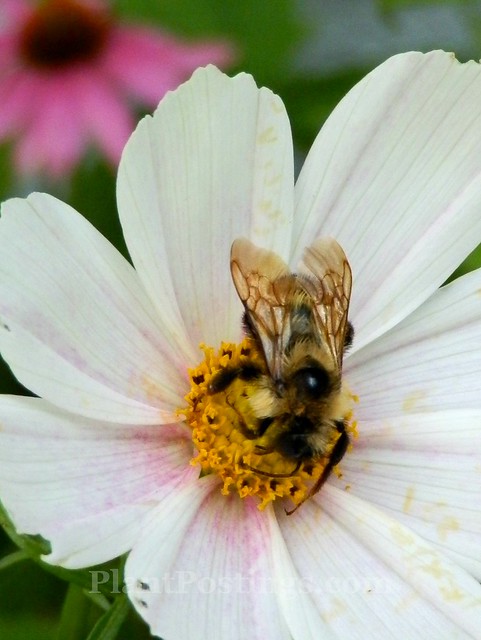
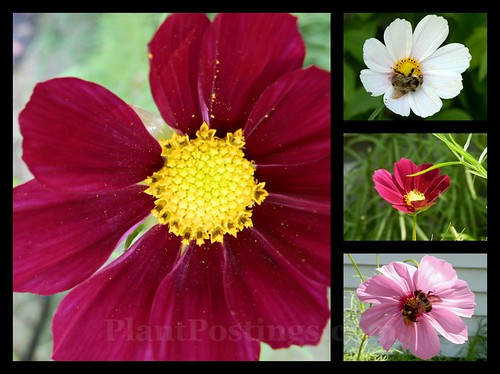
The bumbles agree with me that 'Versailles Mix' Cosmos are irresistible.
sun garden colors

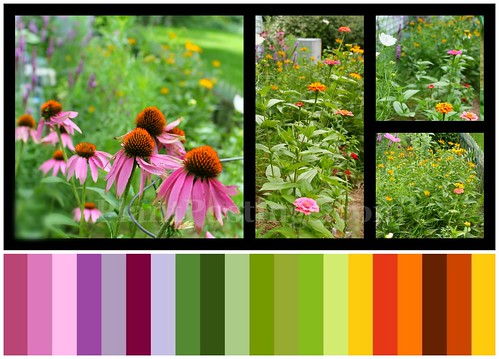
The colors this season have been pleasing to my eye. I recently played around with some color swatches to try to capture the rainbow before it fades.

Thanks to Carol at May Dreams Gardens for hosting Garden Bloggers' Bloom Day!
August 07, 2015

Plant of the Month: Daisy Fleabane

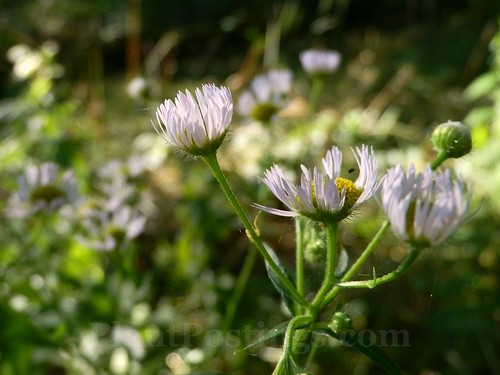
fleabane 3

Have you noticed a recent trend toward using native biocontrols to combat non-native, invasive species?

For example, many plant experts now recommend planting prolific native plants and seeds to replace invasive, non-native plants as you remove them.

fleabane 4

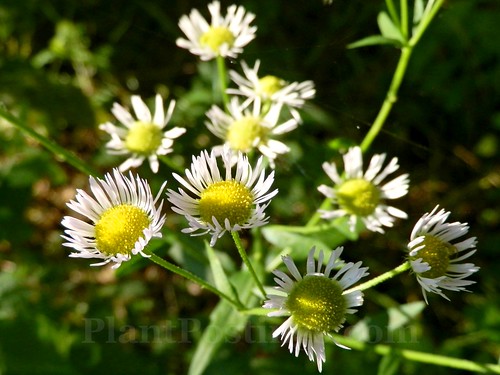
During recent state park hikes, I've noticed that Wild Columbine (Aquilegia canadensis) appears to compete effectively with non-native, invasive Garlic Mustard (Alliaria petiolata), when few other plants seem able to fight it. And in the open woods at our cottage in Central Wisconsin, Daisy Fleabane (Erigeron annuus) is another Garlic Mustard-competitor.

fleabane 1

Fleabane is one of the more prominent understory plants on the property. As we pull the Garlic Mustard, the Fleabane fills in.

woods

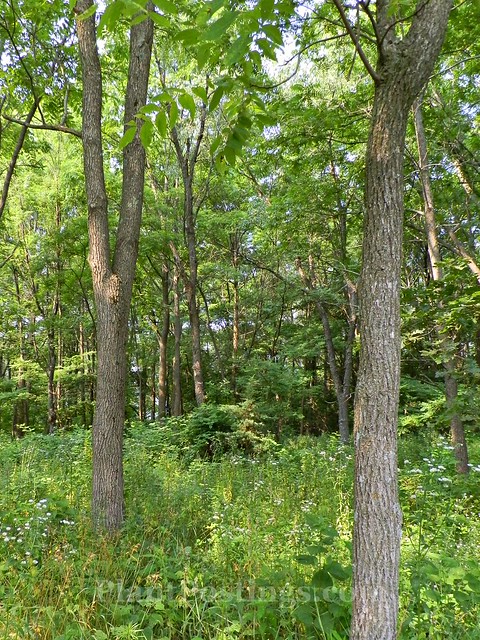
Another benefit of Daisy Fleabane is that it's juglone-tolerant, meaning it resists the toxicity of Black Walnut (Juglans nigra) trees--one of the prominent tree species at the cottage.

monarda & fleabane

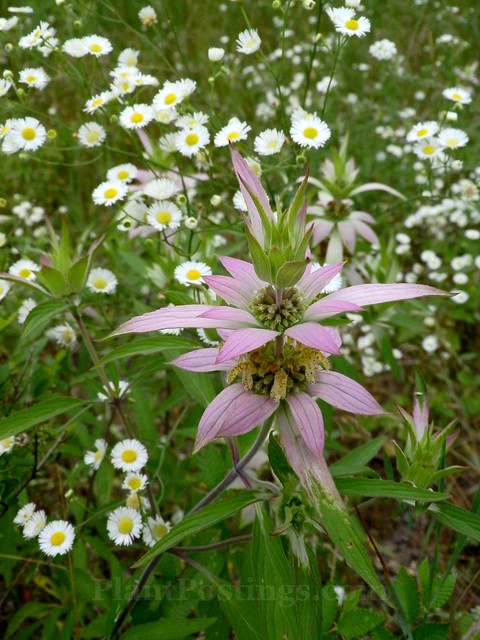
Daisy Fleabane also is a lovely companion to Dotted Horsemint (Monarda punctata). I don't garden much at the cottage, but I do observe what grows well in the dry, sandy soils under the Walnut trees. These two are prolific.

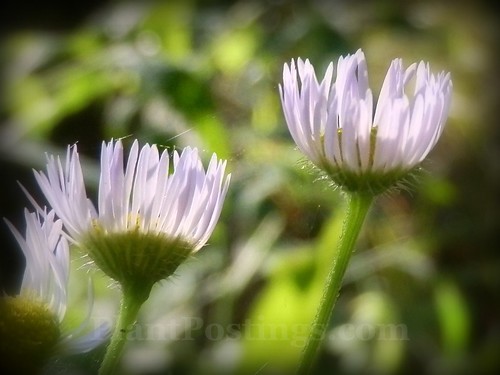
fleabane 2

Plus, Fleabanes have cheery little flowers. They're easy to underappreciate--even though they bloom for most of the summer. A few facts about Daisy Fleabane, from Wildflowers of the United States:

Height: 2 to 3 feet
Blooms: June through September
Range: Native in all but seven states and in most Canadian provinces

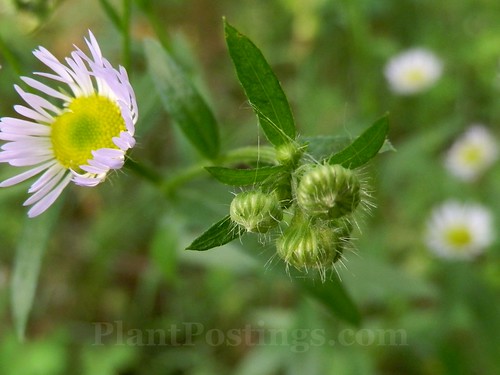
There are 191 species in the Erigeron genus, with E. annuus being one of the most widespread. This one has hairy stems and a longer bloom time than some of the others. The name Fleabane, according to many sources, comes from the traditional belief (unproven) that collections of the plants placed in the home would repel fleas.

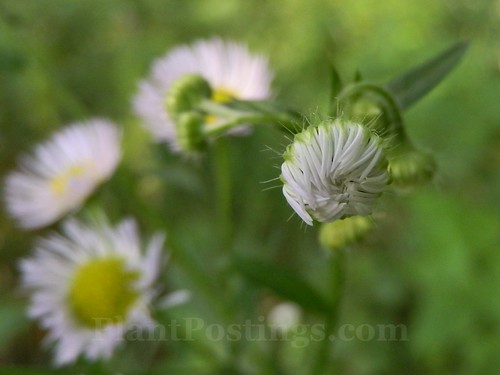
A few personal observations: Cut Daisy Fleabane has a decent vase life, lasting a few days with minimal wilting. The petals are white, with a hint of pink that becomes more evident with indirect and oblique lighting. The petals curl up as the sun fades.

If you have an area you want to naturalize while combatting invasive, non-native species, this is one option.

I like it. It's a modest, little photogenic bloomer.

fleabane 5

fleabane 6

August 03, 2015

In a Basket on Monday

single

Have you checked out the meme "In a Vase on Monday" over at Rambling in the Garden? If not, it's well worth the visit. People share wonderfully creative ideas for arranging the plants and blooms in their gardens.

For this Monday, I'm cheating a bit and sharing a basket arrangement.

salvia
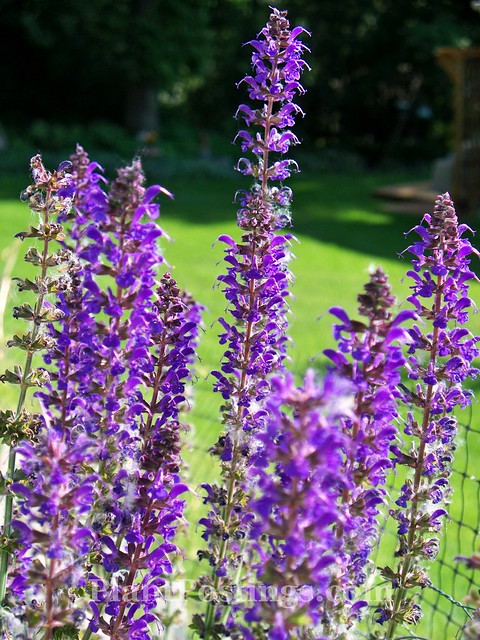
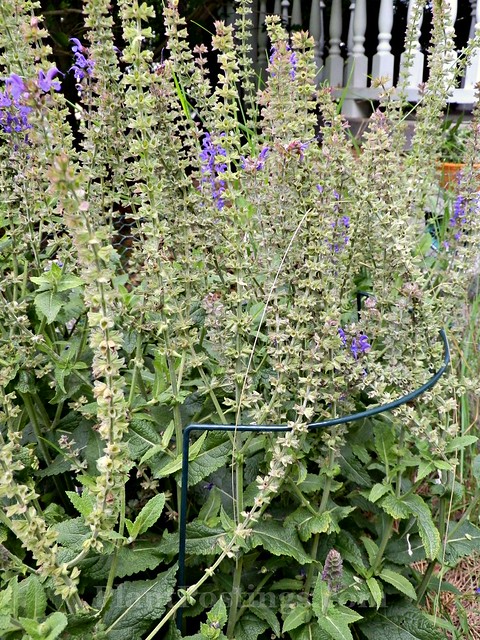
Salvia 'May Night' in spring.

A thought came to me earlier in the summer for using the spent blooms of my Salvias. While they're a flower garden highlight in late spring, they need attention by early summer.

support
Salvia 'May Night' by the end of June.

Many of you have noted that Salvias tend to get floppy. I agree. To deal with this issue, mine are planted in the corners of my cut flower/vegetable garden. As they get tall and start to take over, I stake them with metal supports. I deadhead the spent flowers several times during the summer for repeat blooms.

This year, I had an additional idea.

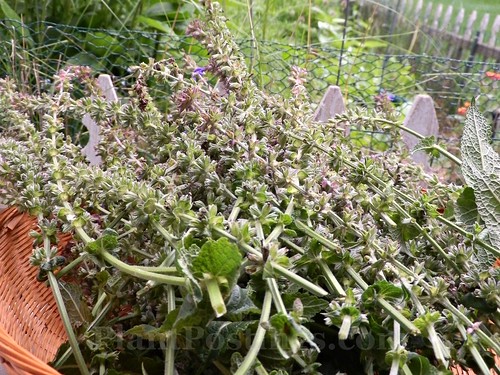
clipped

Instead of throwing the spent blooms in the compost pile, I decided to try saving them, drying them, and using them for potpourri.

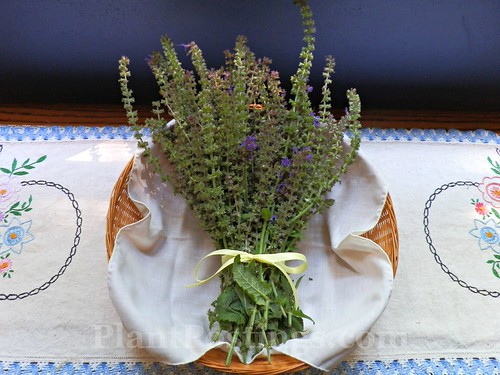
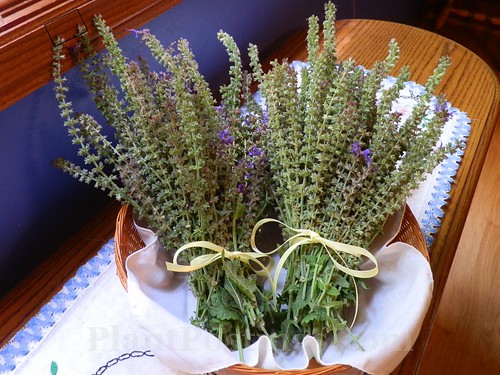
bundles

I have two clumps of Salvias, so I created two bouquets of spent blooms. These were clipped in late June, and they still have a pleasant scent as they've dried during the past month. I placed one above my microwave--so the warm, moist air of cooking can release their scent.

lilies

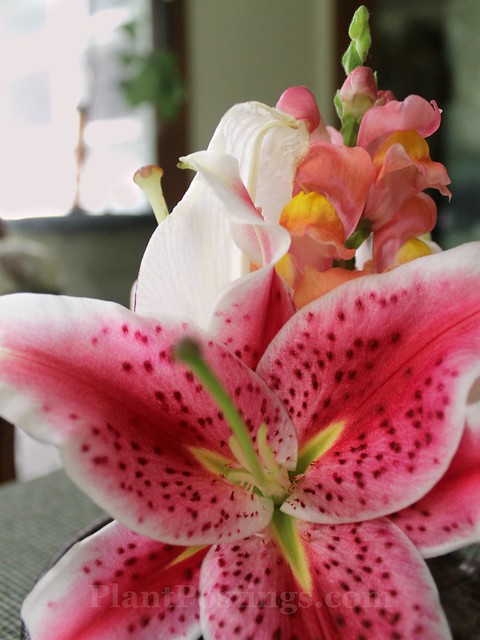
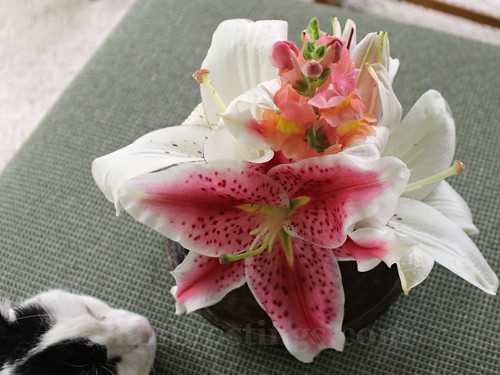
Another recent "In a Vase" creation was very simple: I placed two 'Stargazer' Oriental Lilies and two white ones in a flat vase, with a complementary large Snapdragon in the center. The scent was wonderful, although the fishman said it was almost too overpowering.

cat

Oreo was interested, too. But I had to be careful and place these out of her reach after photographing them. Lilies of many types can be toxic and even deadly to cats!
Head on over to Rambling in the Garden for more plant arranging ideas.