Have you noticed a recent trend toward using native biocontrols to combat non-native, invasive species?
For example, many plant experts now recommend planting prolific native plants and seeds to replace invasive, non-native plants as you remove them.
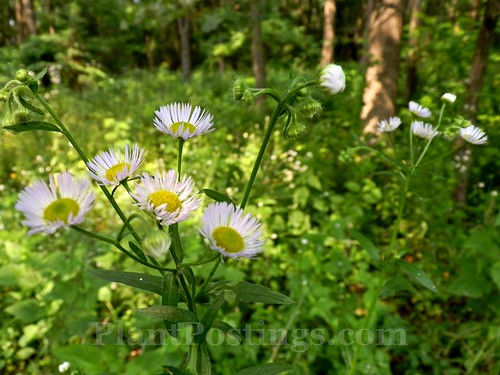
During recent state park hikes, I've noticed that Wild Columbine (Aquilegia canadensis) appears to compete effectively with non-native, invasive Garlic Mustard (Alliaria petiolata), when few other plants seem able to fight it. And in the open woods at our cottage in Central Wisconsin, Daisy Fleabane (Erigeron annuus) is another Garlic Mustard-competitor.
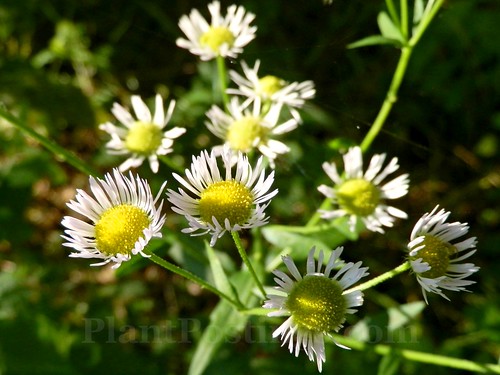
Fleabane is one of the more prominent understory plants on the property. As we pull the Garlic Mustard, the Fleabane fills in.
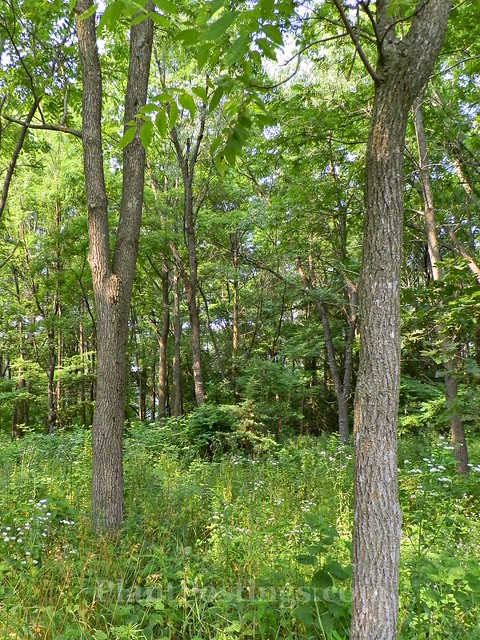
Another benefit of Daisy Fleabane is that it's juglone-tolerant, meaning it resists the toxicity of Black Walnut (Juglans nigra) trees--one of the prominent tree species at the cottage.
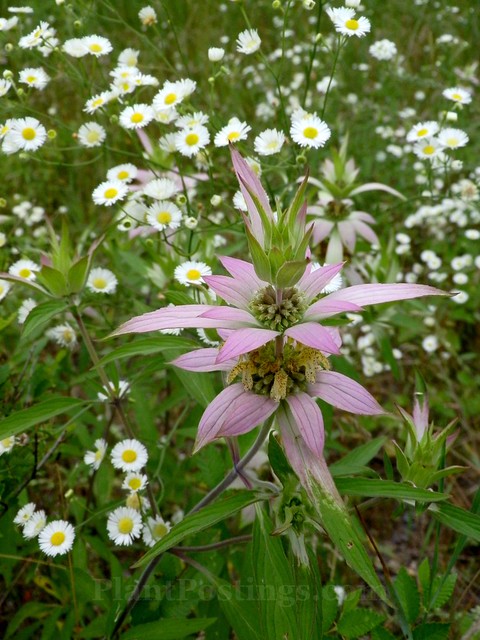
Daisy Fleabane also is a lovely companion to Dotted Horsemint (Monarda punctata). I don't garden much at the cottage, but I do observe what grows well in the dry, sandy soils under the Walnut trees. These two are prolific.
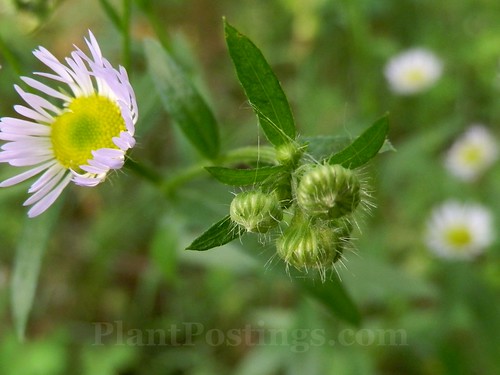
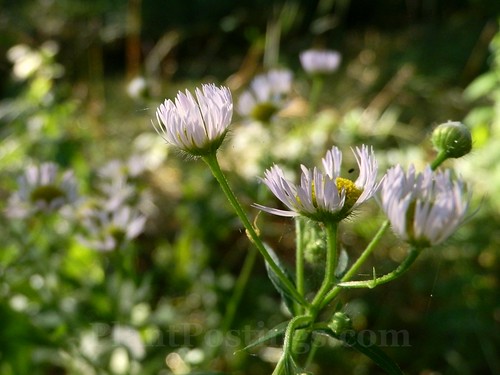
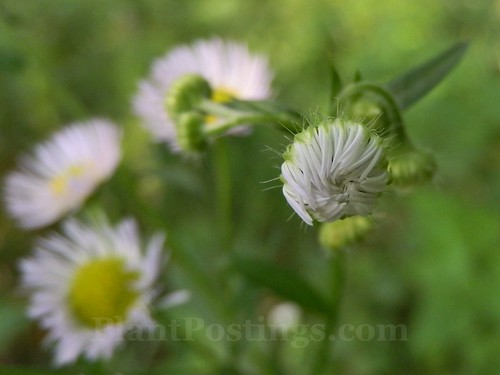
Plus, Fleabanes have cheery little flowers. They're easy to underappreciate--even though they bloom for most of the summer. A few facts about Daisy Fleabane, from Wildflowers of the United States:
Height: 2 to 3 feet
Blooms: June through September
Range: Native in all but seven states and in most Canadian provinces
There are 191 species in the Erigeron genus, with E. annuus being one of the most widespread. This one has hairy stems and a longer bloom time than some of the others. The name Fleabane, according to many sources, comes from the traditional belief (unproven) that collections of the plants placed in the home would repel fleas.
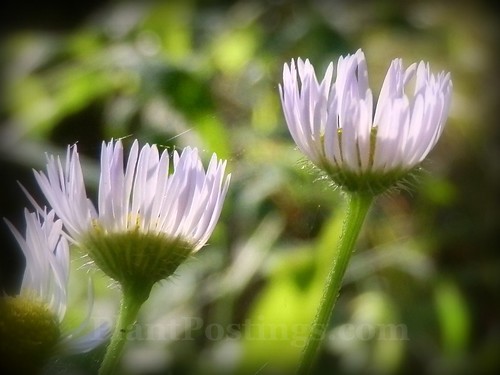
A few personal observations: Cut Daisy Fleabane has a decent vase life, lasting a few days with minimal wilting. The petals are white, with a hint of pink that becomes more evident with indirect and oblique lighting. The petals curl up as the sun fades.
If you have an area you want to naturalize while combatting invasive, non-native species, this is one option.
I like it. It's a modest, little photogenic bloomer.