Showing posts with label Dear Friend and Gardener. Show all posts

May 12, 2015

Coldframes and Windowboxes: Part I of III

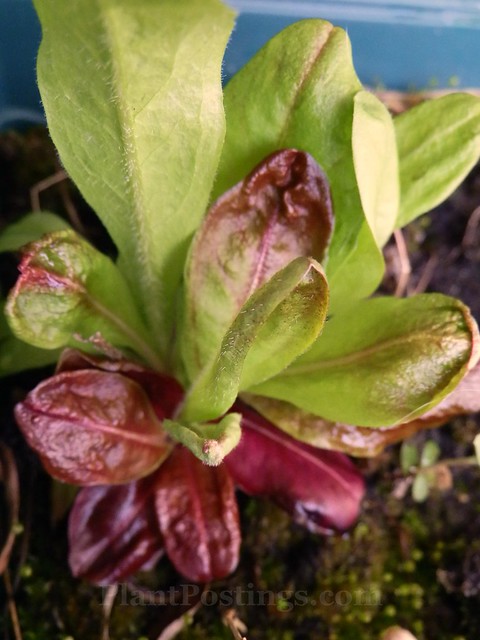
survivor lettuce

Have you ever tried overwintering Lettuces and Scallions in a coldframe over a heated pond?

How about growing salad greens in windowbox liners?

These experiments are new to me as of last spring, and they've been pleasantly successful, thus far. I'm breaking this series into three parts:

  • Part I: Growing salad greens in windowbox liners;
  • Part II: Construction of the coldframe; and
  • Part III: Successes, failures, and miscellaneous observations.
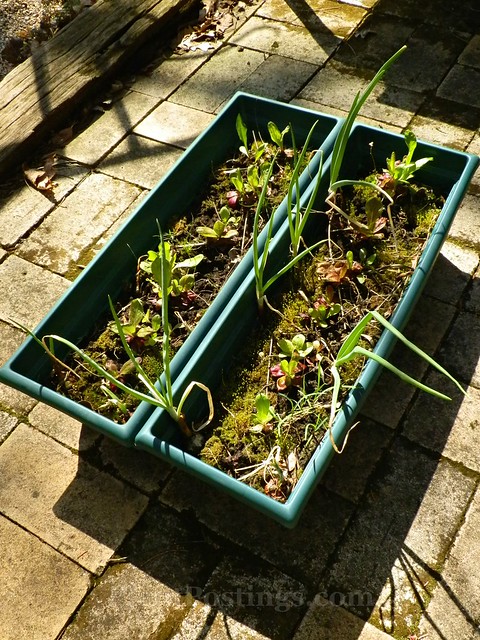
liners

So, Part I: Growing salad greens in windowbox liners: you know, those portable, lightweight troughs you can buy and place in your windowboxes for planting ornamentals ... windowboxes that make your windows look extra snazzy and give your house lovely curb appeal ...

Turns out, the liners make great planting mediums for salad greens, too. You can add rich, healthy potting soil and compost to give your seeds a boost. And you can start the seeds early in the season and move the troughs in and out, as needed, as the temperatures fluctuate. It's similar to raised-bed gardening, but with the additional benefit of being portable--an especially great option for those of us with shorter growing seasons and "surprise" spring and fall frosts and freezes.

I planted 'Mesclun Mix' Lettuce seeds last spring, with Scallions (Onion sets) planted around the perimeter to repel critters. I watched them sprout quickly, then harvested many cuttings through the summer, clipped them down to the base in the fall, and overwintered them in coldframes above our heated pond.
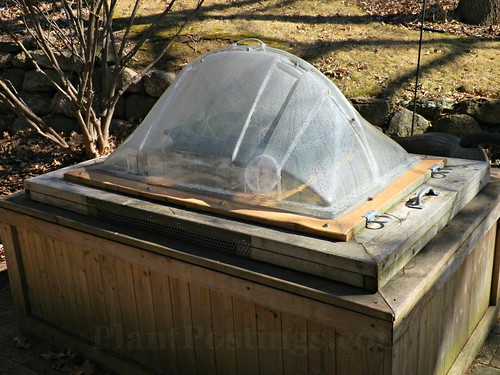
coldframe on pond
In Part II, I'll describe how the fishman constructed this mini-coldframe on top of our pond.

(The fishman gets the kudos for coldframe construction!)
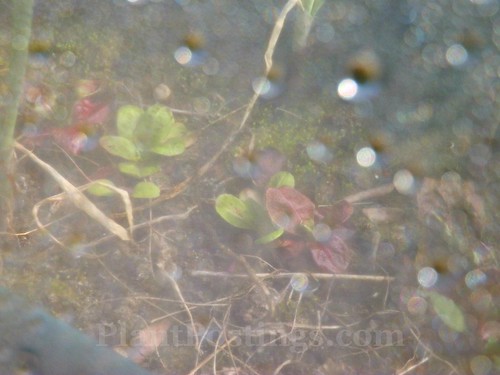
lettuce rosettes
Lettuce rosettes, as seen through the plastic and condensation of the coldframe.

They survived! They remained in a state of perpetual rosette through the winter as the temperatures hovered around 32F to 45F.
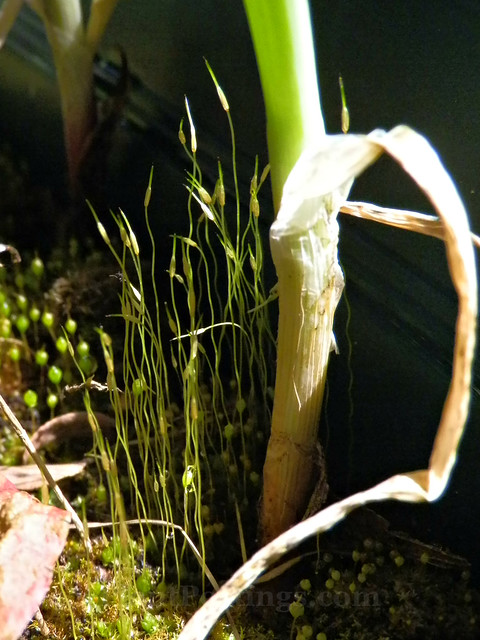
moss and scallions
A new blog topic? "How to grow moss in a coldframe."

(Turns out, these are excellent conditions for growing moss, as well. In this case, I'm considering it a cover crop for my salad greens.) Once the temperatures warmed in April, I moved the trays into the sun, watched the plants grow, and started clipping greens for salads again.
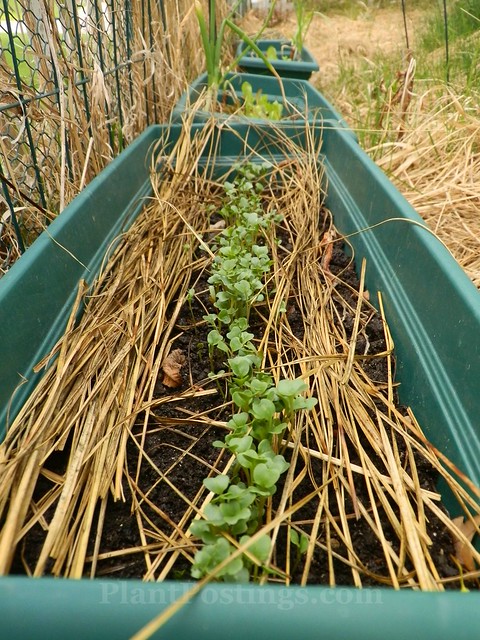
kale and chard

A couple of weeks ago, I also planted 'Tuscan Baby Leaf' Kale and 'Peppermint' Swiss Chard seeds in additional troughs, placed directly in the garden.
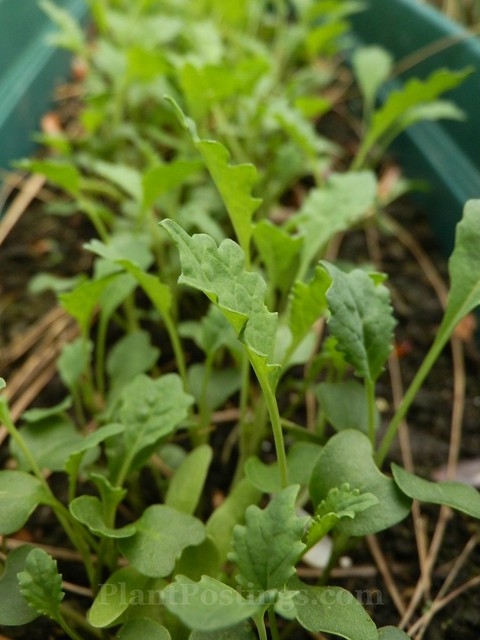
kale

We've already thinned the seedlings, and harvested some baby Kale!

Next in this series: Construction of the coldframe. But first, Garden Bloggers Bloom Day on May 15!

To see what other gardeners are growing this season, check out the Dear Friend and Gardener virtual garden club.

September 07, 2014

A September bucket of plenty

bucket

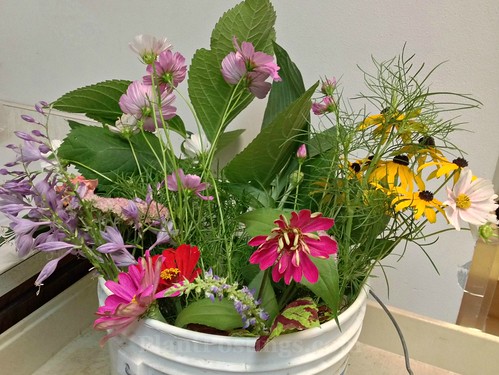
The colors of September are vibrant and full of life. I feel blessed at this time of year as I harvest buckets of plenty--flowers from the garden for fresh floral bouquets.
I was on flower duty at church this weekend, which gave me an opportunity to share some of the bounty with others. I collected Hosta flowers and foliage, Zinnias, Cosmos, Black-Eyed Susans, Coleus flowers and foliage, Hydrangea foliage, and Sedums.

But I still needed a statement bloom with a little more drama.

sunflowers

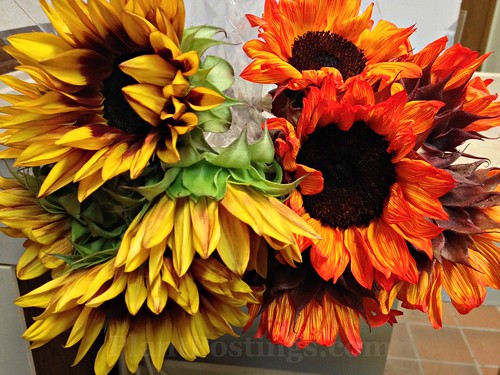
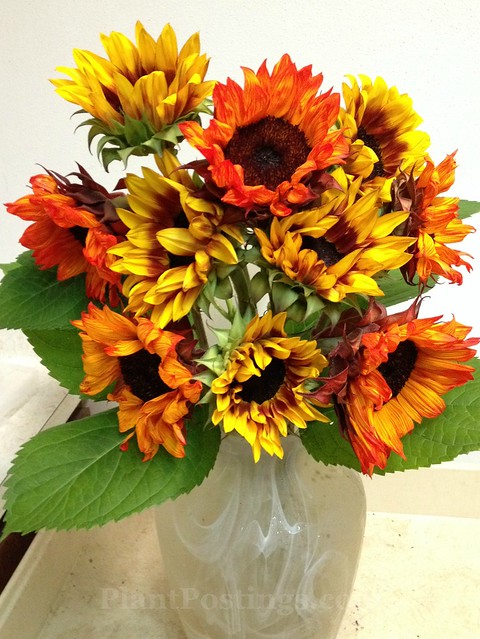
Voila! I noticed Sunflowers at my local grocer: At $5 per five-pack, I couldn't resist!

We're fortunate at our church to have a workroom in the back for decorations and floral arranging. It's not the best staging environment for photography, but it's certainly bright enough to show you how everything came together.

vases

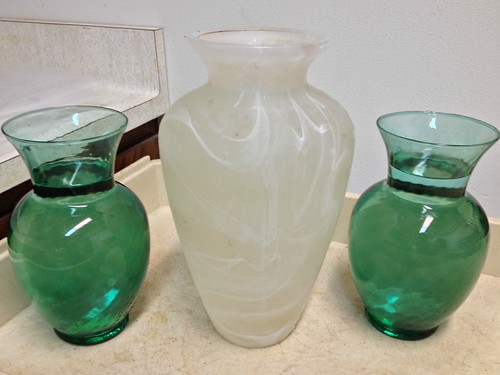
First, I picked a large vase for the center statement bouquet, and two smaller complimentary vases.

pair

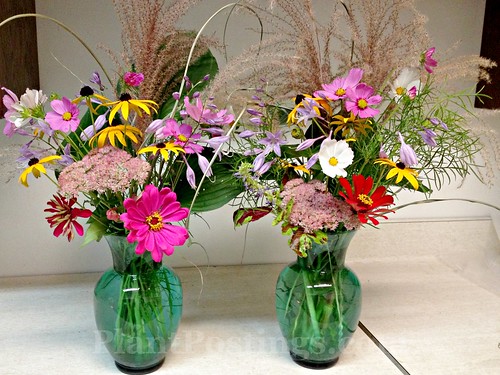
The flowers from my garden came together in two accent bouquets. Simple, but colorful and graceful.

center

I thought it would be fun and whimsical to combine the sun-loving, drought-tolerant Sunflowers with a large branch of moisture-craving Hydrangea foliage. But something was still missing...

center fluff

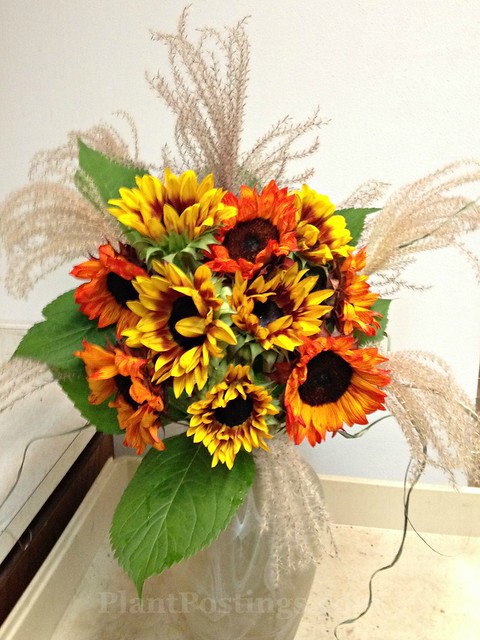
Fortunately, fellow floral arrangers had saved some dried accent elements in the workroom. I added some to the Sunflower bouquet, which gave it a fuller, transitional, summer-to-fall kind of look.

Again, very simple, but it worked for this purpose. Frankly, the flowers--in all their beauty--do most of the work for me. All it takes is a little imagination.

Arranging flowers and other garden elements is one of my favorite things to do during the fall. I'm linking this post to three memes: In a Vase on Monday, Seasonal Celebrations, and Dear Friend and Gardener. Check out these great memes for September garden inspiration!

~ ~ ~ ~ ~ ~ ~ ~ ~ ~ ~ ~

Coming soon: The Garden Lessons Learned and Seasonal Celebrations wrap-ups. Donna and I would be pleased to have you join us! Please share a post, or your thoughts, about lessons from the past season and how you enjoy celebrating the next season. Many people cover both in the same post. To join in, click here to leave a comment with a link to your post. We'll share the wrap-ups at the equinox. Cheers!

July 03, 2014

Bouquets for my dear friends and gardeners

bucket

I'm on flower duty this weekend at church. A group of us take turns supplying flowers throughout the summer. I try to use flowers from my garden as much as possible.

Not all flowers are good cut flowers, and I wasn't sure I'd have enough workable ones for three floral arrangements this weekend. (Soon I'll have so many, I'll call people up to please take some!) The garden's in a bit of a transition now, between late spring to summer blooms.

Still, after checking the garden this morning, I found plenty to add to the mix of blooms I used last week.

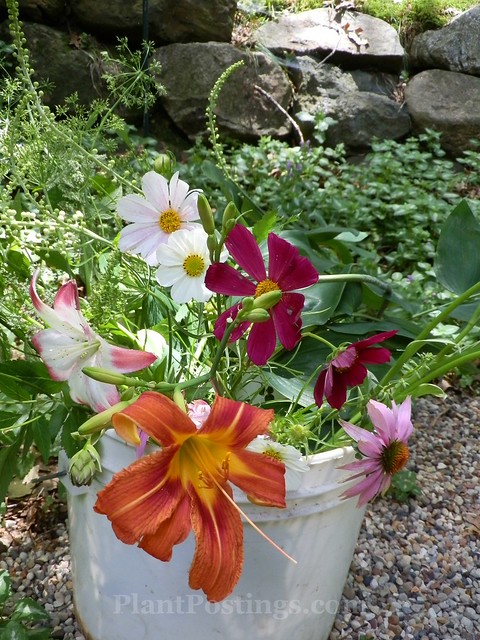
Here are the flowers and fillers I found (all should last several days in a vase):

lily
An unknown Lily hybrid (Lilium spp.). Not perfect, and in my haste to clip off the pollen-laden anthers, I accidentally clipped the stamen, too. Oh well, it will still add color to the bouquet.

iris
Bearded Iris foliage that I needed to clip anyway. It's a great foundation element.

echinacea
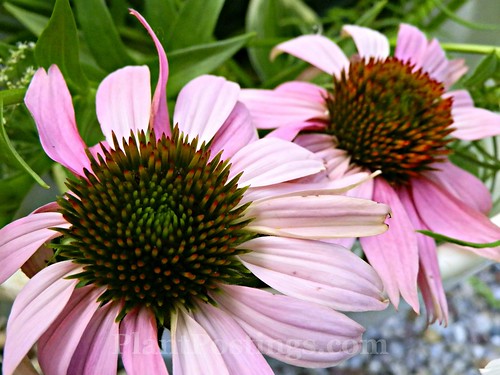
Purple Coneflowers (Echinacea purpurea), just starting to bloom.

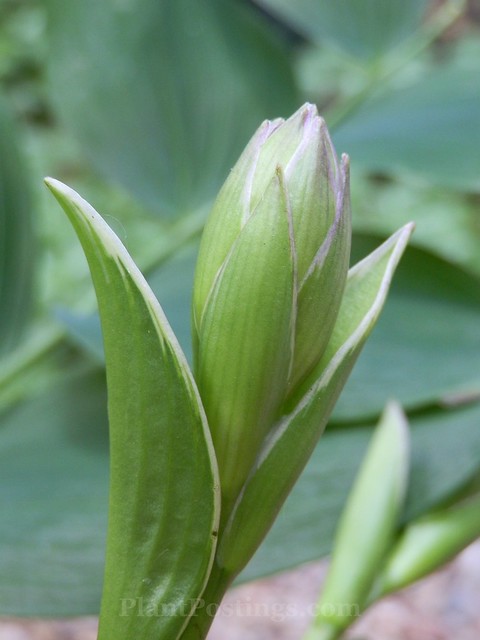
hosta
Hosta flower buds. Yes, the stems with buds, and later the flowers work well in arrangements.

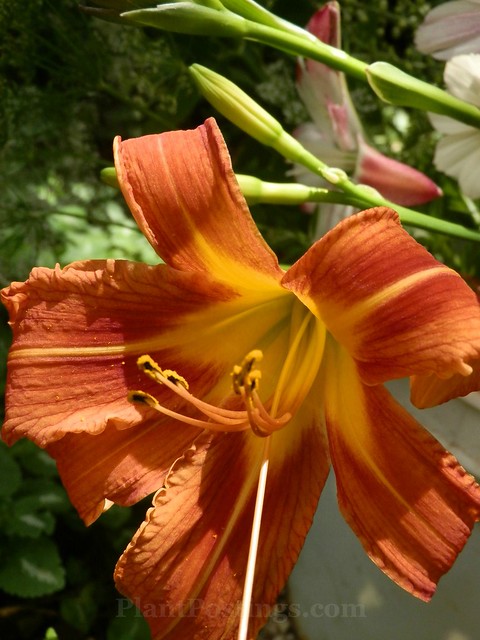
daylily
Ditch Lilies (Hemerocallis fulva). I know, I know, a lot of people don't like this one. But it works well in arrangements, even though each bloom only lasts for one to two days.

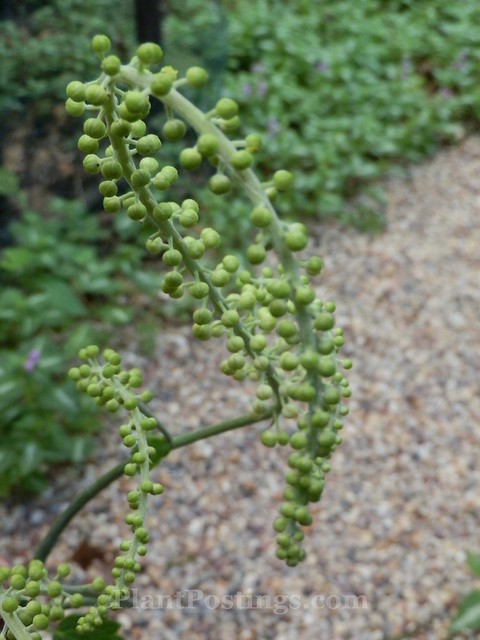
bugbane
A Bugbane (Cimicifuga racemosa) stem that got pummeled so much by the wind that it curled and contorted. Hmmmm ... could be interesting in the floral arrangement.

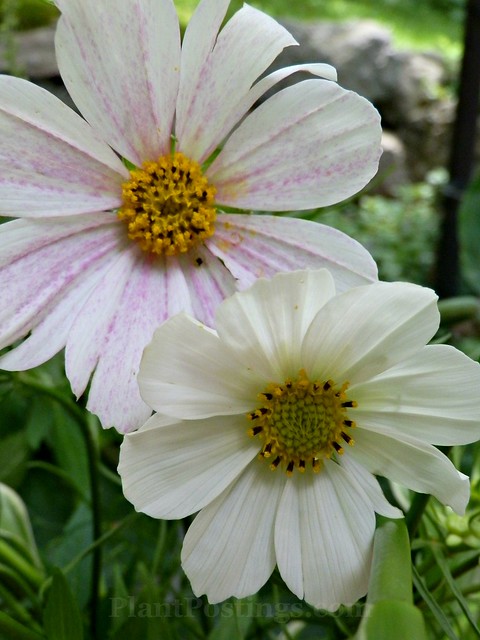
cosmos
One of my favorite annuals, Cosmos (C. bipinnatus), also just starting to bloom in my garden. They'll be prolific until the first hard frost in October.

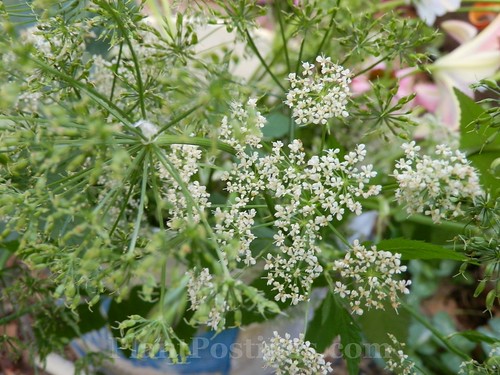
aegopodium
Feathery flowers and seed heads from Snow-on-the-Mountain (Aegopodium podagraria). This ground cover is a little too prolific, but we're mostly keeping it under control. In the meantime, the flowers work well as filler in floral arrangements.

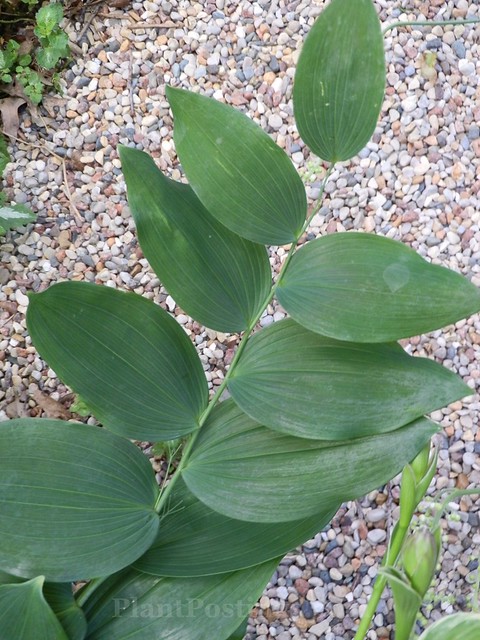
solomon
Solomon's Seal (Polygonatum biflorum), which I didn't end up using, but thought it might come in handy. I have way too many of these, and need to give some plants away next spring.

Not all of the blooms are perfect, but little tucks here and there make for pleasant combinations with the flowers from last week.

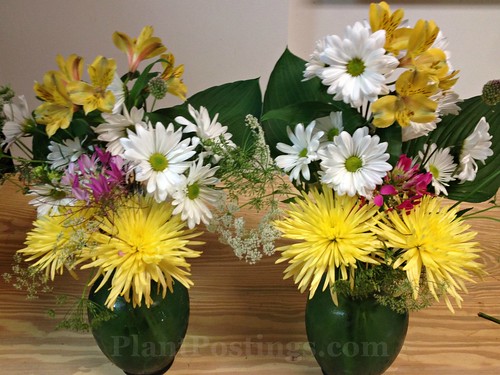
sides

The two side arrangements are made from mostly store-bought flowers.

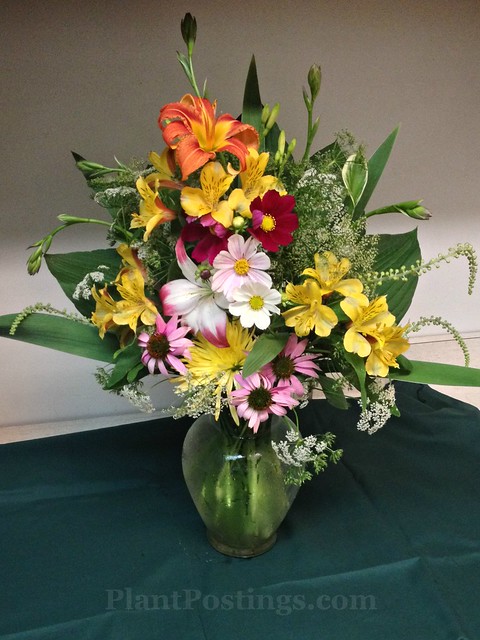
main

The bigger arrangement incorporates mostly blooms and foliage from my garden.

Throughout the rest of the summer, I'll have plenty each week to fill bigger bouquets.


For more ideas on how to grow (and use) your own vegetables and flowers at home, visit this "dear friend and gardener" link.

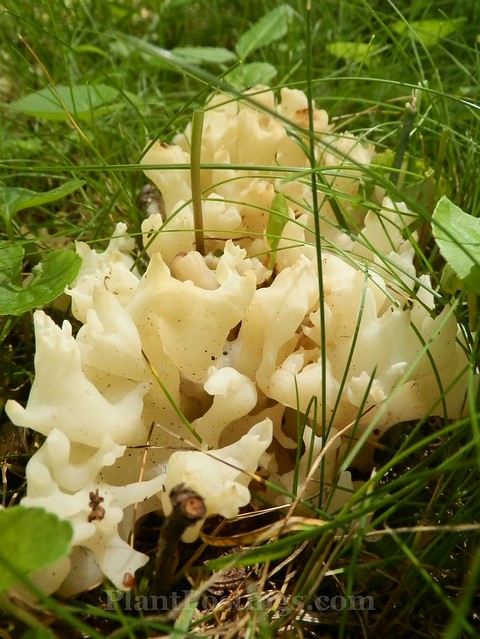
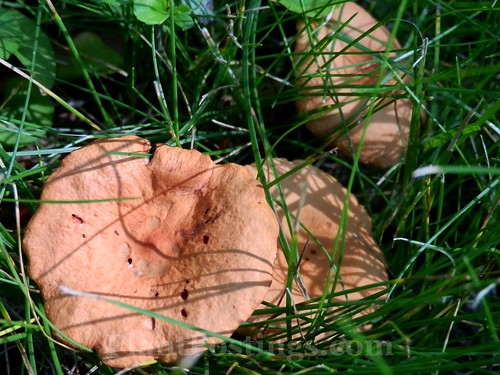
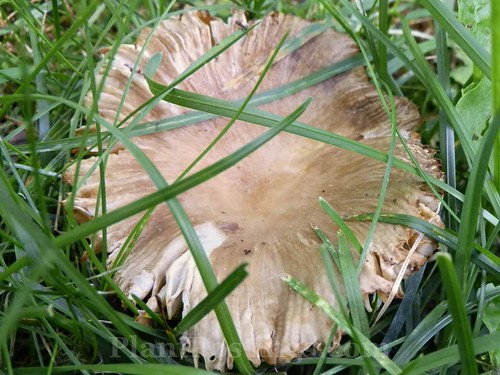
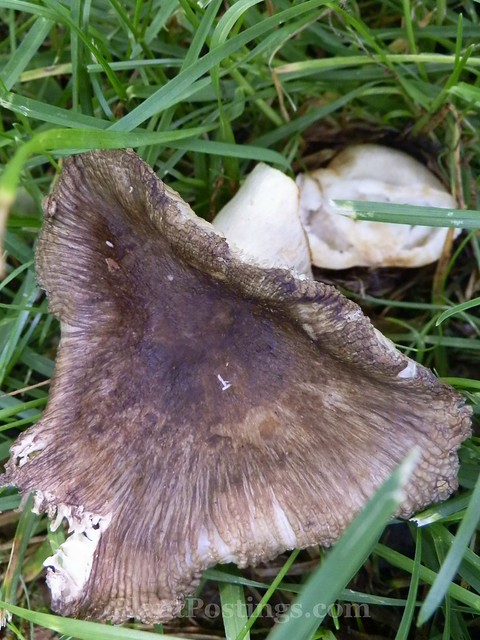
Oh, and for all you mycologists out there, check out all these nifty fungi I found in the garden while gathering flowers. We've had a lot of rain lately, and I managed to snap some photos before the fishman mowed the lawn.

fungi1

fungi2

fungi5

fungi3

fungi4

That last one seems to be popular with the resident squirrels. I've seen them eating this mushroom. I don't feel confident to eat any mushrooms beyond morels, but I wonder if this one is edible for humans, too?

Happy Independence Day to my American friends! And to everyone else: Enjoy the World Cup!

June 06, 2014

Dear friend and gardener:
Welcome to my potager

waxwings
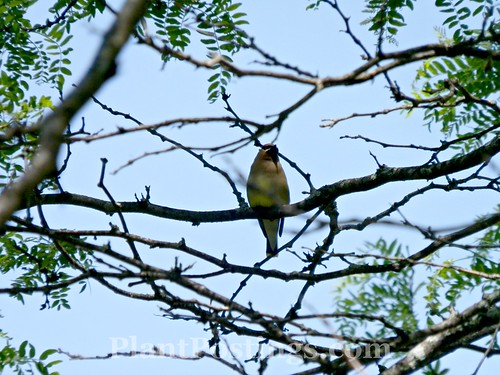
The cedar waxwings are still happy and hanging around the neighborhood.

How would you describe the perfect conditions to grow just about any plant and keep the people and creatures happy? How about: plentiful sun, occasional rain; average highs around 75F-80F/24C-27C and average lows around 55F/13C; long days and short, calm nights. Oh, and near-perfect Midwestern silt loam soil. What am I forgetting?

Anyway, you get the idea. Conditions have been near-perfect for growing things around here, and the plants seem to be growing inches every day.

It's time to talk summer gardening!


Three garden bloggers started a virtual garden club several weeks ago, under the name "Dear Friend and Gardener": Carol Michel of May Dreams Gardens, Dee Nash of Red Dirt Ramblings, and Mary Ann Newcomer of Gardens of the Wild Wild West. They invited others to join in. So I did.

The idea is to share our adventures of growing our own food, flowers, and herbs. So the focus of this post is on my one small patch of sun in this zone 5 Southern Wisconsin garden--my potager. Most definitions of potager refer to a small garden that combines both edible and ornamental plants.

That's how I've always done it. It's a great form of companion planting. The flowers attract the pollinators, which pollinate the edibles. The edibles add nutrients back to the soil, which boost the flower production. There are more intricacies, which I'll explain in a later post.

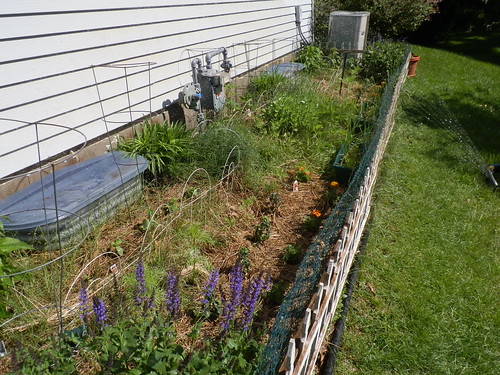
But first, let me show you the progress so far this season. Warning: These are unedited photos, straight out of the camera. The idea with this post is to show what I'm growing, and frankly, my potager isn't fancy. It's a working garden where I grow a few veggies for the family and flowers for church and home. You'll see that I still need to weed the grass out of the Drumstick Alliums, the garden is planted near the utility meter and the air conditioner (the only side of the house where I have sun!), and the window-well covers need to be replaced. The potager is surrounded by multiple layers of fencing to keep out the rabbits!

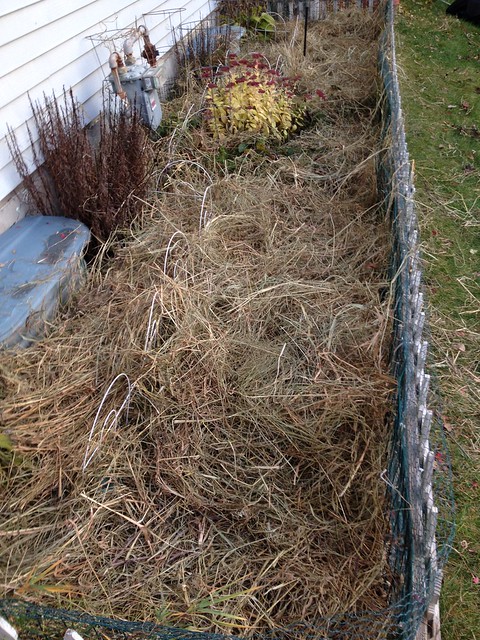
marshhay
The potager in November 2013: Mulched in with Marsh Hay and ready for the
polar vortex?

To give you a true picture, I have to start back in November when I put the garden to bed for the winter. I've tried various methods, but I always go back to Marsh Hay. For me, it's the perfect mulch. It contains very few weed seeds (unlike Field Hay and Straw), it knits together and doesn't blow away in the wind, and it breaks down at a slow to moderate rate. In the meantime, it offers the perfect levels of protection and nutrients.

Also, the lasagna, or layered, method of prepping the soil yields incredible results. First, a layer of Marsh Hay, next compost, then newspaper, and finally a thick blanket of additional Marsh Hay. This cuts down on the weeds, and by the following spring the soil is soft, pliable, healthy, and ready for plants.

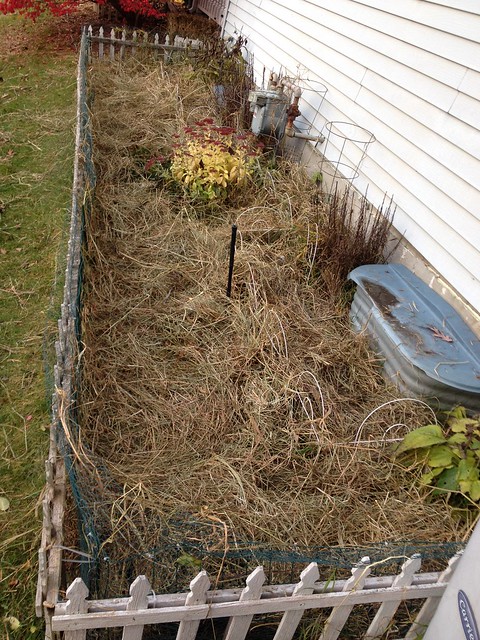
marshhay2
A different angle in November. Please don't mind the mess.

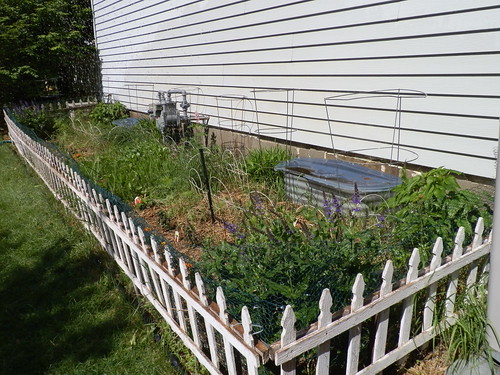
today2
The potager in early June 2014. Again, not exactly lovely, with the utility meter and the
window wells, but I have to take advantage of any sun I can get.

current
A different angle.

So, what am I growing this season? Here are the perennial, annual, biennial, and vegetable potager plants, in no particular order. I added a (C) next to ornamentals I regularly use for cut flowers.

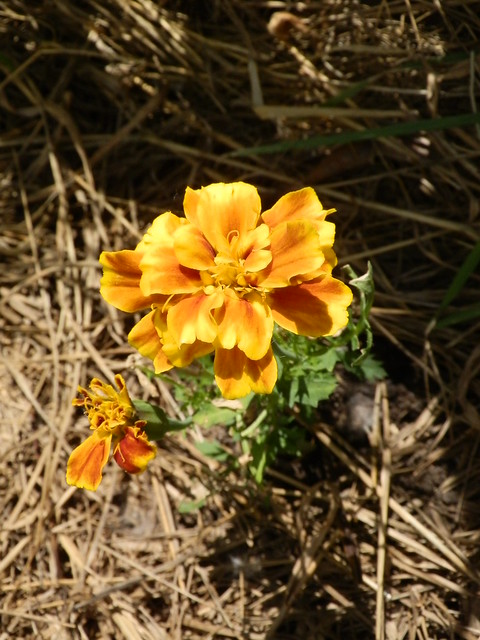
marigolds
Various garden Marigolds (Tagetes patula).

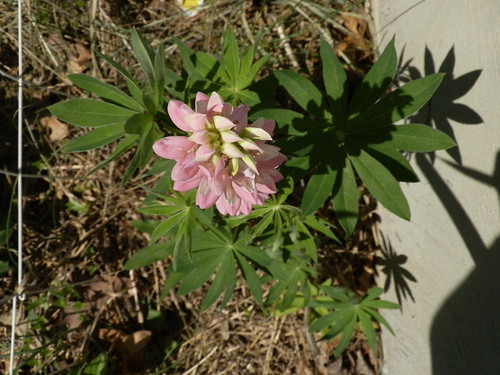
lupine
Lupines (C) (Lupinus polyphyllus 'Russell').

liatris
Blazing Star (C) (Liatris spicata).

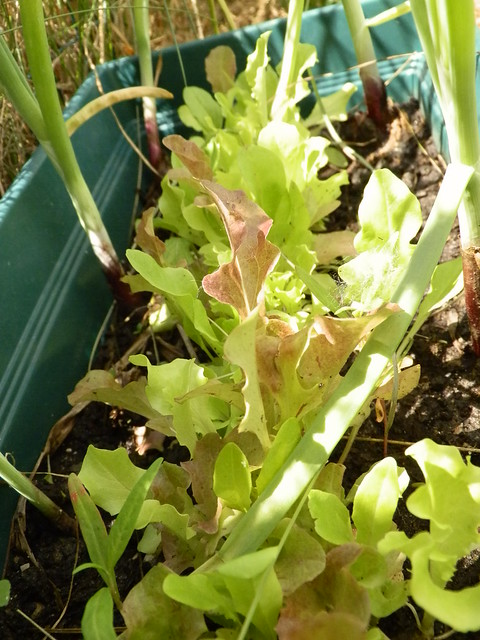
lettuce
Mesclun Mix Lettuce, grown from seed in raised troughs and bordered by scallions.

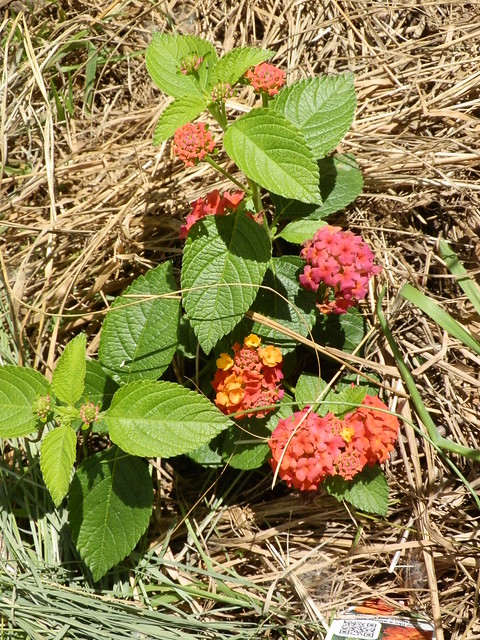
lantana
Shrub Verbena (Lantana camara). The pollinators love it.

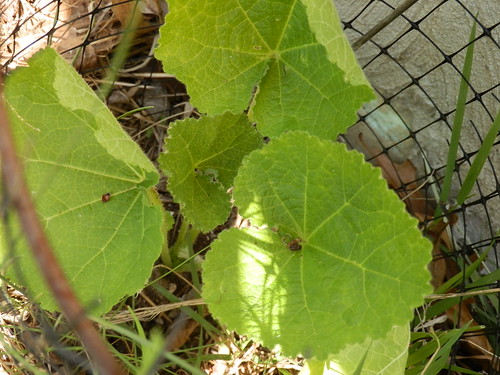
hollyhocks
Hollyhocks (Alcea rosea 'Newport Pink Double'). Only $1.99 per plant, so I couldn't resist
adding these biennials again after they died off following the 2012 drought.

echinacea
Coneflower (C) (Echinacea purpurea).

delphinium
Delphinium spp. (C) (Looks like its twin on the other side will bounce back after the meter
guy crushed it!)

cleome
Spider Flower (C) (Cleome hassleriana). The white, fuzzy stuff on the leaves is Cottonwood
seeds. No worries; they'll wash off with rain.

butterfly
Butterfly Weed (Asclepias tuberosa), which has made impressive progress since my
last post.

snapdragon
Snapdragons (C) (Antirrhinum majus 'Rocket Mix').

sedum
Stonecrop (C) (Sedum telphinum 'Autumn Joy').

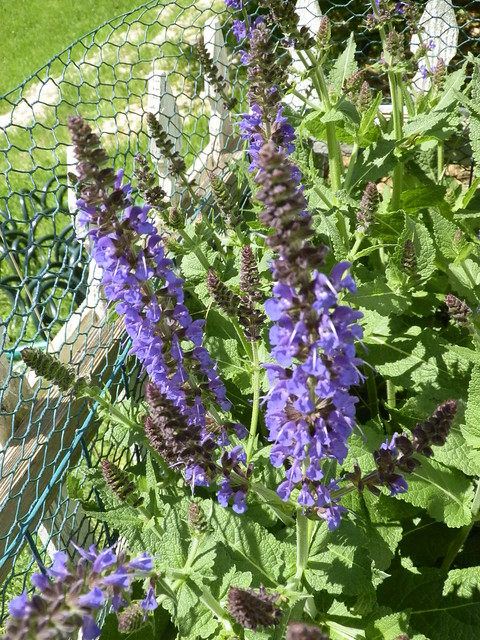
salvia
Ornamental Sage (Salvia nemerosa). Pollinators love this one, too. Doesn't last long in a
vase, though. I guess my worries about it this winter were unfounded because it looks
better than ever.

rudbeckia
Black-Eyed Susan (Rudbeckia hirta). Kind of a mess right now and hard to weed around,
but that will correct itself soon.

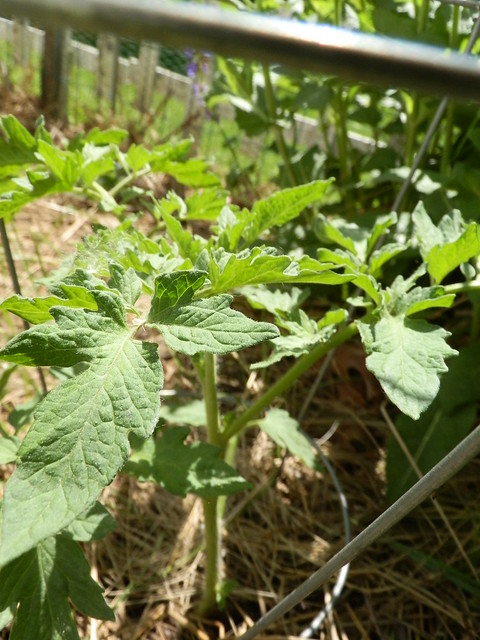
betterboy
'Better Boy' Tomato. (My mouth is watering just thinking about the harvest.) 

zinnia
Zinnias (C) (Z. elegans 'State Fair Mix'). Don't worry, they grow fast!

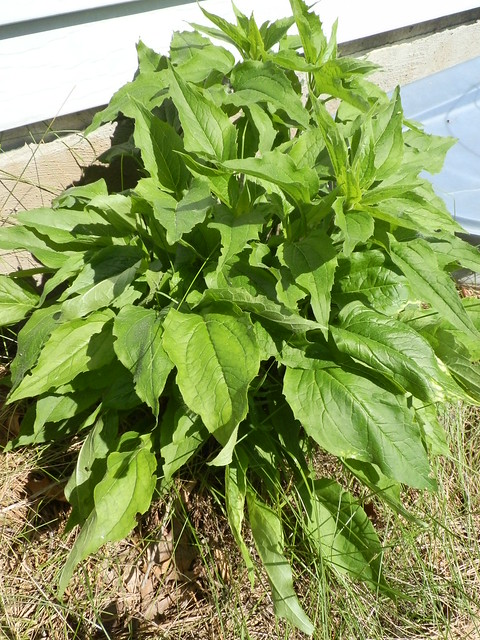
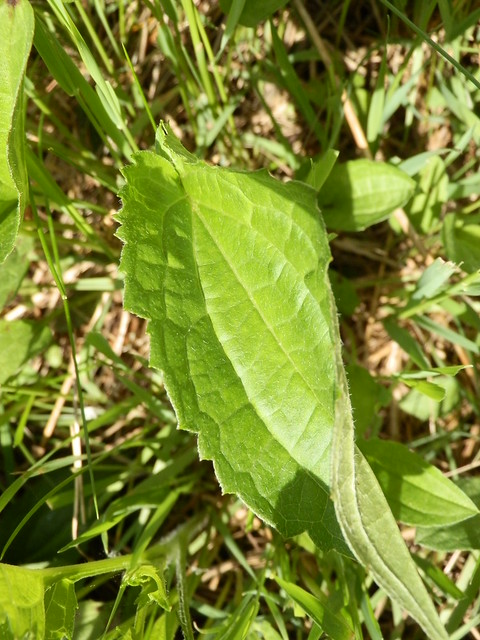
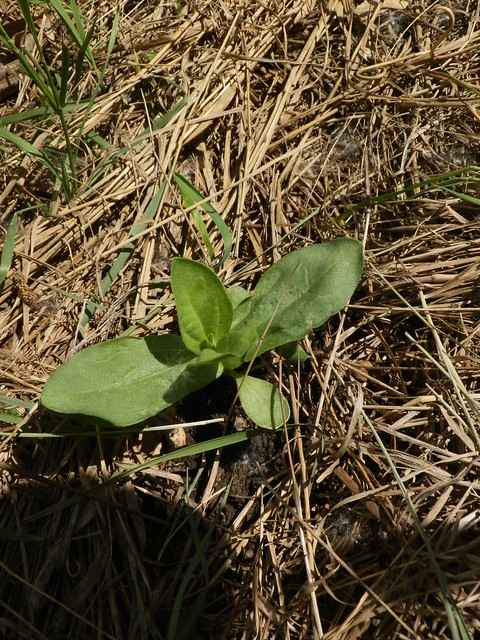
whorled
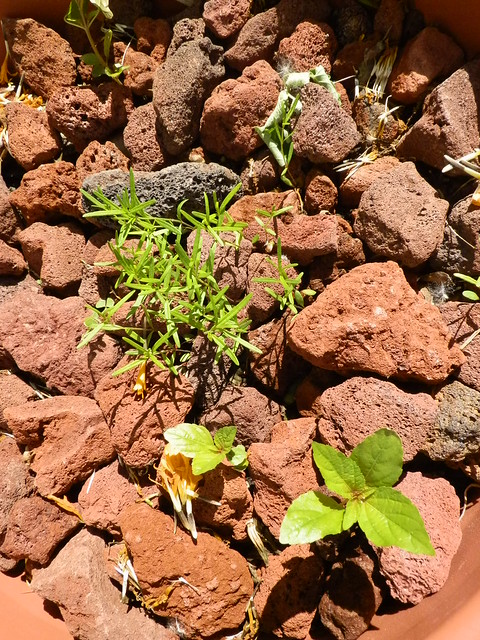
Whorled Milkweed (Asclepias verticillata), which I started from seed. (Not sure what
the mystery plant is in the lower right--maybe Pigweed; I should probably pull it. I
sprinkled Marigold seeds in the pot and added lava rocks to discourage chipmunks.)

Oh, and I thought I had photos of the Drumstick Alliums and the Cucumbers, but I guess I missed them. I'll share them next month ...

Head on over to the Dear Friend and Gardener page to learn more about edibles and flowers that other folks are growing!