I've posted about the UW-Madison West Agricultural Research Station before, but I figured it would be a good time to head over there again to see what's growing. The display gardens and the research crops change from year to year.
Students and faculty at the university's College of Agricultural and Life Sciences have access to the gardens for research, agronomic and horticultural plant breeding and variety trials, community outreach, student training, and providing feed and manure management for the UW-Madison campus livestock.
Focus areas include field crops (corn, soybeans, small grains, alfalfa, and cover crops), plant breeding trials, vegetables, small fruit crops, composting, irrigation, and the horticultural display gardens (annuals and perennials). The latter include All-America Selections (AAS) winners.
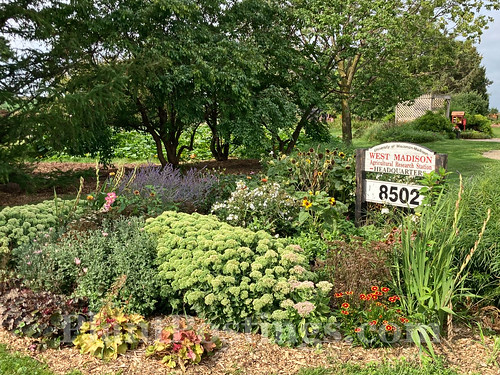
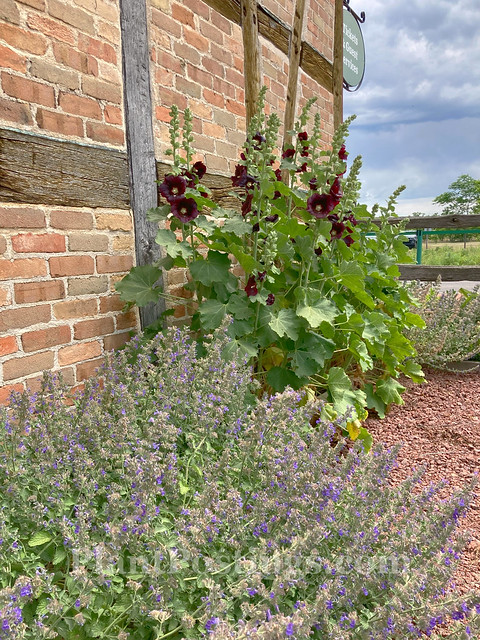
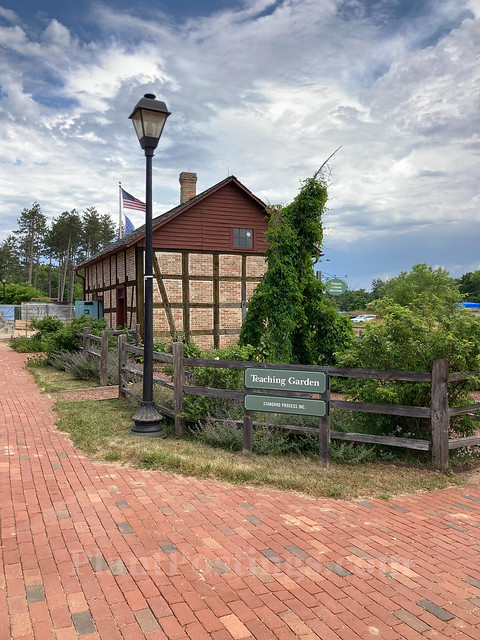
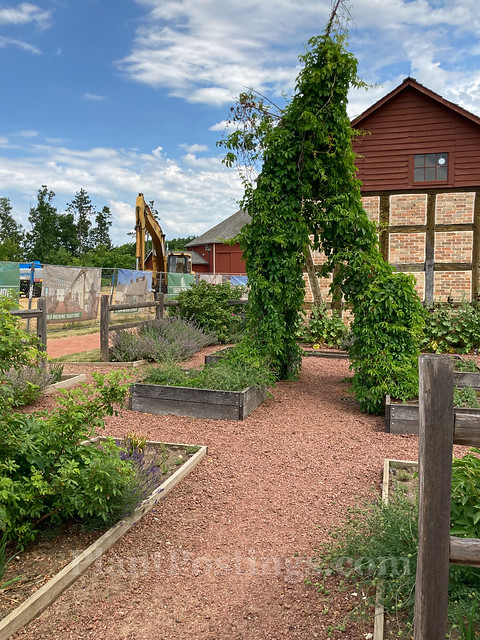
I spent most of my time during this recent visit in the display gardens. There's a pretty little plant collection right out front, with annuals and perennials, welcoming people to the gardens.
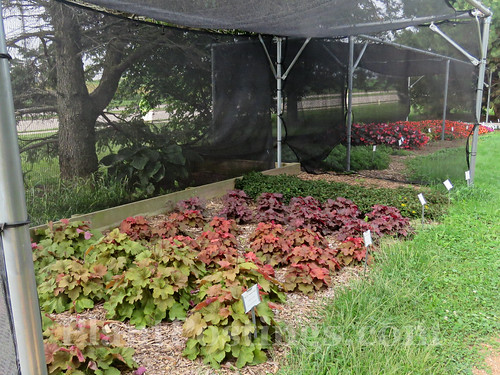
Screen-protected areas display line-ups of various plant varieties; shown here, Coral Bells (Heuchera spp).
I spent most of my time during this recent visit in the display gardens. There's a pretty little plant collection right out front, with annuals and perennials, welcoming people to the gardens.
Screen-protected areas display line-ups of various plant varieties; shown here, Coral Bells (Heuchera spp).
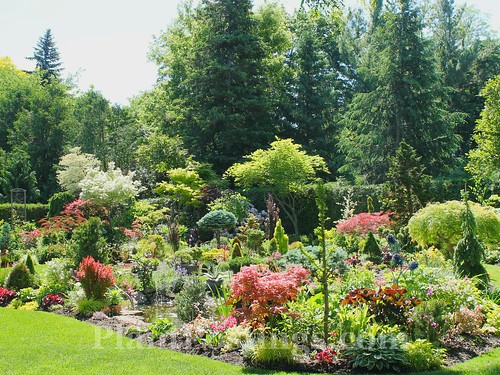
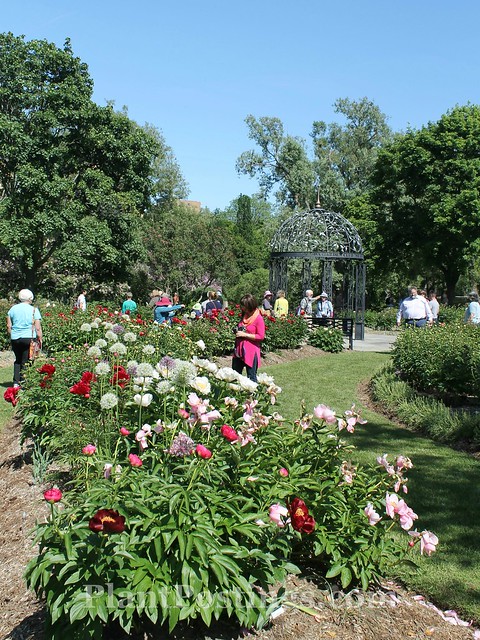
The masses of open areas are fascinating, too, and beautiful!


One could spend hours viewing all these options!
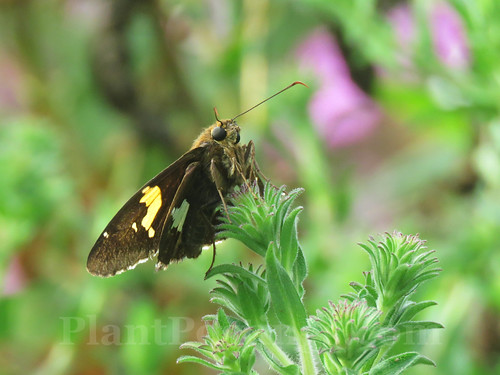
One main reason I enjoy visiting these gardens is to see and track butterflies, like this silver-spotted skipper, for Wisconsinbutterflies.org. With all the flowering plants, the butterflies are plentiful, too.

On this particular day last week, I saw more than 20 monarchs, along with several other species.

Their favorite area seemed to be the Butterfly Bush (Buddleia davidii) display. And the favorite varieties on this particular day were 'Chrysalis Blue' and 'Chrysalis Cranberry.'

Some monarchs were still laying eggs on the plentiful native milkweeds in the gardens.
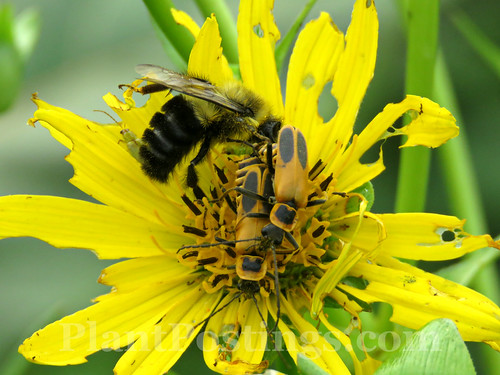
I was particularly tickled to see the popularity of the native Cup Plant (Silphium perfoliatum) blooms and other Silphium species, which were covered in various pollinators.

While I've seen Moneywort (Lysimachia alfredii) in gardens before, this variety, 'Night Light,' was quite attractive. Apparently, it prefers partial to full shade, the foliage turns burgundy in the shade, and it's rabbit-repellent (duly noted for my garden!).

The bumblebees were happy on Heliotrope 'Augusta Lavender' (Heliotropium hybrid). But who wouldn't be?
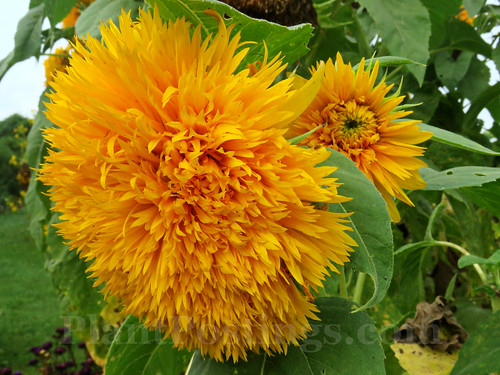
Now this plant had me curious, with its large fluffy, double blooms: 'Double Sunking' Sunflower (Helianthus annuus).
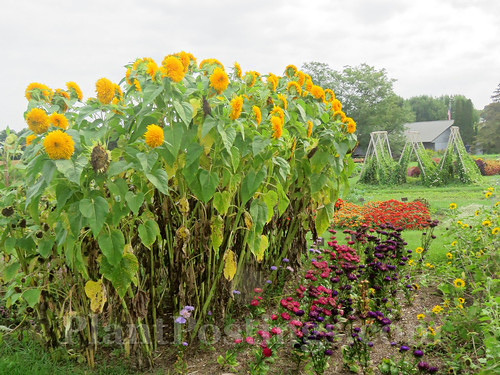
Its height, from various sources, is listed at six feet, but these plants were much taller!

I didn't make note of the species on this Canna Lily (Canna spp.), but I'm thinking it might be 'South Pacific Orange,' the 2018 AAS Flower Winner, and the one that I grew in 2019.
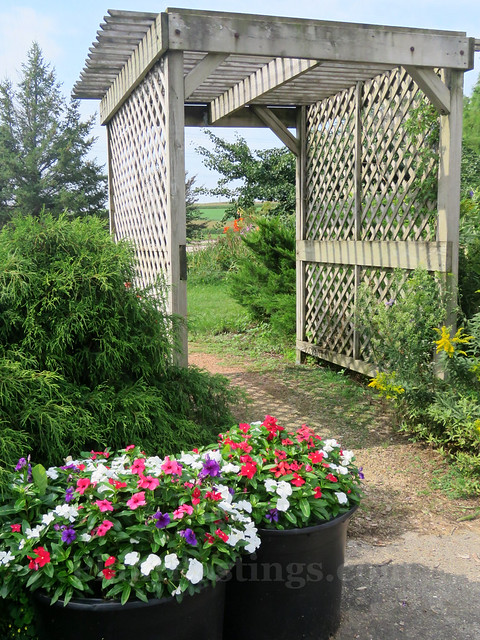
One could spend hours viewing all these options!
One main reason I enjoy visiting these gardens is to see and track butterflies, like this silver-spotted skipper, for Wisconsinbutterflies.org. With all the flowering plants, the butterflies are plentiful, too.
On this particular day last week, I saw more than 20 monarchs, along with several other species.
Their favorite area seemed to be the Butterfly Bush (Buddleia davidii) display. And the favorite varieties on this particular day were 'Chrysalis Blue' and 'Chrysalis Cranberry.'
Some monarchs were still laying eggs on the plentiful native milkweeds in the gardens.
I was particularly tickled to see the popularity of the native Cup Plant (Silphium perfoliatum) blooms and other Silphium species, which were covered in various pollinators.
While I've seen Moneywort (Lysimachia alfredii) in gardens before, this variety, 'Night Light,' was quite attractive. Apparently, it prefers partial to full shade, the foliage turns burgundy in the shade, and it's rabbit-repellent (duly noted for my garden!).
The bumblebees were happy on Heliotrope 'Augusta Lavender' (Heliotropium hybrid). But who wouldn't be?
Now this plant had me curious, with its large fluffy, double blooms: 'Double Sunking' Sunflower (Helianthus annuus).
Its height, from various sources, is listed at six feet, but these plants were much taller!
I didn't make note of the species on this Canna Lily (Canna spp.), but I'm thinking it might be 'South Pacific Orange,' the 2018 AAS Flower Winner, and the one that I grew in 2019.
I could have spent much more time in the display gardens--so much to see, and so many things to learn. I'm looking forward to a return during the next growing season!