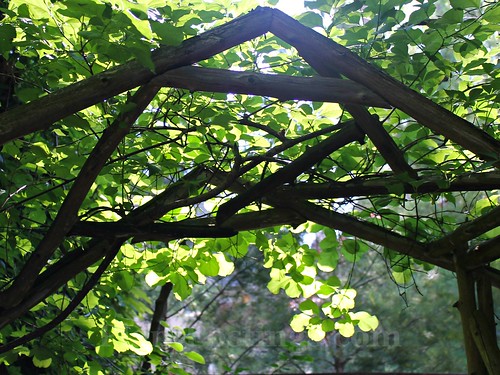
Recently, I attended the Garden Bloggers' Fling in Toronto. It was great fun! Bloggers from around the world converged on the city to share camaraderie, information, ideas, and garden tours.
I hope to post in-depth coverage of several individual gardens in the weeks ahead, but for now I thought I'd share a few takeaways--simple observations that come to mind as I sift through the multisensory experience.
TAKEAWAY #1:
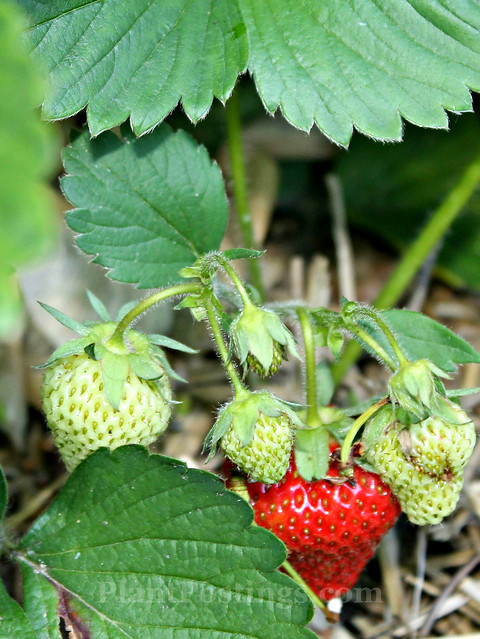
If you don't have a rabbit problem like I do, Strawberries can be planted just about anywhere as a great groundcover, with the added benefit of fresh, sweet fruit, in season. I was excited to try this, and then I realized rabbits in my garden would eat them. Maybe I'll try this in a section of my fenced-in potager.
TAKEAWAY #2:
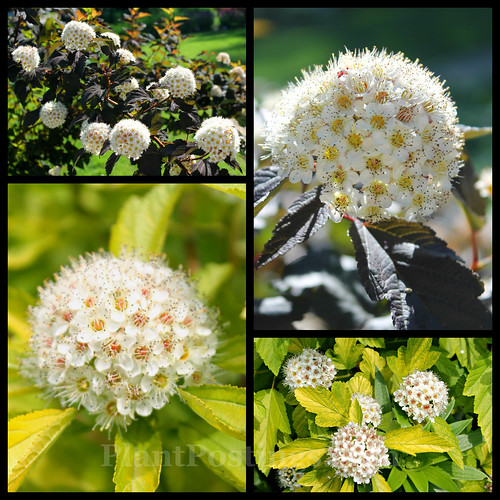
I'm hankering for Ninebark (Physocarpus spp.). I didn't even realize this desire until I got home and started reviewing the plethora of photos I snapped of this lovely shrub. If you have a Ninebark, you probably realize its appeal in all seasons, not to mention the value to pollinators and wildlife. It's a great substitute for Barberry (Berberis spp.) which is invasive in North America.
TAKEAWAY #3:
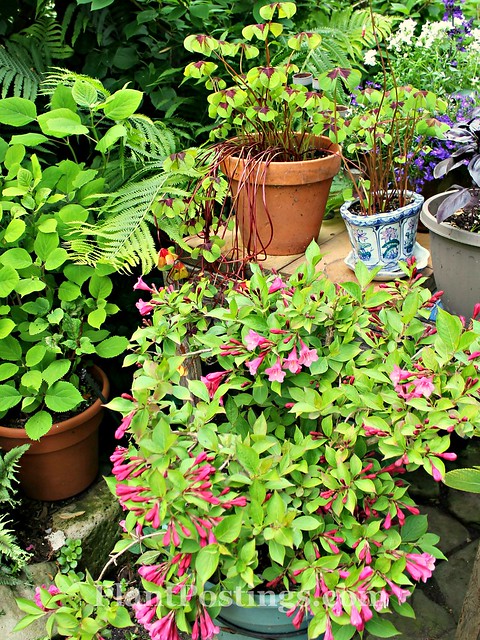
I have many unmatched pots. I have many overgrown perennials. I have potting soil. I don't have to spend big bucks on new "matching" pots and plants. I can divide what I have now and stuff odds and ends of perennials (and annuals) in said pots of various shapes and sizes. Big plants spill over the sides of the pots anyway, and the colorful combinations are whimsical and welcoming.
TAKEAWAY #4:
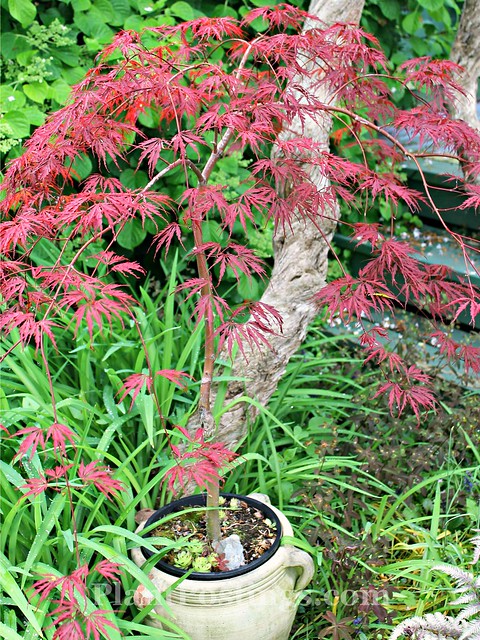
Speaking of pots, they're perfect for small Japanese Maples. (Many ideas on this subject are forming in my brain. Hehe.)
TAKEAWAY #5:
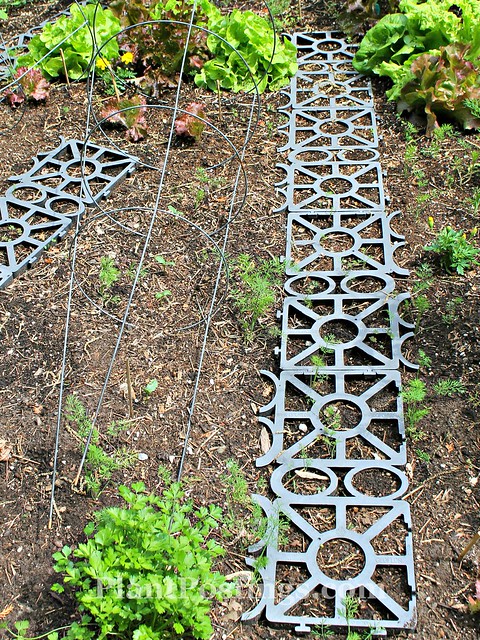
Tomato cages can be turned on their sides as structure and climbing support for plants like squashes, pumpkins, cucumbers, and many other edibles. I've never tried this, but when/if I have a bigger vegetable garden, I will.
TAKEAWAY #6:
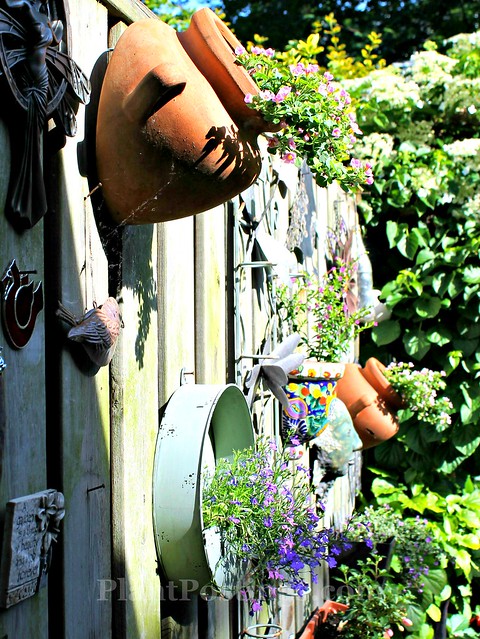
Just about any vessel with a cavity that will hold soil can be used as a container for plants. Sometimes, they can even be mounted on fences and other structures. (Time to investigate the "treasures" in my garage.)
TAKEAWAY #7:
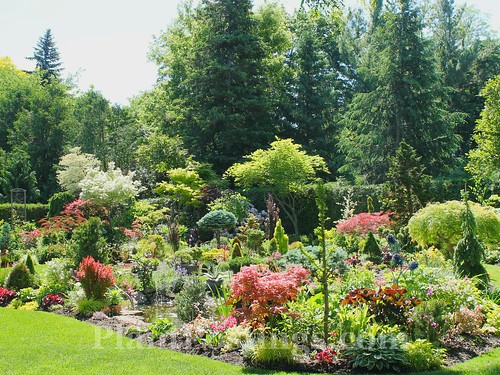 |
A small section of the incredibly wonderful overflowing garden of Marion Jarvie, which is open
to the public several times per year.
|
Sometimes the scale and richness of a large, diverse garden can be overwhelming when looking at the big picture.
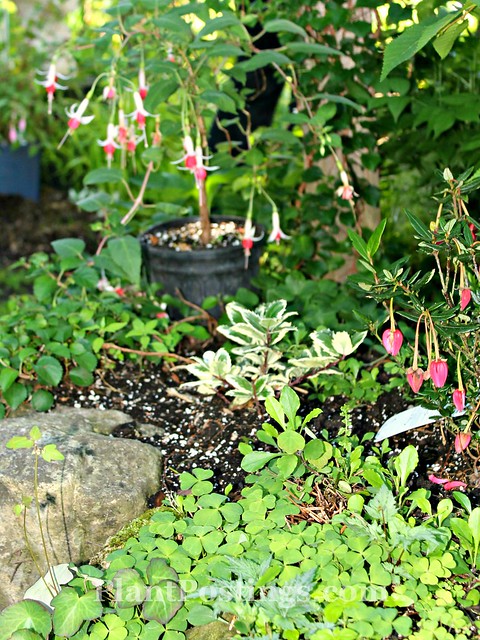
Equally mind-boggling is the small scale of tiny seedlings, purposefully placed together in close quarters, like a fairy garden within a big garden. (How many tiny plants can you find in this one small area?)
TAKEAWAY #8:
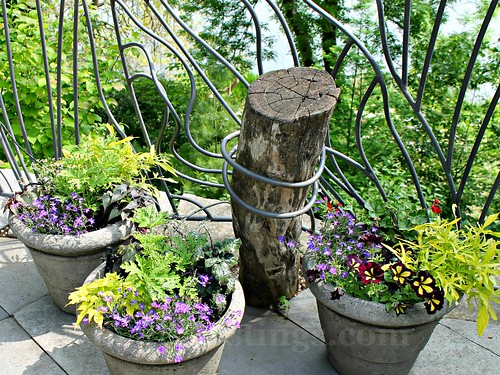
Metal sculpture and earthy elements, combined with colorful plants can create movement and whimsical eye appeal.
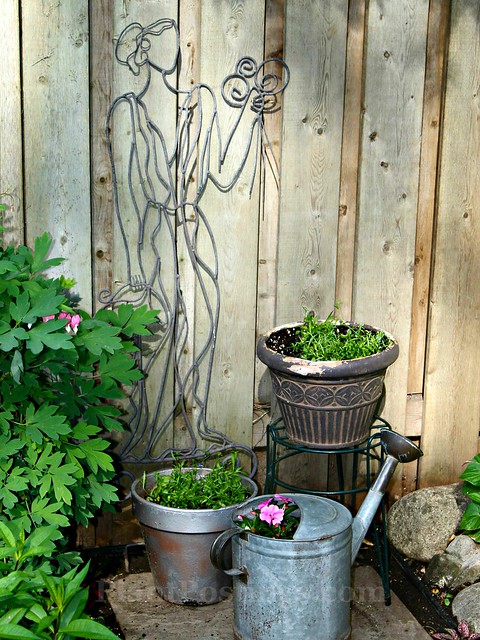
Here, metal sculpture combines with rock, metalized pots, and plants for a simple, yet elegant combination.
TAKEAWAY #9:
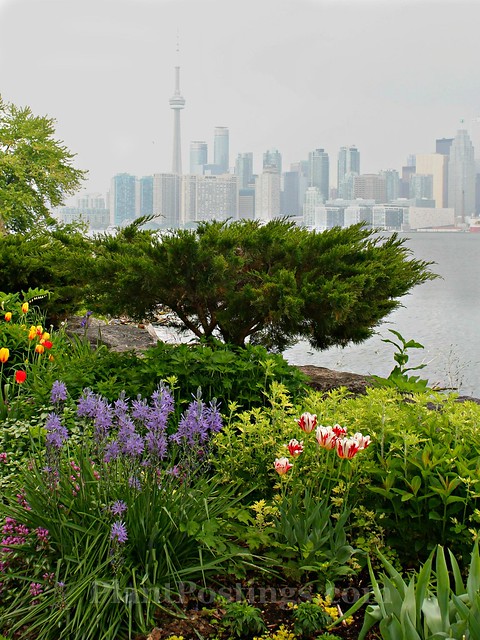 |
Toronto skyline as a backdrop, as viewed from Toronto Island gardens.
|
The Toronto skyline is stunning. It pops into view at various locations around the city, and is especially dramatic when clouds, rain, and stormy weather are imminent.
TAKEAWAY #10:
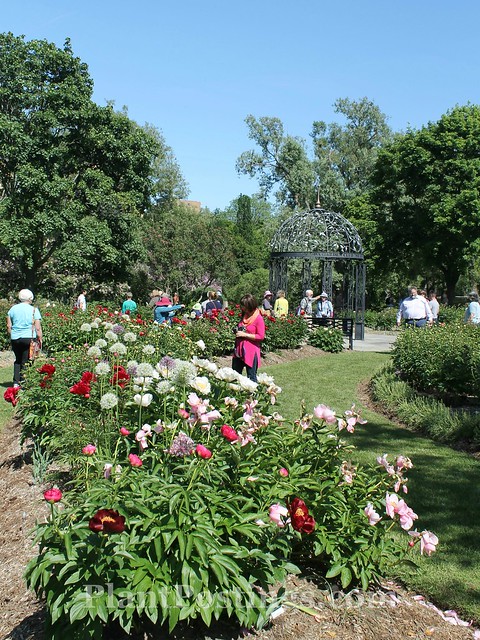
Garden bloggers, like most gardeners, are welcoming people. This was my first Garden Bloggers' Fling, and I was a little nervous about circulating with people who've known each other from previous flings. But there were other newbies, too, and the veterans shared tips, tricks, and fun to make the conference a truly rewarding and enjoyable experience.
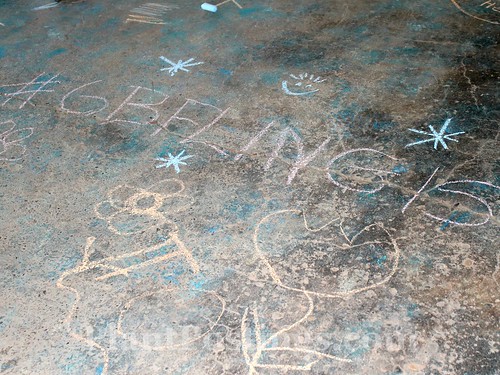 |
Several of us grabbed chalk at the Evergreen Brick Works to add our mark to the graffiti-
decorated floor.
|
I'm already looking forward to next year's Fling in Minneapolis/St. Paul, to reconnect, and to meet new garden-blogging friends!
* * * * * * * * * * * * * * * * * *
There's still time to participate in the "Garden Lessons Learned" meme. Feel free to write a post or share one you've already written about your "Lessons Learned" during the past season. Then share your links or simple observations in the comments at: Garden Lessons Learned, Quarter 2, 2015. The link will be available always under the "Lessons Learned" tab at the top of this blog.
Please also join in Donna's Seasonal Celebrations at Gardens Eye View! You can join in with a post that fits both memes, or separate posts for one or both of them. I'll include wrap-ups on PlantPostings' Facebook page as we approach the solstice.
Please also join in Donna's Seasonal Celebrations at Gardens Eye View! You can join in with a post that fits both memes, or separate posts for one or both of them. I'll include wrap-ups on PlantPostings' Facebook page as we approach the solstice.