March 10, 2024

Nevada Highlights: Plant Treasures at Springs Preserve Botanical Garden

Display

We're recently back from a trip to Nevada, where we enjoyed both exploring natural areas and sightseeing in urban Las Vegas. One highlight was a visit to the Botanical Garden at Springs Preserve. As always, I could have spent many more hours exploring the plant collections, but our brief visit was educational and fun.
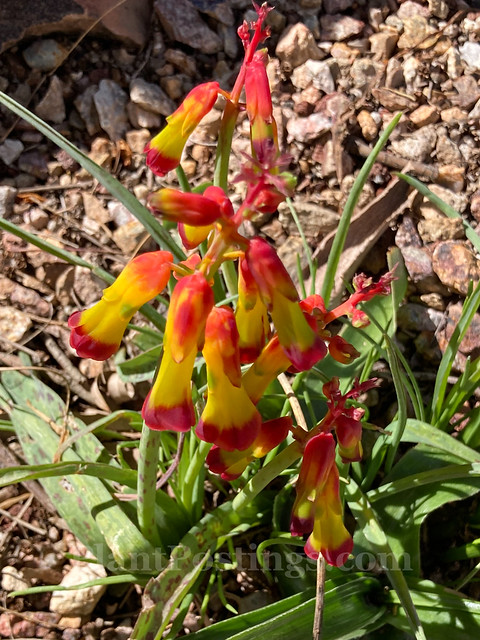
Opal Flower 'Quadricolor'

One plant that really caught my eye, was the four-colored Opal Flower (Lachenalia aloides var. quadricolor). I think I've seen this plant before; perhaps during travels to other warm climates, or on another blogger's post. In any case, it's certainly colorful and fascinating. It's native to southern Africa.

Signage

The botanical garden has an amazing collection of cacti and desert succulents, both around the various trails and in its Cactus Alley display. A few examples:

California Barrel Cactus

California Barrel Cactus (Ferocactus cylindraceus)

Thistle Cholla

Thistle Cholla (Cylindropuntia tunicata)

Argentine Giant

Argentine Giant (Echinopsis candicans)

Silver Torch

Silver Torch (Cleistocactus strausii)

Cottontop Cactus

Cottontop Cactus (Echinocactus polycephalus var. polycephalus)
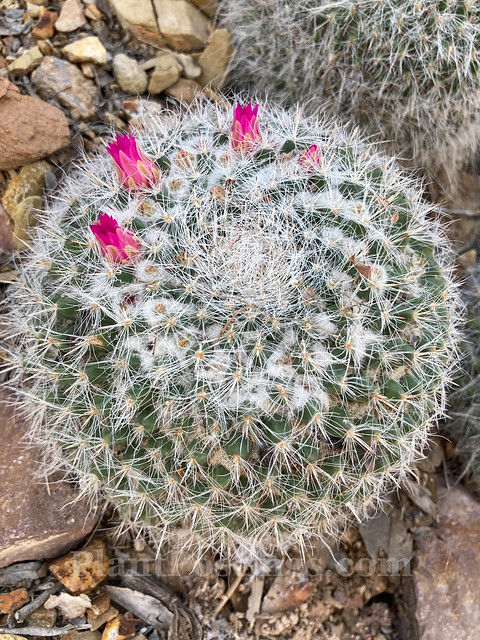
Pincushion Cactus

Pincushion Cactus (Mammillaria pseudoperbella)

Parry's Agave

Parry's Agave (Agave parryi var. parryi)
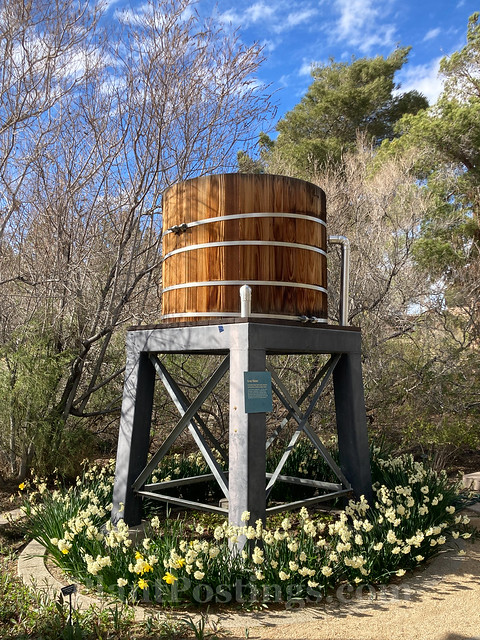
Rainwater Collection

Springs Preserve's water system is designed to be self-sustaining--collecting gray water for treatment and recycling for plant irrigation.

Resting Area

The Palm Garden offers shade and a welcoming resting spot.

Pansies and Kale

During our visit, the botanical garden also had sweet displays of common garden plants, including potted Pansies (Viola spp.) and Kale (Brassica oleracea).

Daffodils

Daffodils (Narcissus pseudonarcissus)

Snapdragons

Snapdragons (Antirrhinum majus)

Other interesting plants of note:
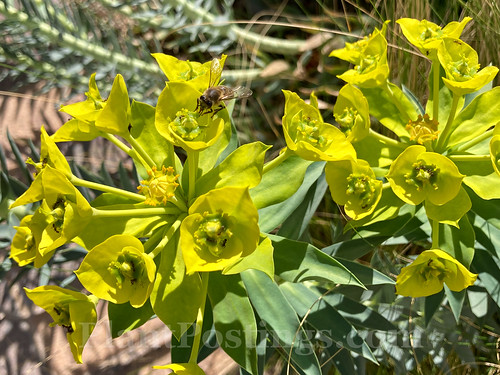
Upright Myrtle Spurge

Upright Myrtle Spurge (Euphorbia rigida), popular with the bees, ants, and other pollinators.

Peach Blossom

Peach blossoms (Prunus persica), with their lovely, delicate beauty.
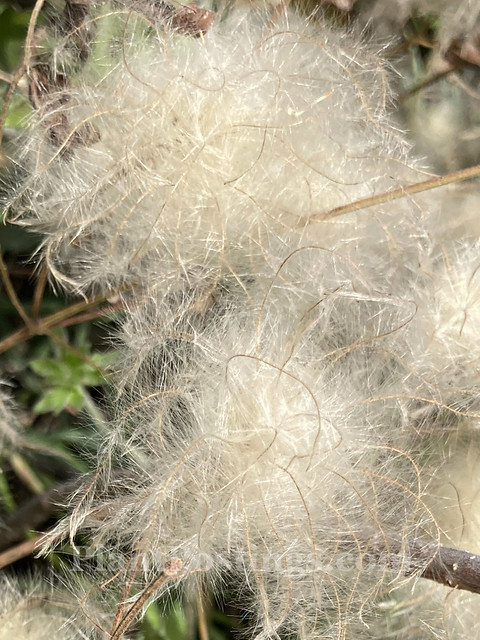
Texas Virgin's Bower

Texas Virgin's Bower (Clematis drummondii), native to the Southwestern U.S.

Spring Bouquet Viburnum

'Spring Bouquet' Viburnum (V. tinus), delicate and fresh, and also popular with the pollinators.

Desert Bluebells

And Desert Bluebells (Phacelia campanularia): Who can resist that bright, true blue?

It was a lovely afternoon visit. If I'm ever in the Las Vegas area again, I'll make sure to stop by this fabulous botanical garden for more exploration.

February 27, 2024

Celebrating the Butterflies of 2023

Friends in the south are beginning to share butterfly photos on social media, so I'm dreaming about what's to come and remembering sightings from last year.

Here's a review of 2023 butterfly sightings--in my garden, and during hikes and butterfly surveys. I generally report counts and species I see to wisconsinbutterflies.org. There were many more of some of these species...and others not included here. I didn't include them all because the post would get too expansive and some of the photos weren't very good.

It was a pretty good year, although with fewer monarchs than in the past; probably because of the drought.

tiger swallowtail
Eastern Tiger Swallowtail

monarch
Monarch

common buckeye
Common Buckeye

summer spring azure
'Summer' Spring Azure

tiger swallowtail 2
Eastern Tiger Swallowtail
black form female

great spangled
Great Spangled Fritillary

clouded sulphur
Clouded Sulphur

silver-spotted skipper
Silver-Spotted Skipper

red admiral
Red Admiral

cabbage white
Cabbage White

pearl crescent
Pearl Crescent

black swallowtail
Black Swallowtail

monarch 2
Monarch

aphrodite fritillary
Aphrodite Fritillary

viceroy
Viceroy

Here's to happy, healthy butterfly viewing in the months ahead!

February 15, 2024

I Miss These Plants

Sanguinaria canadensis

I've been thinking lately about plants of the past: in particular, blooming plants no longer in my garden. Some were species I planted, others were presumably planted by the previous owners decades ago, and still others were natives growing in the woodland.

I glanced through old photos, and while there weren't as many "disappearances" as I expected, some are particularly missed like the Bloodroot (Sanguinaria canadensis) in the photo above. For most of the years we've lived here, I found patches of Bloodroot each spring. A beautiful native ephemeral, it only blooms for one to two days. The foliage remains throughout the spring, and the plant reappears the next year. Why is it missing?

While I don't truly know why any of these plants disappeared from the property, I'll try to guess. In the case of the Bloodroot, perhaps it's the changing conditions of several years of floods followed by several years of drought...or other factors relating to climate change. Or, perhaps the fox (and family?) that now lives in the back woodland dug around in the limited spots where the plant was located.

Tricyrtis hirta

Another plant that's gone is the Toad Lily (Tricyrtis hirta). Unfortunately, this plant is long gone from my garden. It's a fun little bloomer, but it only lasted a couple of years. Either it didn't like the growing conditions (although they matched its described preferences), or the rabbits ate it, which seems more likely since rabbit foraging is a noted issue.

Oenothera pilosella

Meadow Evening Primrose (Oenothera pilosella) bloomed here off and on for two decades. I'm assuming the previous owners planted it, although it is native so it might have occurred naturally. I haven't found it in its "spot" for several years now. Such beautiful bright yellow flowers: I miss them. I really have no idea why this plant is gone.

Lupinus polyphyllus

I planted Russell Lupines (Lupinus polyphyllus) in the side garden many years ago. They're stately, tall bloomers, regularly visited by pollinators, and they're great cut flowers. I don't remember when they disappeared, but they are listed as short-lived perennials, so perhaps I should plant more.

Euphorbia polychroma

Cushion Spurge (Euphorbia polychroma), planted by the previous owners, was a reliable bloomer in my garden from the first growing season here (2000) until a couple of years ago. It's not native, but it's not invasive, and it certainly was a reliable stalwart for most of my time here. As with the Oenothera, I have no idea why this one disappeared. Rabbits leave it alone, and the fox doesn't hang out much in its open area of the garden. It's also drought-tolerant.

Delphinium elatum

Finally, I truly miss this beautiful bloomer that graced the side fenced garden. I don't remember which Delphinium (D. elatum) hybrid it was, but what a stunner! Delphiniums are noted as short-lived perennials, too. I don't know if I'll plant them again in this garden, because the growing conditions have changed and other plants are in this spot. But, maybe...?