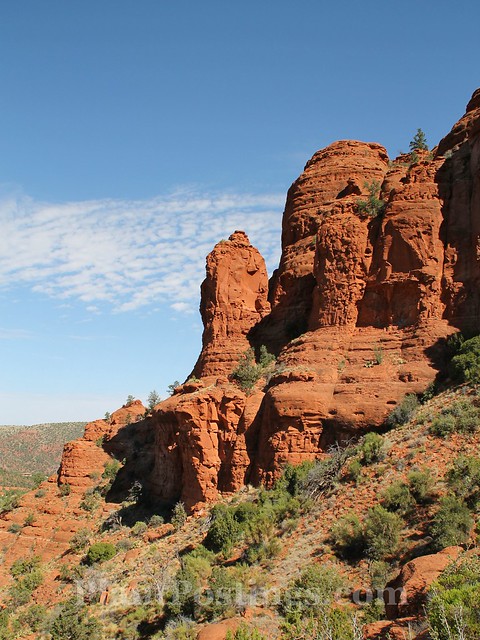
If you only have one day or a few hours to explore Sedona, Arizona, it won't be enough. But do it anyway: The memories will warm your soul on a cold winter's day.
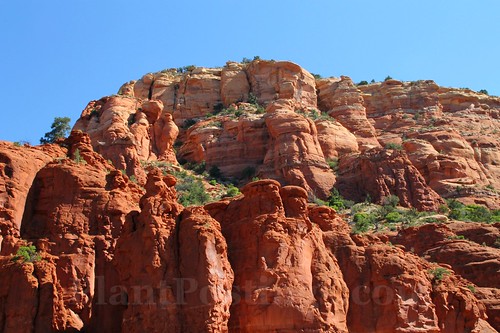 Red Rock Country
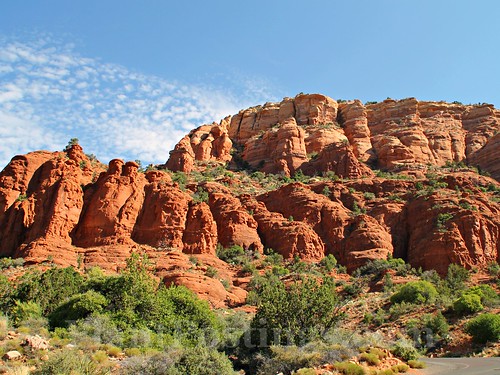
 is visually stunning and other-worldy. Apparently the rocks are red because of the area's hematite (iron oxide) that stained the sandstone. The
rock formations were formed over millions of years, through water flows, erosion, wind, and other forces, and they're always changing.
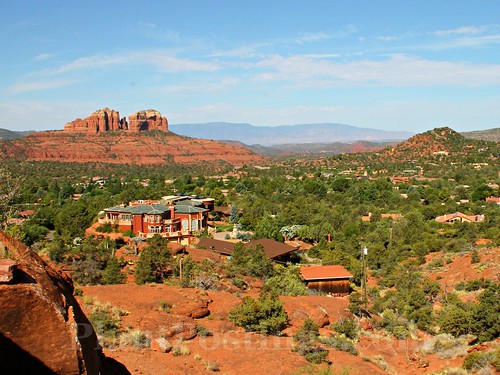
There's a story behind this
sprawling estate surrounded by picturesque rock formations. Some think it's fabulous, while others consider it an eyesore.
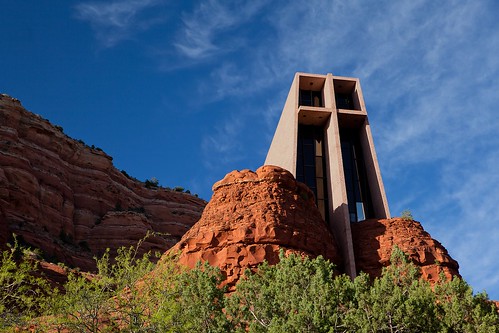 |
By Matthew P. Del Buono (Own work) [CC BY-SA 3.0
(https://creativecommons.org/licenses/by-sa/3.0)], via Wikimedia
Commons.
Wikimedia Commons contributors, "File:Chapel of the
Holy Cross, Sedona, AZ.jpg," Wikimedia Commons, the free media repository,
https://commons.wikimedia.org/w/index.phptitle=File:Chapel_of_the_Holy_Cross,_Sedona,_AZ.jpg&oldid=123792338 (accessed
January 14, 2018).
|
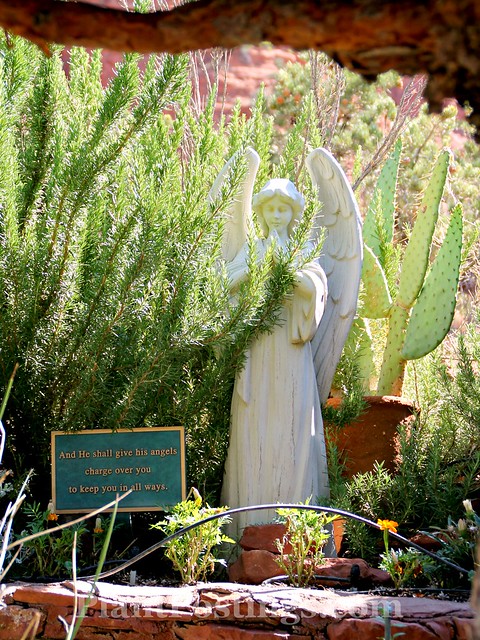
This little angel statue is part of a garden display, along the trail leading up to the chapel. It's very peaceful.
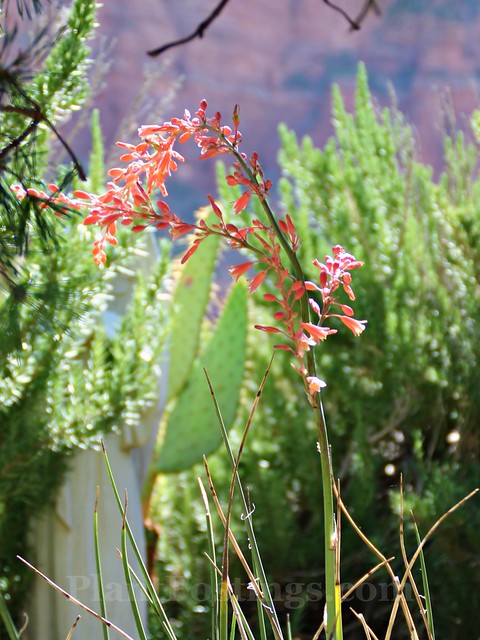
One of the featured plants: a Red Yucca (Hesperaloe parviflora).
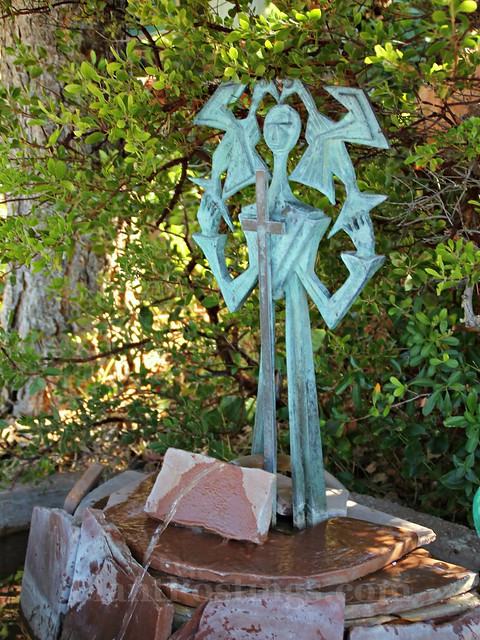
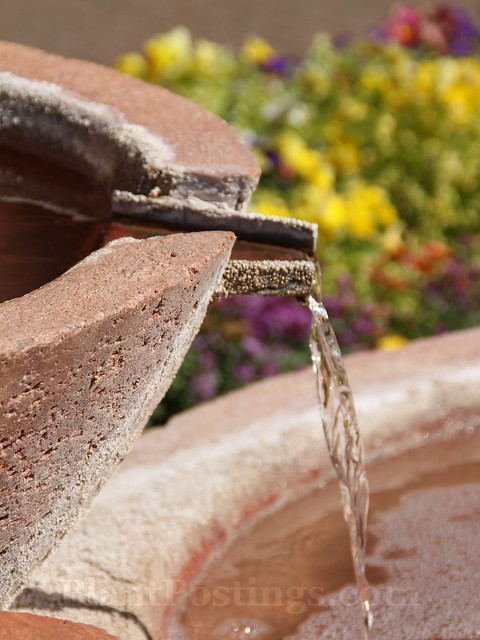
I love this St. Francis fountain--a calming presence, surrounded by plants and moving water.
Other fountains and simple structures decorate the area adjacent to the chapel.
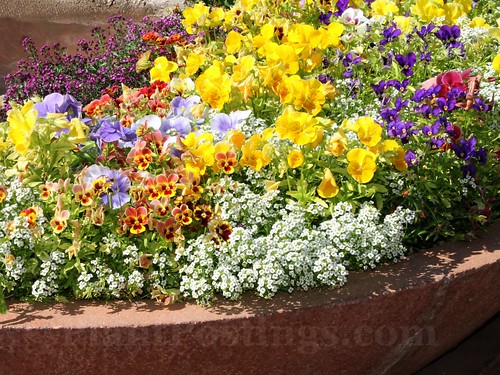
Large planters are filled with colorful annuals.
I also noticed other plants in the more naturalized areas of the property:
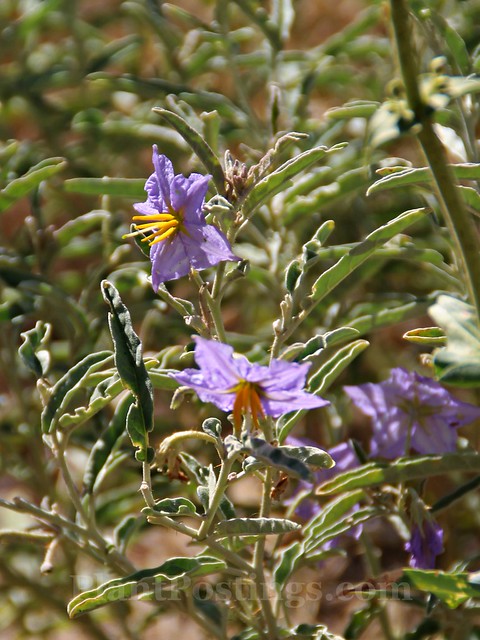
Silverleaf Nightshade (Solanum elaeagnifolium) is a North American native--from North Carolina and Florida, through the central Midwest and west to the Pacific states.
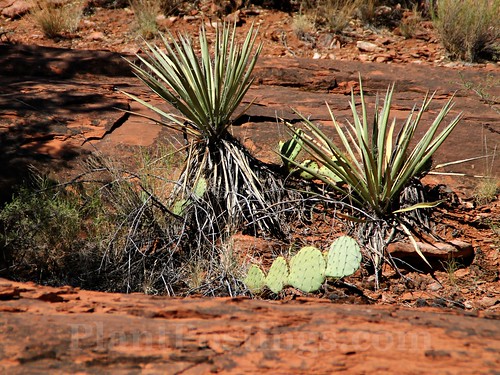
These Opuntias and Yuccas form an attractive border near the parking lot.
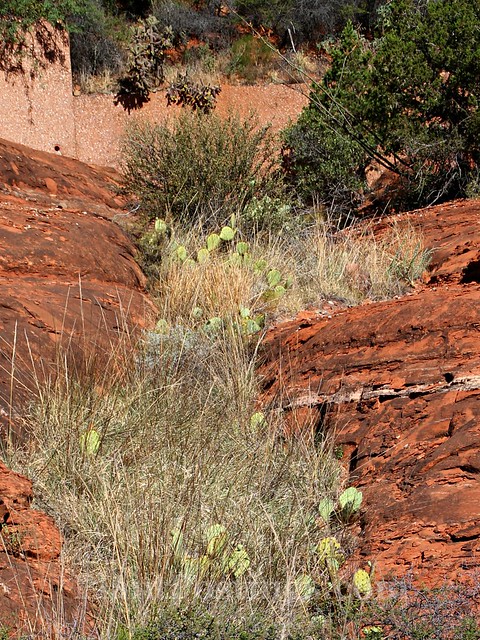
Large Opuntia cactuses are common in the Sedona area.
They grow in cracks and crevices with grasses along the ridges and indentations of the rock formations.
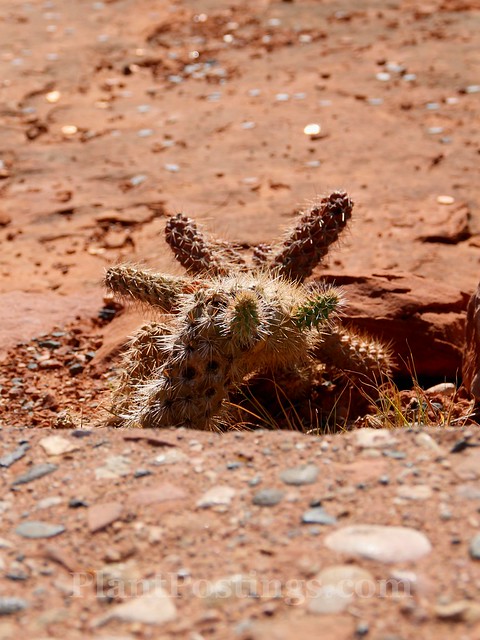
It's incredible how opportunistic little cactuses can be--putting down roots in very shallow indentations in the rock.
A Gambel's quail poses for candids.
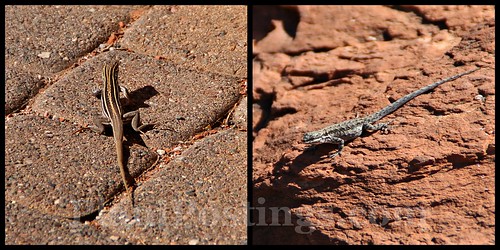
Lizards scurry to and fro.
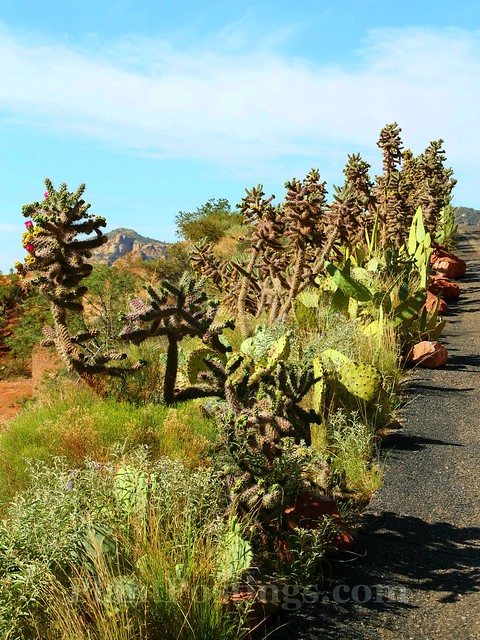
The path up to the chapel features an impressive stand of cactuses.
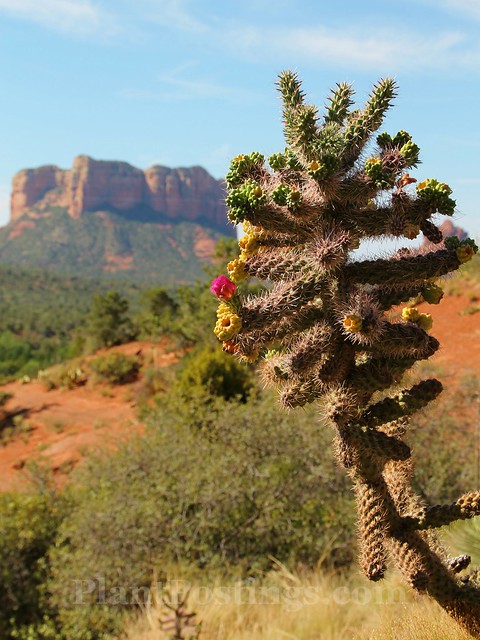
Cholla cactuses (Cylindropuntia spp.) in flower are dramatic.
Many of the local famous Sedona rock formations are visible from the Chapel of the Holy Cross, but the angles are different than the traditional views more commonly photographed.
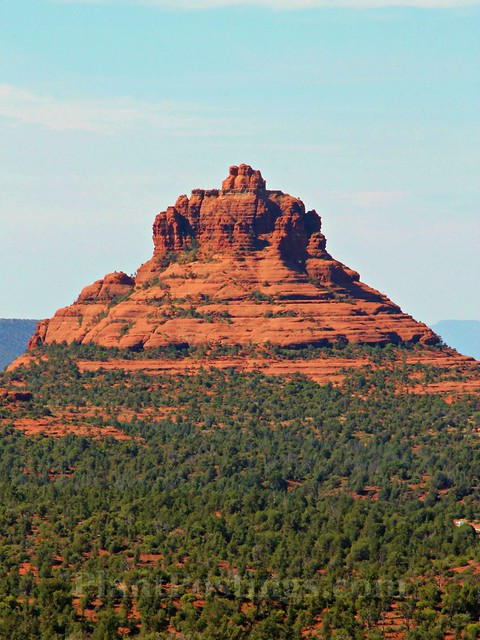 |
| Bell Rock |
You can see the strata of rock along many of the ridges.
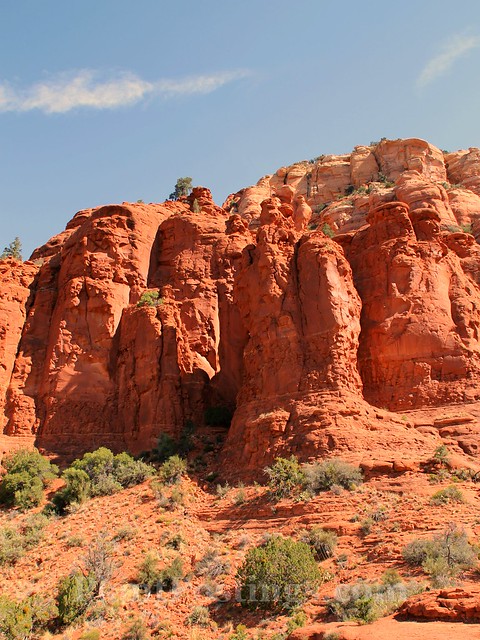
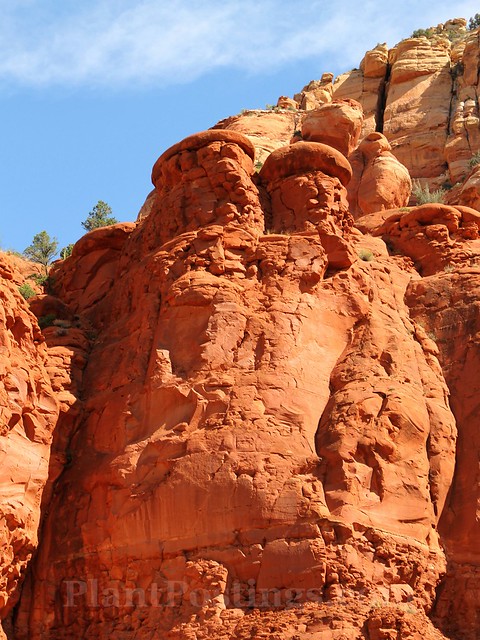
These look like chimneys to me.
The color of the rock is striking and changeable, depending on the sun's angle at various points in the day.
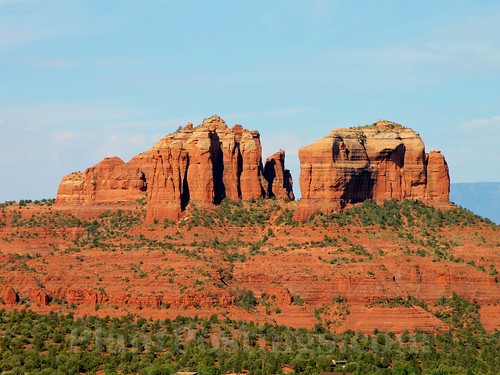 |
| Cathedral Rock |
Ah, Sedona, I remember you well. Until we meet again...