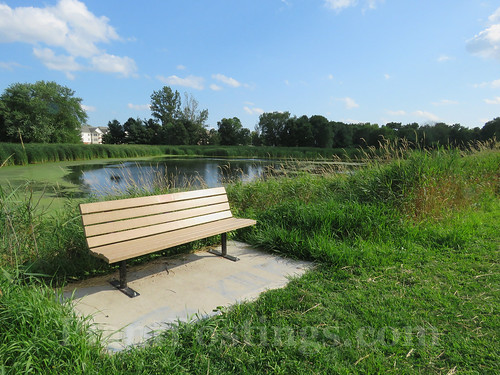
I happened upon a gem of a place in late summer 2019: a 56-acre natural area surrounded by residential property and commercial development. While I've lived near it my entire 35+ years in the Madison area, I'd never explored it. Discovering it felt like found treasure.
I posted about the Edna Taylor Conservation Park in June last year, but I'd never posted about my original (August 2019) impressions until now. As we're climbing out of a deep subzero freeze from the wobbly polar vortex, it seems fitting to project six months out from February to the warm, fertile conditions of August.
The verdant park includes wetlands, woodlands, oak savanna sections, and more. Interestingly, despite the fact that it's a sizeable property, one would hardly know it exists when traveling the perimeter...until venturing in beyond the wooded entrance and exploring the riches beyond.

Silver-spotted skippers on Bull Thistles (Cirsium vulgare).

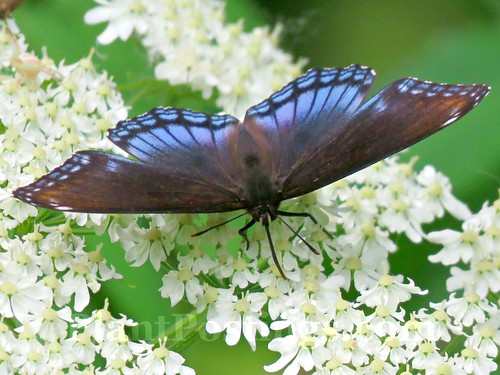
And viceroys on fields of grasses.

There are so many reasons for any person to appreciate this special place. For me, beyond its richness with natural resources and natural beauty, its habitats and conditions are similar to those in my backyard garden: oak, maple, and shagbark hickory trees, woodland edges, rolling hills...the list goes on. So, it's a great place to take note of plants likely to thrive in my own garden.
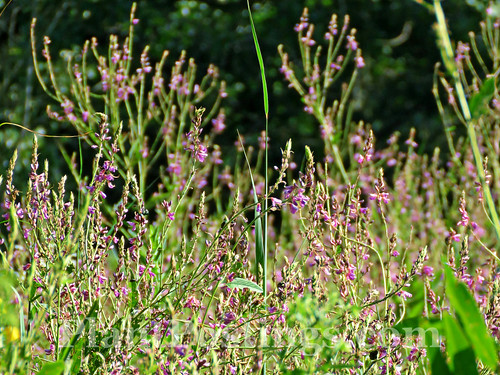
Soon after traversing the land bridge between wetlands shown in the first photo on this post, one encounters an upland path that winds around beautiful woodland-edge meadows. In early August, the masses of Showy Tick-Treefoil (Desmodium canadense) were thick, bright, and dramatic.

Several species of native sunflowers, including Thin-Leaved (Helianthus decapetalus), were beginning their late-summer show.

The understated and edible Self-Heal (Prunella vulgaris) popped in here and there along the hiking paths.

Several Rudbeckia species including Orange Coneflower (R. fulgida) graced the woodland edges and open areas with their sunny faces.
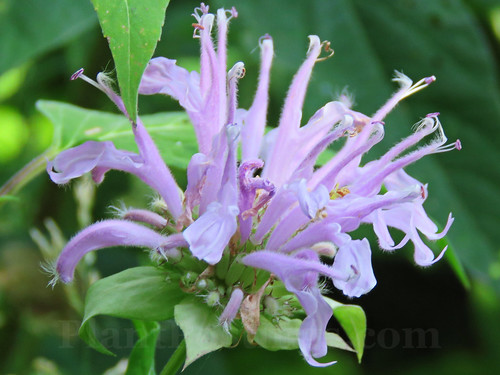
One plant I was surprised to see in shade was Wild Bergamot (Monarda fistulosa). I was aware it would grow in partial shade, but I was surprised to see so much of it in heavy shade. Because of this, I added this plant to my garden; alas, the rabbits seem to like it, too.

I've always enjoyed Prairie Coneflower (Ratibida pinnata), so I was happy to see it. I think my garden might be a little too shady for this one, but maybe at some point I'll add it.

Among my favorite plants of the late summer in this part of the world are the Silphiums. This photo of a Compass Plant (Silphium laciniatum) recalls many happy, warm hikes.
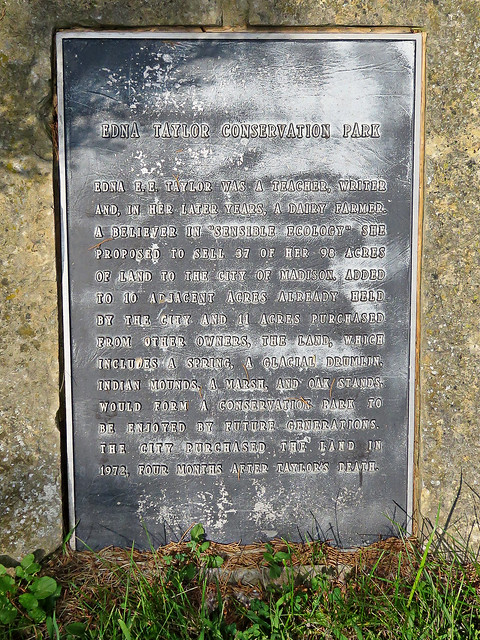
This plaque near the entrance to the main hiking trail at the park provides a brief synopsis and tribute to Edna Taylor herself.

Edna Taylor, a writer, teacher, and dairy farmer, owned a large portion of the property and sold it to the city of Madison to help create the conservation park. It includes six linear Indian effigy mounds and one panther-shaped mound, all listed on the National Register of Historic Places. PortalWisconsin.org does a great job of describing this special place, which is free to all visitors.
Among other things, it's a great place to do butterfly surveys.
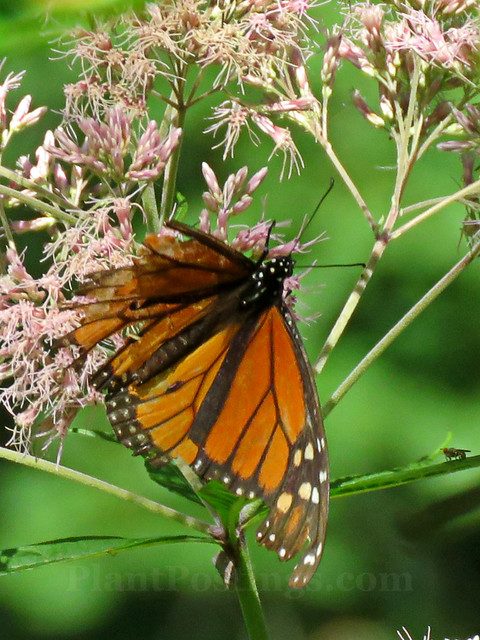

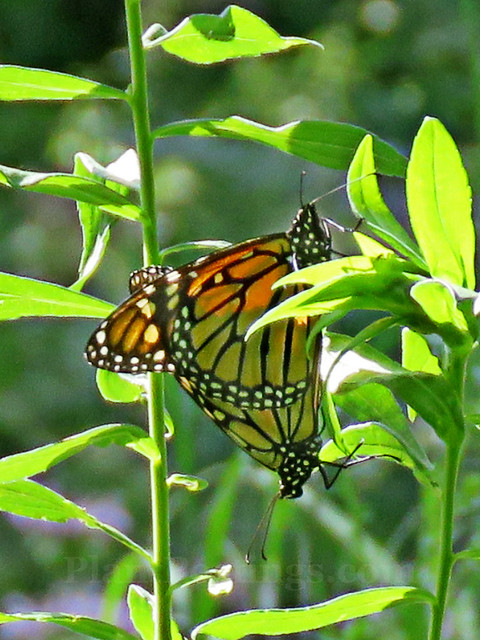
Old, tattered monarchs and healthy, thriving, and mating monarchs on Sweet Joe Pye Weed (Eutrochium purpureum) and other plants.
Old, tattered monarchs and healthy, thriving, and mating monarchs on Sweet Joe Pye Weed (Eutrochium purpureum) and other plants.
Silver-spotted skippers on Bull Thistles (Cirsium vulgare).
And viceroys on fields of grasses.
There are so many reasons for any person to appreciate this special place. For me, beyond its richness with natural resources and natural beauty, its habitats and conditions are similar to those in my backyard garden: oak, maple, and shagbark hickory trees, woodland edges, rolling hills...the list goes on. So, it's a great place to take note of plants likely to thrive in my own garden.
Soon after traversing the land bridge between wetlands shown in the first photo on this post, one encounters an upland path that winds around beautiful woodland-edge meadows. In early August, the masses of Showy Tick-Treefoil (Desmodium canadense) were thick, bright, and dramatic.
Several species of native sunflowers, including Thin-Leaved (Helianthus decapetalus), were beginning their late-summer show.
The understated and edible Self-Heal (Prunella vulgaris) popped in here and there along the hiking paths.
Several Rudbeckia species including Orange Coneflower (R. fulgida) graced the woodland edges and open areas with their sunny faces.
One plant I was surprised to see in shade was Wild Bergamot (Monarda fistulosa). I was aware it would grow in partial shade, but I was surprised to see so much of it in heavy shade. Because of this, I added this plant to my garden; alas, the rabbits seem to like it, too.
I've always enjoyed Prairie Coneflower (Ratibida pinnata), so I was happy to see it. I think my garden might be a little too shady for this one, but maybe at some point I'll add it.
Among my favorite plants of the late summer in this part of the world are the Silphiums. This photo of a Compass Plant (Silphium laciniatum) recalls many happy, warm hikes.
This plaque near the entrance to the main hiking trail at the park provides a brief synopsis and tribute to Edna Taylor herself.
What a wonderful resource for residents and visitors to the area. But I'm certain many aren't even aware of this amazing park's existence. I look forward to many more hikes and discoveries in this special place.