Showing posts with label fruit. Show all posts

December 05, 2025

Winter Fruit in the Snow

winter
A pastoral scene near one of our favorite dog parks, including an ice fisherman
in the distance on a frozen tributary to the Yahara River.

Suddenly...it's winter!

We've already broken two "winter" weather records near Madison, Wis. On November 29, we received nearly 12 inches of snow in 24 hours--the snowiest November day and the heaviest single November snowstorm on record!

And now it's very cold: On December 4, the high temperature was 16F/-9C and the low was around 0F/-18C. While these temperatures often occur in January or February here, they're far below normal for December.

Right after the big snow, I thought I'd go out and photograph some winter fruits--they're so interesting and colorful framed in white. But the bitter cold and heavy snow limited my choices in our garden. So I'm including a few fruits from plants in the sunroom, and another observed during a recent dog walk:

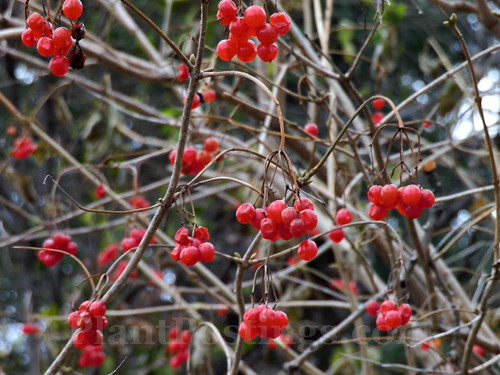
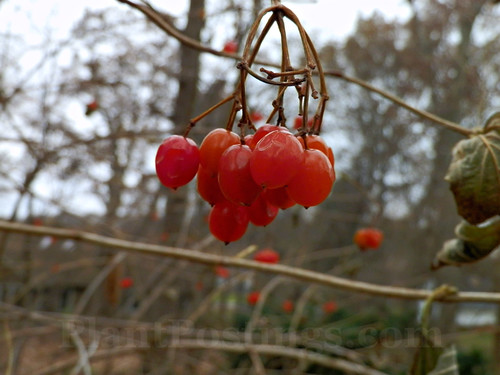
Viburnum trilobum drupes

Frosted drupes on Cranberrybush Viburnum (V. trilobum);

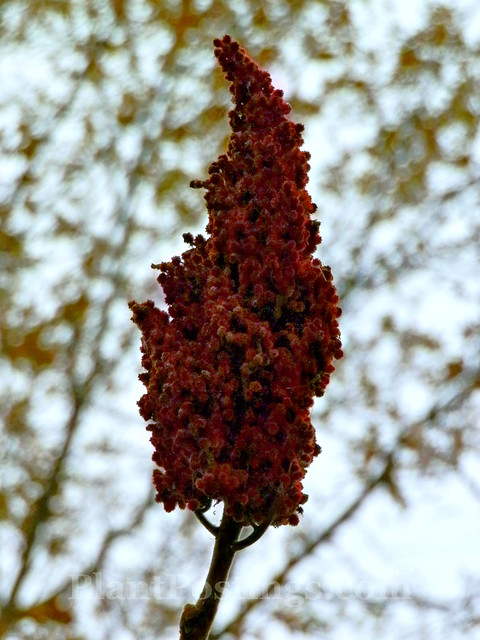
Rhus typhina drupes

A snowy cap for Staghorn Sumac (Rhus typhina);

Malus spp. pome

Wind-scattered Crabapples (Malus spp.) for bird snacks;

Spathiphyllum wallisii berries

Poisonous, drying Peace Lily (Spathiphyllum wallisii) berries, ready to be clipped;

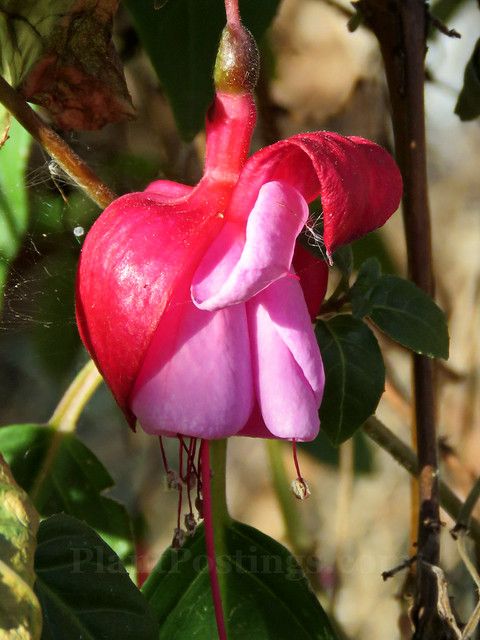
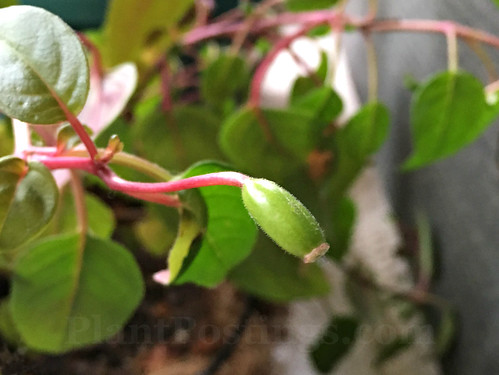
Fuchsia 'Marinka' berries

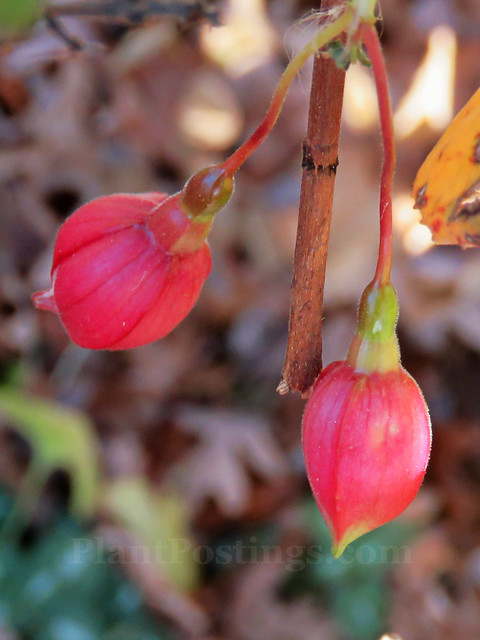
Ripening Fuchsia 'Marinka' berries, almost ready to harvest;

Celastrus scandens arils

And bright, cheerful American Bittersweet (Celastrus scandens) along the trail.

dog love

I couldn't resist sharing this special message created by a fellow dog lover at the park. ❤️

I'm linking in with Jim's "Six on Saturday" meme over at Garden Ruminations.

February 15, 2025

Six on Saturday in the Sunroom

snowy garden

My garden is currently "reset" on winter, after one storm dropped more snow in one day than during the entire month of January. I admit it's prettier, and the plants now have a white blanket of protection. I'm joining in Jim's "Six on Saturday" meme at Garden Ruminations, but I hope it's OK if I focus on my indoor garden in the sunroom...

Canna

I'm thrilled to see that some shoots of the 'Canova Rose' Canna Lily (Canna x generalis) are breaking through the soil in their pot. (If you see lava rocks in my pots, it's to protect the plants from digging squirrels and chipmunks when the pots are moved outside during the growing season. The rodents don't like to dig through the tough lava rocks.)

Fuchsia

Fuchsia  'Marinka' (F. hybrida) is putting on more buds.

Fuchsia fruit

And there are plenty of edible Fuchsia fruits, too!

Passiflora

The potted Passionflower (Passifloria incarnata) vine that I bring indoors for the winter is budding. I have another Passionflower outdoors, and I hope it survived the bitter cold of January with no snow.

Kalanchoe

Flaming Katy (Kalanchoe blossfeldiana) is full of buds, too. When open, the blooms are a beautiful bright yellow.

Oxalis

Purple Shamrock Oxalis (O. triangularis) is happy all winter in the sunroom. Its companion in the pot is variegated English Ivy (Hedera helix).

Gerbera

And the Gerbera Daisy (G. jamesonii) is the brightest star in the group. I have to smile when I see these happy faces.

So much to celebrate (in the plant world) indoors and out. Happy Six on Saturday and Garden Bloggers' Bloom Day!

October 12, 2024

Berries on My Mind

Taxus baccata
 Common Yew (Taxus baccata)

Lately I've been noticing and thinking about berries, so I thought I'd reflect on them here on the blog. Some are poisonous and some are edible, but this post is simply about how beautiful they are and how they provide food for birds and other wildlife. For information on human edibility, check out this link. All berries shown here are in my garden.

Polygonatum biflorum
Smooth Solomon's Seal (Polygonatum biflorum)

Fuchsia 'Marinka'
Fuchsias (F. 'Marinka') (unripe berries above the flowers)

Actaea pachypoda
White Baneberry (Actaea pachypoda)

Viburnum trilobum
Cranberrybush Viburnum (V. trilobum)

Callicarpa 'Pearl Glam'
Beautyberry (Callicarpa 'Pearl Glam')

Arisaema triphyllum
Jack-in-the-Pulpit (Arisaema triphyllum)

Rhus typhina
Staghorn Sumac (Rhus typhina)

There are more, but this was a quick reflection. How are the berries doing in your garden? Happy autumn!

November 04, 2022

The Fuchsias of November 2022

bloom 4

This is an unusual November for my part of the world. We've had light frost, but it's been followed by days of very mild weather, similar to what we'd usually experience in September. While most perennials have gone dormant and many annuals have passed, some plants that can take a light frost are holding out. This includes my hanging baskets of Fuchsias.

I have many around the property, and most have not been sheltered from the cold nights or covered at all. They're actually looking better than they did during the hot summer days.

I don't know the names of most of these Fuchsias, because they came in mixed baskets without tags. The last two photos, however, are 'Markinka,' which I bring in to the sunroom for the winter every year, and the buds of 'Dark Eyes.'

bloom 1

buds 1

bloom 2

bloom 5

fruit

bloom 3

bloom 6

buds 2

We've been spoiled with this mild autumn. I'm not ready for the cold days of winter ahead.

November 28, 2017

A Few Fleshy Fruits of Autumn

Viburnum 2

Garden blooms are gone and foliage is fading in my neighborhood, but a few fruits remain here and there. Some will last through the winter, while others offer happy feasts for birds and critters as winter's cold, icy claw will soon grip the landscape.

As I glance around the garden, the berries, drupes, pomes and other fruits catch my eye amidst the brown and gray of "once lush" trees, shrubs, and forbs. I'll refer you to a list of types of fruits for proper identification.

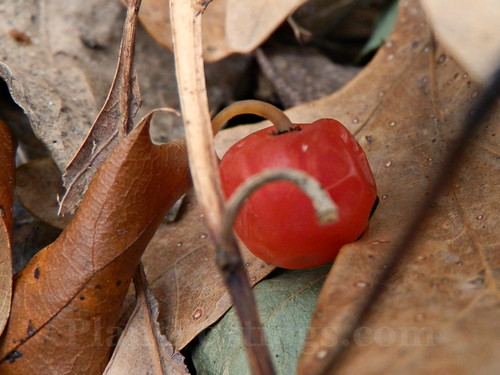
Can you identify what types of fruits (berries, drupes, pomes, hesperidia, other) are shown here?:

Viburnum

Cranberrybush Viburnum (V. trilobum)

Rhus

Staghorn Sumac (Rhus typhina)

Pachysandra

Pachysandra (P. terminalis)

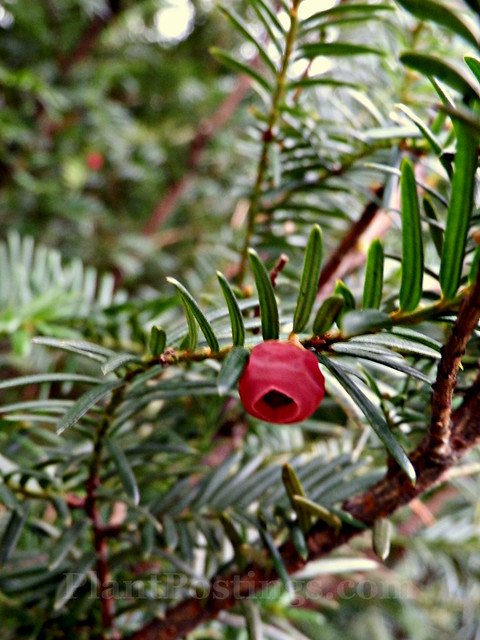
Taxus

Yew (Taxis canadensis)

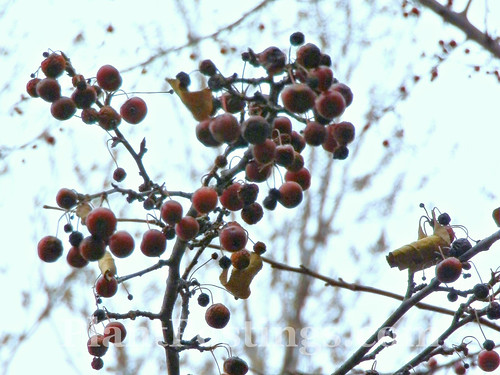
Malus

Crabapples (unknown Malus cultivar)

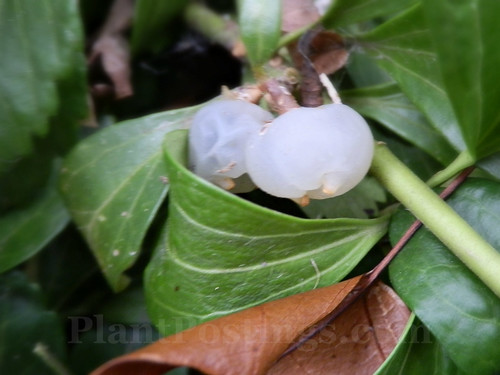
Convallaria

Lily of the Valley (Convallaria majalis)

Those are a few of the outdoor fruits; here are two I overwinter in the sunroom:

Fuchsia

Developing Fuchsia fruit (F. 'Marinka')

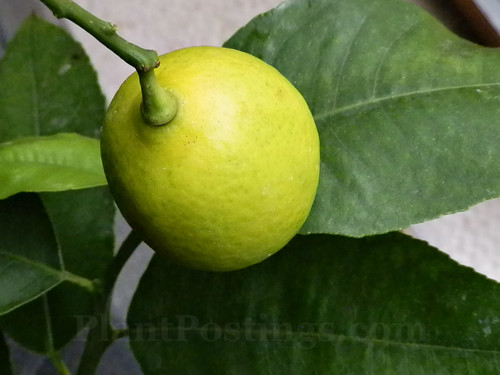
Citrus

Meyer Lemon (Citrus x meyeri)

Can you correctly classify these fruits? What fruits are growing and ripening in your garden?

[Disclaimer: Not all of the fruits shown here are edible to humans! Research before you consume the parts of any unfamiliar plant!]

February 16, 2017

Join Me in the Sunshine at the
San Diego Botanic Garden

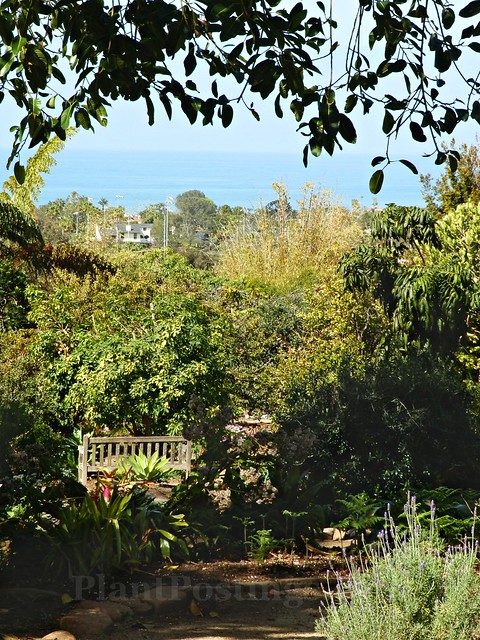
ocean view

It's looking like the Midwest will have an early spring this year. However, even during a mild winter my mind tends to wander to warmer places.

Last year, in March, when we traveled to San Diego, one of my favorite destinations was the San Diego Botanic Garden, in Encinitas. As with all botanical gardens, my time there was too short. But here are a few highlights.

childrens garden 1

In the children's garden, signage and garden descriptions are friendly and informative.
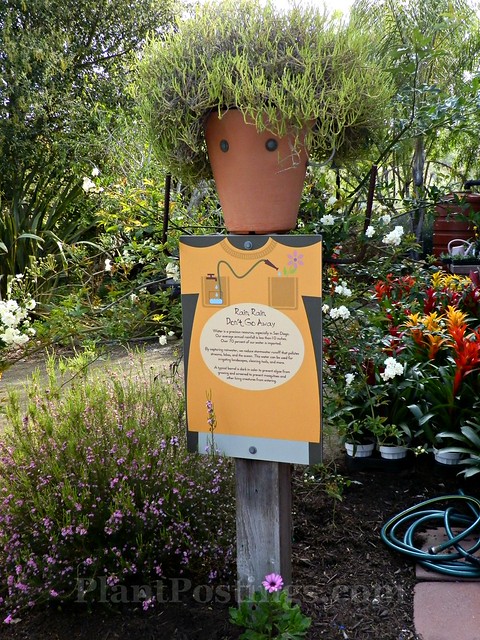
childrens garden 2

This whimsical planter on a post describes the precious resource of water and how to conserve it.
childrens garden 3

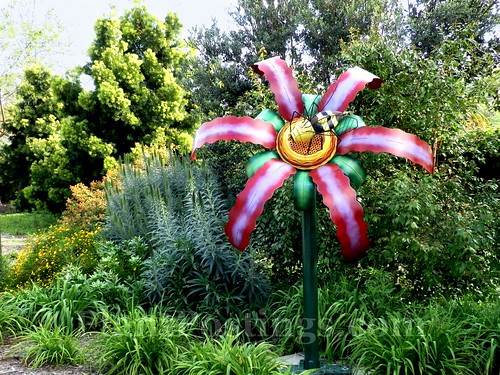
Without words: sculpture illustrating the importance of pollinators.
childrens garden 6

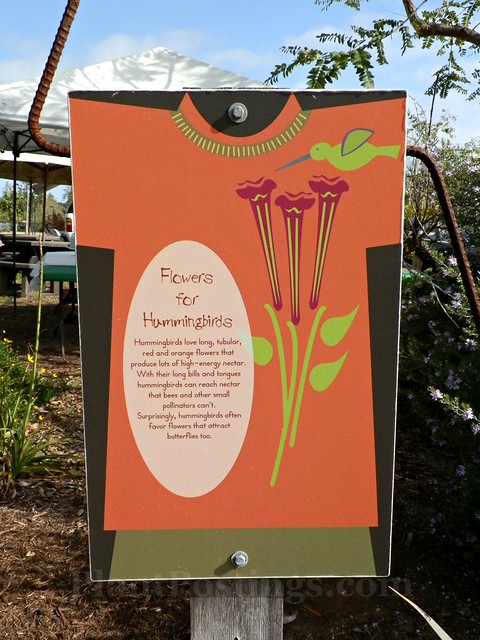
This sign explains hummingbirds' penchant for long, tubular flowers, as the little friends circle around the nearby flowers and hide in the treetops.
childrens garden 4

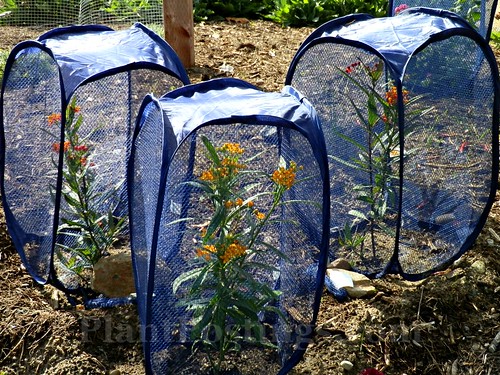
The San Diego Botanic Garden provides protected habitat for Monarch caterpillars.
childrens garden 5

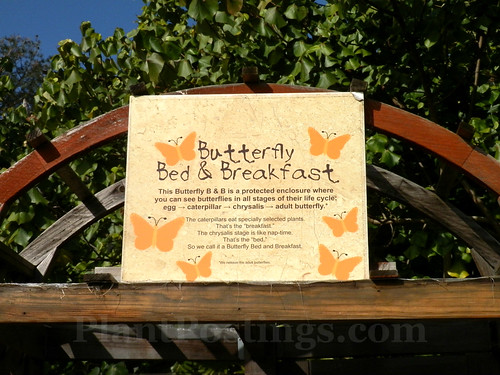
And a "bed and breakfast" enclosure for butterflies through all their life stages.
giant swallowtail

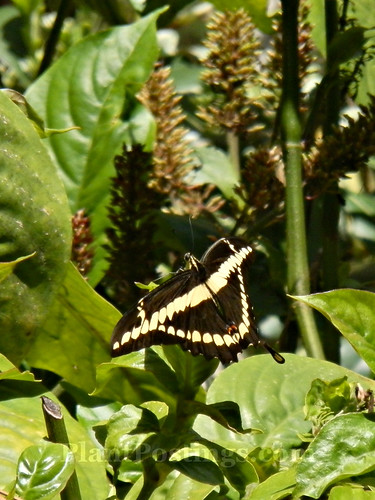
Many butterflies, like this Giant Swallowtail, flit and float throughout the gardens.

fiddler

This "Fiddler" steel sculpture seems to come to life at the center of a mixed garden area.
mariachi topiaries 1

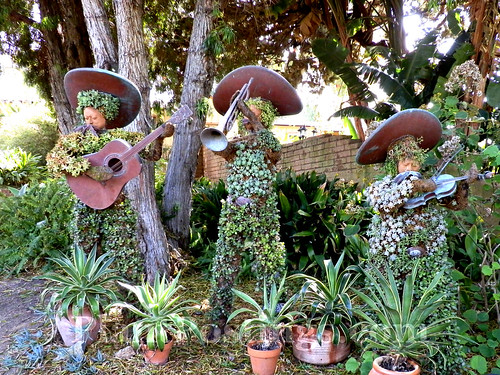
Mariachis covered in succulents--perfect!
mariachi topiaries 2

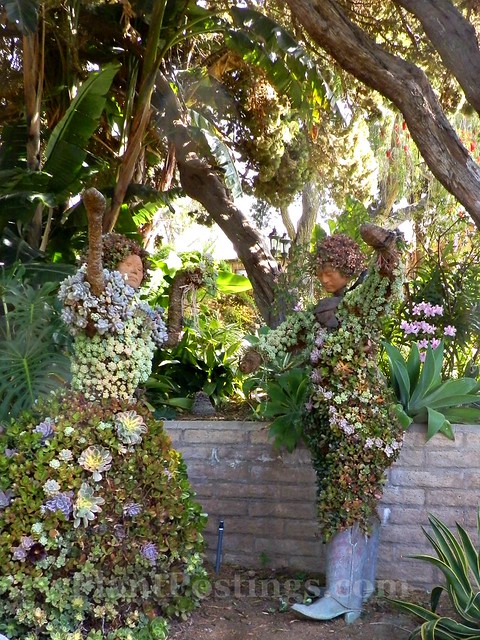
And dancers nearby--pure joy.

tropical

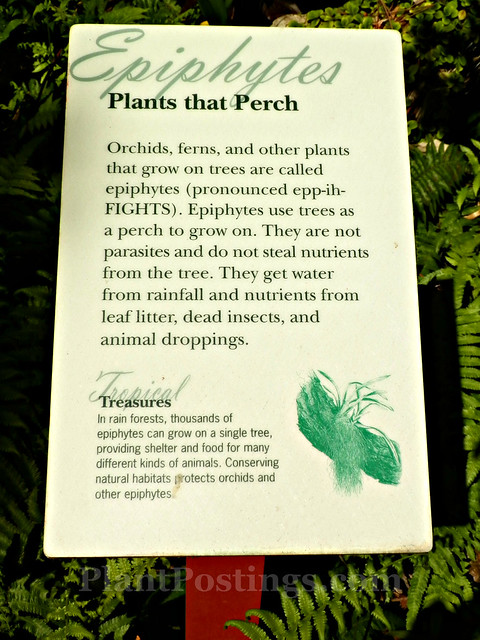
One area of the garden is dedicated to a tropical rain forest theme.
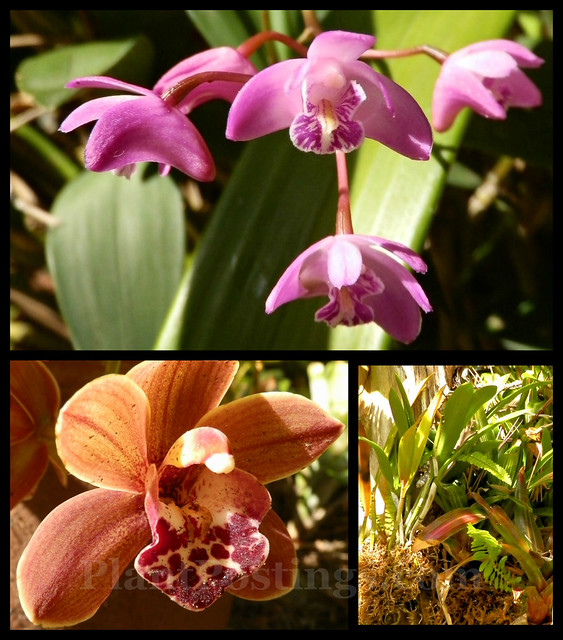
tropical epiphytes

Including the specialized plants that inhabit rain forests.
epiphytes collage

Some epiphytes in the gardens are potted, while others perch on trees.
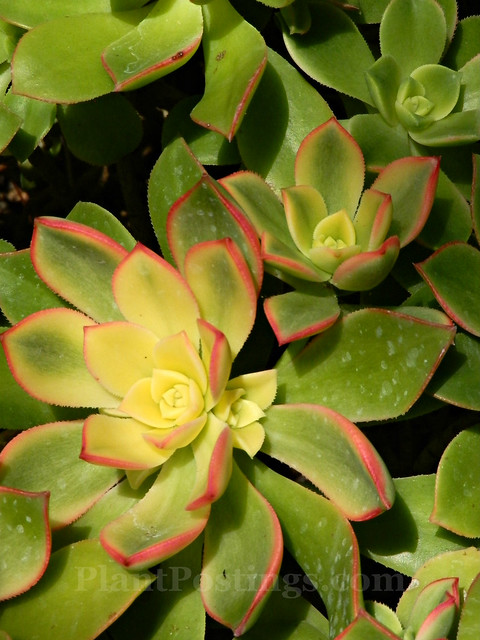
kiwi aeonium

Likewise with plentiful succulents, like this Kiwi Aeonium, planted directly in the soil.
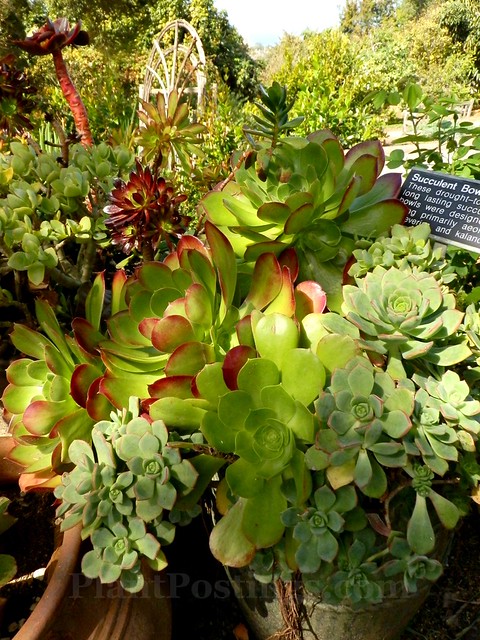
succulent bowls

Others planted in pots.

And then more plants ...
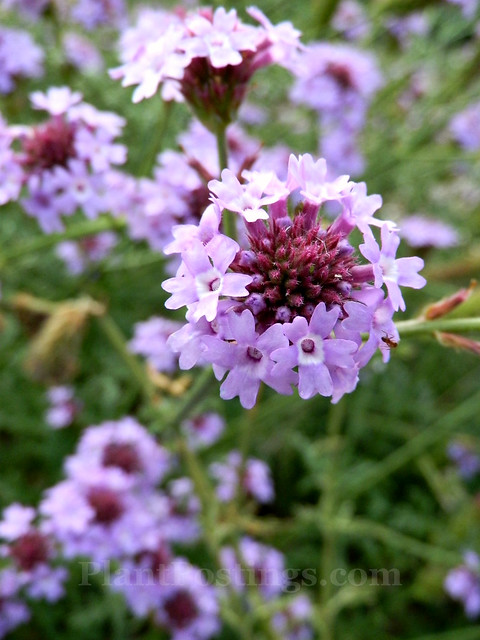
lilac verbena

Lilac Verbena (V. lilacina; syn. Glandularia lilacina), native to Baja California and Mexico.
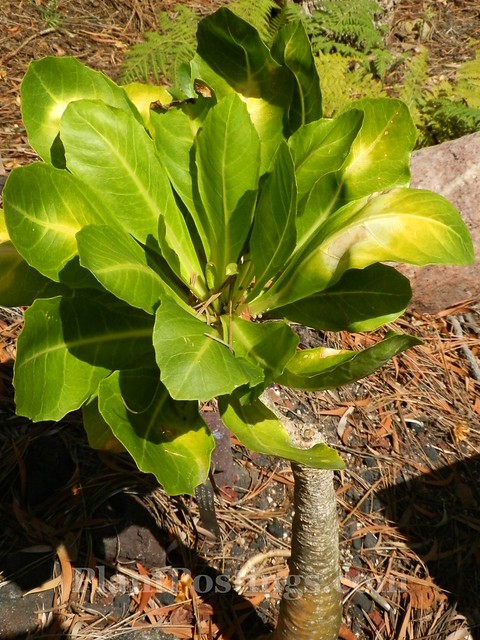
olulu

Olulu or Cabbage on a Stick (Brighamia insignis), nearly extinct and native to the Hawaiian islands.
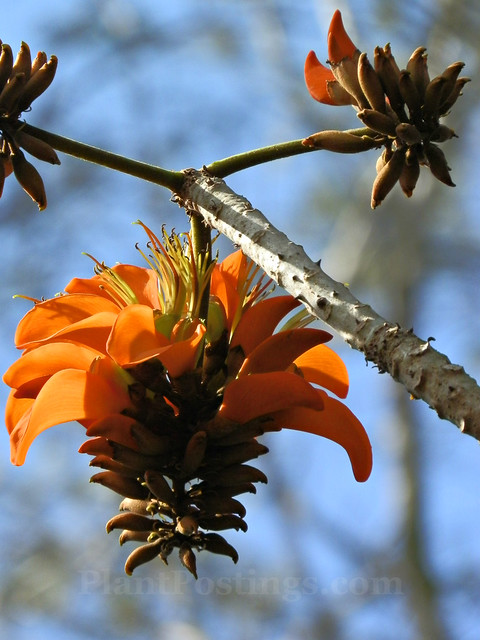
coral tree

Coral Tree (Erythrina caffra), native to South Africa.
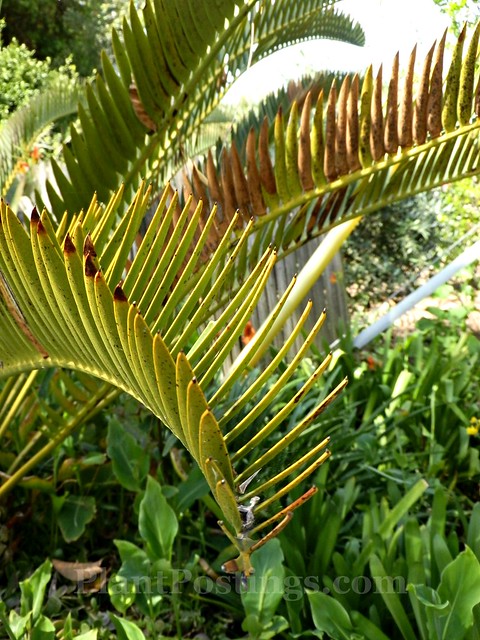
cycad

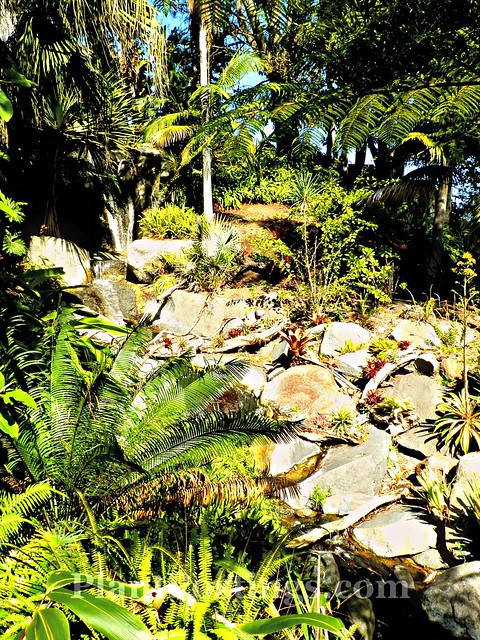
Long-Leafed Cycad (Encephalartos longifolius), native to South Africa.
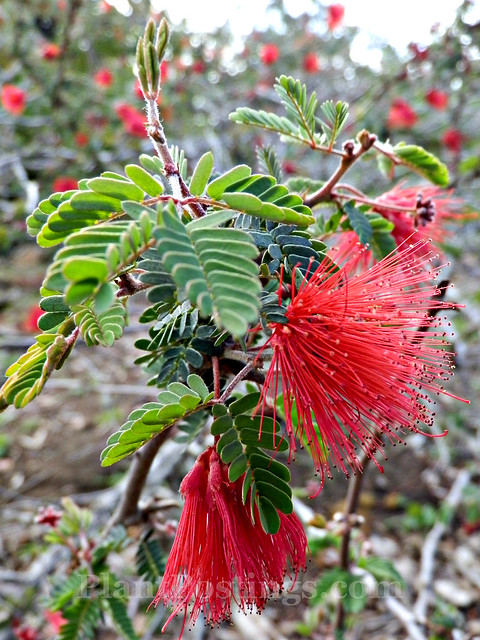
baja fairy duster

Baja Fairy Duster (Calliandra californica), native to California.
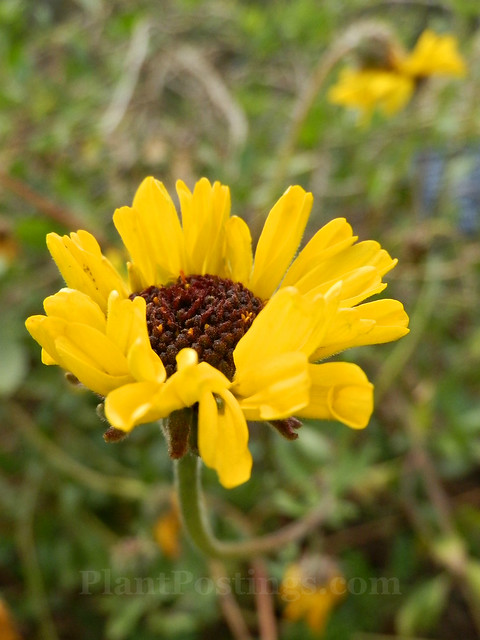
coast sunflower

California Brittlebush (Encelia californica), also native to California.
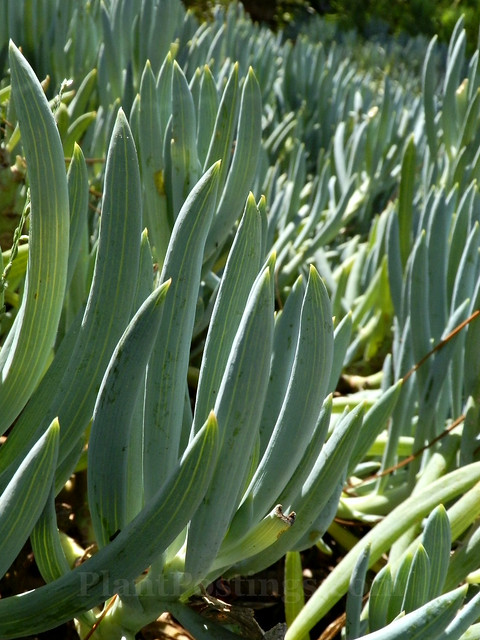
blue chalksticks

Blue Chalksticks (Senecio mandraliscae), native to South Africa.
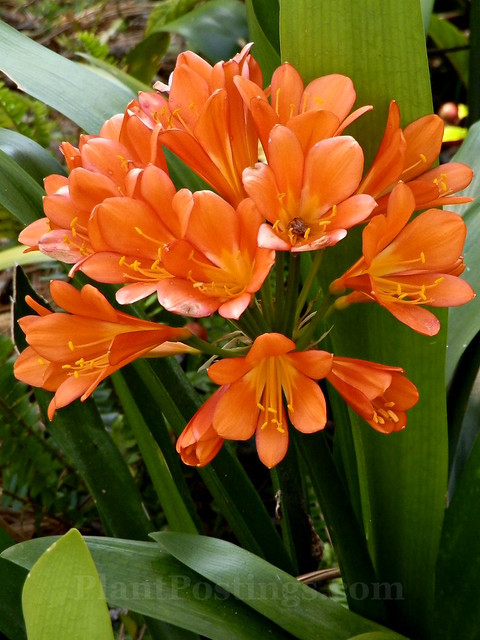
clivia

Clivia (C. miniata) native to South Africa.

calif lilac

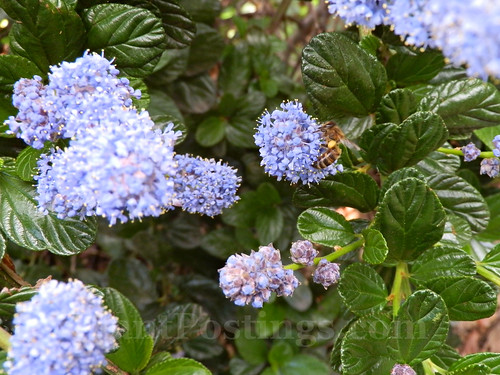
California Lilac (Ceanothus arboreus), native to California.
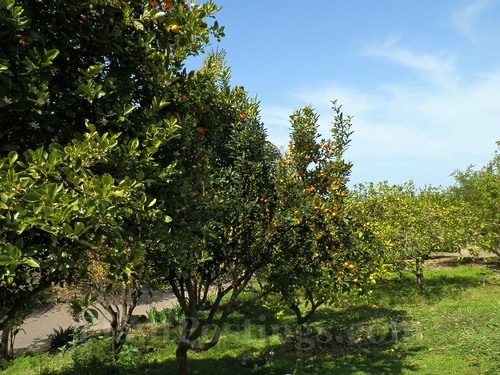
citrus

The botanical garden also has groves of Citrus, native to various Asian and Pacific locales.
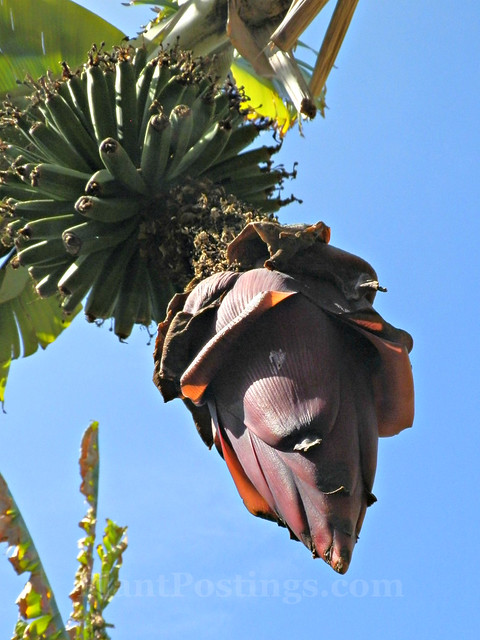
bananas

And other fruits, such as Bananas (Musa acuminata), native to Southeast Asia.

secret garden 1

One of my favorite spots: the walled garden. Secret gardens with benches always beckon.
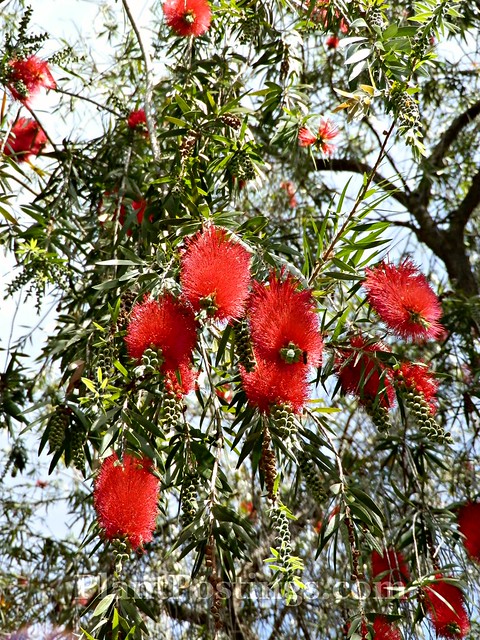
bottlebrush 1

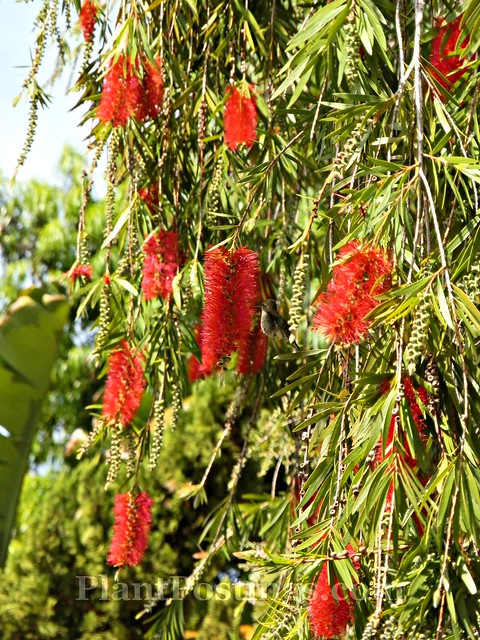
Draping over the walled garden are giant Weeping Bottlebrush (Callistemon viminalis, syn. Melaleuca viminalis) trees.
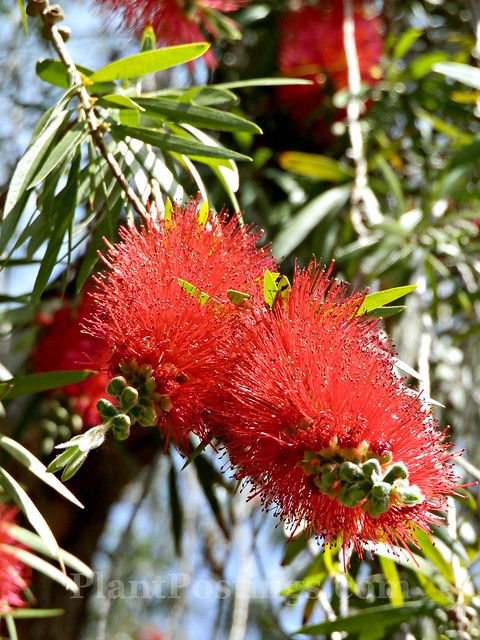
bottlebrush 2

Yummy.

bottlebrush 3

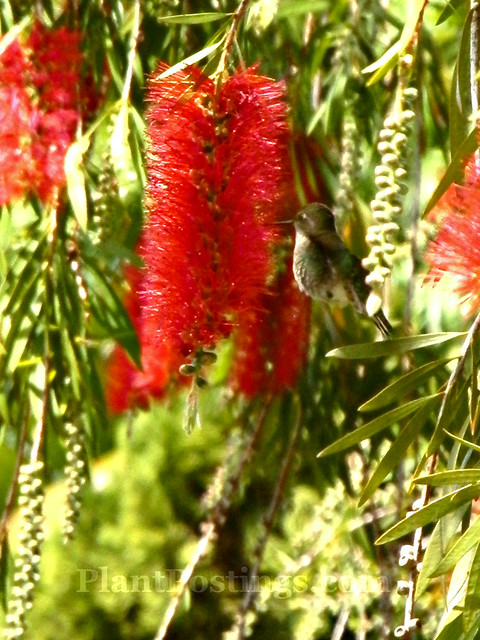
While I was in this walled garden admiring these trees, hummingbirds were buzzing by. But I couldn't seem to capture them in a photo--partly because of the great camouflage of the trees.
hummer

Later, I enlarged one of the photos and found a surprise hummer. You can see how easy it is for them to hide among the leaves and flowers. :)

secret garden 2

Bye, for now, walled garden and San Diego Botanic Garden. I hope I'll visit again before too long.

**************

(Note: The San Diego Botanic Garden has a substantial collection of native and xeric plants. A future post will focus more on these plants.)