October 20, 2015

Plant of the Month: Jack-in-the-Pulpit

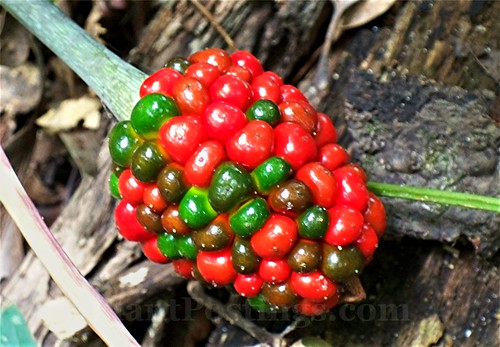
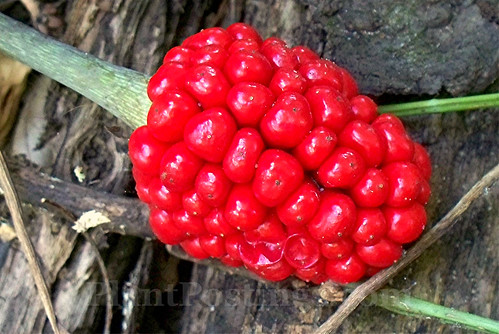
jack berries

Embarrassingly, I only learned recently that Jack-in-the-Pulpit (Arisaema triphyllum) is an herb (it lacks woody tissue when mature). I also learned that all parts are extremely toxic to most animals, including humans, but that when cooked or dried, its corm (fleshy root) is edible. In fact, historically it apparently was a staple of some Native American cuisines, according to many sources, including the Lady Bird Johnson Wildflower Center.

I'll leave the research on how to dry and cook it to you, since I won't be trying this one any time soon. It sounds too dangerous.
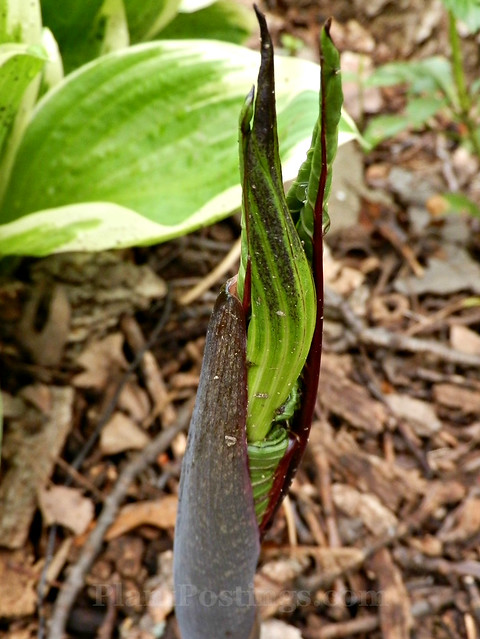
jack 1

What I do know is that this beautiful, unique North American plant is extremely common in my woodland garden. In fact, volunteers pop up all over the place--probably by seed carried by birds who eat the berries.

The plant is common in most of eastern North America in woodlands, swamps, and marshes--but particularly common in deciduous forests, which explains why it will grow in part sun or in shade. It prefers humus-rich, moist soils. But when we had a summer-long drought in 2012, the plants came back in full force the following year.
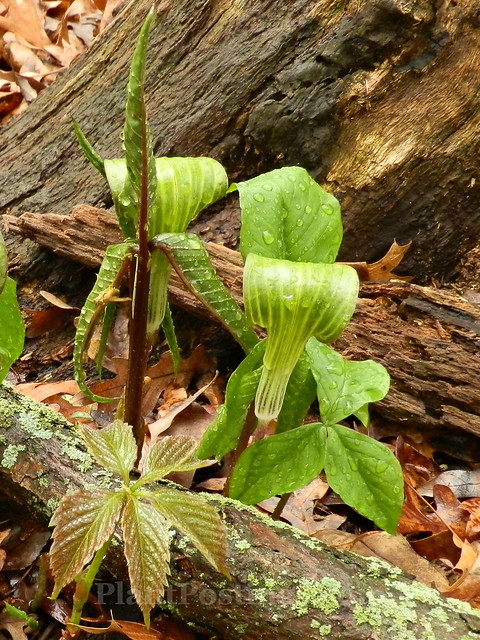
jackcreeper

Jack-in-the-Pulpit seems to prefer the same growing conditions as Virginia Creeper (Parthenocissus quinquefolia) and various Trilliums. In fact, Jacks and Trilliums tend to bloom about the same time in my garden, and it can be hard to differentiate Jacks from Great White Trilliums (T. grandiflorum), unless blooms are present.
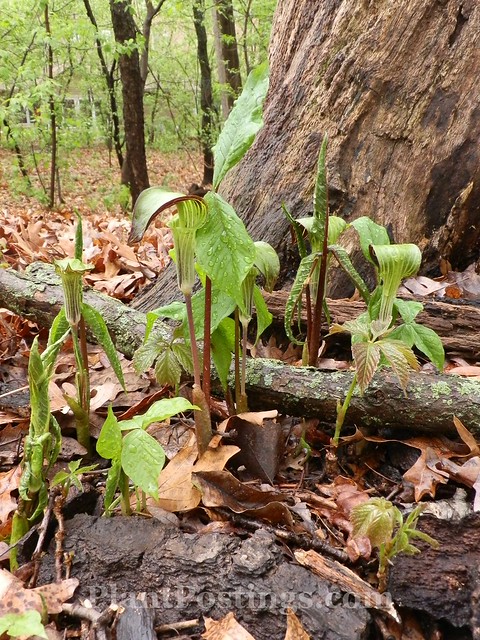
mix

Often, I'll find colonies of these plants together in mid-spring.
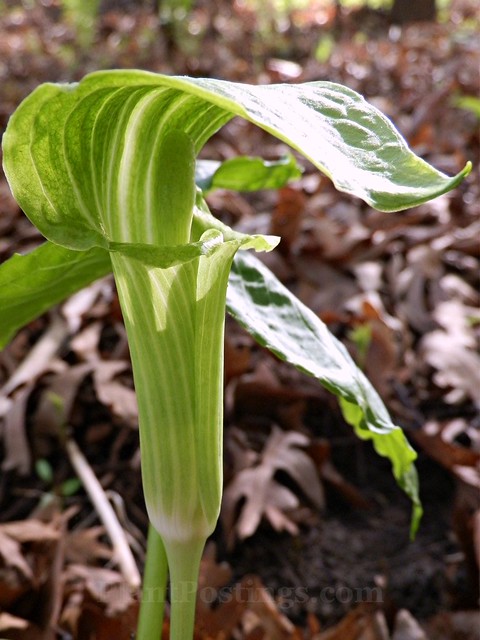
jack 2

Some Jacks are mostly green, with white stripes.
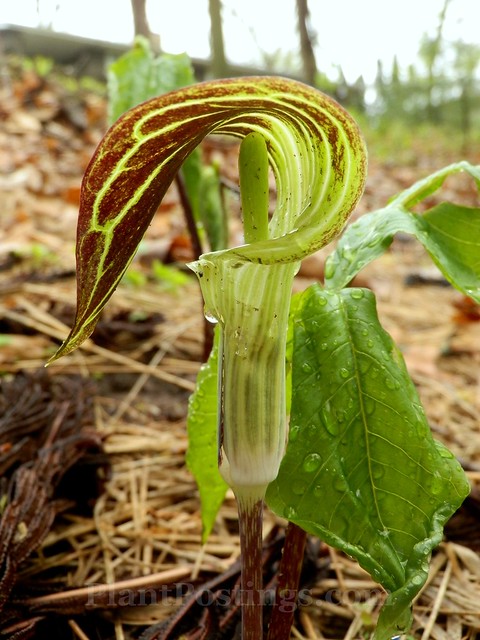
jack 3

Others have fascinating patterns of brown to burgundy markings.
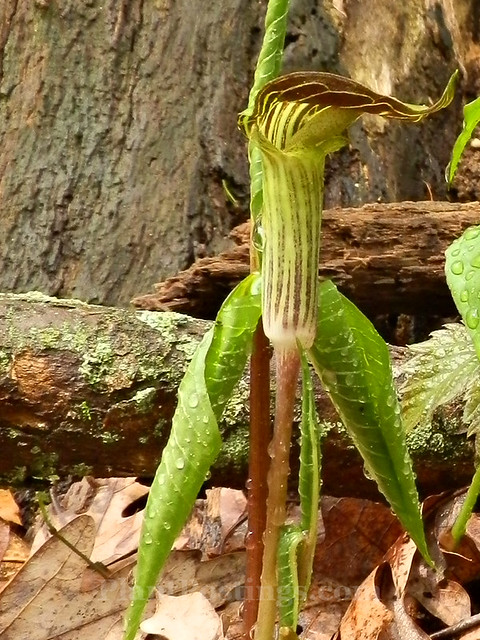
jackopen

I enjoy watching the foliage unfurl on stems parallel to the flower stems.
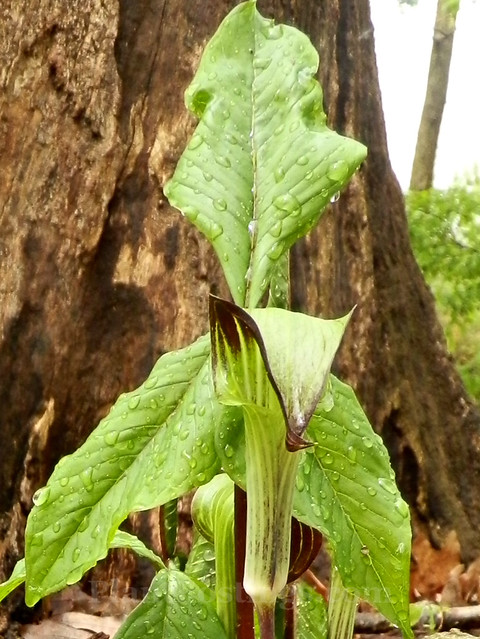
jackopen 2

They all seem to have different shapes and sizes.

Each individual plant has a gender. You can tell by looking under the hood! Also, each plant can change its gender from season to season. This excellent resource from Michigan State University explains the gender characteristics in great detail.

Oh, and another nifty thing is that pollinators are more likely to escape from a male flower than a female flower, because the males have an escape hatch!

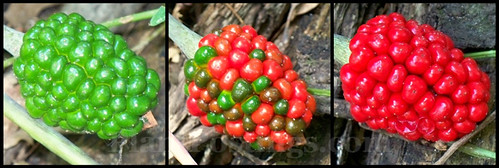
After the flowers fade, the pollinated plants produce clusters of berries.
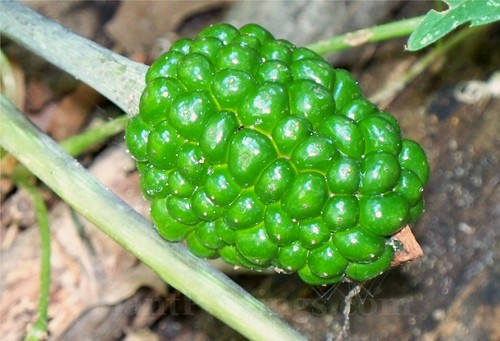
jackgreen

They begin bright green,

jackmulti

Change to multicolored,

jackred

And end a bright red that brightens the late summer and autumn landscape, if the birds don't get them first.

Jack-in-the-Pulpit grows 1 ft. to 3 ft. in height, and blooms from March to June, depending on your zone and the specific growing season. It's hardy in USDA zones 4 to 9. It seems readily available from most garden centers in my area and from online North American native plant sellers.

I consider this plant a familiar old friend, as it grows wild and is wonderfully plentiful in my woodland garden.
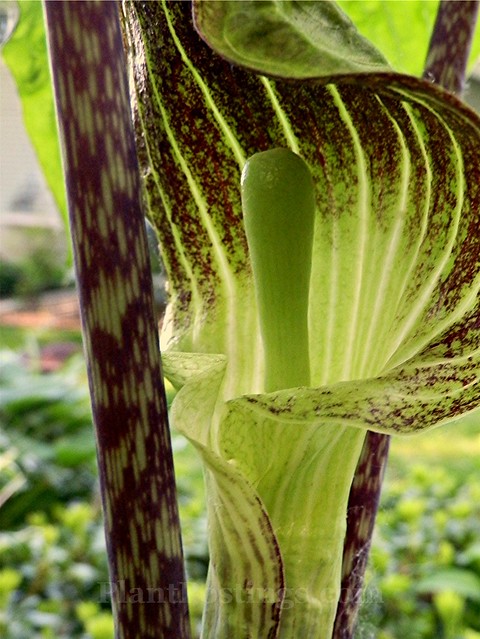
jack 4

I'm linking this post to Dozens for Diana over at Elephant's Eye on False Bay, a meme that celebrates a "plant a month" on blogs from around the world.

October 14, 2015

Rescued From the Impending Frost

bowl of blooms

(Update 10.20.15: We escaped the predicted killing frost this past weekend. All plants shown here are still alive and blooming. Only one was covered--the tiny pink double Impatiens. This is very late for my garden, but I'll enjoy it while it lasts.)

October 06, 2015

Midwest Meet-Up
At Klehm Arboretum and Botanic Garden

castor

Isn't it a thrill to discover horticultural resources close to home--new botanical wonderlands to explore?

That's what happened when several Midwest gardeners and garden bloggers met in August in Rockford, Illinois, to explore three botanical properties. (Our group included folks from Indiana, Illinois, and Wisconsin. We plan to continue this gathering next summer, possibly meeting in Madison.)

Our first stop was Klehm Arboretum and Botanic Garden, a 155-acre site that combines native plant and tree collections with rare trees and shrubs cultivated for exhibition.

We met on a Friday, and had the place almost to ourselves.

pavilion

The grounds were well-maintained, yet warm and welcoming--including this pavilion, a popular local wedding venue.

fountain

The Fountain Garden adjacent to the pavilion tempted us. Our visit occurred on a very hot day, and some of us thought about running through the water spouts.

pots

Gathering areas throughout the property provided resting places and inspirational plant combinations. I enjoyed the Foxtail Ferns (Asparagus densiflorus)/Petunias combination and the small potted shrubs with purple Sweet Potato vine (Ipomoea batatas).

bench

rock border

The formal garden areas were whimsical, and had a nice mix of statuary, benches, birdhouses, trees, shrubs, perennials, and annuals.

plant sign

azalea sign

Even the signage was bright, colorful, and informative. I'd like to go back next spring to see the Rhododendron and Azalea Dell.

children's garden

This plot in the Children's Garden was arranged by alphabet--using common names. It was bright and colorful, and most of the plants selected for this special area were either in bloom or had eye-catching foliage.

fountain grass

Loved this stand of Fountain Grass (Pennisetum setaceum) along the path to the pavilion.

bridge

This bridge over a small stream took us to an interesting woodsy area.

waterfall 1

waterfall 2

Several simple, but very attractive waterfalls dotted the landscape.

bumble

cabbage

monarch

webworm

skipper

carpenter

Pollinators and accidental pollinators all seemed happy with the nectar and pollen smorgasbord.

I photographed several individual plants that captured my eye, including:

amsonia 1

amsonia 2

Blue-Star Amsonia (A. hubrichtii): There were several patches in various stages of color change, depending on location and lighting. I imagine this area is stunning in the fall!

calamint

As always, the Lesser Calamints (Calamintha nepeta subsp. nepeta) were covered in bees.

coreopsis

Around one corner was a swath of Threadleaf Coreopsis (C. verticillata), which was gorgeous even at this late stage.

daylily

A few Daylilies were still blooming.

cleome

Cleomes (C. hassleriana) were probably the plant of the day--another specimen that looked stunning en masse.

turtlehead

The Turtleheads (Chelone lyonii) were just starting to bloom.

amistad

'Amistad' Purple Salvias were spectacular, too.

While I was drawn to individual plants, it was the formal and informal plant combinations that really impressed, like the grouping at the beginning of this post and several others:

mixed

Castor Bean plants, Cleomes, potted succulents, Coral Bells, Alyssums, and more.

cotoneaster

A very healthy patch of Cotoneaster (C. horizontalis) framed by conifers and green late-season Hydrangeas (I think these are 'Annabelles').

helio petunias

And a dramatic grouping that we all found fascinating: Flowering Tobacco (Nicotiana), Cleomes, Purple Heliotropes (Heliotropium arborescens), and swaths of Petunias.

group
Recognize any of these people?

It was a fun day! We also visited the Anderson Japanese Gardens and the Nicholas Conservatory and Gardens, which I'll highlight in a future post. Rockford is an excellent destination for plant-lovers and garden enthusiasts. I'm already planning a return visit next year!

September 28, 2015

The Last Perfect Day Before Winter

remains

For this perfect day, my only option was to swing wide the windows and steal little moments of nature's glory.

Projects, dirty dishes, dinner, Facebook, unanswered emails ... all waiting.

But I delayed ...

maple

Dawdled on the front porch glancing at the green Maple that will soon be amber,

locusts

No longer denying that the Honey Locusts are proclaiming autumn.

Listened to the last cricket songs of the season,

Snapped mediocre photos with my phone, too enchanted to try to capture perfection with a better camera ...

wine

And toasted a most excellent summer, and the last perfect day before winter.